
Skipper’s Log
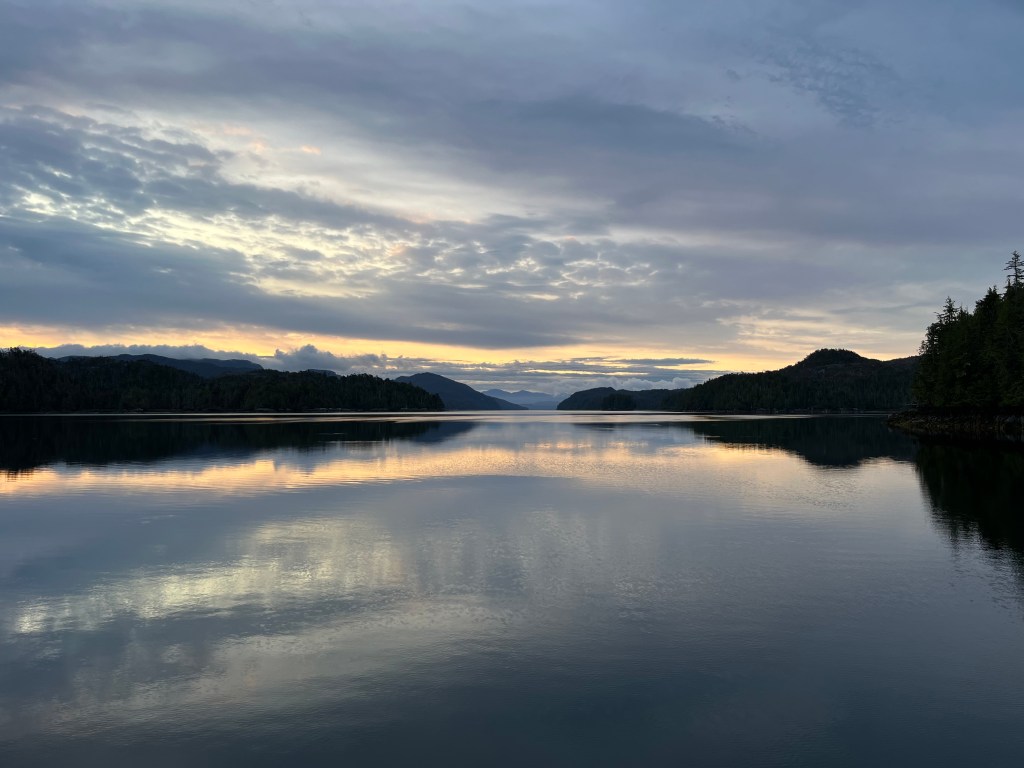
Making it north of Cape Caution was a big milestone for us, and we woke the next morning ready to move on. We’d originally planned on staying in Pruth Bay a couple nights to decompress and explore the Pacific side of the island, but found the bug situation on the beaches to be a bit overpowering. We instead decided to press northward, and make for Shearwater that afternoon.
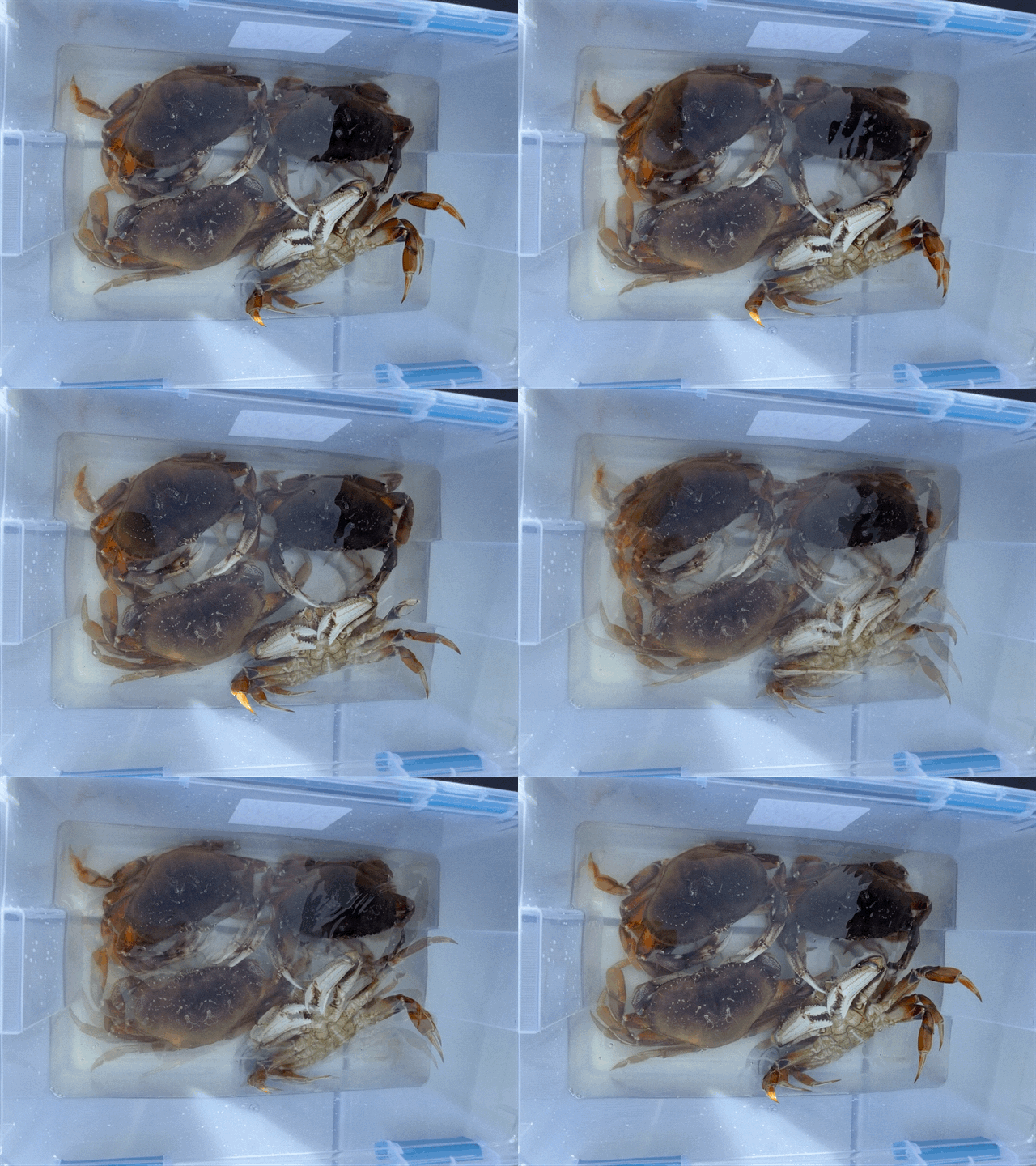
Melinda had set our crab pot down the bay from our anchorage, and was delighted to find four male Dungeness crabs waiting there in the morning. She hauled them in, and had them boiled before we pulled anchor to leave. As I worked my day job, Melinda shucked the crabs and Grace piloted us up Fisher Channel under motor. It was another day of wind on the nose, and engine power was the prescription for making distance.
We had our first tight passage with a tug and its log boom in Lama Passage, just south of Bella Bella. It was a bit unnerving to watch the tug manage the giant raft of logs left and right in the channel – nudging it here and there to keep it on course. We were happy to pass this monstrosity by and turn the corner to see Shearwater waiting for us.
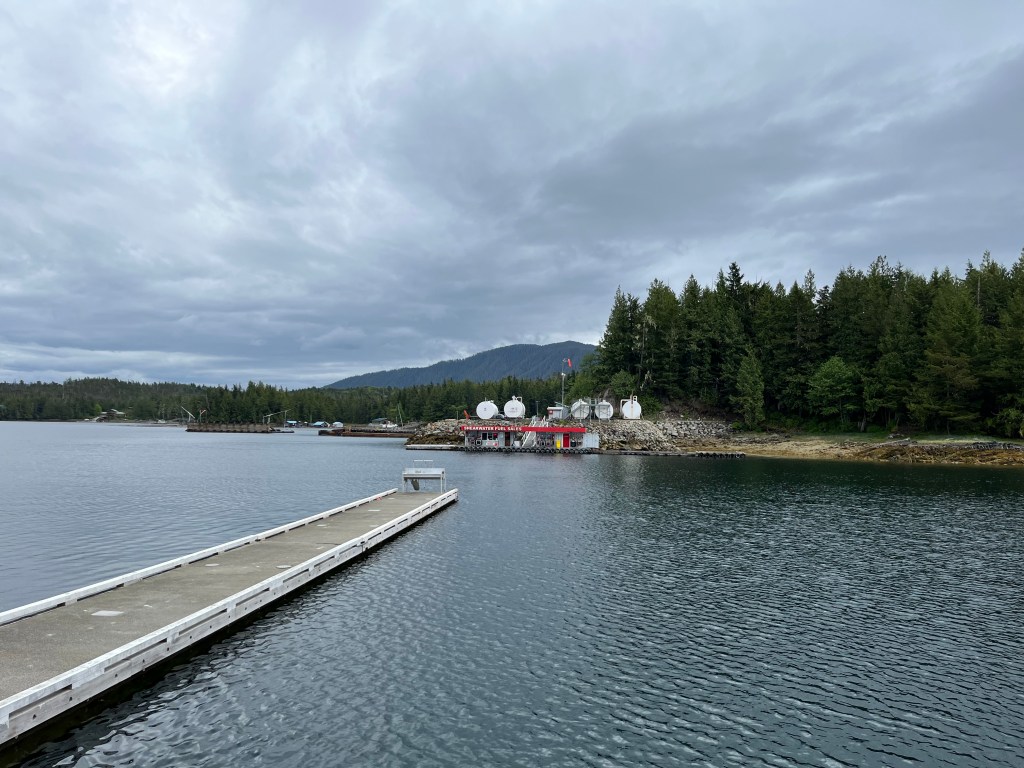
We fueled up before tucking into our slip for the night. The fuel dock had been a concern of mine as I didn’t know quite how primitive it and the fuel quality might be. I had no concerns given the amount of traffic there and the well-kempt pumps and tanks. I was happy to top off, though we’d only used about 1/4 of our capacity.
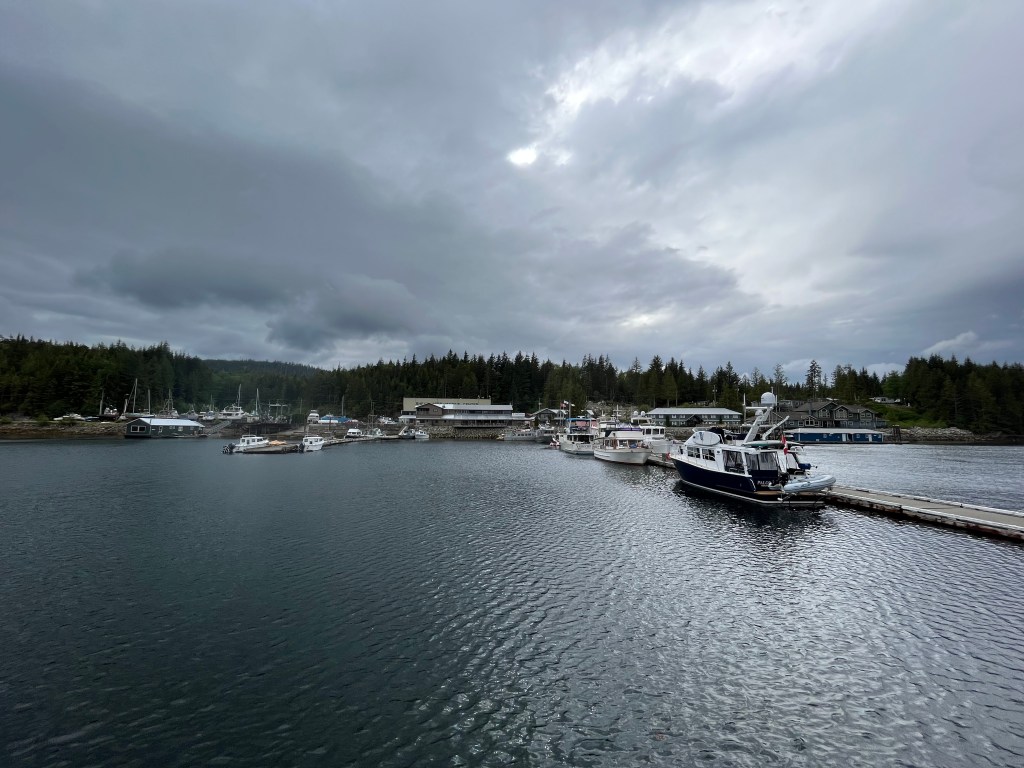
The staff at the marina were super helpful, waiting for us to cross over from the fuel dock. They took our lines and guided Perception down the long arm of the tee until we were tucked into the corner.
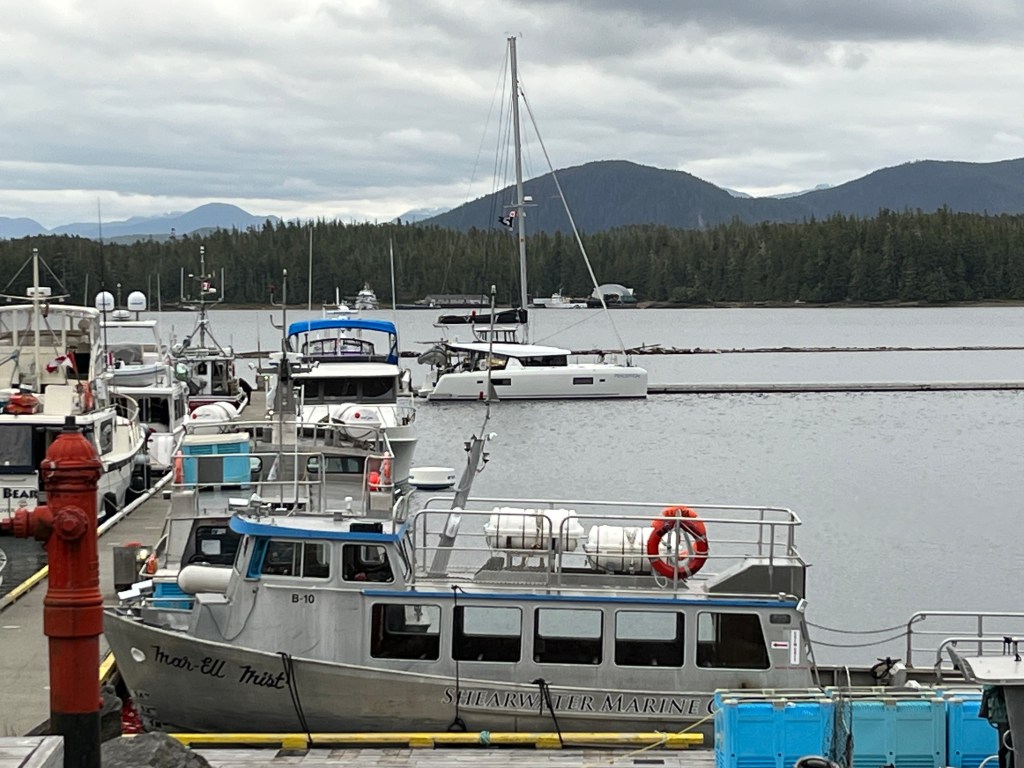
I was happy to see that Otter Bay was in the marina near us. This was an aluminum hulled trawler that had passed us as we rounded Cape Caution, and I’d taken some pictures of her as she passed. As I approached her to knock on her hull, I realized that she was actually a Canadian Coast Guard boat. We hadn’t been close enough to really see the boat as she passed, but in hindsight the red and white paint really should have given it away!
The captain of Otter Bay invited me aboard to look at their equipment. They were preparing to do a hydrographic survey on the west coast of Haida Gwaii, of all places. The captain seemed pleased that I had some pictures of her vessel, and gave me her email address where I could send them.
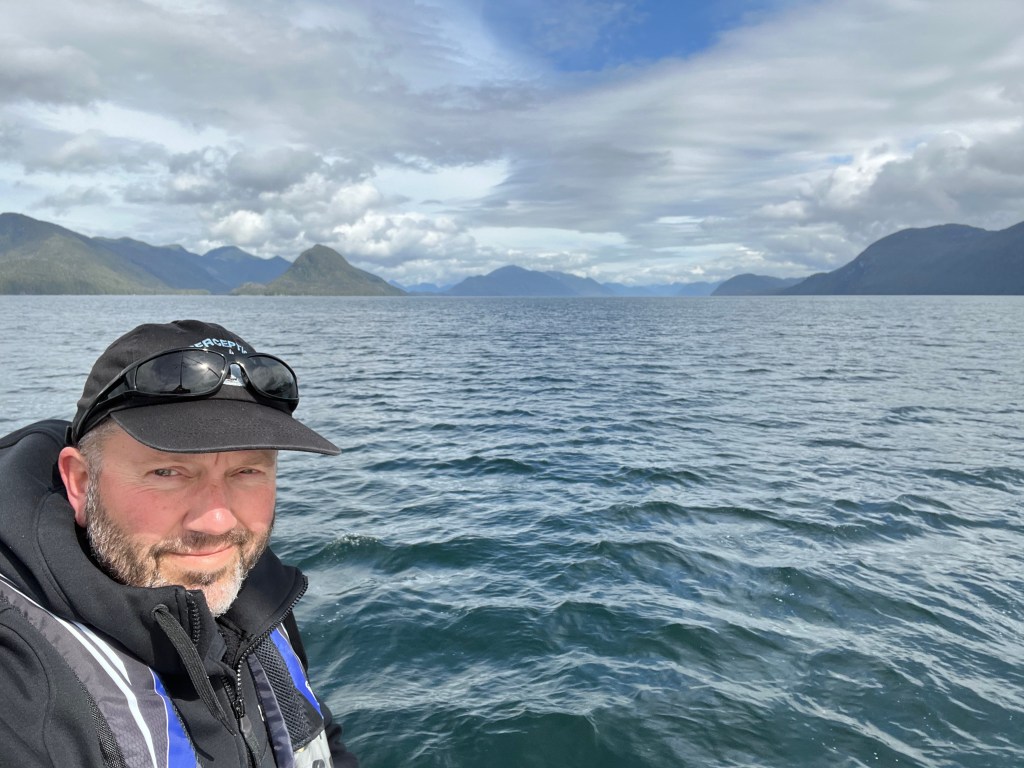
The next morning was Saturday, and we got underway early to make best use of the flood tide up the channels north of us. We had a relatively significant navigational choice to make as we reached the western end of Seaforth Channel. Most cruising boats seem to avoid Milbanke Sound and the potential for heavy swell there, going instead north in Reid Passage and ultimately through Jackson Passage to get into Finlayson Channel. This winding route looked interesting, but the narrows in Jackson Passage might be tricky when the current was running fast. Our timing wasn’t great for this, and I worried we might need to stay a night nearby to wait for slack.
Our other choice would be to go more directly to Finlayson Channel through Milbanke Sound. I had been watching the weather and wave state in the Sound, and it didn’t seem like it would be any worse than what we’d experienced at Cape Caution. It would be a shorter, more direct route than Jackson Passage, as long as my gamble on sea state was right.
My nerves spiked as I saw the swell crashing on the rocks near the end of Seaforth Channel. But I am slowly learning that the swell can make some dramatic crashing surf even when its height is relatively low out in deeper water. My bet was rewarded with gently rolling swell that we glided across – first on our nose, then shifting to our beam as we turned around Lady Douglass Island. As we pointed northward into Finlayson Channel, the swell became a following sea, and we gently surfed back into sheltered waters.
I was happy to see via AIS that our maneuver put us ahead of a few other boats that we had previously been chasing. Not that it’s a race!
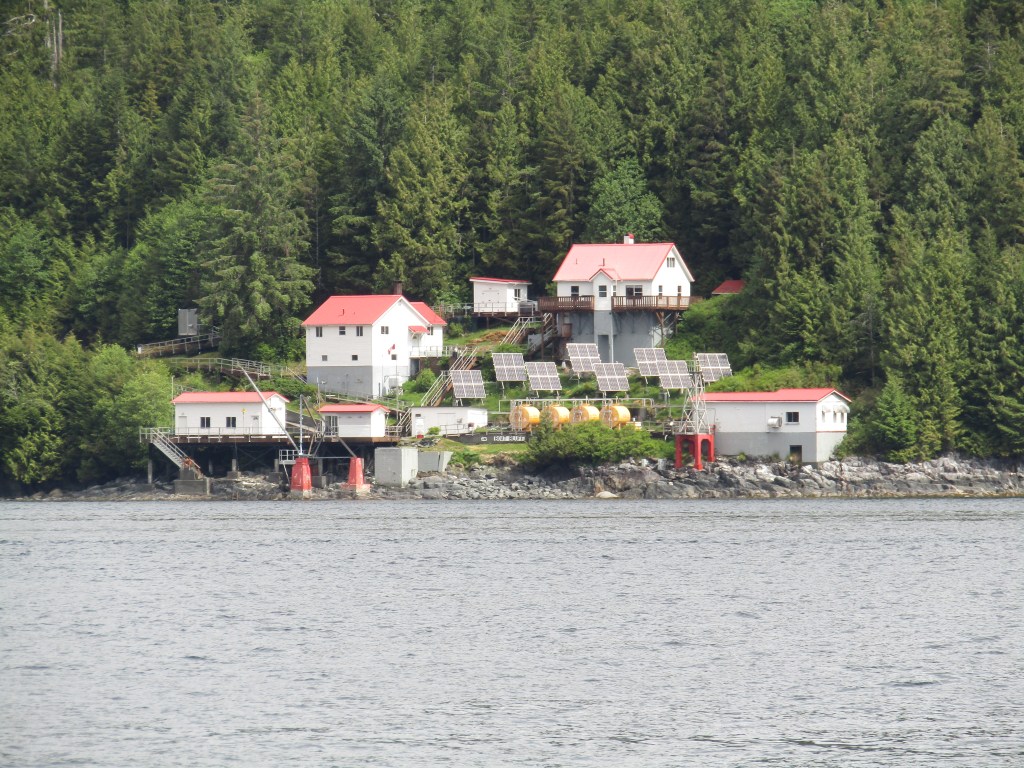
We saw a number of pods of humpback and minke whales in Finlayson Channel before turning off into Graham Reach north of Klemtu. The complex at Boat Bluff Lighthouse was impressive, with the red roofs really standing out in the light.
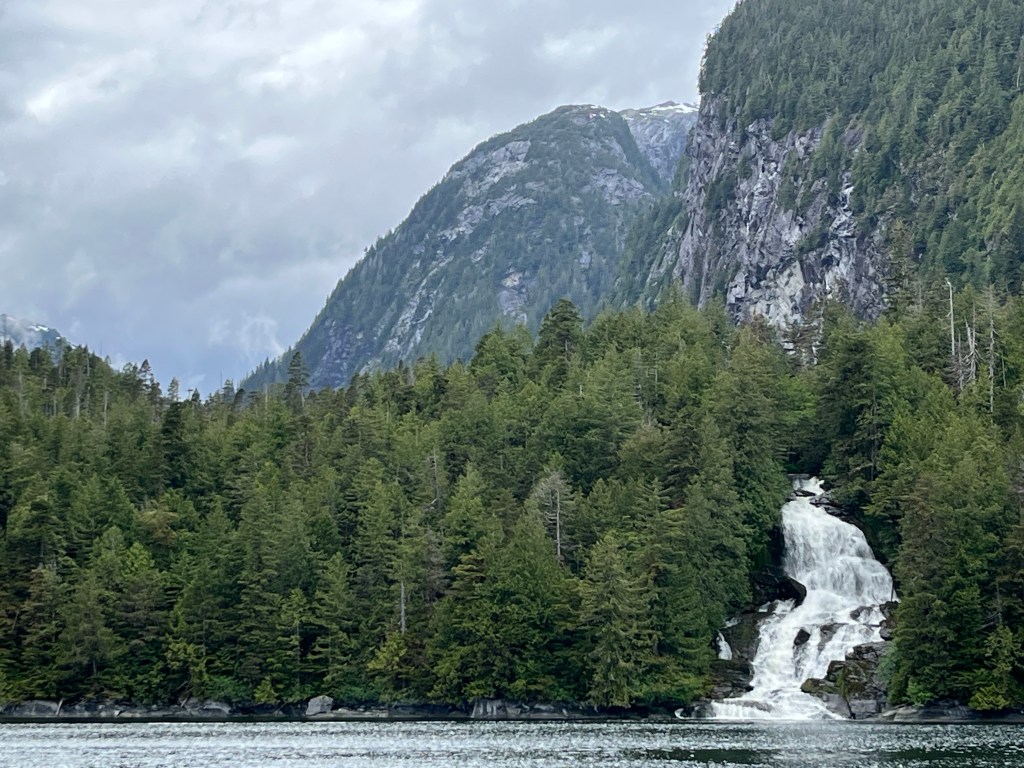
Graham Reach was our first long, straight, narrow section of the Inside Passage. It was impressive to see the hanging valleys caused by glaciation, many of which had waterfalls streaming into the sea from on high.
We pulled into Khutze Inlet after our longest day yet – almost 69 nautical miles. The Inlet was an anchoring challenge for us. I’d taken the warnings to heart about anchoring at the head of the inlet, so chose instead to try the shallow area on Green Spit. We dropped anchor in about 25 feet of water. The current was streaming out of the inlet, so we pulled back with it to set the anchor.
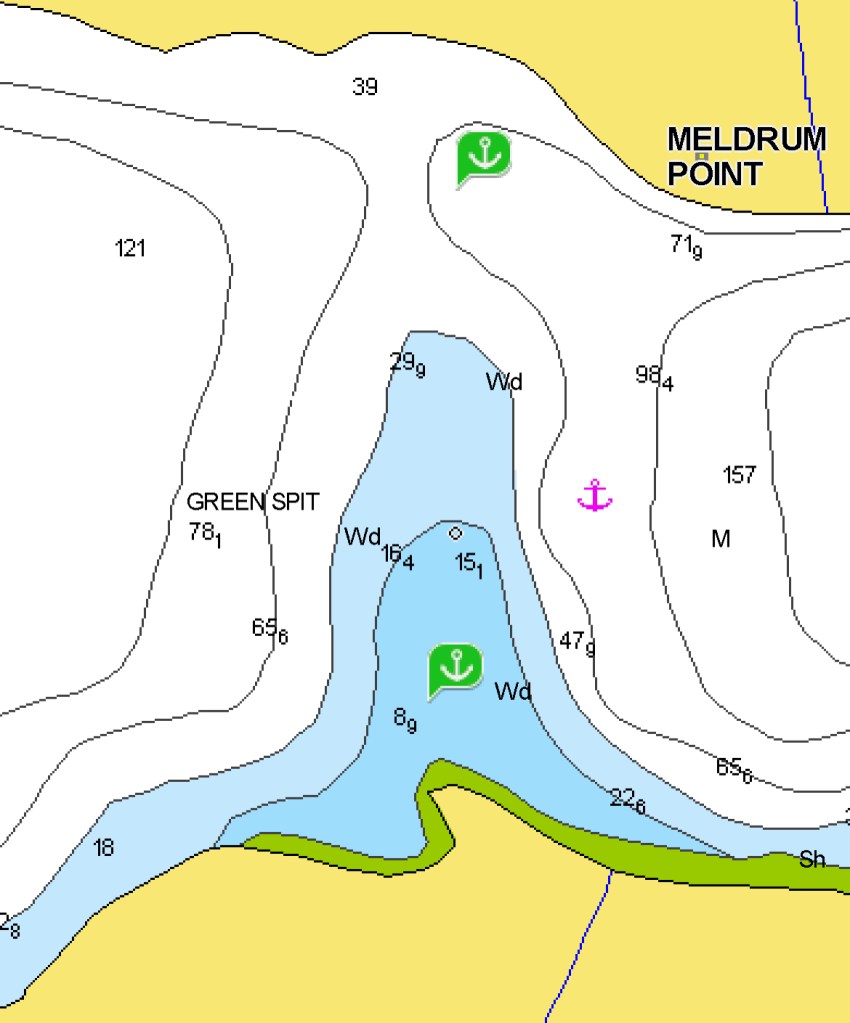
I was quite nervous about the current reversing and pulling us back across the anchor, but this was unfounded. Interestingly enough, the ebb current out of the inlet continued unabated through the entire tidal cycle. Melinda dropped her halibut lure into the water off the stern, and we could see that the surface current was ebbing while deeper there was a flood underneath us, pulling the lure in the direction of the head of the inlet. The surface ebb must have consisted mostly of less-dense fresh water coming out of the river at the head of the inlet.
That evening we took a long dinghy ride up to the head of the inlet to see if we could spot bears. We noted a number of other boats anchored up here, and will definitely try that if we stay here again.
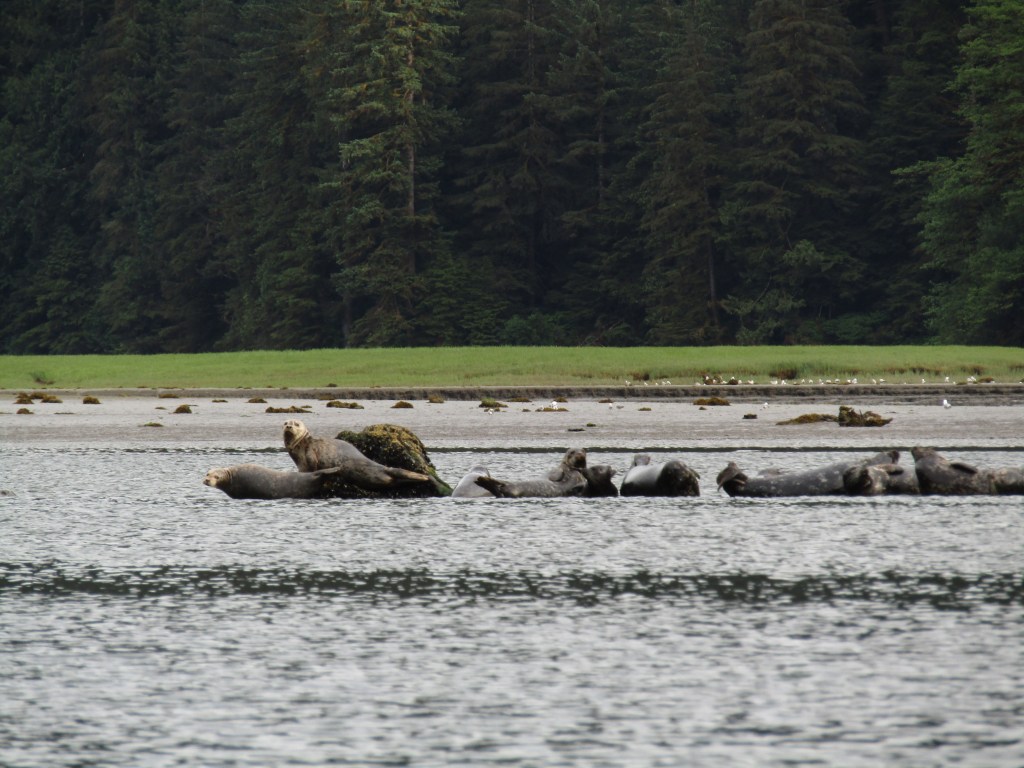
As we approached the river mouth at the head of the inlet we noted something that looked like an odd tree snag with many thick limbs lying in the water. This resolved into a large herd of seals that was hanging out on the bar formed as the river dropped its sediment upon entering the inlet. Sadly we didn’t see any bears, but the noise of our dinghy was not really conducive to spotting wildlife.
The next day we continued our journey northward with a target of Bishop Bay. We’d learned of this place watching our favorite Youtube sailing blog – Ran Sailing. They had stopped at the hot springs in this bay on their way south from Alaska. We wanted to experience the hot springs first hand.
As we entered Ursula Channel, the wind swung around to our after port quarter. We were relatively close to our destination to go through the effort of putting up our mainsail, so I lazily put out just the jib to catch some of the following breeze as we continued motoring.
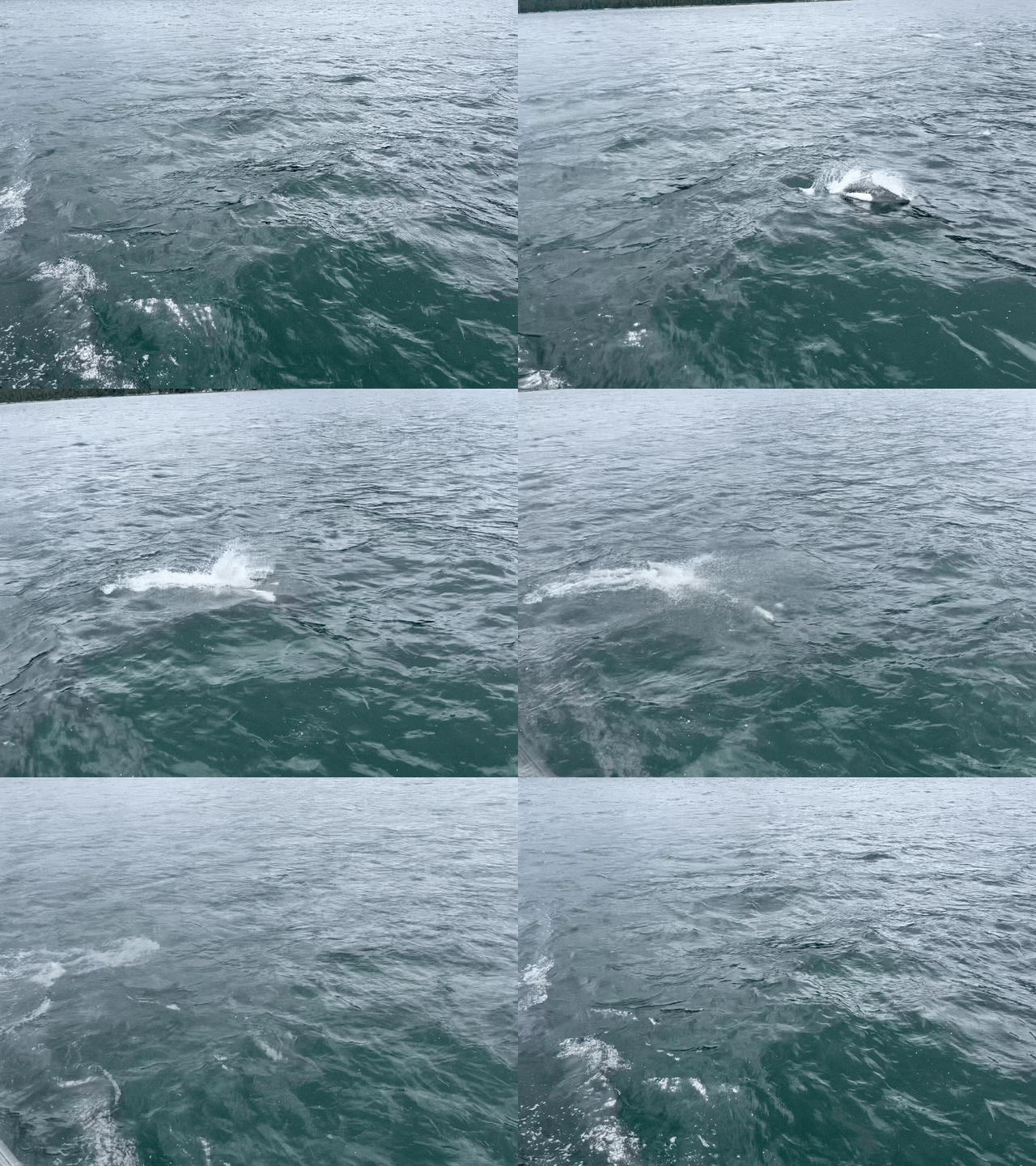
Suddenly we were alerted to splashing around the boat. A pod of Dall’s porpoises had joined us, playing ahead of the boat and surfacing off our beam. Their coloration is reminiscent of orcas but they are quite small – I joked that they are like “pot-bellied pig orcas”.
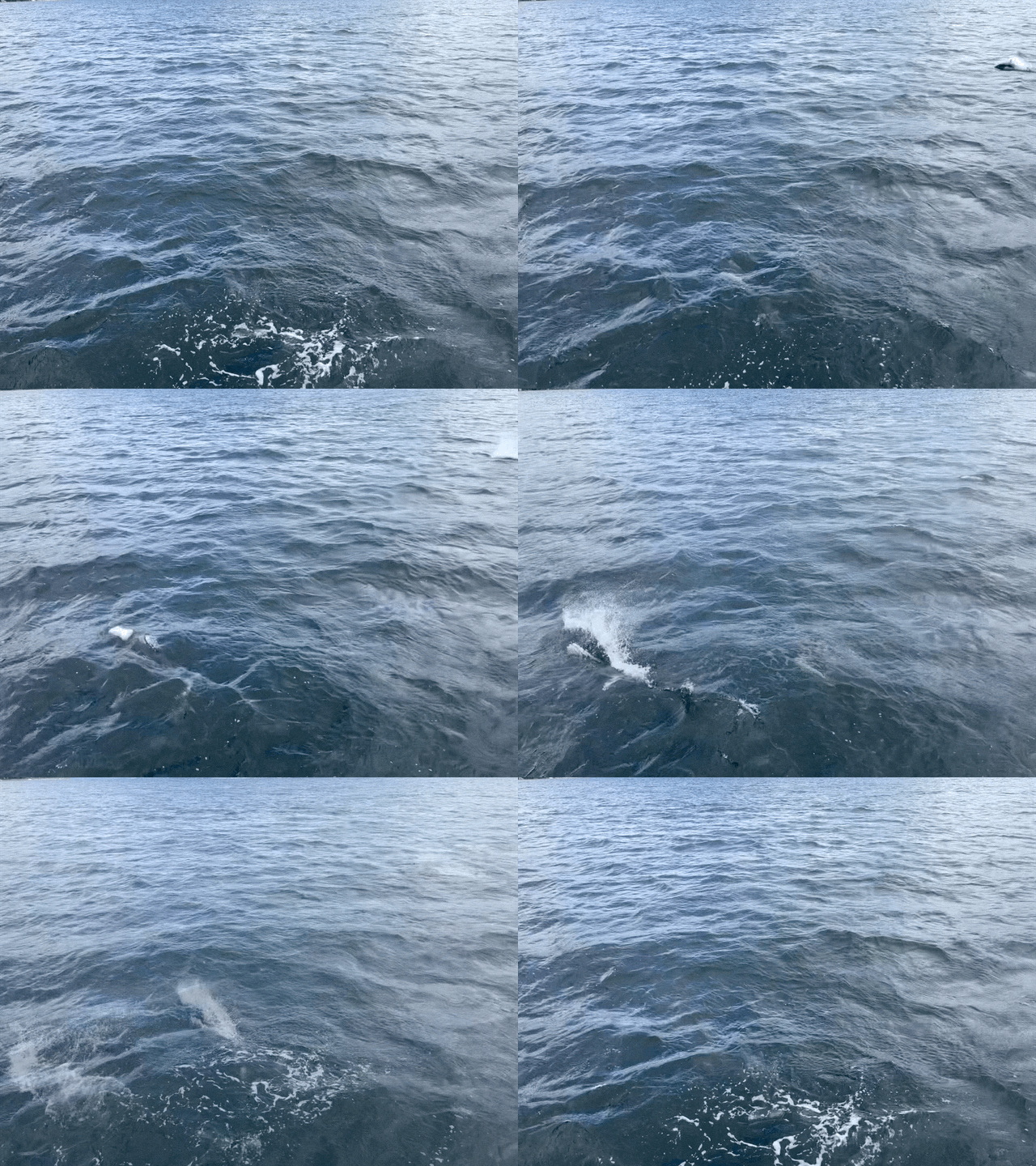
It was our first up-close experience with wildlife for some time. They swam with us for about 20 minutes before we left them behind. We couldn’t stop watching and photographing. Melinda even laid face-down on the trampoline while they swam underneath her.
Soon after leaving the porpoises behind, we were turning up into Bishop Bay. We were anxious to see who was there as the anchorage is very deep with steep-to sides to the shore. Anchoring would be a challenge. The guidebooks said there was one public mooring ball in the bay. I was hoping it would be open so we could avoid a challenge anchoring and a potentially sleepless night worrying about our holding.
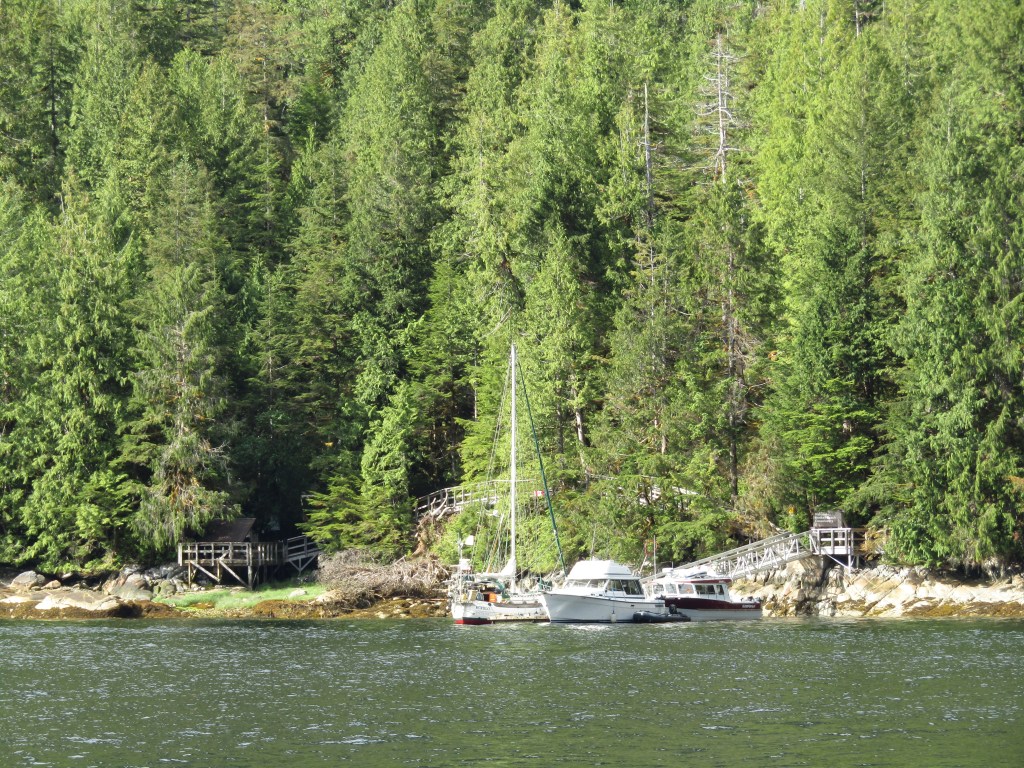
As luck would have it the ball was open and Perception was soon comfortably tied a nice distance away from the hot springs. There were a couple small motor boats at the dock when we arrived, one that had raced past us on the way in. We kept our eyes on the dock for an opportunity to go in and use the pool.
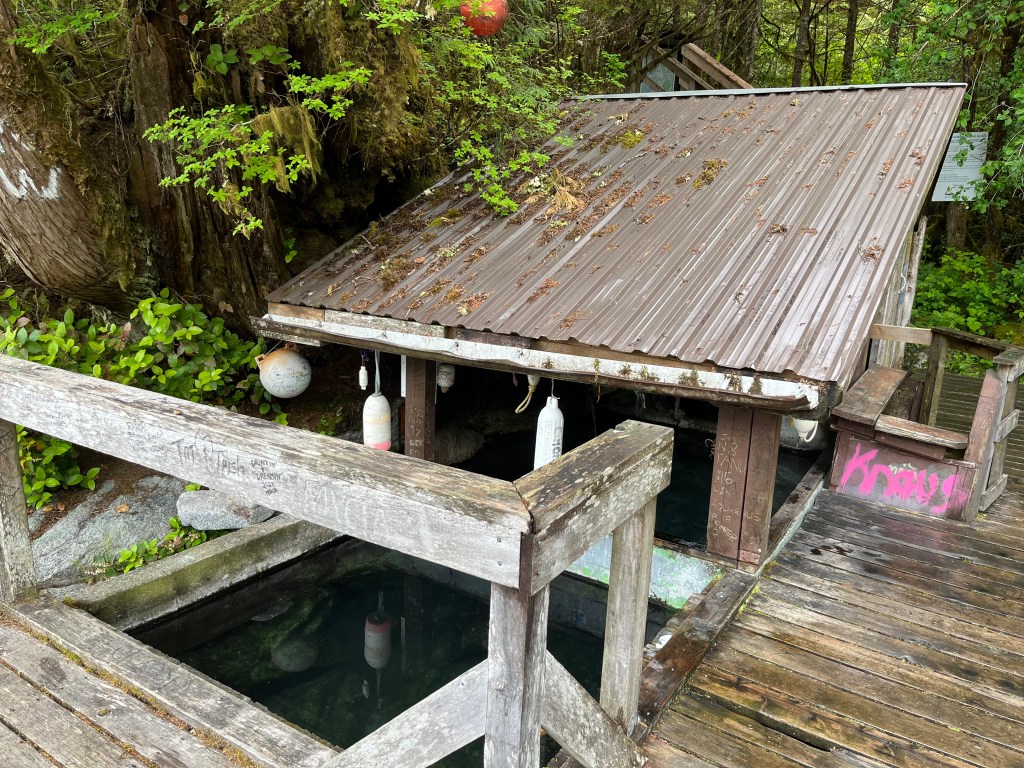
Before long the two boats were untying and backing out. We’d proactively donned bathing suits, so jumped into the dinghy with our towels and headed to shore. The hot springs house was rustic, but relatively clean. The pool was clear with no sulfur smell or algae, and the temperature was very comfortable to enter.
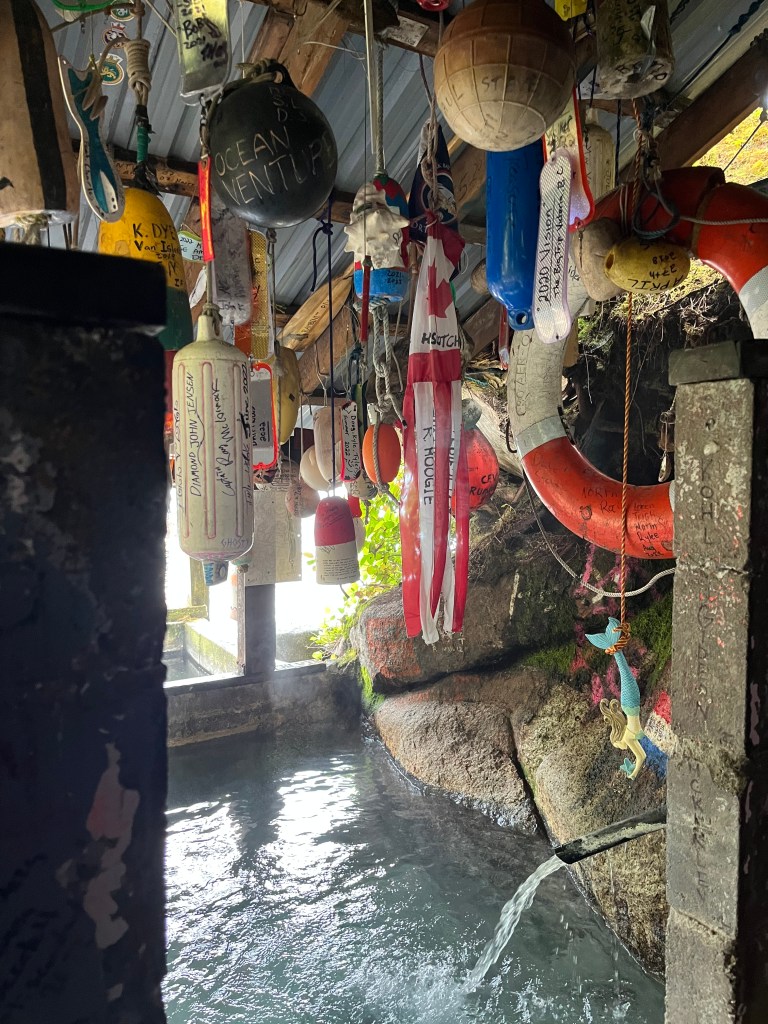
The interior of the hot springs house was decorated with inscriptions and paraphernalia by prior visitors. They had left their mark on the beams, and strung all manner of nautical chaff into the rafters. We hoped to see the Swedish flag left behind by Ran Sailing, but sadly it was not there.
We sat for about 20 minutes in the heat, about as much as our bodies could stand before wanting cool relief. A couple other boats had pulled up to the dock while we soaked, so we toweled off and headed back to Perception for dinner. It was another magical day living the cruiser’s life…
 Sailing Perception
One response to “June 2nd – 4th, 2023: Shearwater, Khutze Inlet, Bishop Bay”
Great adventures – thanks for sharing!!
LikeLike