
Skipper’s Log
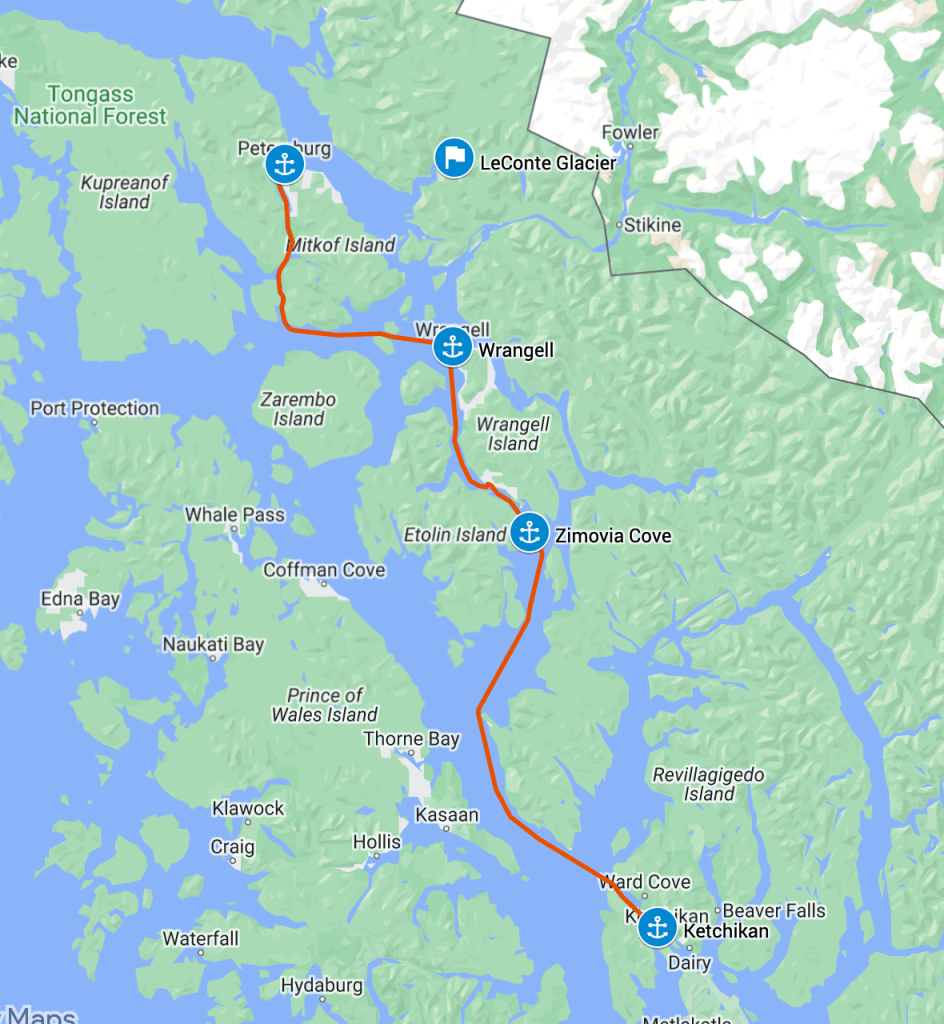
We’d finally reached our goal of Ketchikan, and found ourselves there almost a week ahead of schedule. After touring the town, we were left with the choice of what to do next. It seemed premature to head south again so soon, and then be early for our jump across to Haida Gwaii. We knew we wanted to see Misty Fjords, but figured that would just take a few days at most.
We’d also started to feel the itch to see a tidal glacier – one that is terminating in the sea. The southernmost tidal glacier in the world is at LeConte, which was just a few days north of Ketchikan for our mode of travel.
Another significant factor weighing on our decision making was our exhaustion. We’d been pushing hard almost every day since Vancouver, other than a day’s rest in Port Hardy. We were all ready for a break, and the thought of a very leisurely pace back down to Haida Gwaii was attractive.
We’d actually decided to head south again through Misty Fjords, but after a day’s rest in Ketchikan we were all rejuvenated. By Saturday evening we had flopped our decision back to going north to see what we could see with our extra time.
Sunday morning we started forging our way north. We headed up Tongass Narrows and entered Clarence Strait. As we passed Guard Island, the cruise ship Regatta was just approaching from the west, getting ready to turn down into Tongass Narrows for Ketchikan. They hailed us to make sure we wouldn’t try to cross in front of them – not a problem given their speed was about 3x ours!
It was a long day motoring into the wind, which later died almost completely. As we rounded Lemesurier Point on Cleveland Peninsula, we noticed a number of fishing boats out near McHenry Ledge. Melinda had just purchased a fishing license for Alaska, so we stopped for a while and put down our lure. We drifted and reset our position a few times, had a few possible nibbles, but never a solid bite. We moved on up Ernest Sound towards our intended stop at the southern end of Zimovia Strait.
Further up in Ernest Sound off Menefee Point we were joined by a group of Dall’s porpoises. For the second time during the trip we had a group swimming alongside us for a spell. Even when we are getting tired from a long day, seeing wildlife like this really rejuvenates the whole crew. Our spirits were high as we passed the final few miles and entered Zimovia Cove for the evening.
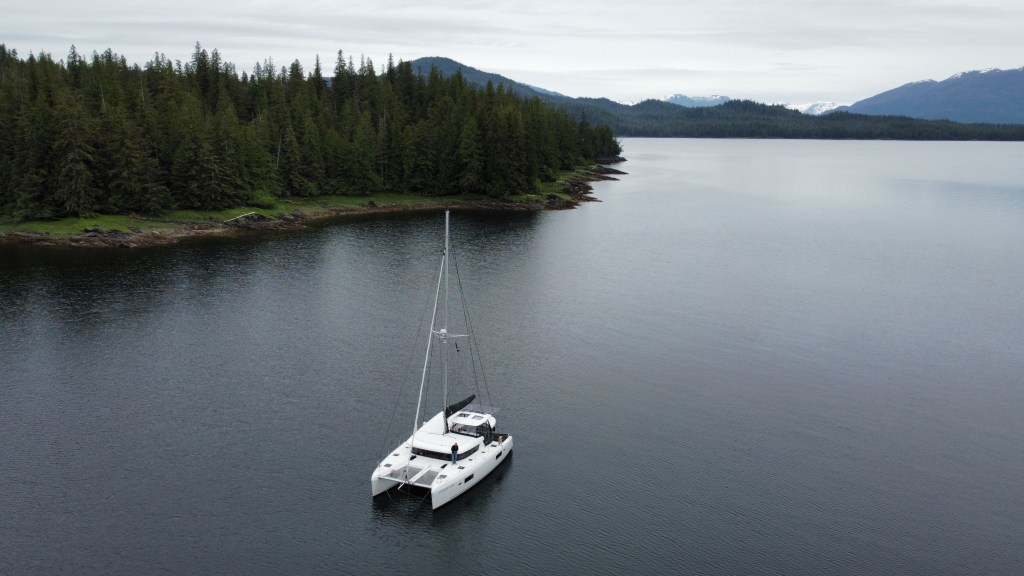
We dropped anchor in about 60′ of water near the head of the cove, leaving plenty of swinging room around us. We were all alone, and didn’t see a single other boat passing in the channel outside the cove until the next morning. We were starting to feel the loneliness of Alaska. We’d experienced a bit of this in the Broughtons, but here it was even more apparent how small we are in the vastness of the untamed.
In Zimovia cove we had our first significant luck – good and bad – at fishing. We dropped our lure down off the back of Perception at anchor, not really expecting to have any success, but as soon as the lure hit the bottom we had a big bite.
There was definitely something large and unhappy on the end of our line. We brought the line up in fits and starts, easing off when the monster at the end would fight. Eventually we surfaced a fairly large halibut. I attempted to gaff the fish, but missed, and shortly after the fish had thrown the hook and descended back into the murk.
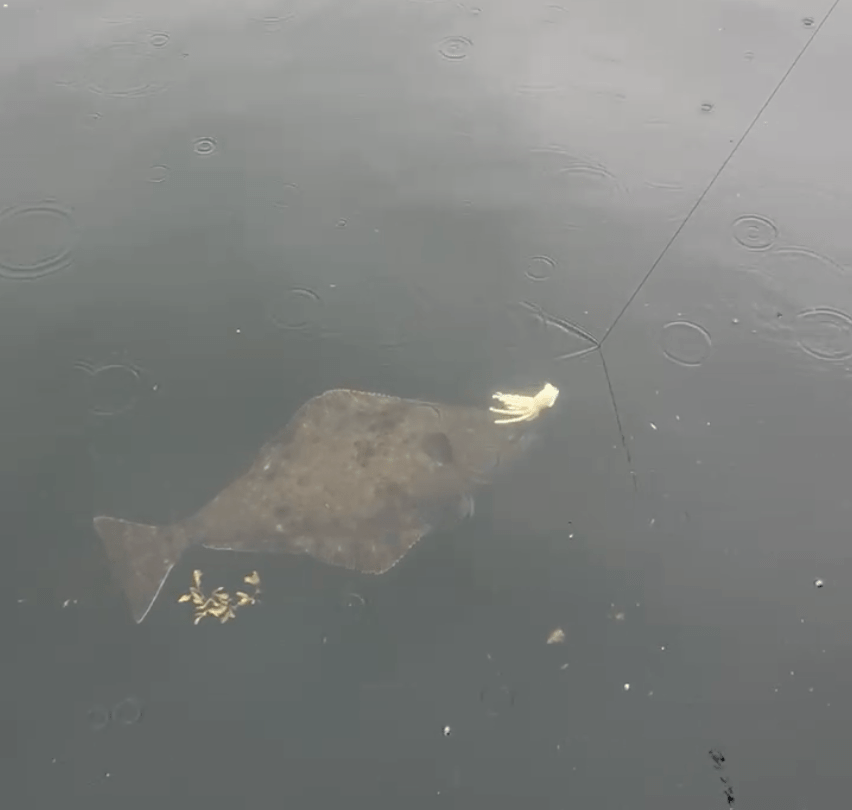
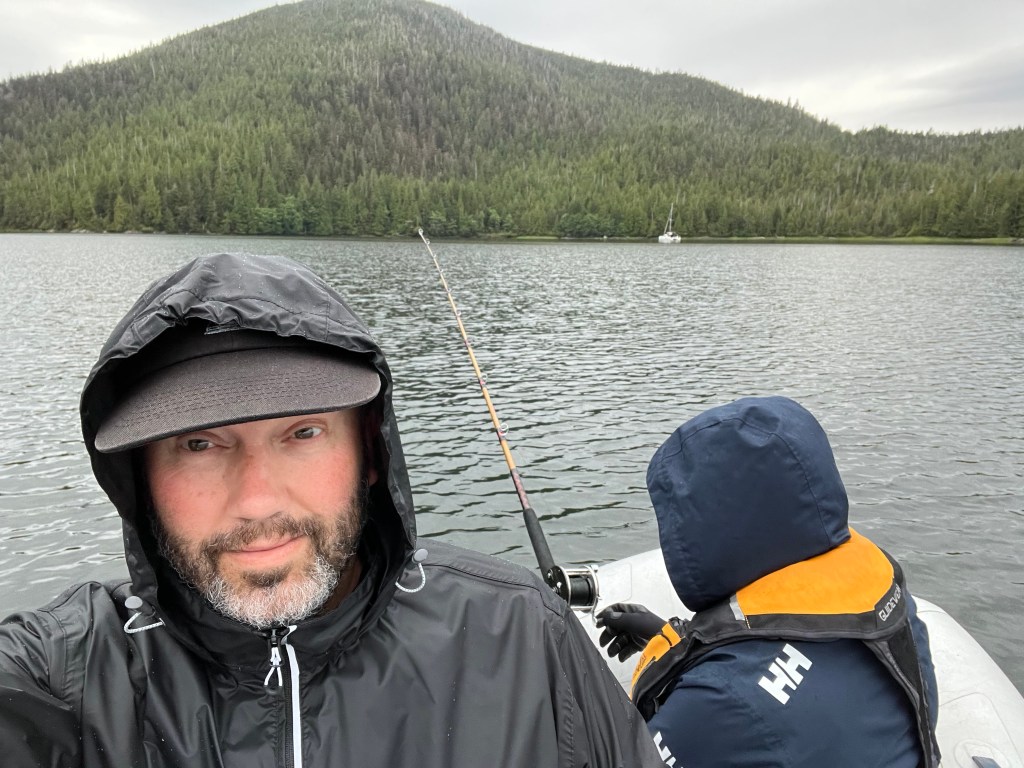
This near-success launched us on a new mission to catch a halibut. We were to spend many hours from here on out fishing off the boat and from the dinghy, honing – or at least attempting to hone – our nascent fishing skills.
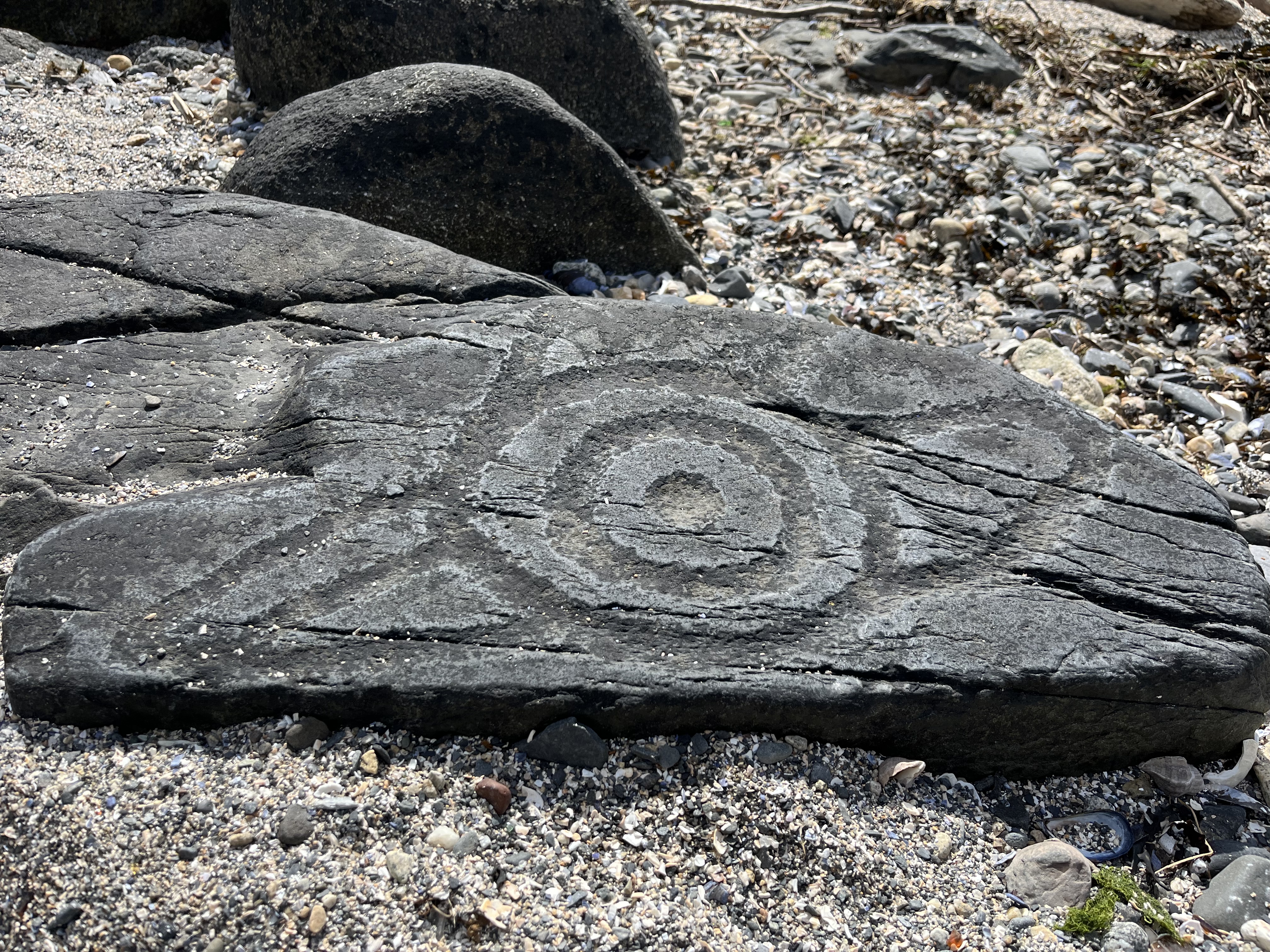
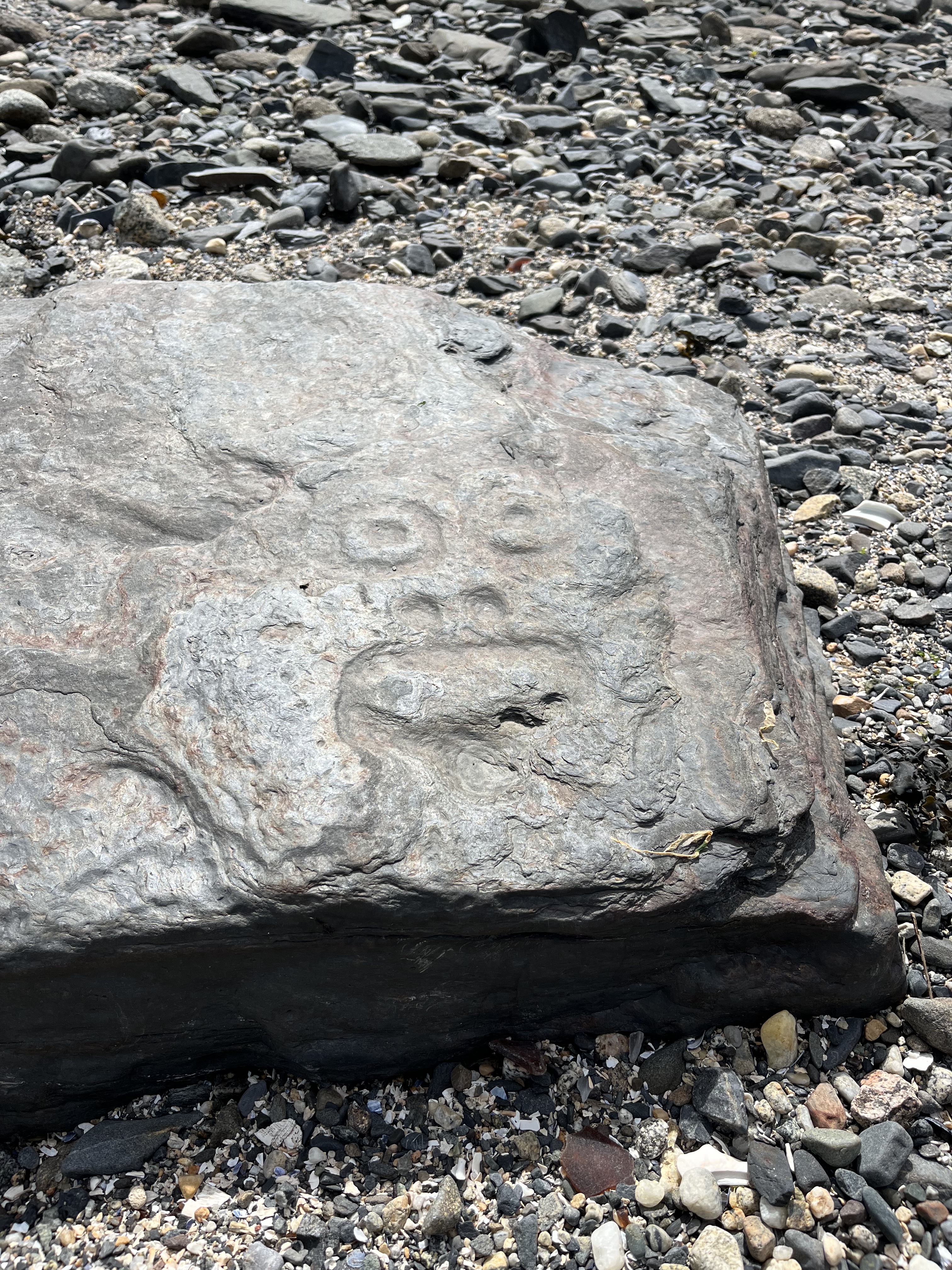
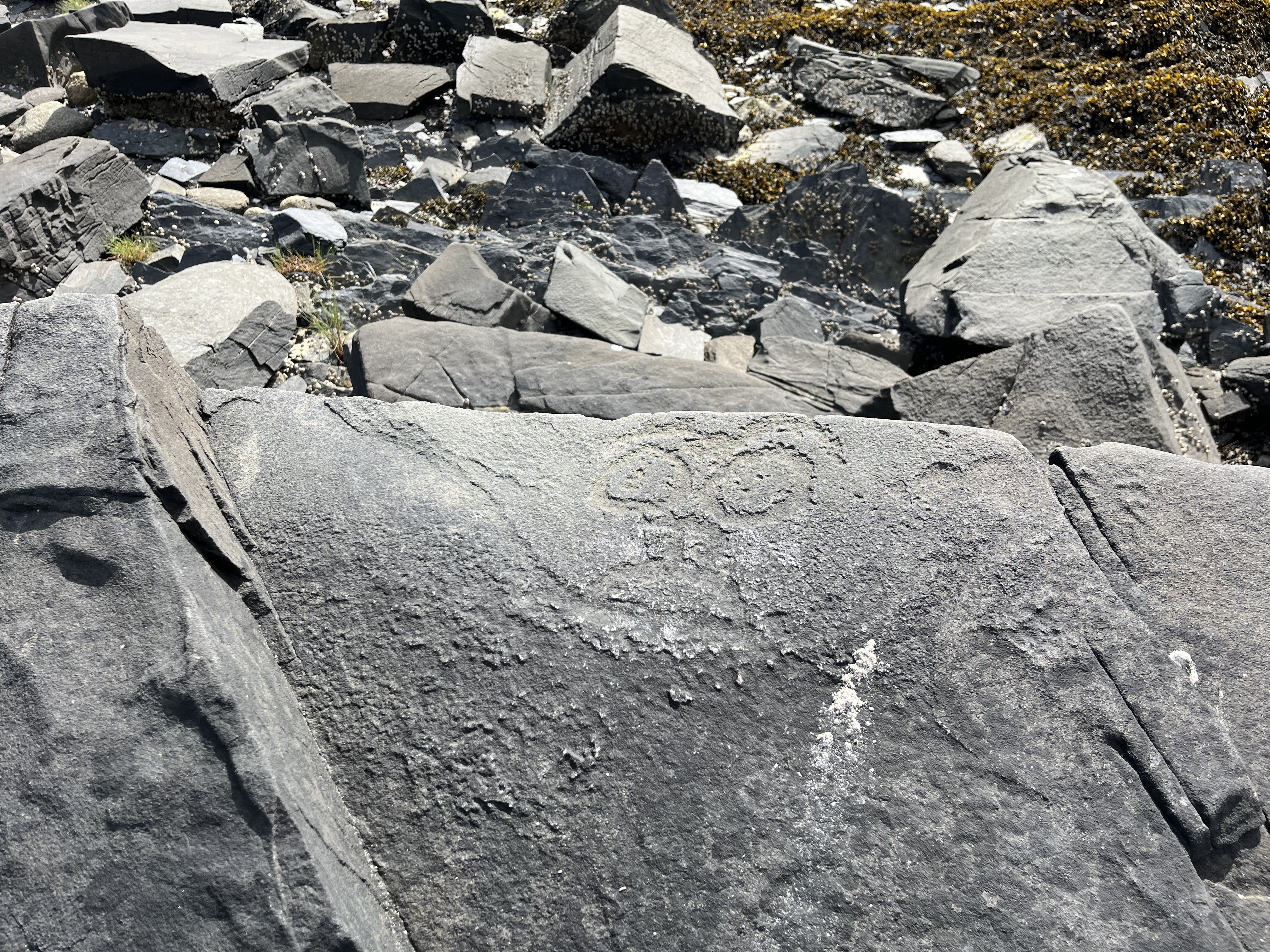
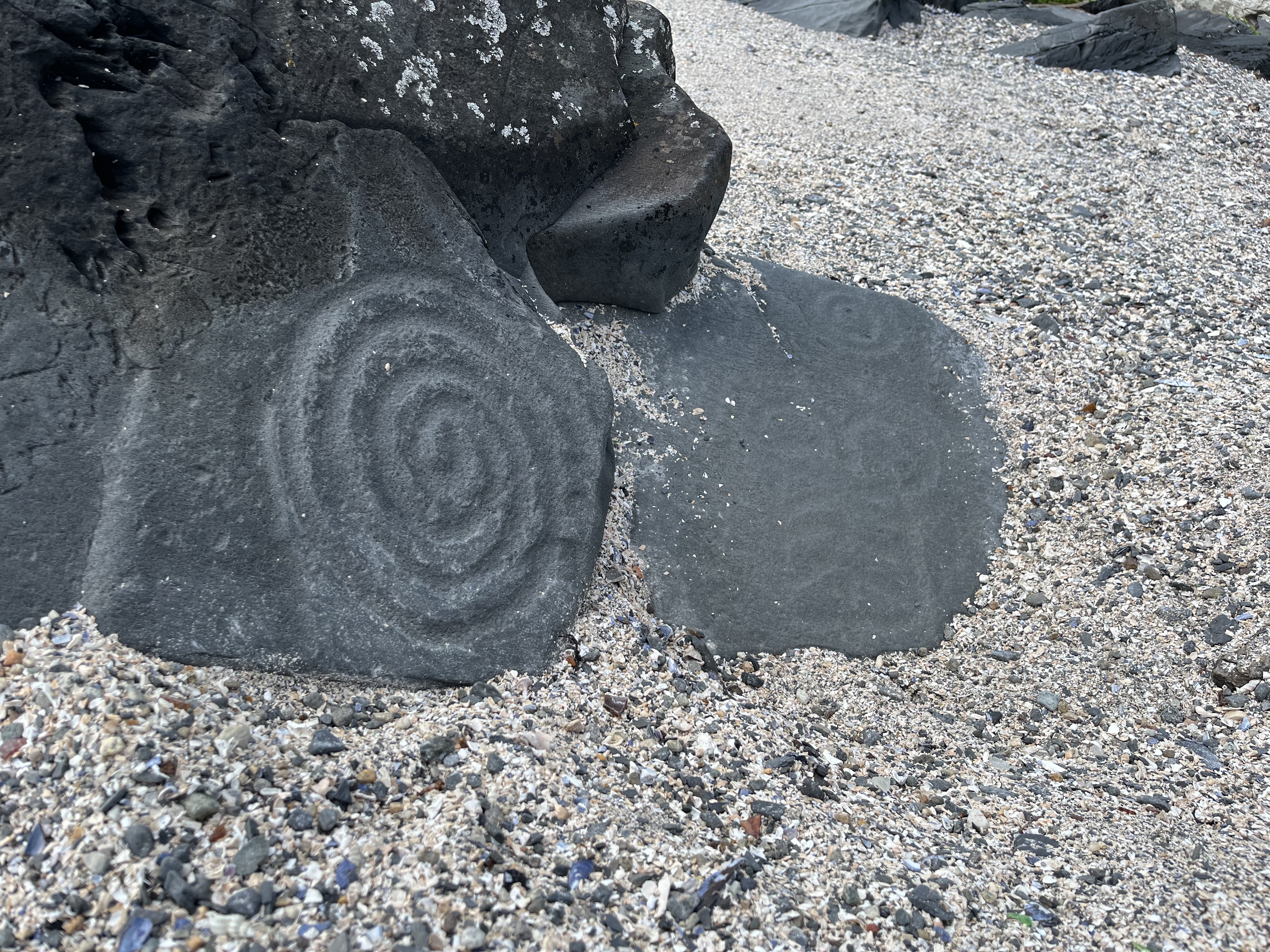
The next day our target was Wrangell, a relatively sizable town of about 2000 people that had once been a major gateway for the gold rush. We were looking forward to seeing their large collection of petroglyphs, and to see if we could perhaps book a tour of the LeConte glacier. We left our comfortable spot in Zimovia Cove after work ended for me, intending to catch the flood tide up Zimovia Strait.
We transited Zimovia Strait to get to Wrangell, enjoying the winding path through the well-marked channel. It is super-nice to have such a good set of channel markers in almost every place we navigate. Once of the benefits of sailing in US and Canadian waters. Things will likely be different as we head south this fall.
Once through the narrows we should have had an easy time of it getting to Wrangell. The flood current should have been carrying us northward at a high clip. Instead we found that we were pushing against a significant current the whole way, which didn’t match the NOAA predictions at all. I can only guess that water flowing from the Stikine River past Wrangell was impacting the current flow in Zimovia, working against us even in a flood tide.
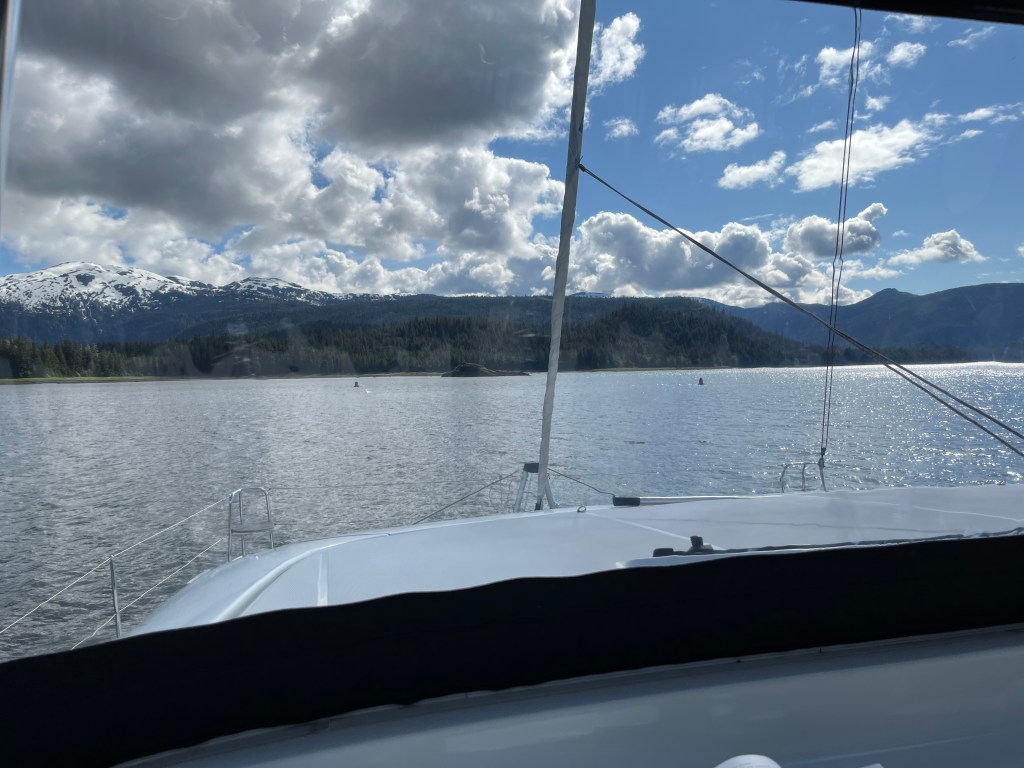
As a result we arrived in Wrangell more than an hour later than I had predicted, and I was definitely worn from the day of work and the time at the helm. It was a relief to get tied up to the dock – we stayed at the Reliance Float near to the heart of the town.
It took me three tries to land Perception, even in relatively light wind. The wind seemed to be shifting around a bit, first blowing us on, then off the dock, and we were trying to squeeze in between two fishing boats already tied there. Just as soon as I start feeling comfortable at the helm, something like this shows me I still have a ways to go.
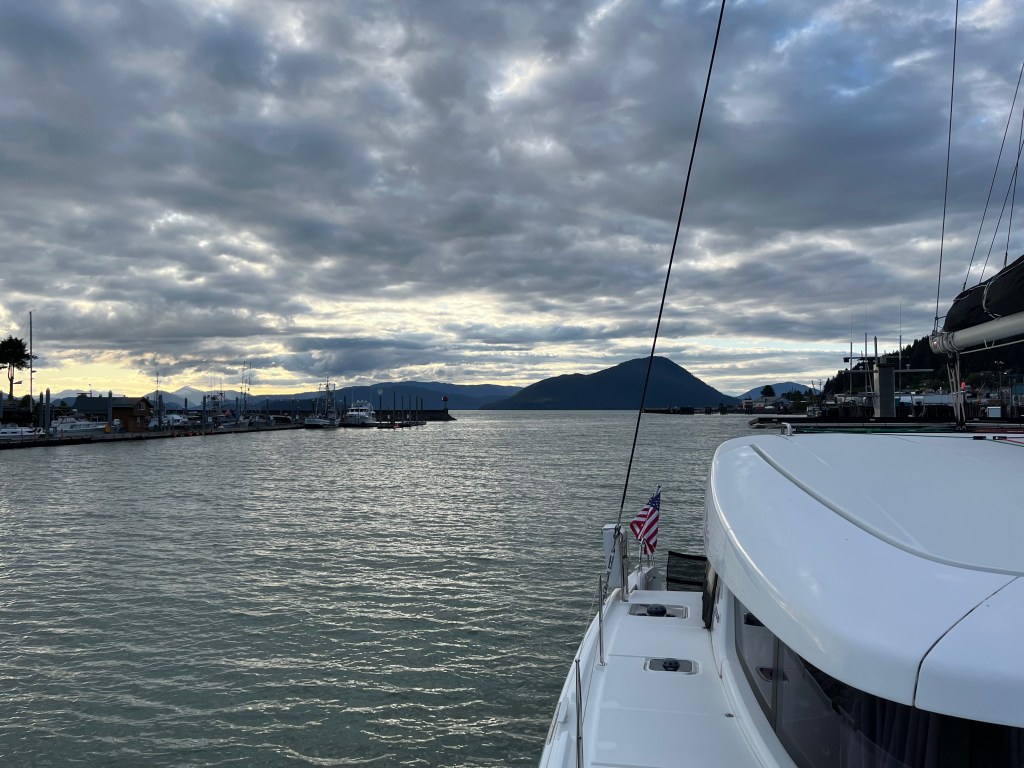
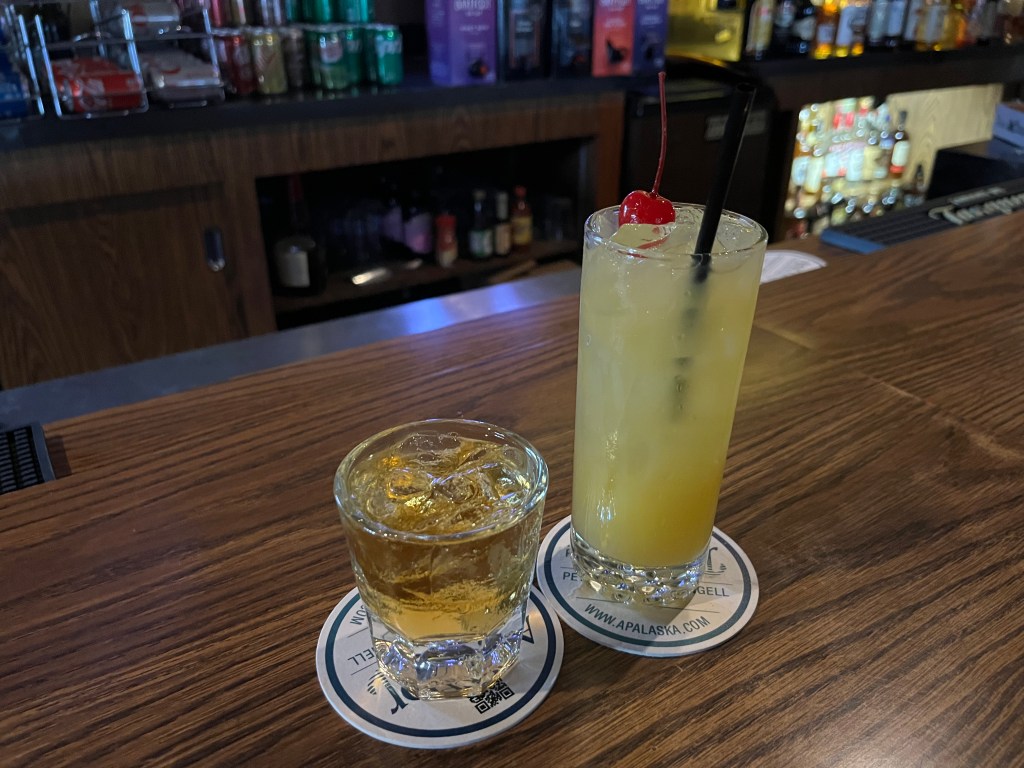
Safely docked for the night, Melinda and I did a bit of exploration to find the trash and the laundromat. We also happened to find the Marine Bar, and went in for a libation. It was a colorful though relatively quiet place, nice to sit on a stool for a bit with your feet up. The barkeep took good care of us, and we vowed to return the next day with Grace.
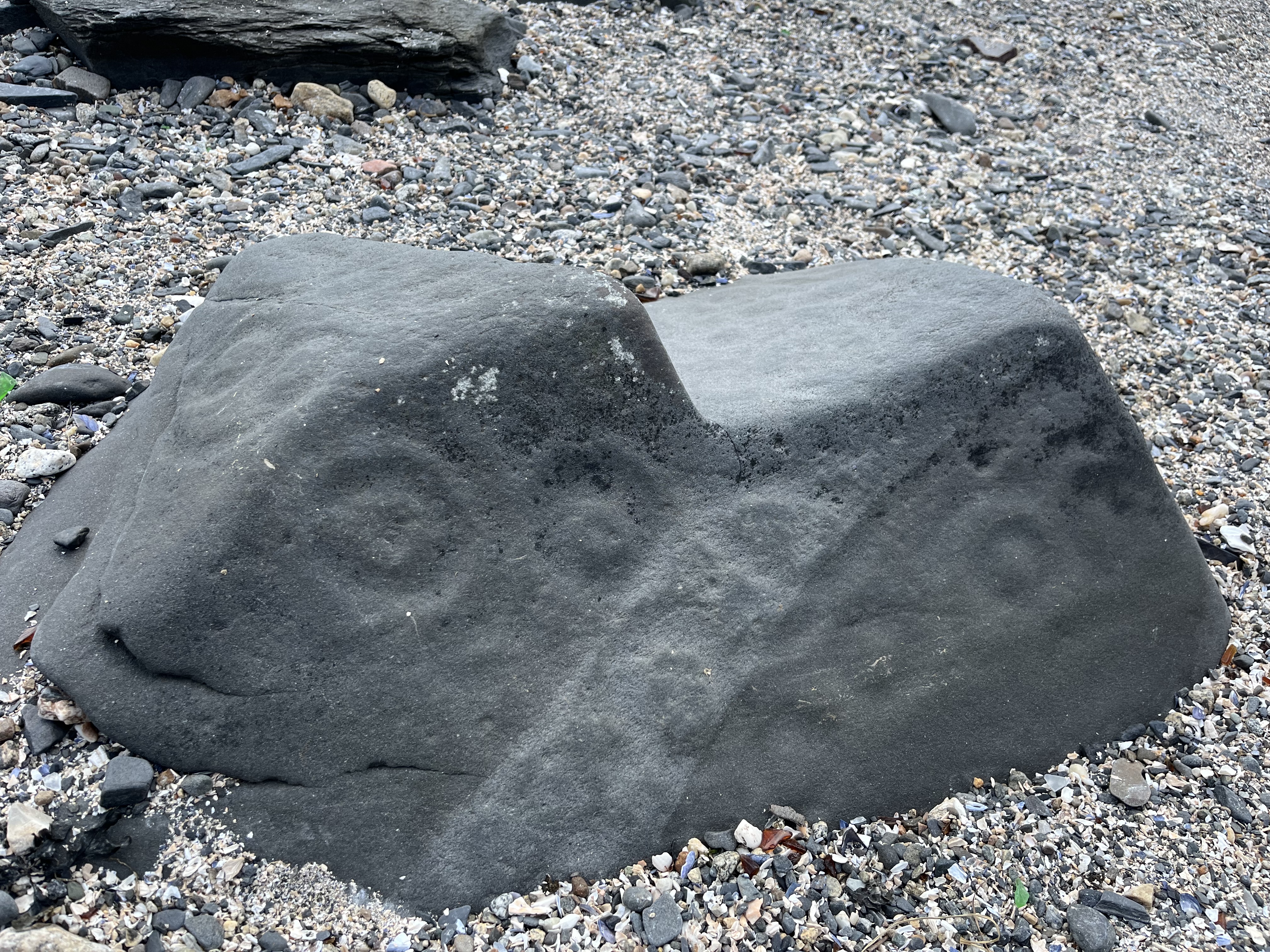
I had wanted to stay in Wrangell for a couple days as I’d been having some issues with Starlink dropping out during my working zoom meetings. I had some important meetings Tuesday, and didn’t want any motion – at anchor or underway – to disturb them. We took advantage of the time in Wrangell to see Petroglyph Beach – a few of the petroglyphs we saw there are shown below. It was amazing to be able to walk among them freely, and a bit surprising that they aren’t somehow better protected.
Wednesday was a light meeting day for me, so we were underway again, this time heading to Petersburg. We had to transit Wrangell Narrows to get there, about twenty miles of narrow channel that was regularly used by ferries, cruise ships, and tugs with tow.
The channel had an additional complexity in that the tide would ebb and flood towards a center point of the channel from both ends, so with good timing one could flood in to the center, then ebb out to the other end. We timed our transit such that we were able to take advantage of the current in this way.
Despite warnings in the guidebooks about Wrangell Narrows, we found it to be a typically passage when timed correctly. I can see how it would be challenging in places to squeeze by larger vessels, but we were fortunate not to meet any during our time through. At times it almost felt like you could just throw out your fenders and bumper-car your way down the large number of aids-to-navigation (ATONs). Our only significant hazard of any consequence was in avoiding the numerous fishermen in small vessels who were trolling in the channel.
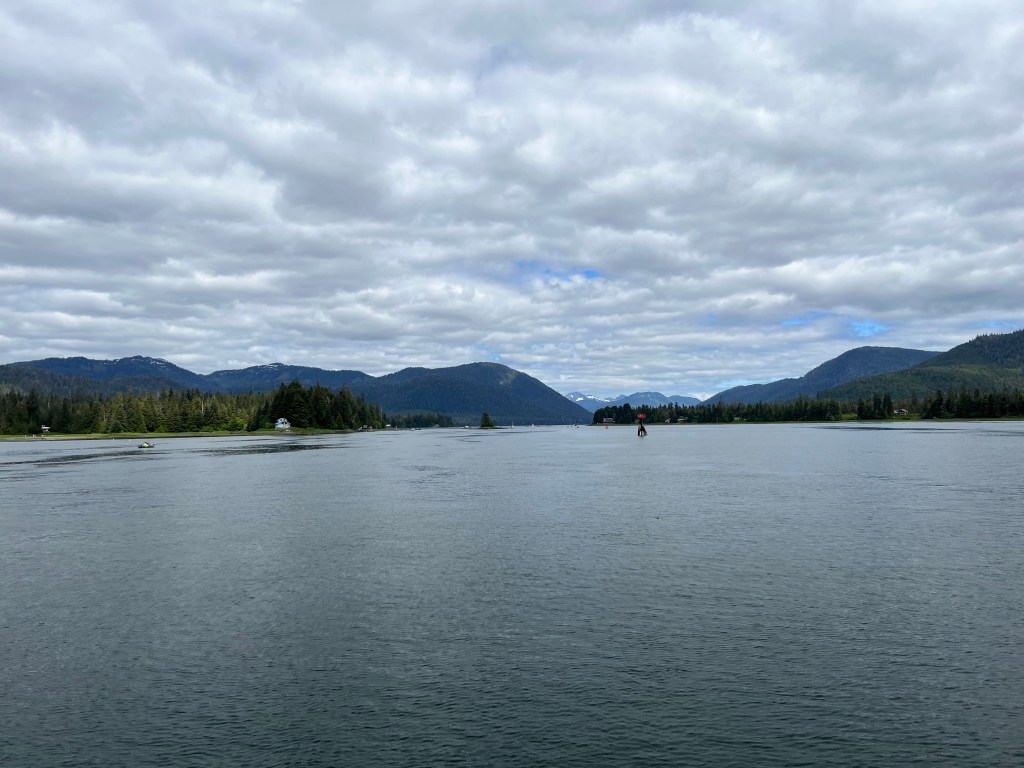
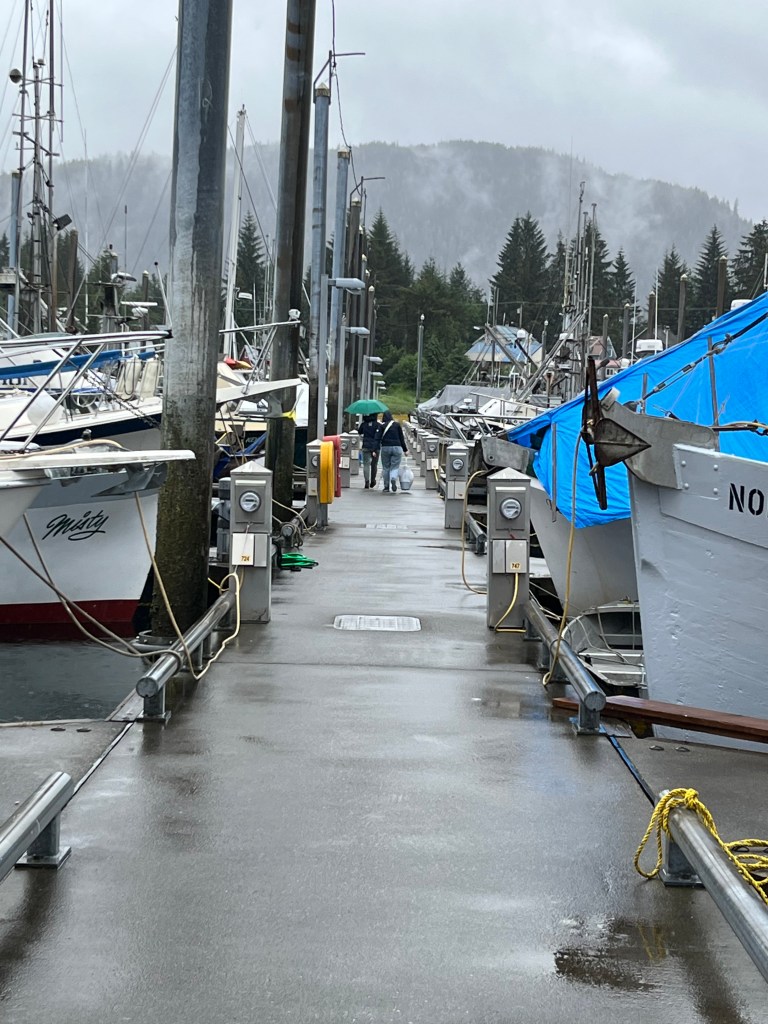
As we rounded the final bend in Wrangell Narrows, we could see the Petersburg marinas laid out before us. We were there just after the ebb started, so didn’t have much difficulty getting into our slip – though apparently at maximum current it can be difficult. We docked in the South Harbor among a majority of fishing boats and a handful of pleasure craft.
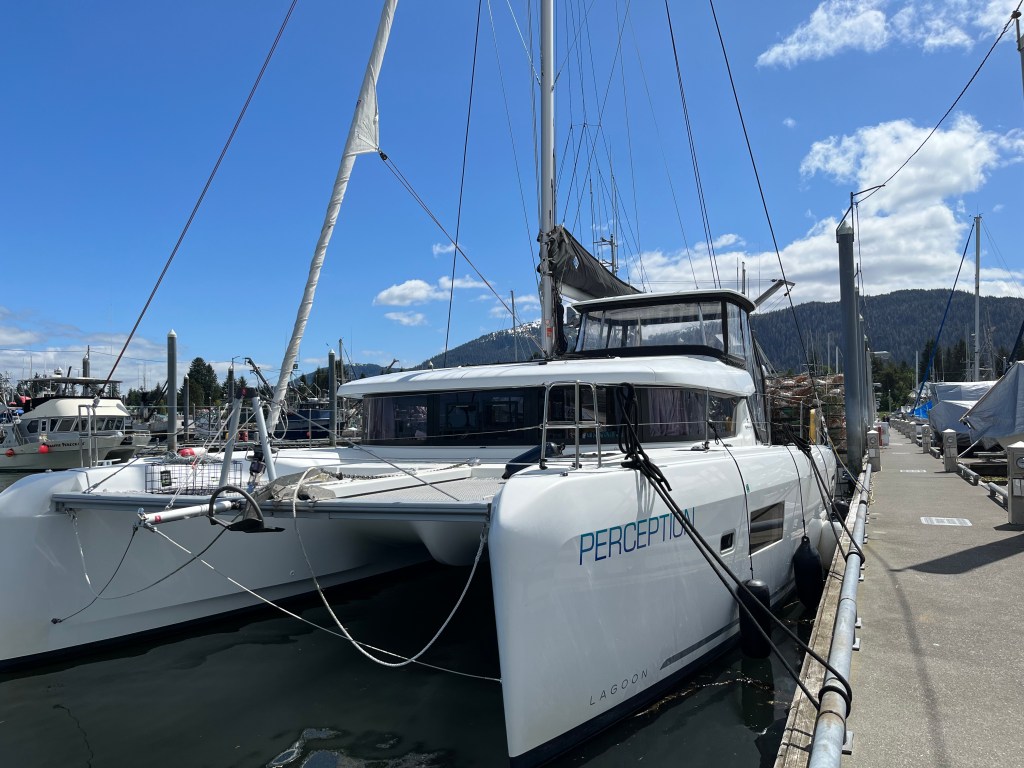
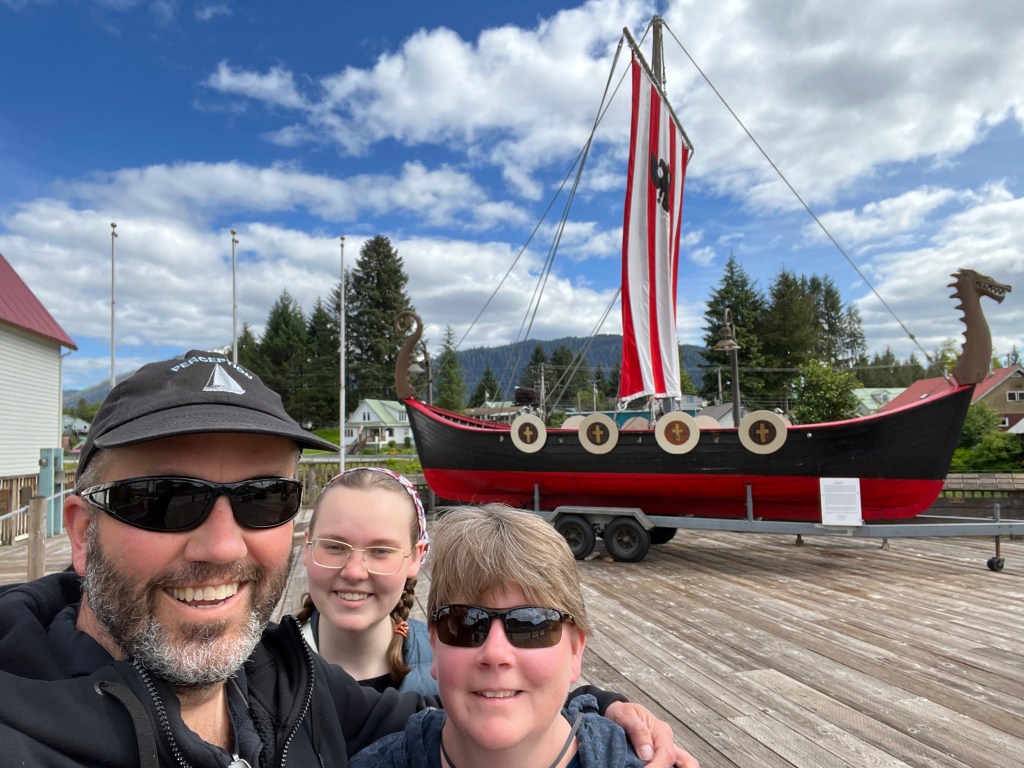
As it was a sunny afternoon, we were able to get out and see the town. We checked out some of the Norwegian heritage of the town, and took the obligatory picture at the replica longship.
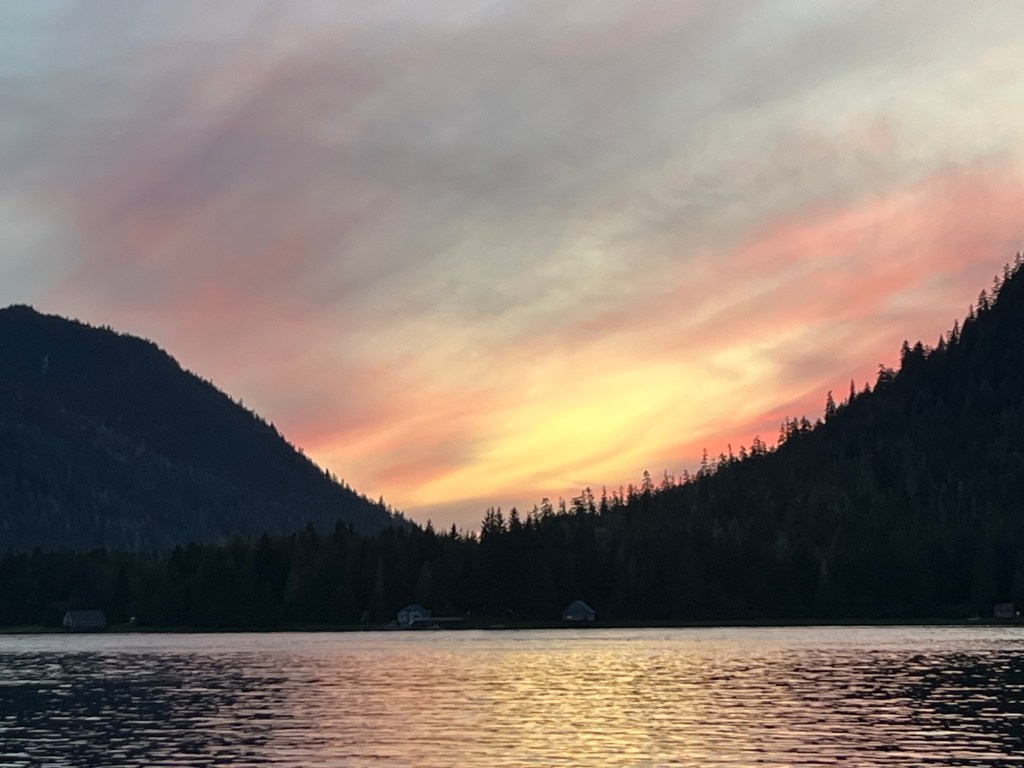
Sunsets had really begun to linger as we approached the solstice. Our first evening in Petersburg glowed with a beauty that lasted into the late hours of the evening.
Soon our good fortune with weather was at an end, and we saw a couple rainy days in Petersburg. I’d started changing our engine oil the evening of our arrival, but as with most of my first-time boat projects it took me much longer than anticipated. I had decided to use a drill-powered “self-priming” pump for the oil, but it wouldn’t prime, and I eventually had to pour some fresh oil into it to get it to start pulling from the oil pan. After that it wasn’t too bad, though I could only get about 4.5 of the ~ 5 quarts of oil that should have been in the engine. Presumably good enough as I can’t drain it like a car!
I was tuckered out after getting the starboard engine oil changed, and saved port for the next day. The rain put the kibosh on that, as I didn’t want to get water into the engine oil. I didn’t finish the job until Saturday morning when the rain finally subsided enough to go down in the engine compartments without drenching everything.
We had our most memorable day yet after this, going to the LeConte Glacier. I’m sure Melinda and Grace will write more about this spectacular experience with Dan and Sage at Seek Alaska.
 Sailing Perception