
With our successful visit to the LeConte Glacier out of Petersburg, we were ready to turn the boat south. We returned to Petersburg from the glacier Saturday afternoon just about at slack water, so decided to buck the coming ebb into Wrangell Narrows and get some miles behind us that day.
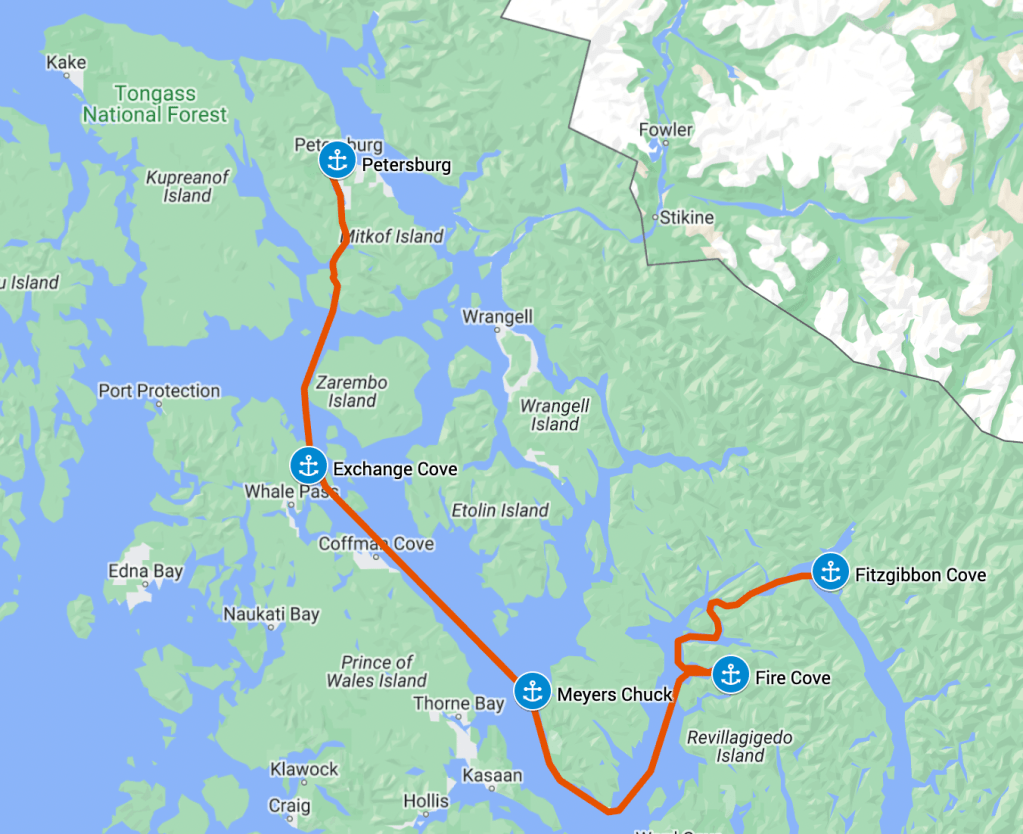
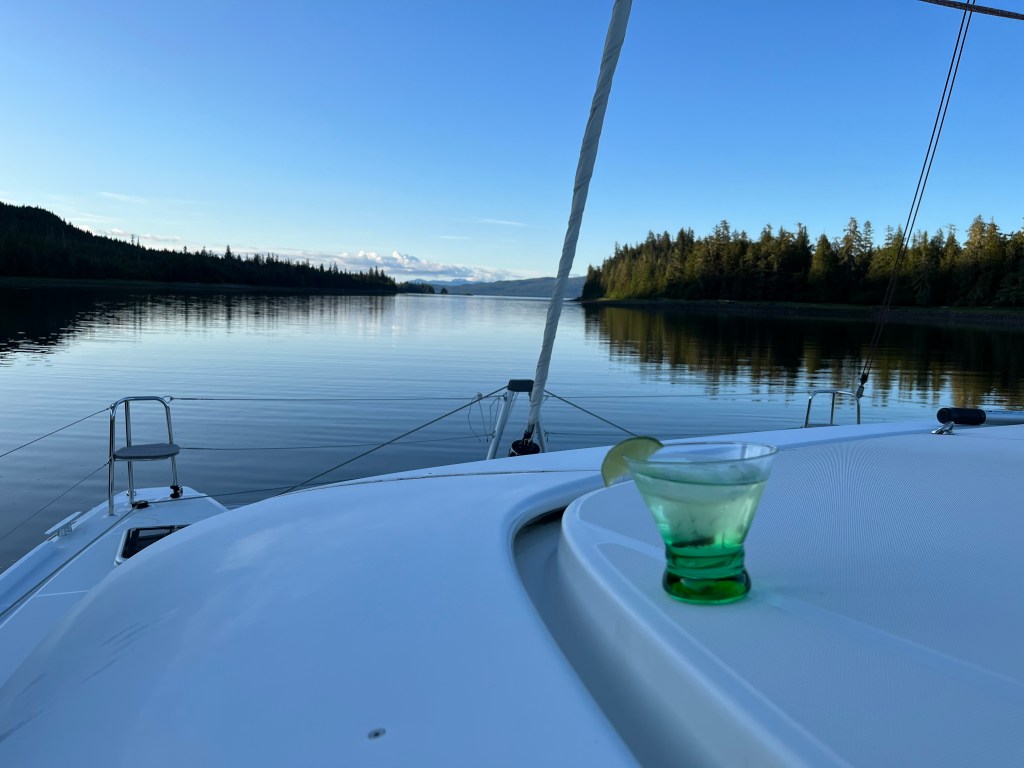
Since the tidal midpoint of the channel was close to Petersburg, we didn’t have far to go before we were sliding down the south side of the channel with the ebb current behind us. Wrangell Narrows was old hat for us at this point, and we again encountered no large vessels or tugs in the channel to cause any concern. We tucked into Exchange Cove on Prince of Wales Island for the evening with one other boat, and enjoyed our first glacial ice cocktails.
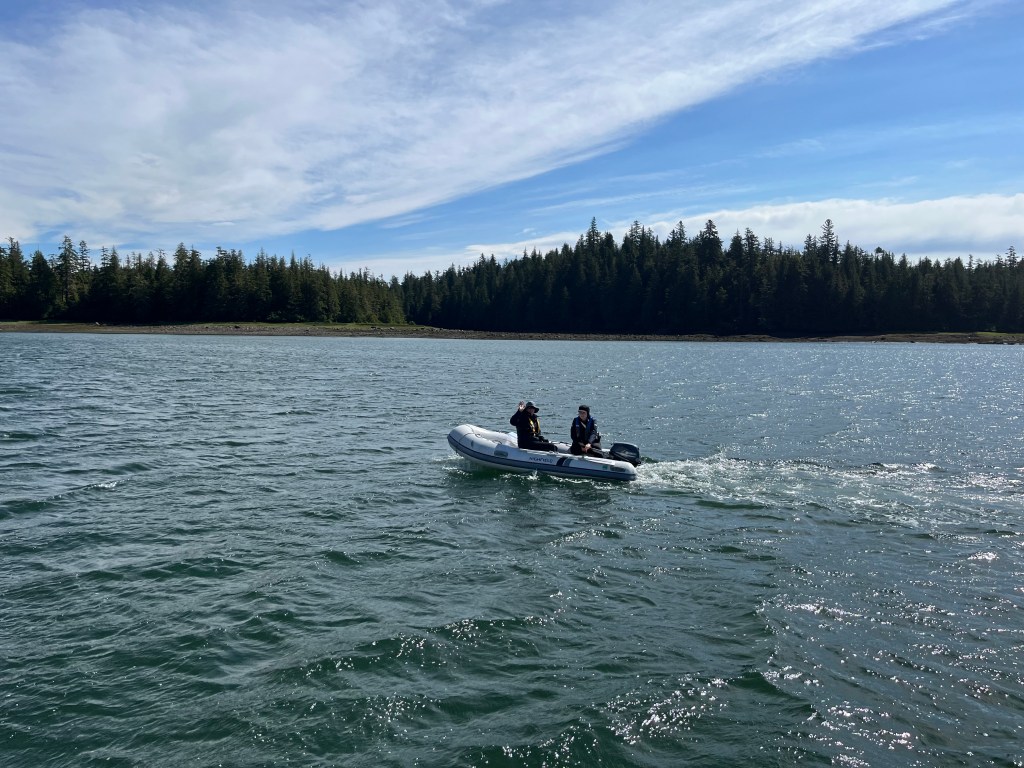
The flood tide being early in the day, we decided to hang out in Exchange Cove for a while and push onwards after noon. It was a restful morning, so Melinda and Grace went out for some fishing from the dinghy while I worked on a few minor boat projects.
At noon we raised anchor and started making our way south. At the south end of Kashevarof Passage, we paused for a bit to try our luck fishing. Melinda and Grace hadn’t had any luck in Exchange Cove, and we were all eager to try and land a halibut.
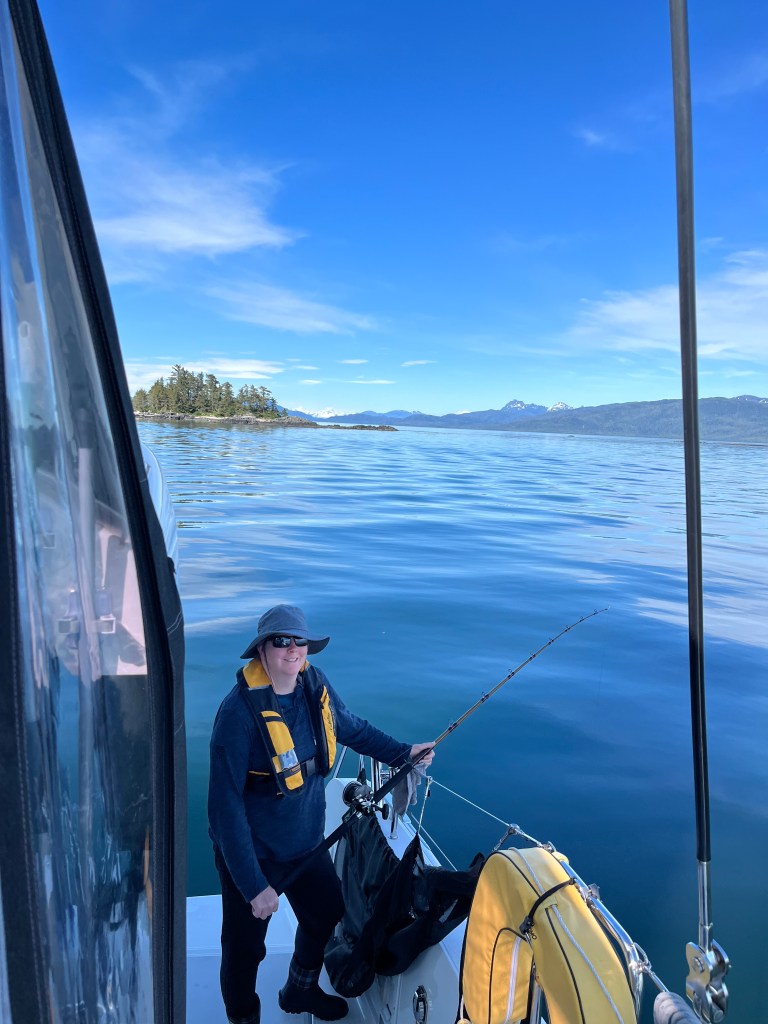
We drifted at a few spots among other fishing vessels, sadly losing our favorite lure in the kelp there. Again no halibut, but we enjoyed the peace and quiet of the water. Before we saw them, we began hearing humpbacks blowing as they surfaced in Clarence Strait. The sound would carry for a mile or more across the water. We soon spotted them, and a while later a second group of whales further south. When we tired of fishing, we pointed the bows at Meyers Chuck and motored on.
As we entered Clarence Strait, the whales from the second group surfaced just ahead of us. They were likely minke whales, though we had some discussion that their dorsal fin shape looked more like blue whales.
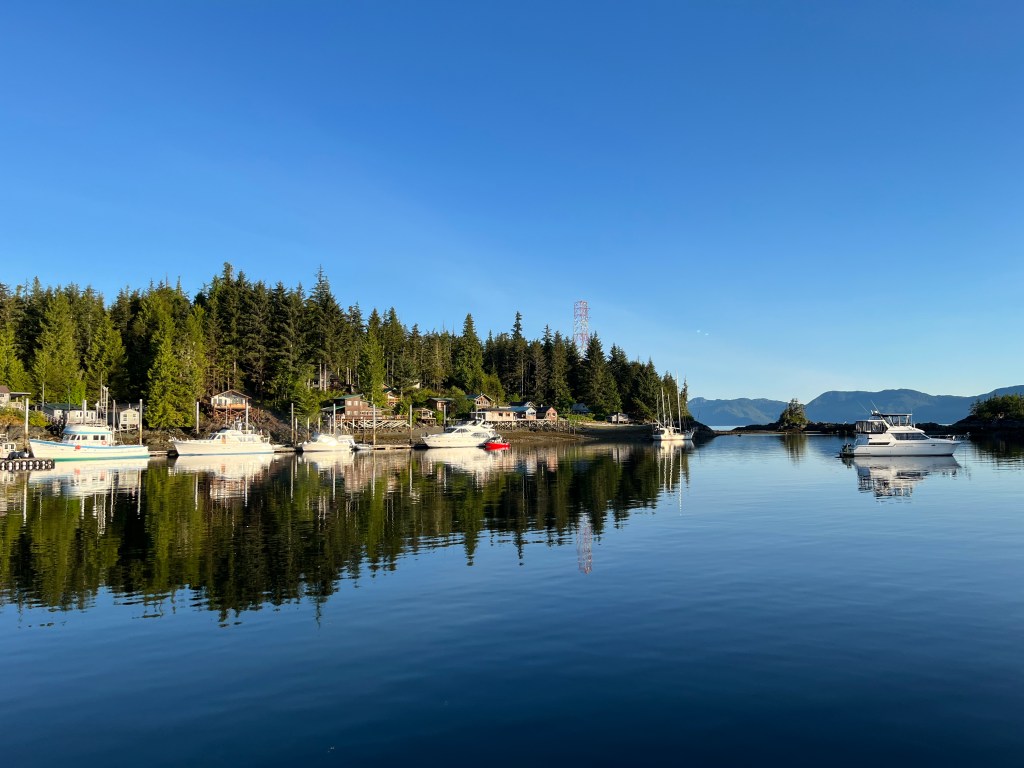
We pulled into Meyers Chuck as the day started to wane. The entrance to the bay is narrow, and the left/green channel marker seems to be missing in the narrow passage in. It was nice again to have the Navionics Sonar Chart view to guide us in through the deepest part of the channel.
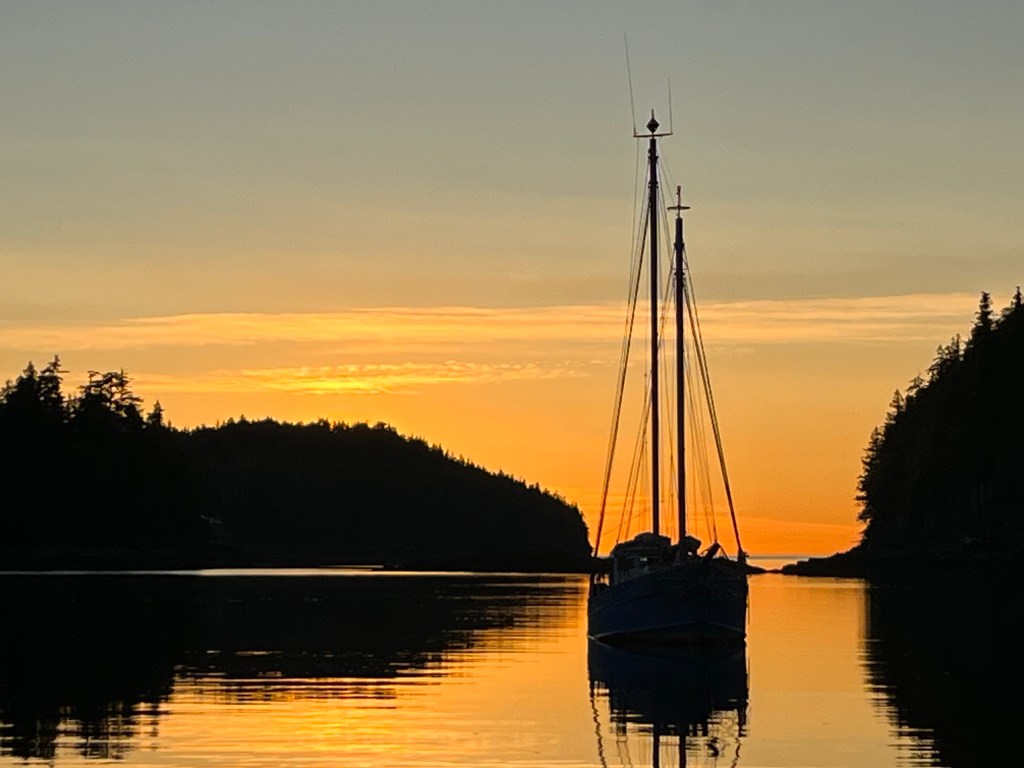
We found a few other boats anchored in the bay, and a number on the docks in front of the community. As it was late, and we were weary from the day, we did not attempt to go ashore.
We pulled anchor early the next morning to catch the ebb tide south, hoping to round the corner into Behm Canal before the flood started. After rounding Caamano Point, we attempted fishing for a while in the waters there but unfortunately snagged and lost our last halibut lure. Sadness ensued…
With heavy hearts and light tackle boxes, we continued north towards our target for the evening: Fire Cove. This little nook is nestled at the southeast end of Neets Bay, which was generally referenced as a good place to fish for Salmon. With a light wind on our aft quarter, we put up the jib and killed the engines, sailing the length of the bay at a couple knots to facilitate trolling. We struck out again, unable to attract any scaled denizens to our complex diver/flasher/lure arrangement.
Neets Bay was fascinating, but not really what we’d hoped to find. During the day a constant stream of fishing trawlers worked the bay with nets. The noise of their diesel engines filled the air, and we soon longed for the quiet of our earlier anchorages.
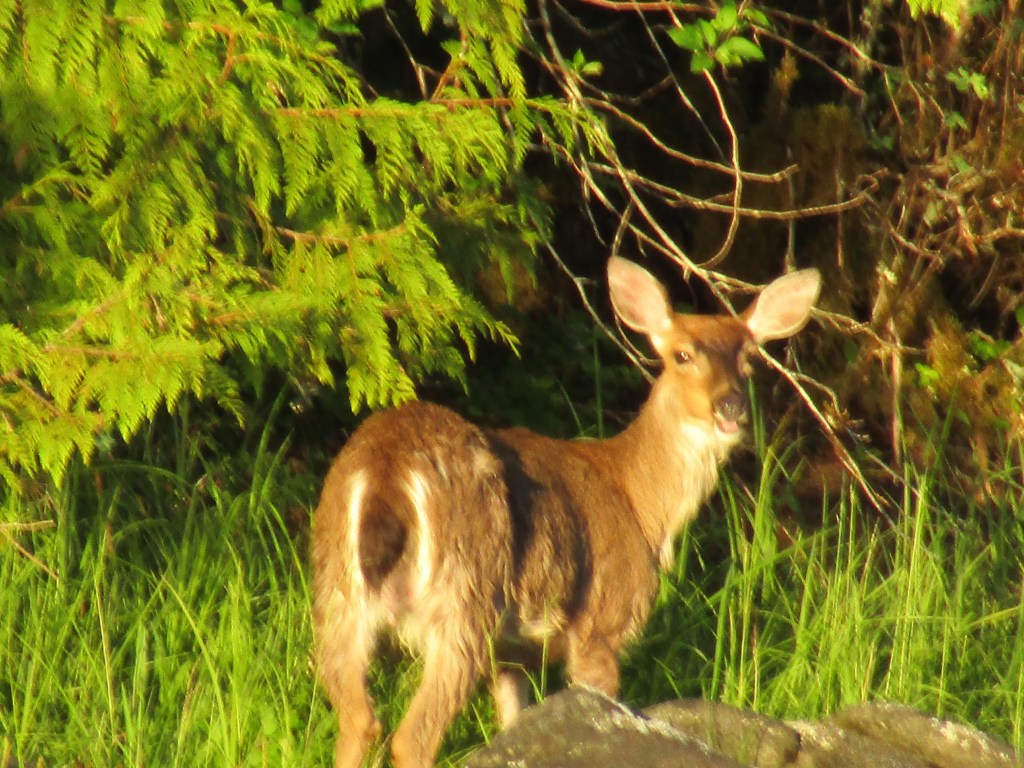
Nearing the head of the bay, we furled our jib and motored into Fire Cove. As we entered the inner bay, we were surprised to see a new type of aquatic creature – this time a deer swimming across to the islet protecting the cove.

Back in Idaho we like to put out salt blocks for the deer to enjoy. Here they can create their own salt licks in the form of a seawater rinse of their fur.
After exploring the small inner cove, I felt there wasn’t enough room to swing without a stern tie. Not anxious to clamber ashore, we backed out of the inner cove and dropped our hook in the slightly deeper water of the outer cove, free to swing with impunity.
Fortunately as the evening progressed, the fishing vessels disappeared and left us with peace and quiet again. The bay was scenic, and we continued our search for local fauna.

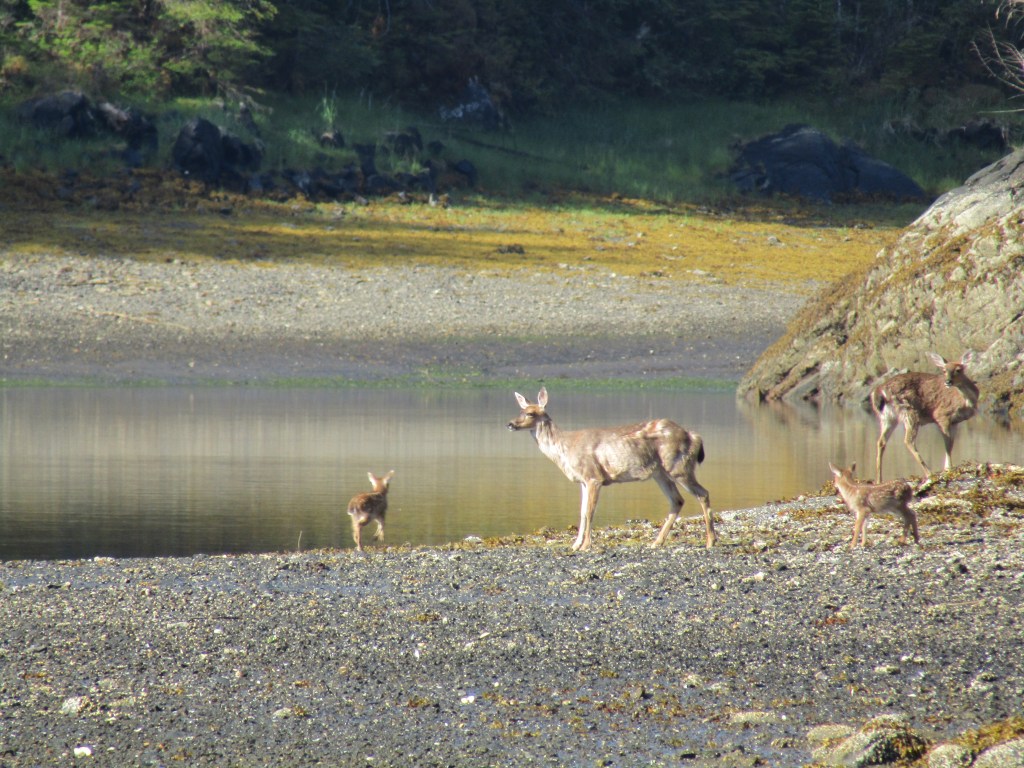
The morning brought out more deer, including some speckled fawns. We believe these are Sitka Black-Tailed Deer.
We had enjoyed our long weekend, with my employer giving us Juneteenth off that Monday. As it was Tuesday and another work day, Melinda and Grace were at the helm again. They navigated us up through Hassler Pass and Behm Narrows, taking us in to Fitzgibbon Cove to anchor for the evening. Our intent was to set up for exploration of Walker Inlet and Punchbowl Cove over the next couple days.
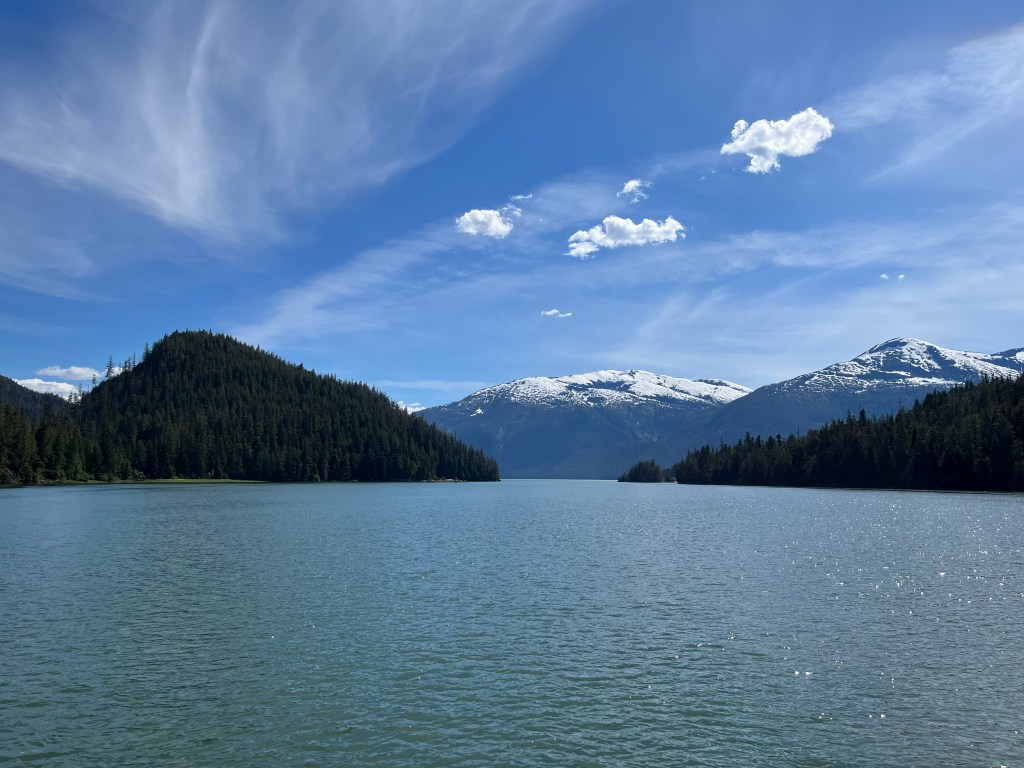
We dropped the hook near the head of the bay with plenty of room to swing. I’m starting to enjoy putting out 200′ of chain in deeper water that is further from shore, where I don’t have to worry quite so much about swinging into rocks. I keep our flag up overnight as well, which is mounted right above our cabin. I can hear it flapping when the wind comes up, alerting me that we might be getting blown in unproductive directions. I still don’t trust that the anchor alarm on my iPhone will alert me in time to save us from our anchor dragging, and like this other low-tech method to remain situationally aware at night.
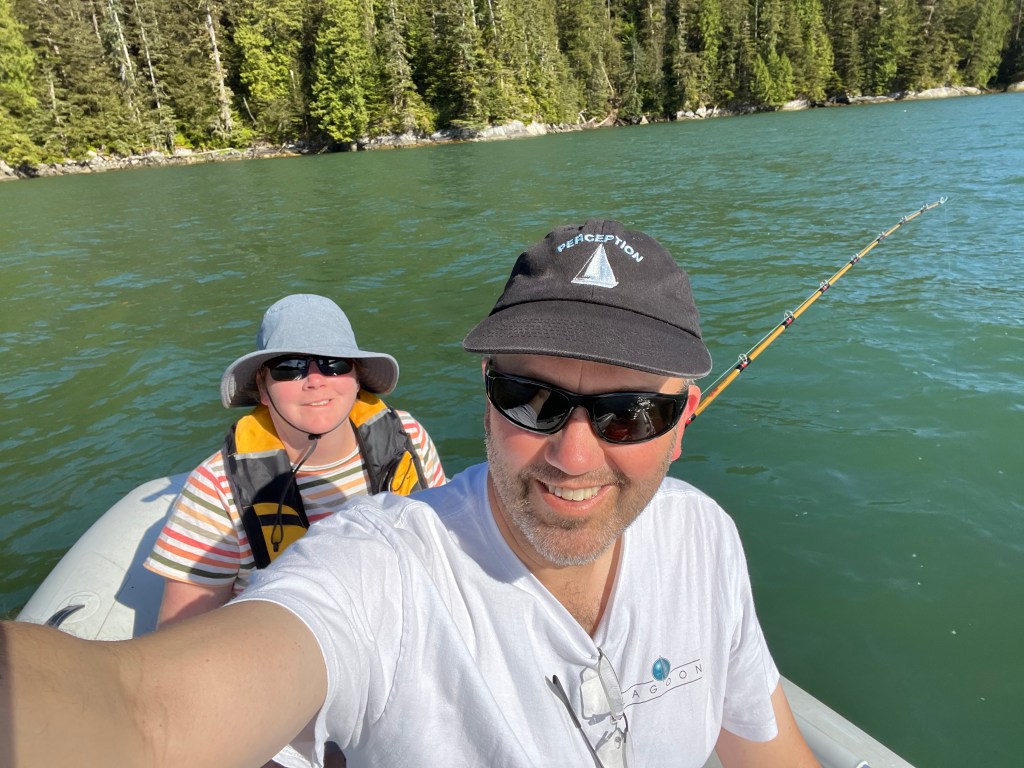
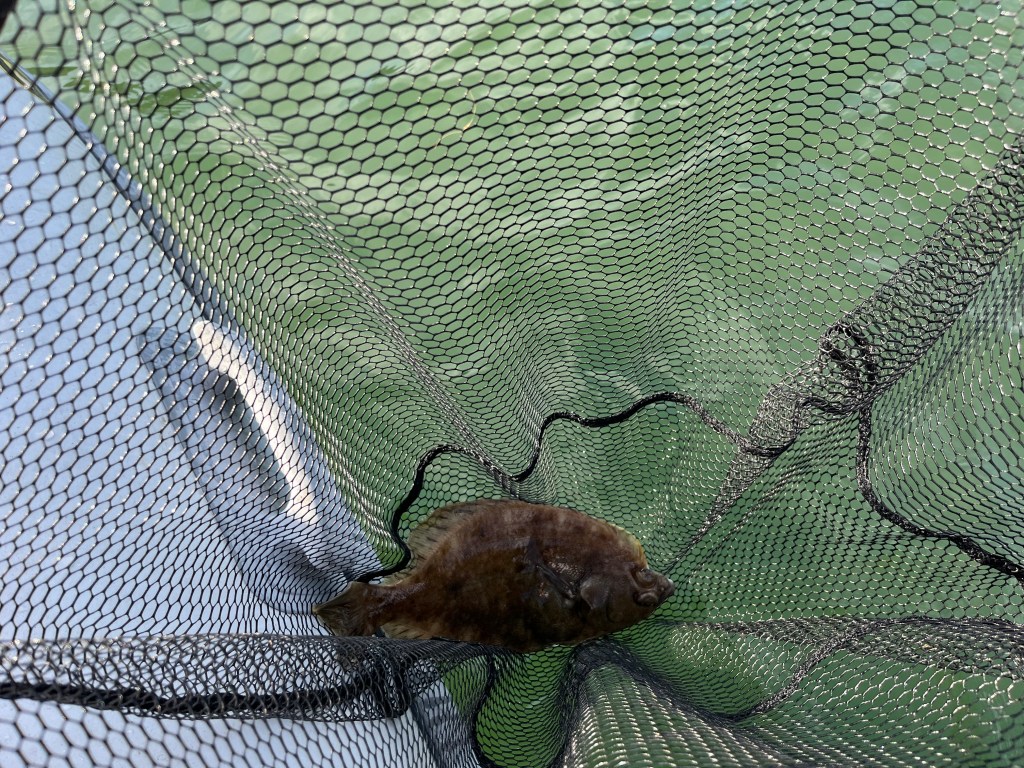
We continued our manic search for a halibut, creating our own halibut rig from a squiddy lure, a wire tie, and a weight. We actually had our first luck with this setup at the entrance to Fitzgibbon, landing a wee halibut that we returned to the deep. Not enough meat on him to feed even a mini-me.
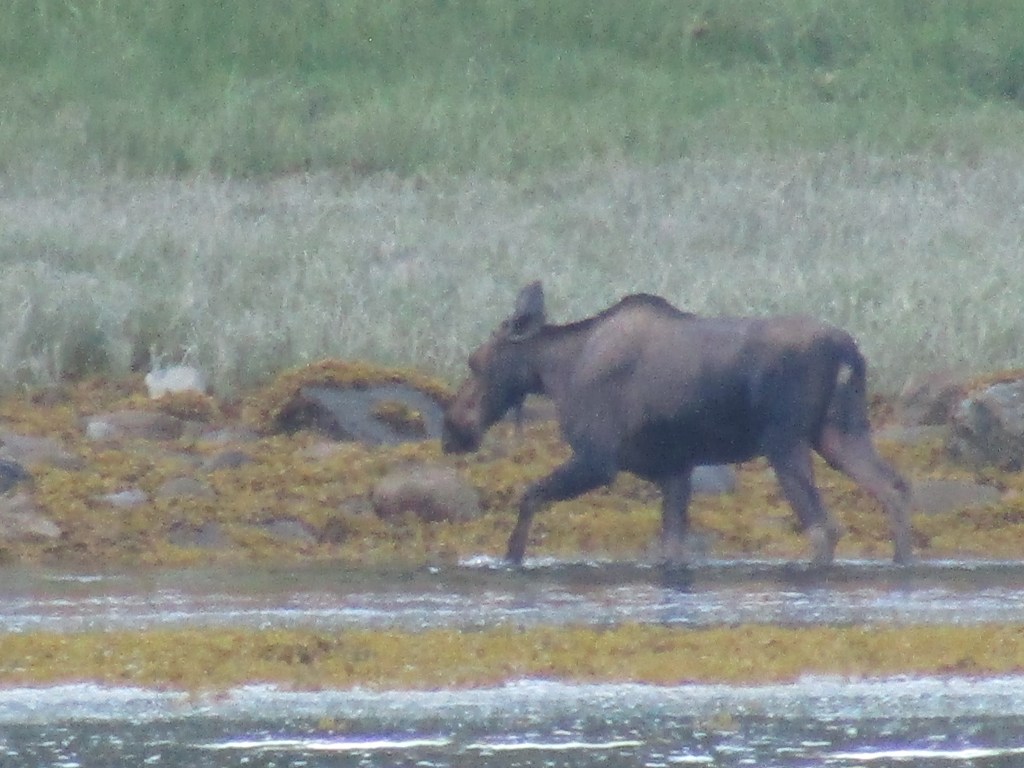
Back at the boat, we had a couple more cruisers come in and drop anchor behind us closer to shore. One of them stopped by to chat, and pointed out a moose in the shallows at the head of the bay. Grace caught this nice photo with her zoom lens from the back of Perception.
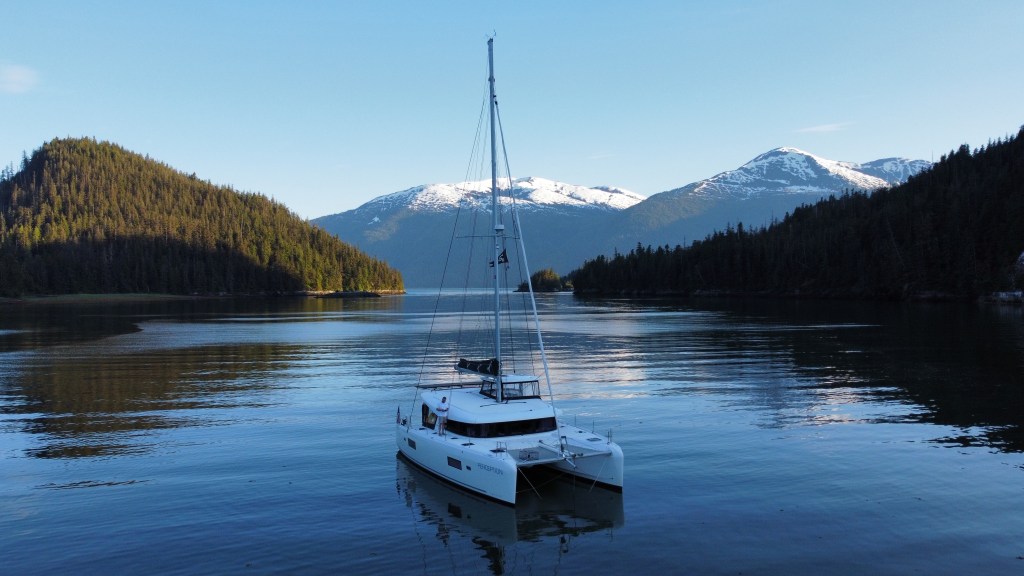
I cracked out the drone as well, and got some shots of Perception with the snow capped mountains in the background. We haven’t tired yet of the beautiful anchorages we’ve found in Southeast Alaska. There is so much to explore! I can see why so many boaters head here summer after summer.
 Sailing Perception