
Skipper’s Log
After a day of rest in Bag Harbor, we were ready to continue our exploration of Haida Gwaii. In hindsight, our pause for a day may have been a mistake, and we began to see the attraction of attempting to transit Burnaby Narrows at a high tide.
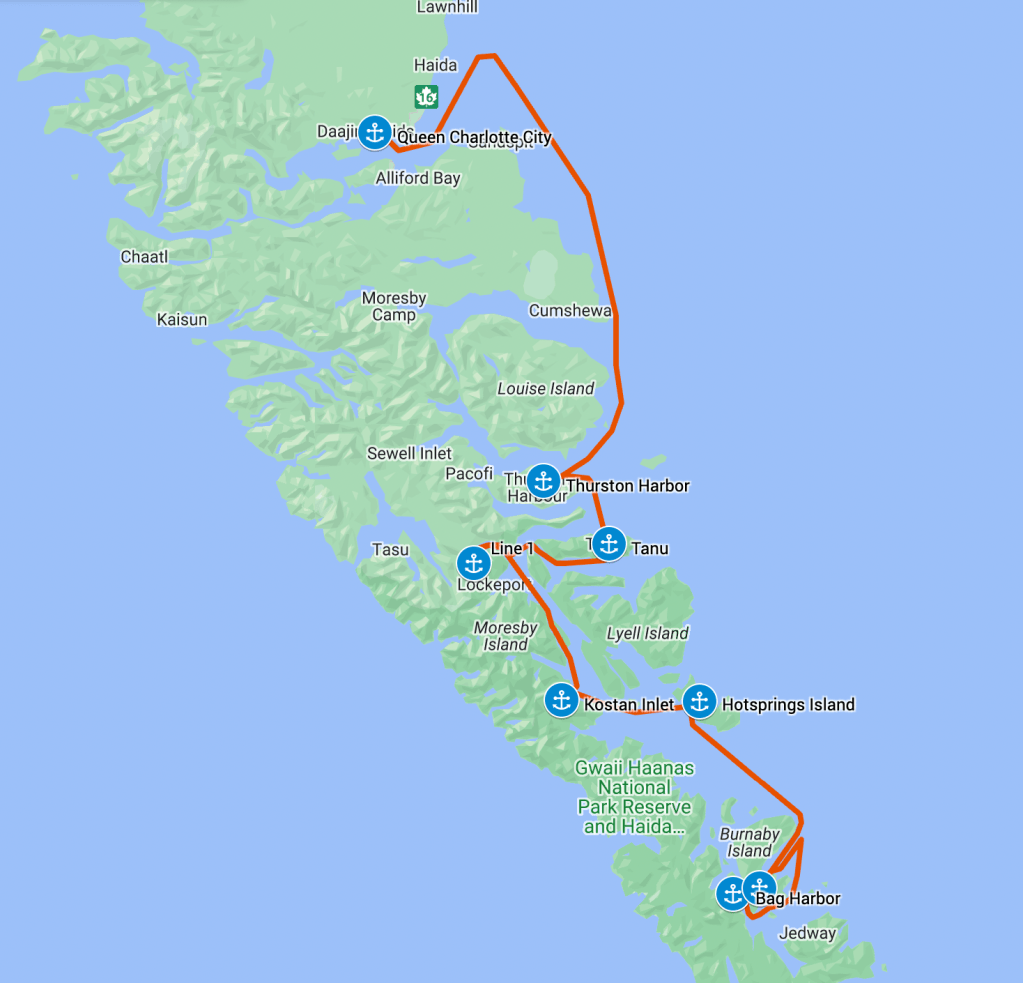
On July 3rd we pulled anchor and headed around the south end of Burnaby Island, intending to get up to Hotsprings Island that day. I’d hoped to make it around Scudder Point on Burnaby Island while the ebb was still occurring, thinking that in a flood against the northwesterly wind we would find steep, uncomfortable waves.
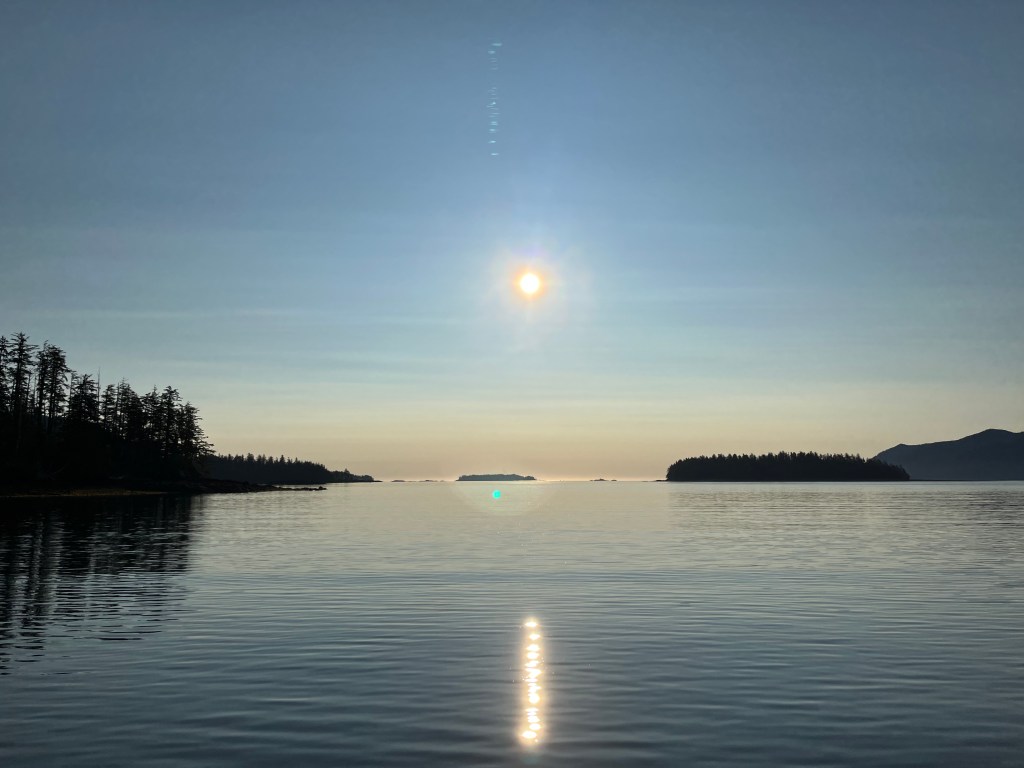
As we entered waters exposed to Hecate Strait, we encountered significant swell, which caused us to slow down. As we approached Scudder Point we were right at the edge of what we considered tolerable to make forward progress, and we were going so slow it became difficult to maintain helm. The bows were pounding through the swell even at these low speeds. Ahead of us at the point I could see whitecaps, even worse than what we saw immediately around us. Since we’d slowed our progress, the tide was starting to flood against the wind, increasing the nastiness of the sea state. We decided to follow the “misery is optional” mantra, bail out and wait for more favorable conditions.
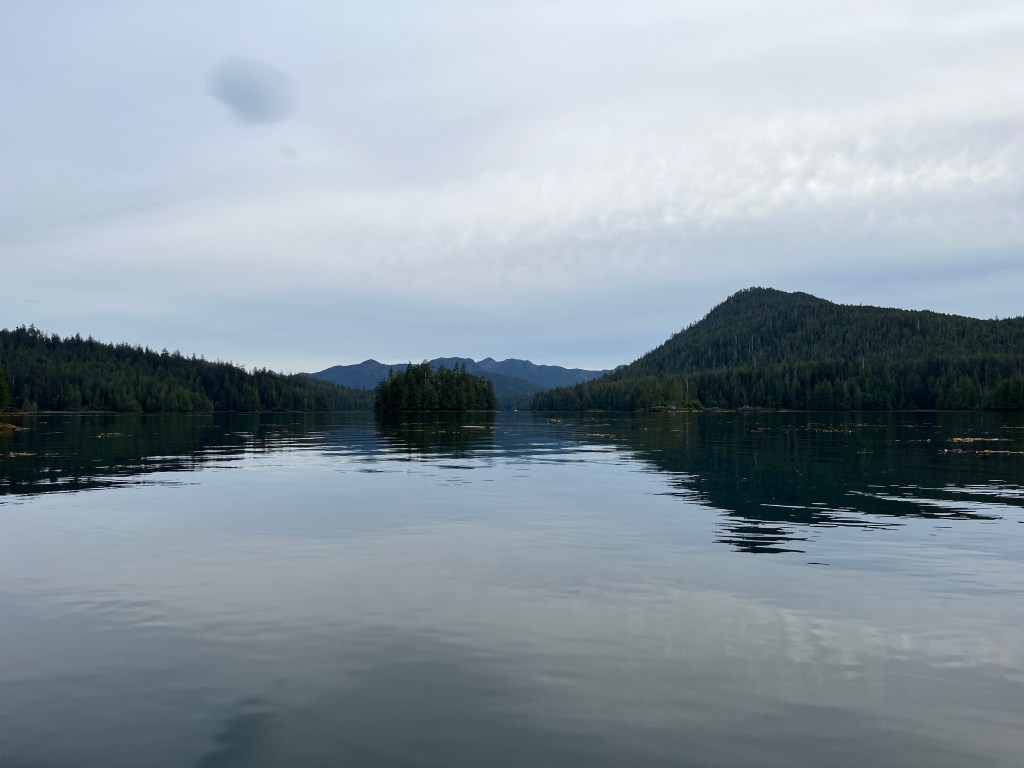
That began an unplanned stay in Poole Inlet, which presented a welcome calm after the pounding we took that morning. As soon as we turned Perception around, the swell became a following sea and my stress level dropped precipitously. As we entered Poole Inlet the swell fell off significantly. By the time we had penetrated to the head of the inlet we were in waters as still as one could hope to see.
The following morning the sea state was significantly better, and we were able to pass Scudder Point without significant discomfort. We continued up to the Watchman Site at Hotsprings Island and anchored in the shallow channel between it and House Island.
The tide was out, and we couldn’t see an obvious place to land our dinghy that wasn’t rocky. We called in to the Watchman Site and they recommended the east side of the island near where we’d anchored. We clambered out of the dinghy and waded 10 feet through the rocks to get ashore, tying Ghost off on a large rock as high up the shore as we could take the painter. We soon located a trail that promised to lead us across the island to the hot springs, and enjoyed a walk through the trees.
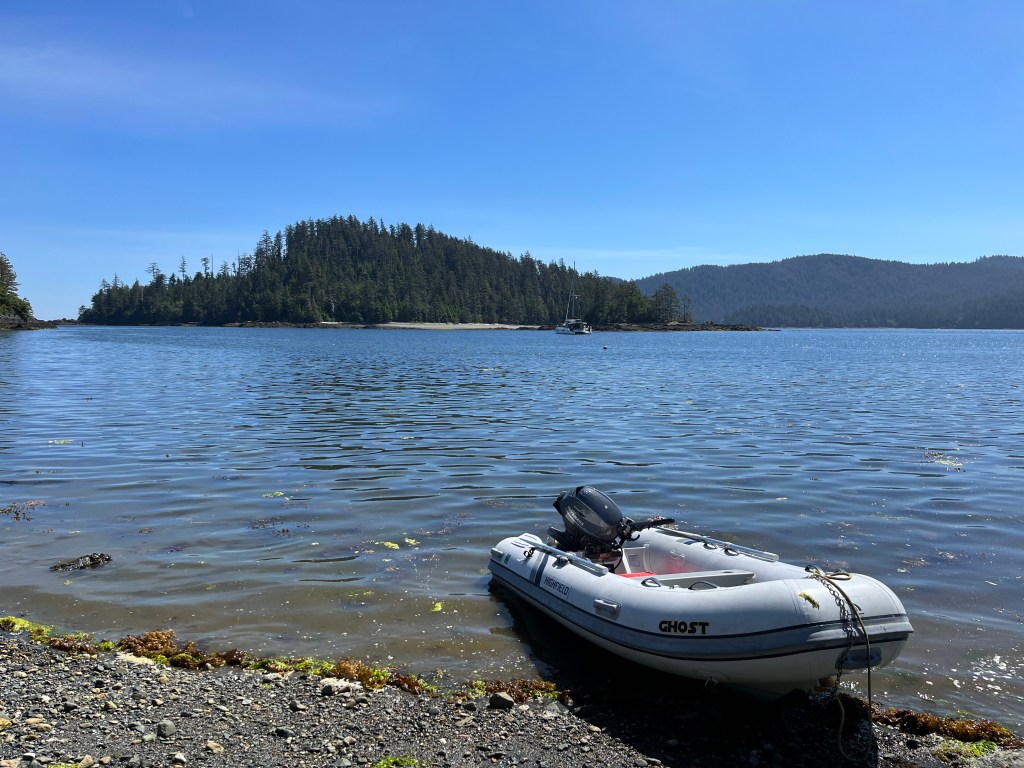
I knew I’d need to get back to check on the dinghy as the tide was coming in. After a quick dip in the hot springs, I went back. to the while Melinda and Grace soaked for a while. Lucky thing I returned when I did—the rock where I’d tied the painter was already under water, and I had to reach in to my shirt sleeve to get it untied. I pulled Ghost up onto the gravel beach over water that now covered the rocks we’d waded through earlier. At least it was easier to reload the dinghy for the trip back to Perception!
A note on the facilities at Hotspring Island—this is a well-developed site with cement rimmed pools that appear to be cleaned regularly. They have restrooms, showers, and changing rooms for you at the pools. Very nice place to spend some time.
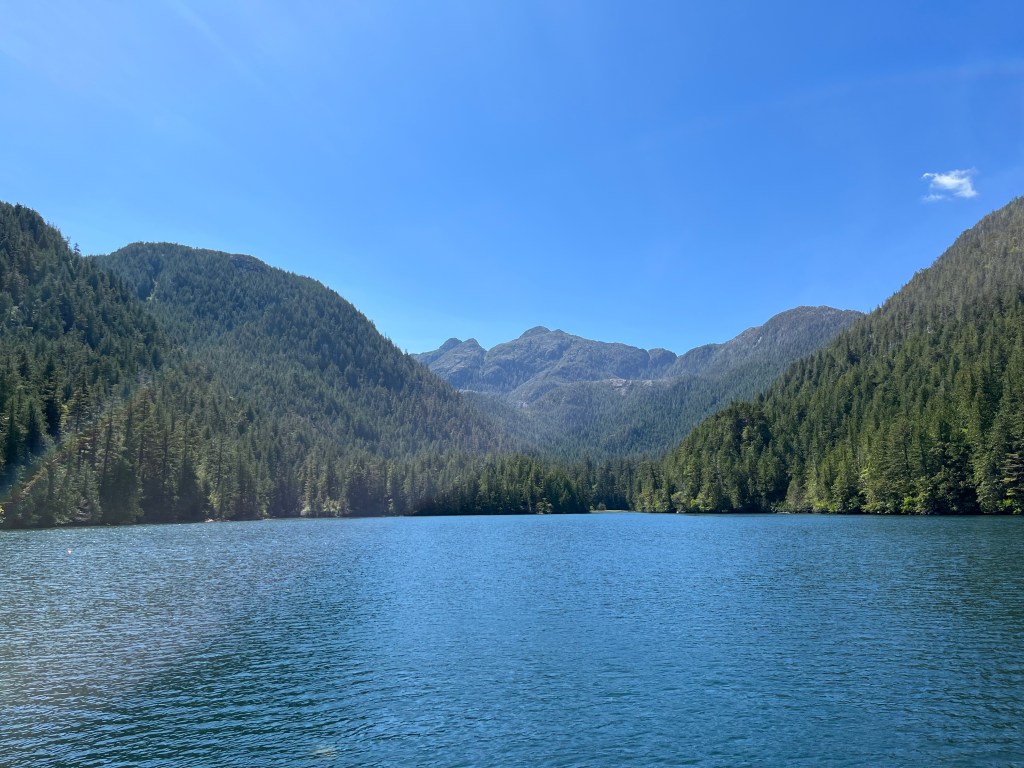
After our visit to the hot springs we headed west to Kostan Inlet for the night. This interesting inlet must be entered at high tide across a drying channel, leaving you trapped until the tide rises again. We enjoyed the challenge of entering the inner harbor, and the resulting isolation and protection from the wind and sea outside.
As Wednesday morning dawned and I started my short week of meetings from Kostan Inlet, I found myself amazed again at how Starlink has enabled our lifestyle. Incredible to be attending all of my normal meetings via Zoom and Starlink, from a site that could hardly be more remote from civilization.
That day we moved a bit further north, heading for Crescent Inlet. This proved to be a well-protected inlet with a wide shallow head, good for anchoring. At the head of the inlet was a wide drying flat with sedge grass growing above it. Over the course of the evening we enjoyed watching a couple of black bears out in the grass, along with a small group of deer.
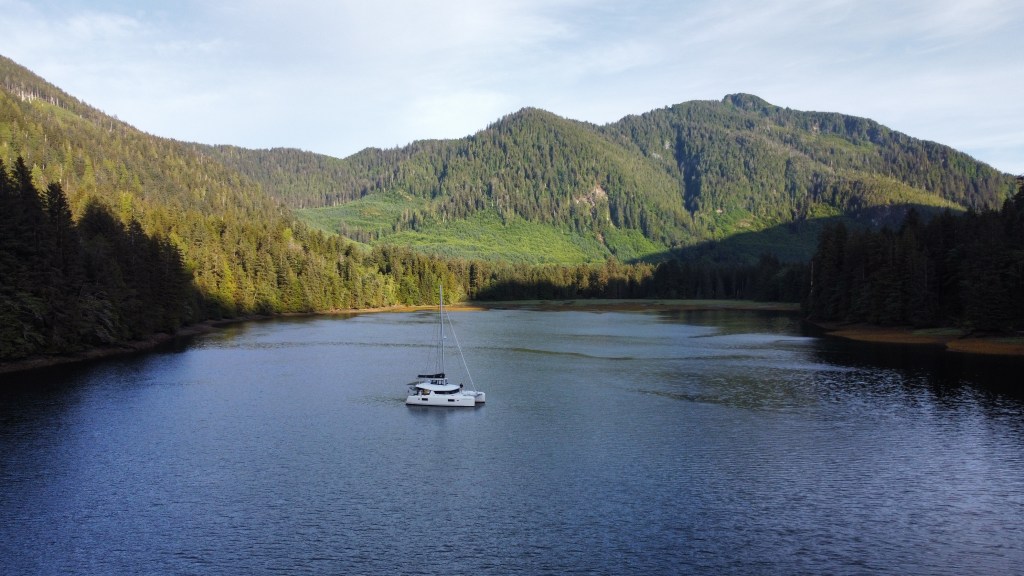
Thursday we headed for the Tanu Watchman Site. We had some challenge anchoring there, as we found ourselves in the channel exposed to the currents in about 60 feet of water. I was in meetings when we arrived, so Melinda and Grace dropped the anchor with the intention of pulling back with the wind. Unfortunately the current was moving in the opposite direction, so they were immediately riding over the anchor as they dropped. We recovered by pulling up the anchor, repositioning, and letting the current pull us back into the set. I remained on Perception in meetings while Melinda and Grace went ashore to the site, so was able to make sure we didn’t move.
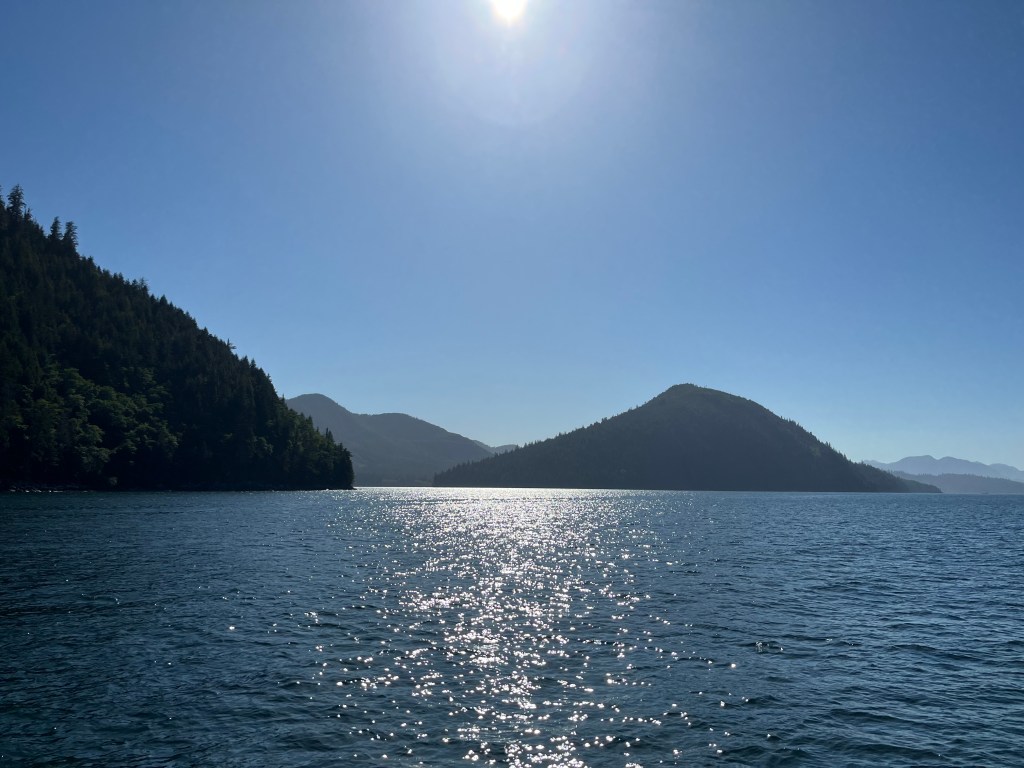
After the successful trip to Tano, we motored on up to position ourselves for the return jump up to Skidegate Inlet the next day. We picked Thurston Harbor this time, since we’d been in Rockfish on the way down. Thurston was a fine place to stay, but one could clearly see the logging scars on the hillsides–not the most beautiful of anchorages we’d been in during our stay. We did spot a number of deer grazing in the grass on the south shore of the inlet.
It was starting to look like Saturday would be a decent day for getting back across Hecate Strait, and I would be free to pilot us across. That Friday morning we headed back out around Cumshewa Head on Moresby Island and north to Skidegate Inlet to stage ourselves for the crossing.
Coming back into Skidegate Inlet, we again cut across the bar just north of the C19 channel marker. The sea state was low, and we again had no issues scooting across at this point.

Upon arriving at the marina in Queen Charlotte City, we attempted to fuel up. It was about 2pm, and there was no one at the fuel docks, and no one answering the posted phone number there. We waited a bit, tried calling a few more times, and finally got someone on the other end. Turns out the fuel dock is only staffed from 4pm to 8pm daily, so we went on into our assigned slip at the marina to wait.
After a few hours we returned to the fuel dock and tanked up. We had to tie up to the end of the tee on the dock and could only secure at midships and aft cleats, but the sea was calm so no issues. It is quite shallow at the fuel dock, when we first approached earlier in the afternoon we were in about 8′ of water. We’d returned at a higher tide state and it wasn’t a concern at all. I think deeper draft boats could touch bottom here at low tides.
The marina was relatively nice, with a typical bull-rail setup, fresh water and power. We were able to wash down Perception for the first time in a while, and it felt good to get the salt spray off. We went out to dinner at Blacktail just east of the marina and enjoyed a wonderful restaurant meal. We savored the warm loaf of bread, something we greatly missed. The Salmon Wellington that I had was to die for.
Saturday morning dawned, and the forecast for Hecate Strait continued to look reasonable with some wind building from the southeast later in the afternoon. Patchy fog spotted Skidegate Inlet and the bar entrance, so we ran with lights and radar active to help avoid other boats. The sea was very calm in the morning, with almost no swell touching the surface.
Over the course of the day the wind steadily built out of the southeast as predicted. The wind waves started to pound, and the comfort level on the boat dropped. It wasn’t horrible, but definitely rankled on the nerves to be exposed with hours yet to go to safe haven. I took comfort that we could always turn around and head downwind, but it would be majorly disappointing after making it more than halfway across the strait. We suffered through, and in the end sighed with relief to come into the lee of Banks Island on the east side of the strait.
After the long crossing we thought briefly about just tucking back into Larsen Harbor where we’d stayed on the way out to Haida Gwaii, but decided instead to go a few more miles to Keswar Inlet on McCauley Island. After passing through a narrow channel, we were inside the inner cove for a peaceful night.
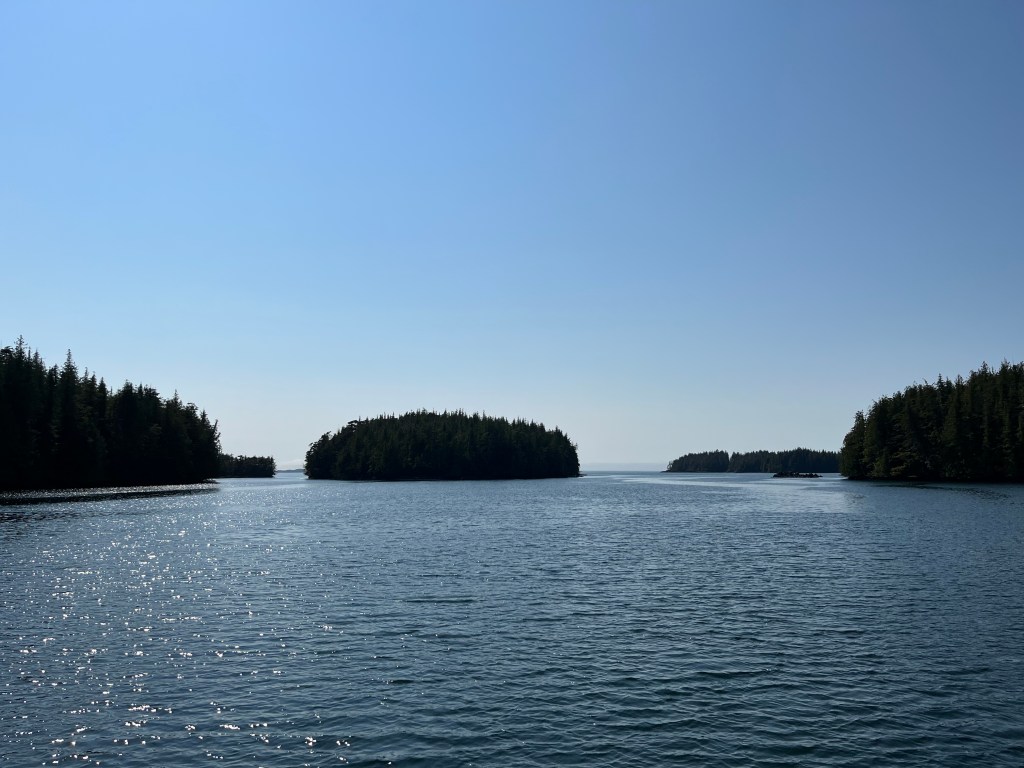
It felt good to have the Hecate Strait crossings behind us. While I wish we’d been able to sail more, we were still weighing caution against the extra time it would have taken to get across under sail. None of us wanted to spend more time beating into the wind when the sea state might worsen over time. We were looking for some good downwind time, and hoped to see more of it with northwesterly winds as we headed south.
 Sailing Perception