
With our final crossing of the Hecate Strait behind us, we focused on the somewhat more relaxing process of heading south towards civilization in protected waters. We decided that rather than going immediately back into the inside passage, we should stick to the “outer”, less travelled passage east of Banks, Campania, and Aristazabal Islands.

With this in mind, we pointed our bows to the southeast down the Principe Channel. In what was to be our finest day of sailing (with our actual sails!) of the summer we cruised downwind in a 10-20 knot northeasterly breeze from Keswar Inlet to Markle Passage.
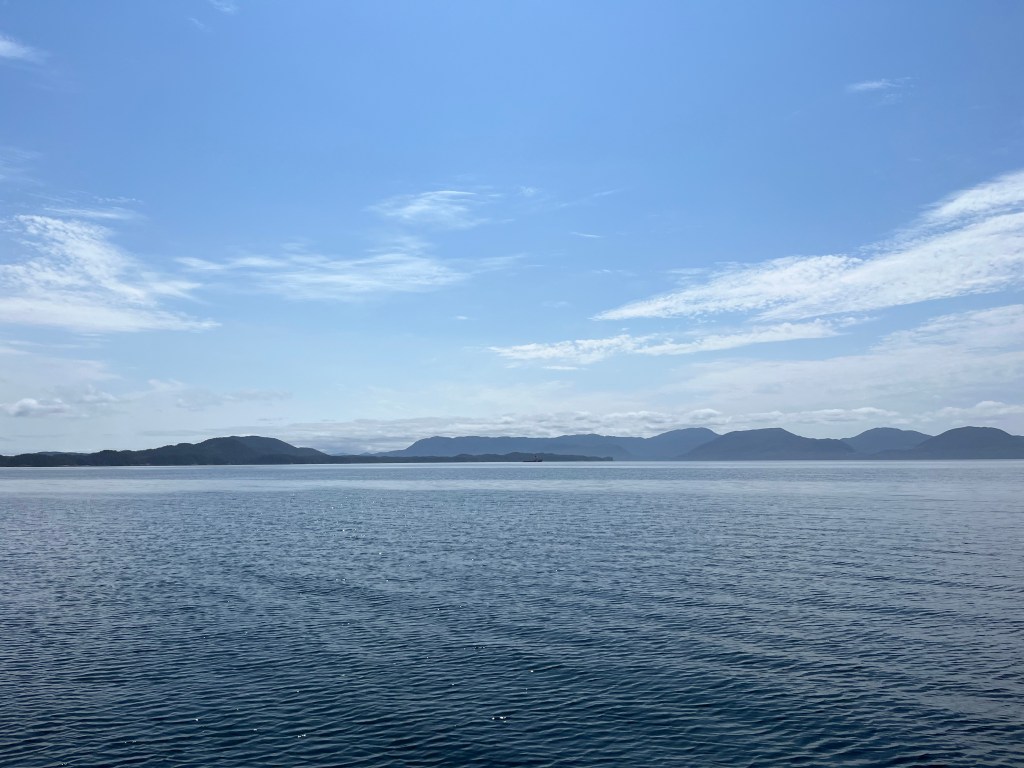
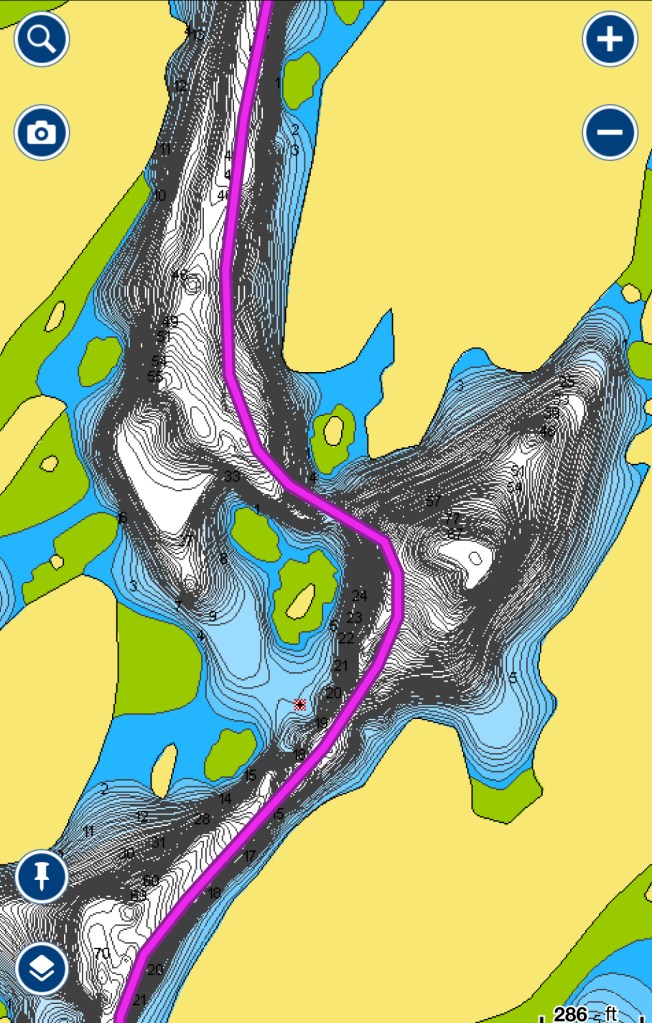
We motored through the narrow channels into Markle Inlet. We made it safely in, but I had made a dangerous error in riding a flood tide into the inlet. There is a significant volume of water north of the most narrow passes into the inlet, and there is one particularly narrow, shallow, curve on the way in. While transiting this narrows I found the boat suddenly swept out of the center as I rounded this curve. I powered up the port engine to turn us away from danger, but it felt like a close thing. We made sure to leave near slack tide on the way out!
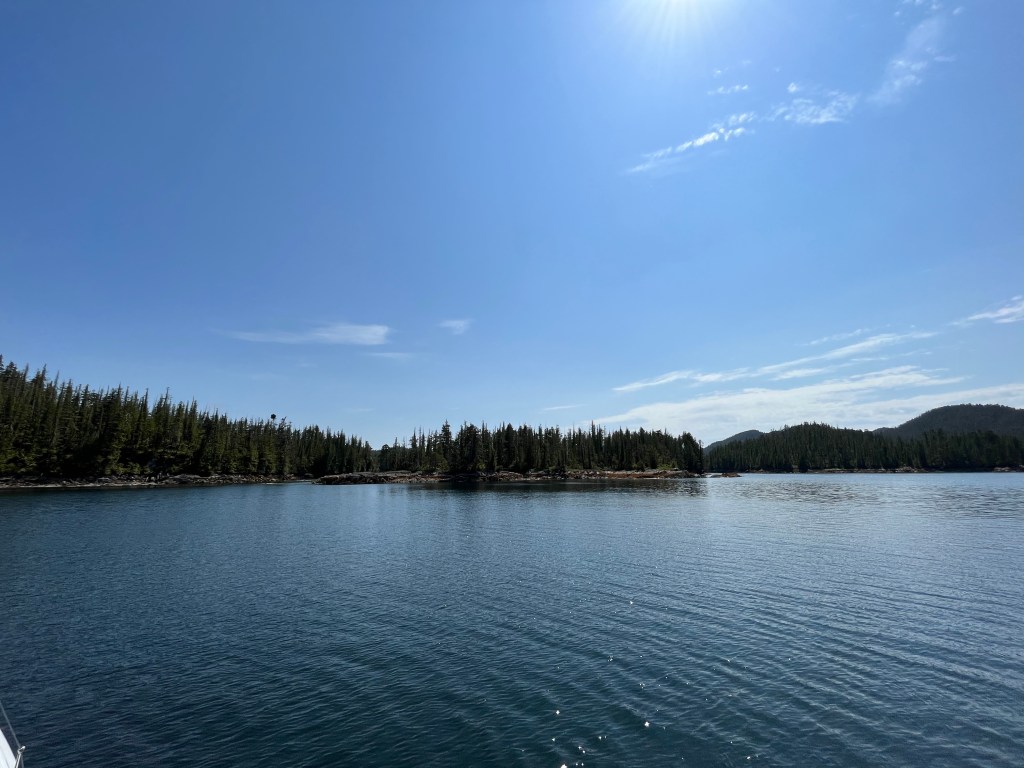
Once in the inlet, we found yet another protected, beautiful, deserted anchorage. Untamed forest marched right down the rocky terrain to the water. The only significant flat, clear areas were the drying flats where streams entered the inlet. I can’t complain about the beauty of these places, but as the days progressed we became ever more anxious to stretch our legs ashore.
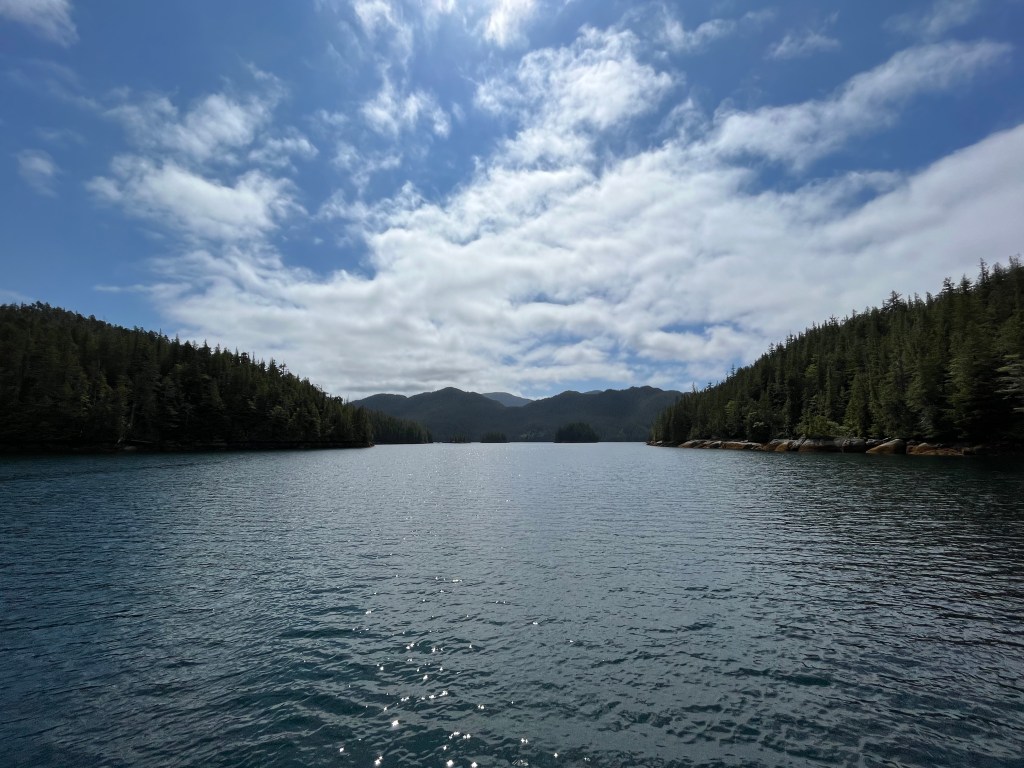
The work week started the next day, and the crew motored us further to the southeast. We stopped for the night in the north arm of the Monckton Inlet, and again had the place to ourselves.
Tuesday we moved southeast again and saw one of the most spectacular sights of the trip. As we rounded the southern tip of Pitt Island we were surprised by a group of humpback whales “bubble net feeding.” At one point they surfaced so close to the boat we were a bit concerned for our safety. It shocked Melinda enough that she forgot to even try to get video of them at that close range.
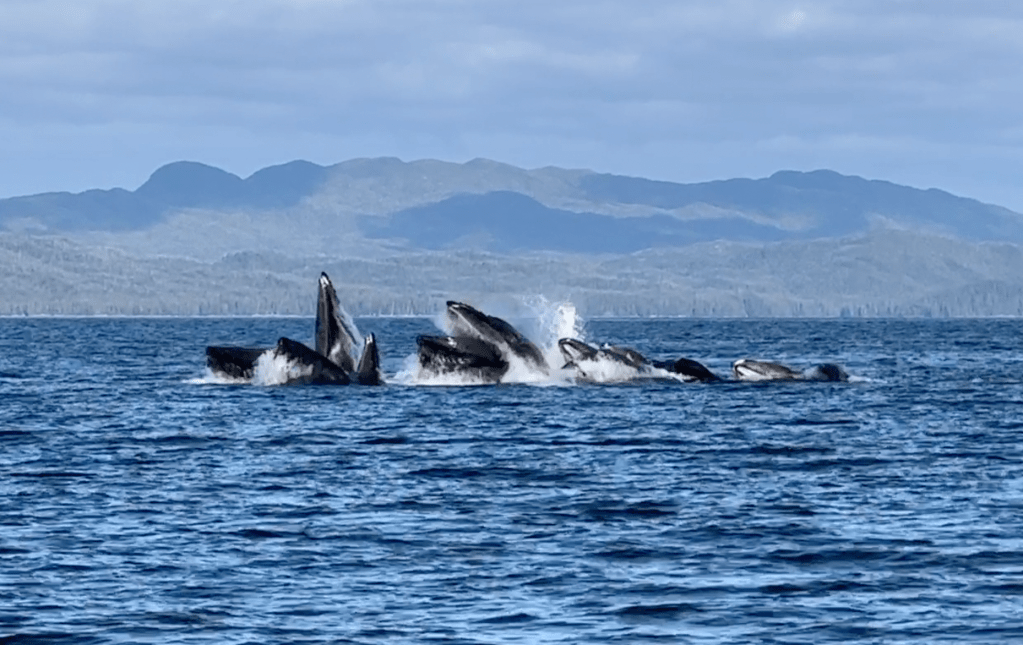
Energized by our close encounter, the crew brought us to the entrance of Kent Inlet. Kent is a bit of a challenge as it has a very narrow inner channel to get deep into the head of the bay. We timed entry so that I would be done with meetings for the day and could pilot us through the entrance near slack tide.
It was quite narrow, but without much current was no real trouble to pilot through. As usual, we posted Melinda and Grace on the bows to watch for any uncharted obstructions, but found that our Navionics charts matched reality enough to get us through.
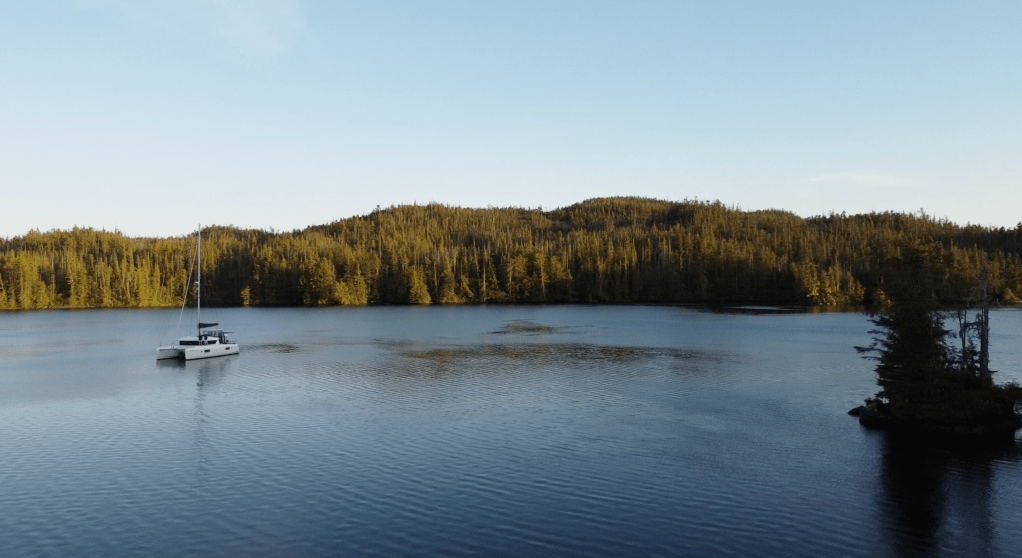
Once inside we anchored at the head of the inlet near the channel into the large lagoon. We took the opportunity to fly our drone and get a few pictures of the rapids into the lagoon and the lagoon itself.
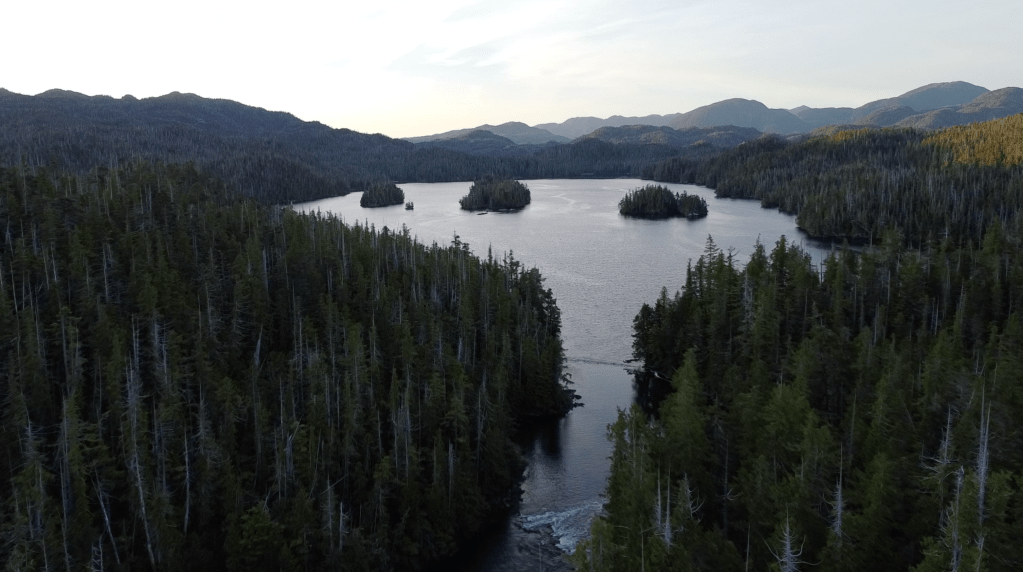
We felt that we had a good opportunity to enter the lagoon that evening in the dinghy. Slack tide would occur well before sunset which should give us ample time to explore before dark.
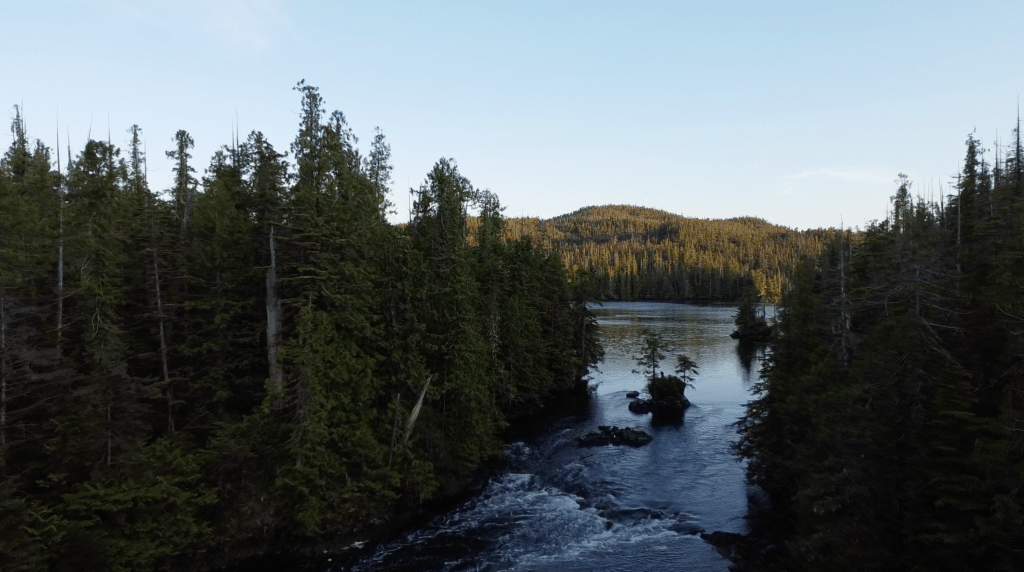
We tried entering the lagoon just before slack, at slack, and twice more at 30-minute increments after slack with no luck. Even up to an hour after slack tide the current was still flowing strongly into the lagoon, which we did not want to attempt without being sure of our clearance above the rocks in the channel.
The size of the lagoon ensured that it would not actually equalize with the height of the water on the outside until long after high slack tide. As we were losing our light for the day, we abandoned our attempt to enter and turned in for the night.
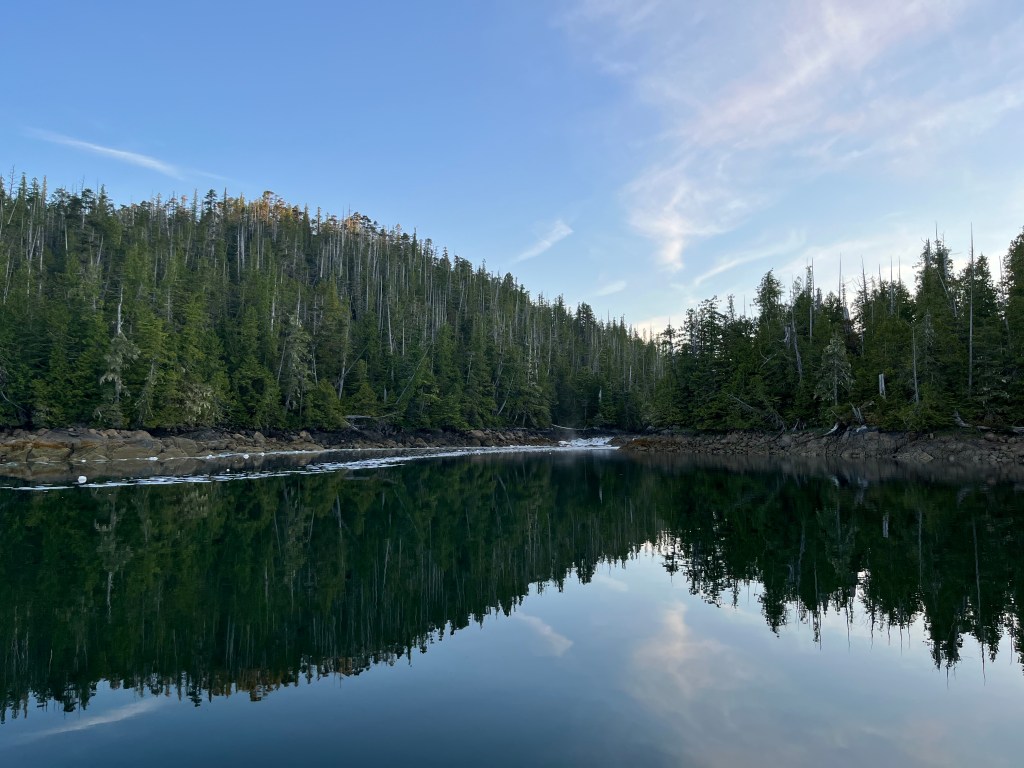
The next morning as we left the current had turned and was ebbing out of the lagoon. The brackish water formed little foam “bergie bits”, which looked like little pieces of ice, as it ran across the rapids.
The exit from Kent Inlet was a bit stressful for me, as I had a customer meeting that morning right at the time of slack tide. Melinda and Grace pulled anchor about 20 minutes before the end of my meeting, and got us to the narrows just as it ended so I could pilot us out of the inlet.
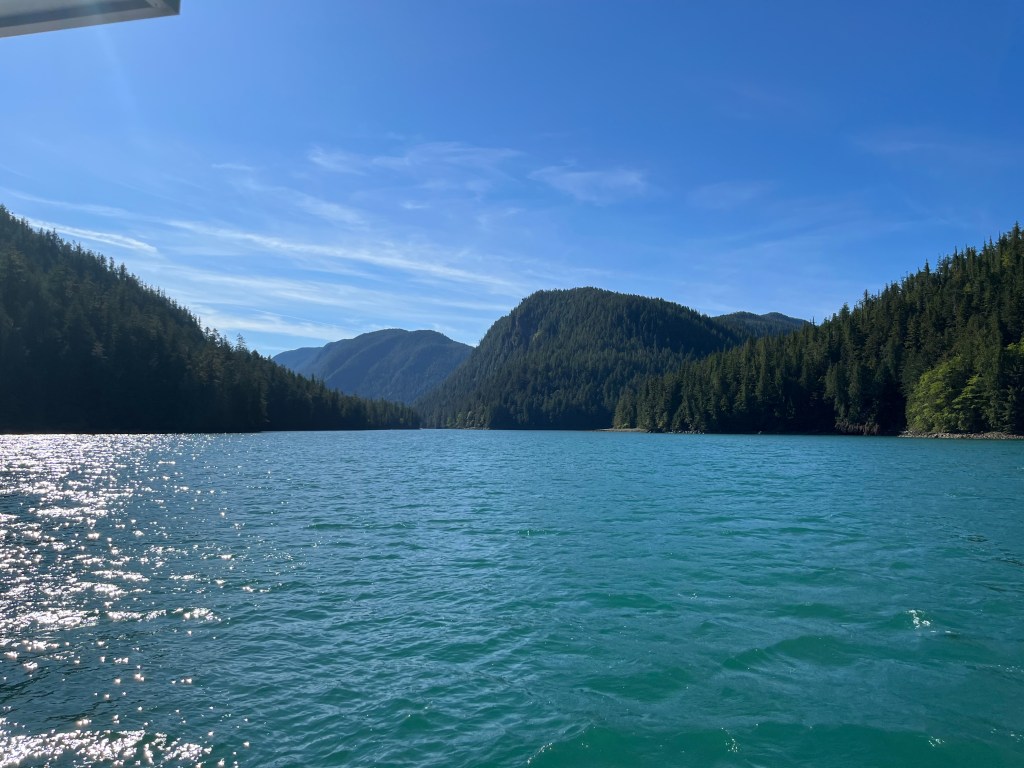
We arrived at the Bay of Plenty that evening, which is an arm off of the Laredo Inlet. We were in Spirit Bear country, and we hoped to see one of these white-colored bears as we passed through. The Bay of Plenty had a large drying area that we hoped might be a place to see bears, as we’d seen them eating sedge grass in these areas in Haida Gwaii.
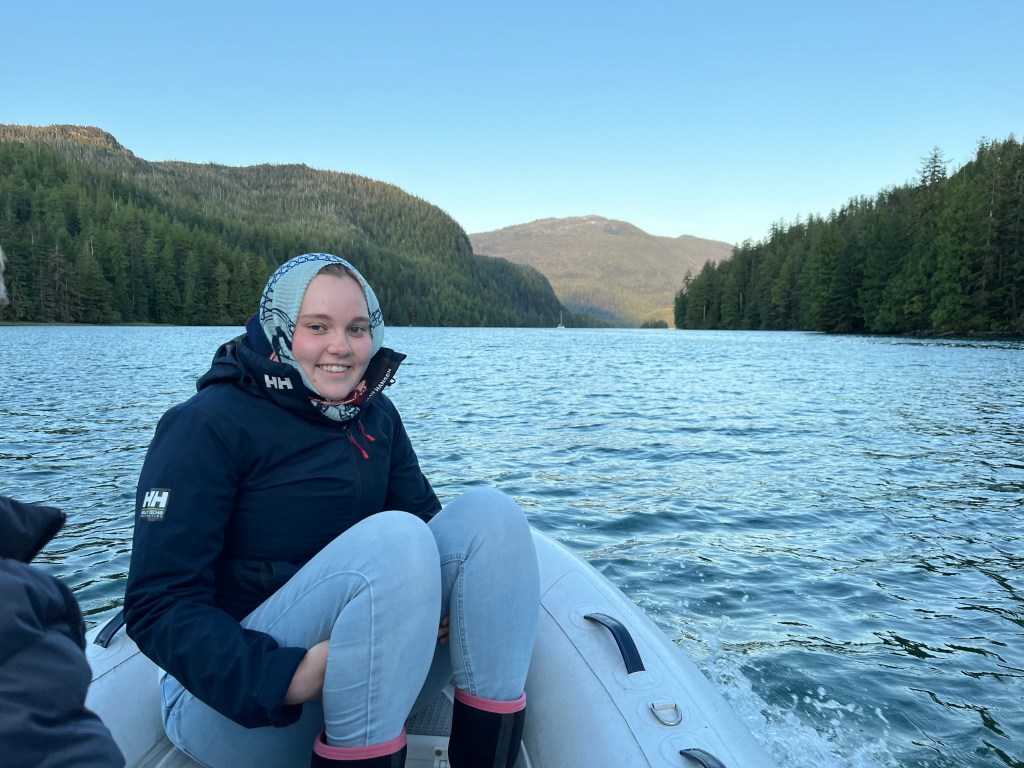
The drying flat was a very large area here, and we decided to try to dinghy up into it during high tide. We took our trip after dinner, and went quite a ways up before we had the shallows come up under us. We had to turn back before we really reached the sedge grass, and didn’t have a good opportunity to see bears.
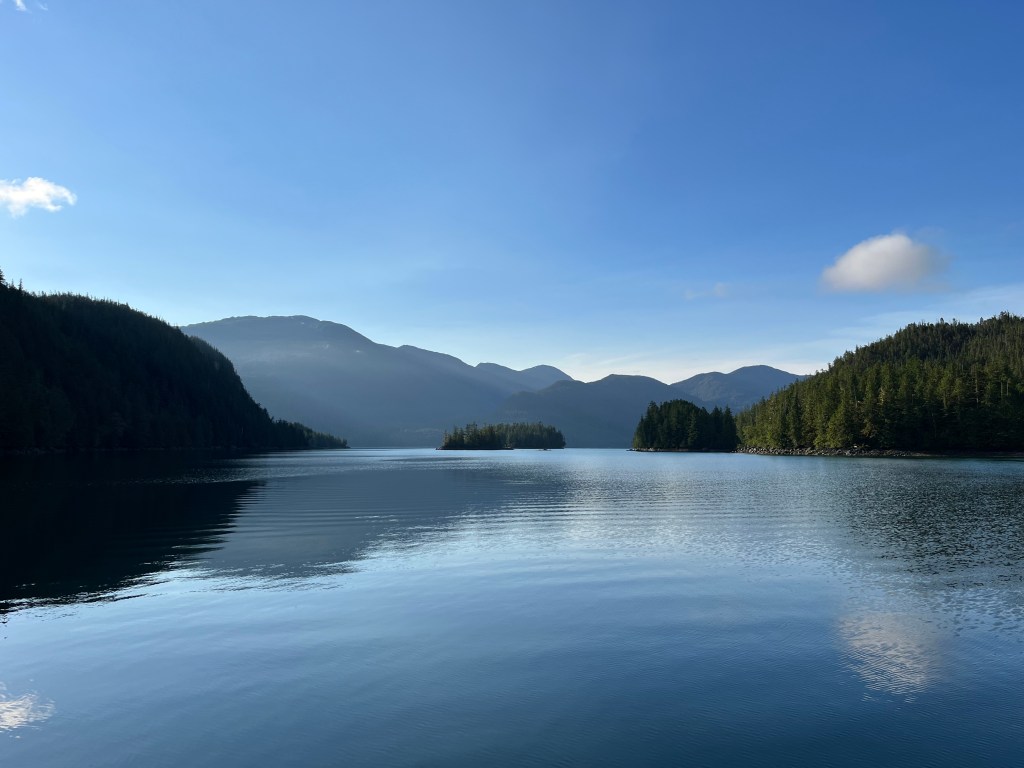
The next morning we headed back to the true Inside Passage, tucking up Meyers Passage to join the end of Tolmie Channel. Meyers Narrows was a caution area, but a big nothing-burger given what we’d already been through. We just timed it with near-slack tide and it was no problem whatsoever.
We crossed the Finlayson Channel via Jane Passage and entered Jackson Passage. Jackson Narrows was again a relatively straightforward transit as we were near high tide and the shallows were not much of a concern. We motored into Rescue Bay and found plenty of room to anchor for the night.
Our big event of the day was found in the form of fishing after we had settled in for the evening. Melinda and I took the dinghy out into the waters between Rescue Bay and the eastern end of Jackson Passage. We took several passes through the deep waters there, drifting with the prevailing wind and plunking our halibut lure on the bottom along the way.
We were just about to call it quits when Melinda hooked the big one. She handed me the line to reel it in, and we spent about ten minutes pulling it up. We would reel when the fish went slack, and pay out line when it dove for the bottom. It pulled the dinghy around with it when it fought.
Eventually we got the fish to the surface. I handed the rod to Melinda, and as she passed the fish by me I was able to get our gaff in its mouth and pull it up. The fish thrashed maniacally, splashing us with salt water as it struggled. When it paused, Melinda handed me the bat and I went to town on its pointy little head.
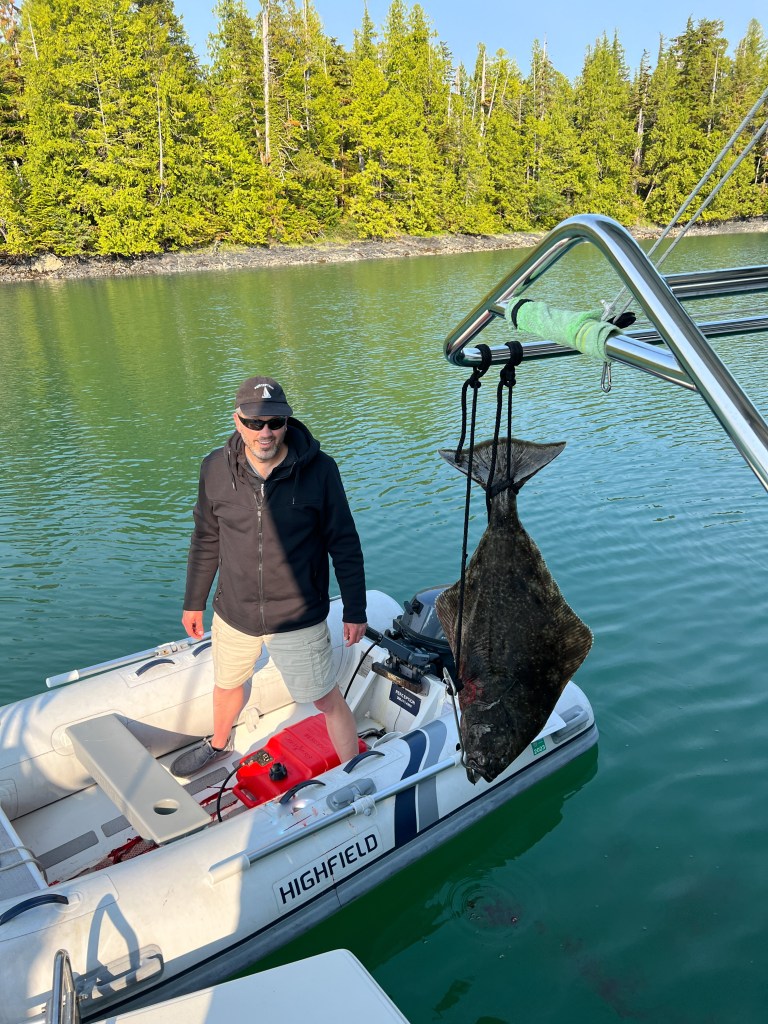
Once she was subdued, we slathered our catch aboard and hauled it back to the mother ship. She weighed in at 40 lbs, and it took us roughly three hours from hooking her before we were cooking up the first halibut steaks on the stove top. It was a fine end to our halibut fishing, as we had no need of more!
 Sailing Perception
2 responses to “July 9 – 13, 2023: The outer Inside Passage”
Wonderful and delicious adventures! Thanks for taking the time to share.
LikeLike
I love reading the details of your adventures! Great job with the Perception Blog!
LikeLike