
After spending the better part of a week anchoring in deserted coves, we were more than ready to see a bit of civilization and a dock. We’d also finally caught our “big halibut” in Rescue Bay, and as a result the dinghy, boat, and crew were all experiencing various amounts of fishiness. We were ready for some power and water to rectify the situation.
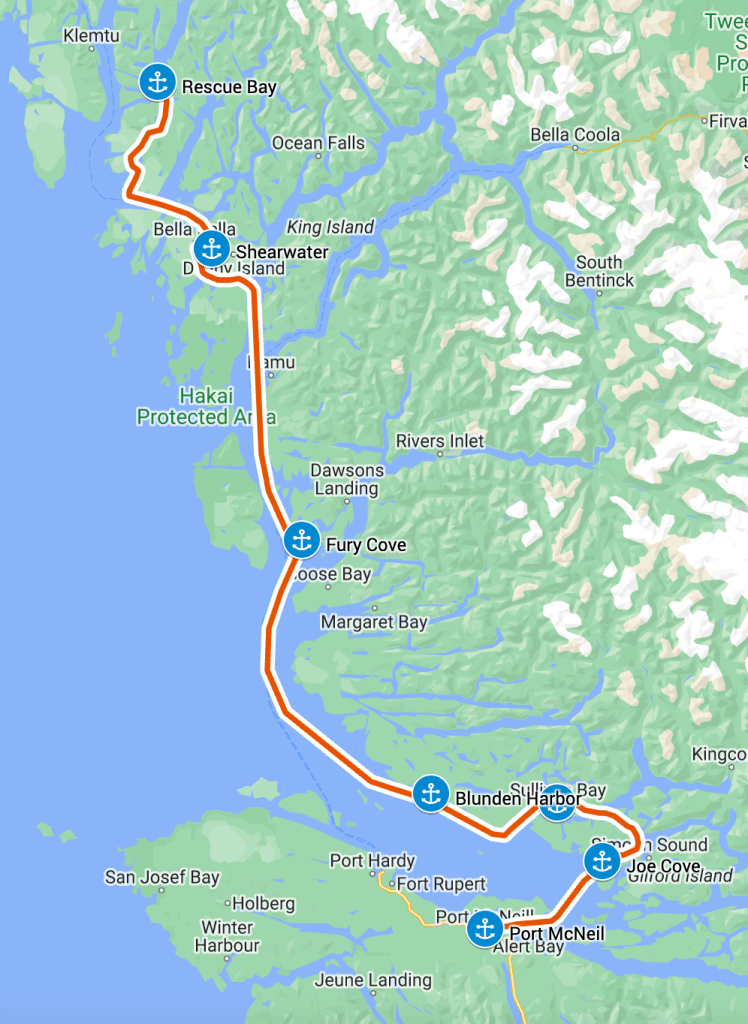
We headed out from Rescue Bay and proceeded southward in Mathieson Channel. I was working that Friday morning as Melinda and Grace piloted us towards our destination for the night at Shearwater. I’d become accustomed to sudden changes in direction and engine speed indicating that something of interest had been seen from the helm.
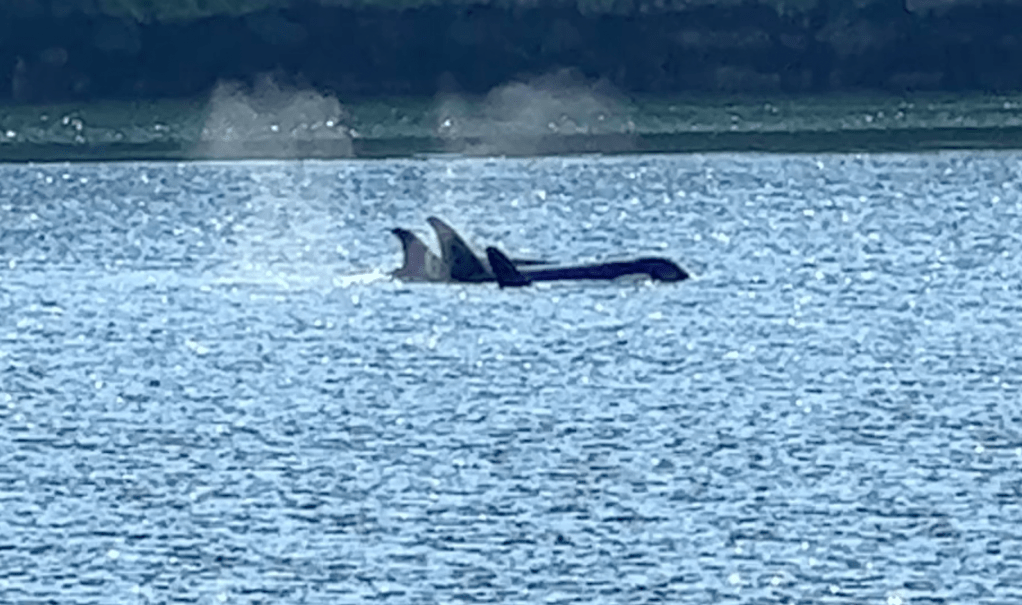
The crew had seen a little pod of orca swimming down the channel, with a mix of adult and juvenile orca surfacing repeatedly. Their dorsal fins at times appeared as a windmill as they surfaced in rapid succession.
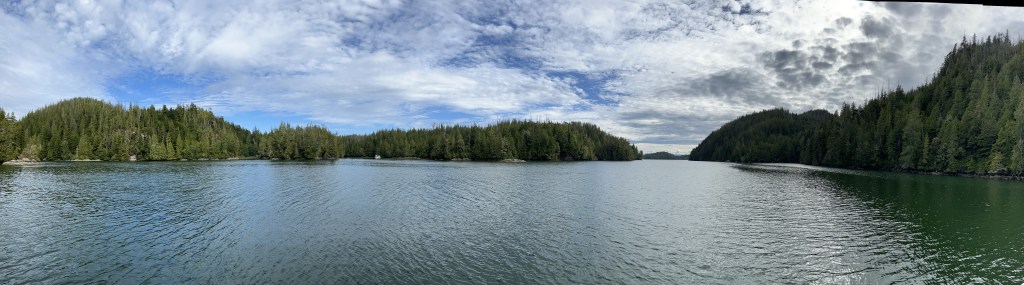
It was a beautiful day, and we had no issues passing through Percival Narrows and entering Reid Passage. The channel was fairly tight, but our able admiral at the helm made it through just fine.
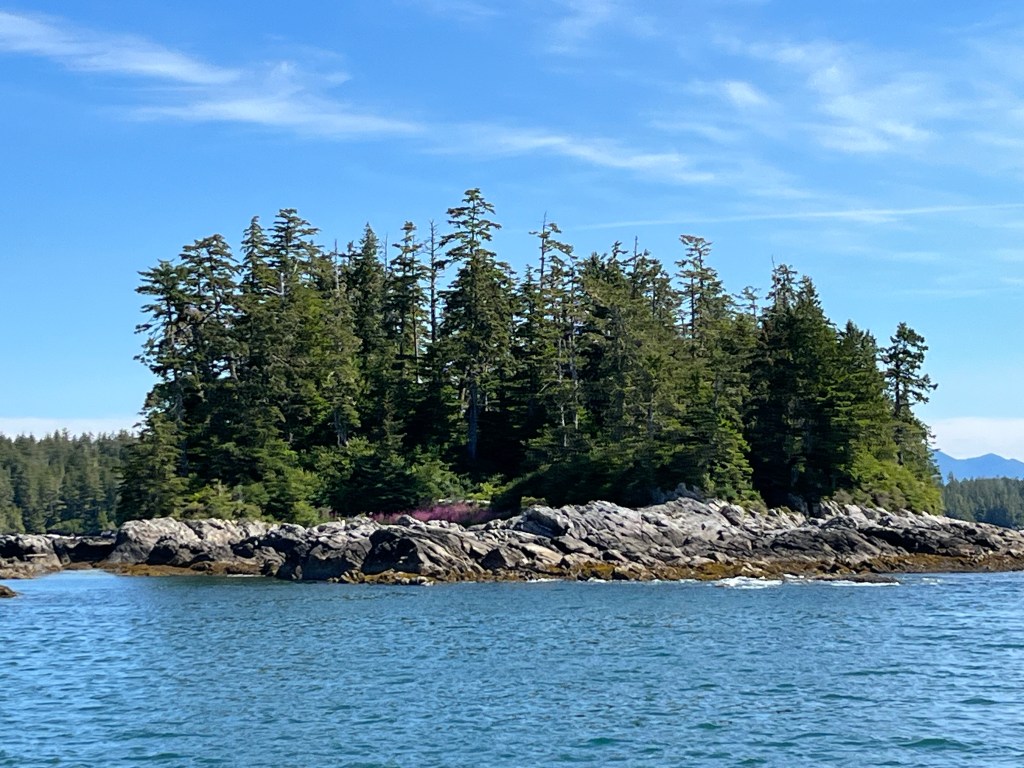
Rounding the corner past Harmston Island into Seaforth Channel, we spotted a large clump of purple flowers growing in a small clearing. We’d seen these before at a distance – but are unsure if they are the invasive Loosestrife or possibly Hyacinth. Either way, the color really stands out from the pervasive green, blue, and grey.
Shearwater didn’t disappoint – it was nice to be tied to a dock for a night and have a meal at the lodge. We topped off water the next morning, and continued on our way south.
We’d come to the conclusion over the last several days that we were ready to get further south – past Cape Caution to see some of the highlights that had been recommended to us in the Broughtons and beyond. With this in mind, we decided to head right down to Fury Cove on Saturday to set ourselves up to round Cape Caution before the next work week commenced.
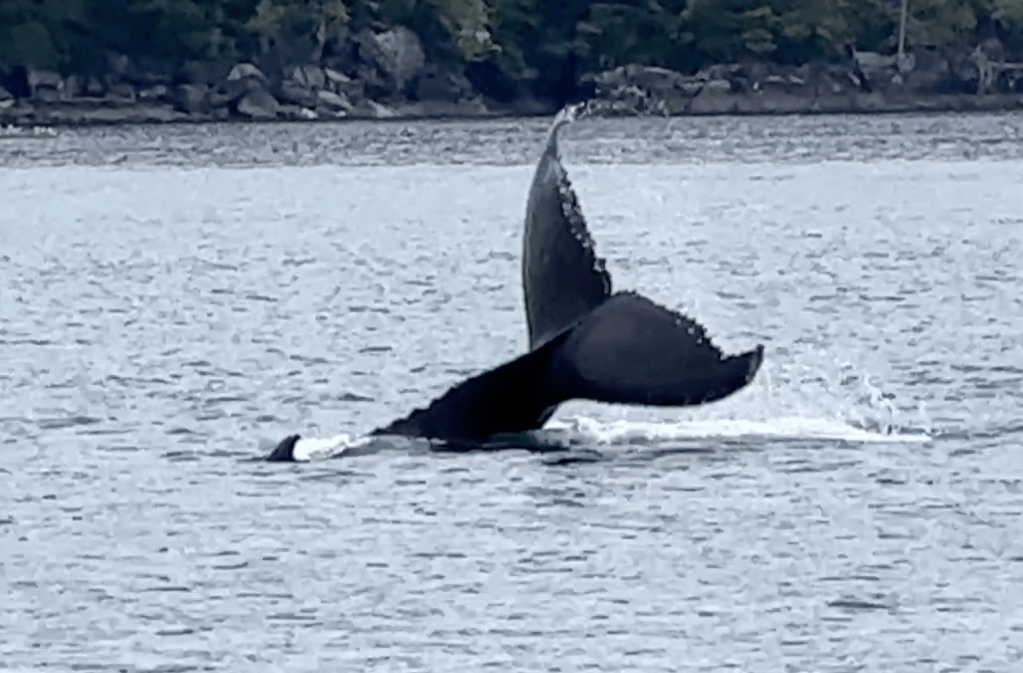
We saw a number of humpback whales surfacing and blowing in the distance as we headed south in Fitzhugh Sound. Suddenly we were treated to a new sight – a lone humpback lobtailing not far off the port side of the boat. The whale would extend the bulk of its tail out of the water, then slap it down hard, repeating the process again and again. It was fascinating to watch and puzzle over why the lone whale would behave this way.
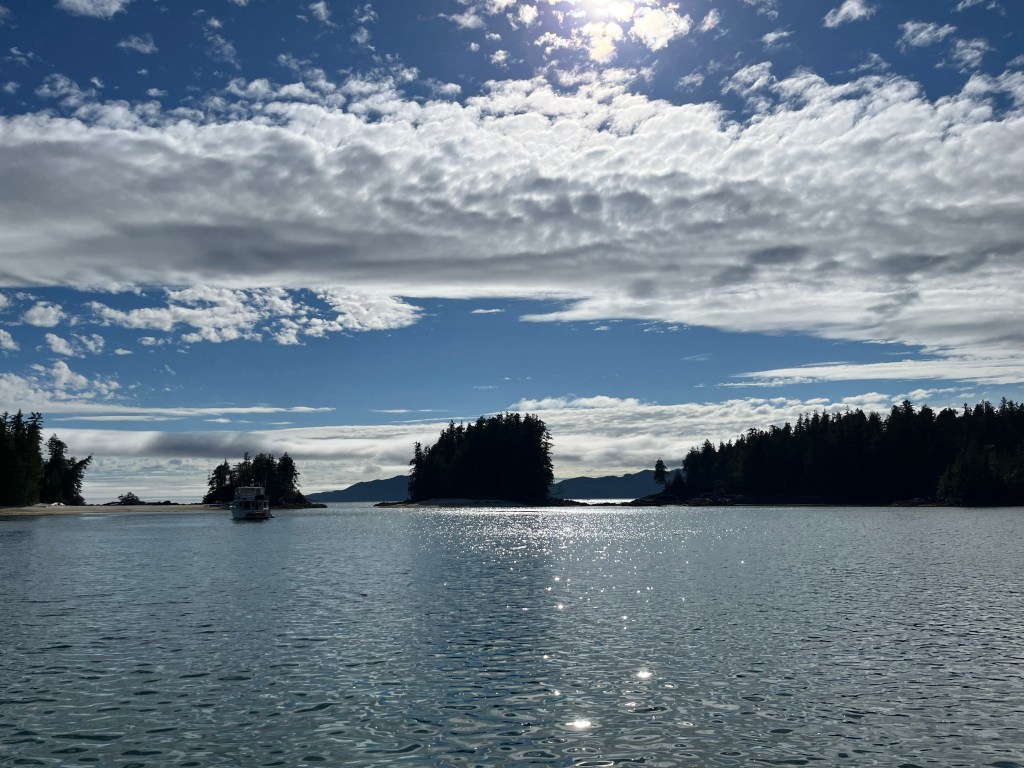
We made our way into Fury Cove without trouble. We found two other boats anchored there ahead of us, but there was plenty of room for many more boats to anchor. We dropped our hook in about 40′ of water and settled in for the afternoon.
A brief aside for a mechanical issue. As we completed the journey for the day, I had noticed that the port side engine was reading a higher coolant temperature than normal. Both engines will reach a temperature of 77-78C at cruising speed and had never deviated from this before. The port engine was now running at 79C – not disturbingly high, but as I’d never before seen this I took it as indicative of some imminent failure.
My stress level climbed thinking about our distance from competent technical help. The prospect of rounding Cape Caution with a suspect engine didn’t seem all that appealing, though at least we have the advantage of two engines on our cat.
Once we were anchored, I began trying to discover the source of the increased temperature. I found no issues with oil or coolant levels, and no obvious signs of distress in the engine compartment. I did however note that our hydronic heating system was not running its coolant pump. It should have continued to circulate its heated coolant through the boat to heat our water until the heat dissipated.
Digging further, I found that the circuit calling for the hot water was not indicating on the hydronic heater control box. I traced this back to the hot water heater under the berth in the aft-port cabin. A standard dial bimetallic thermostat is zip-tied onto the pipe fitting on the hot water tank that indicates to the hydronic system when the water needs to be heated. As soon as I turned the dial slightly the thermostat clicked on and the hydronic system spun up. Apparently the thermostat had become stuck, and just a bit of actuation freed it up to function normally.
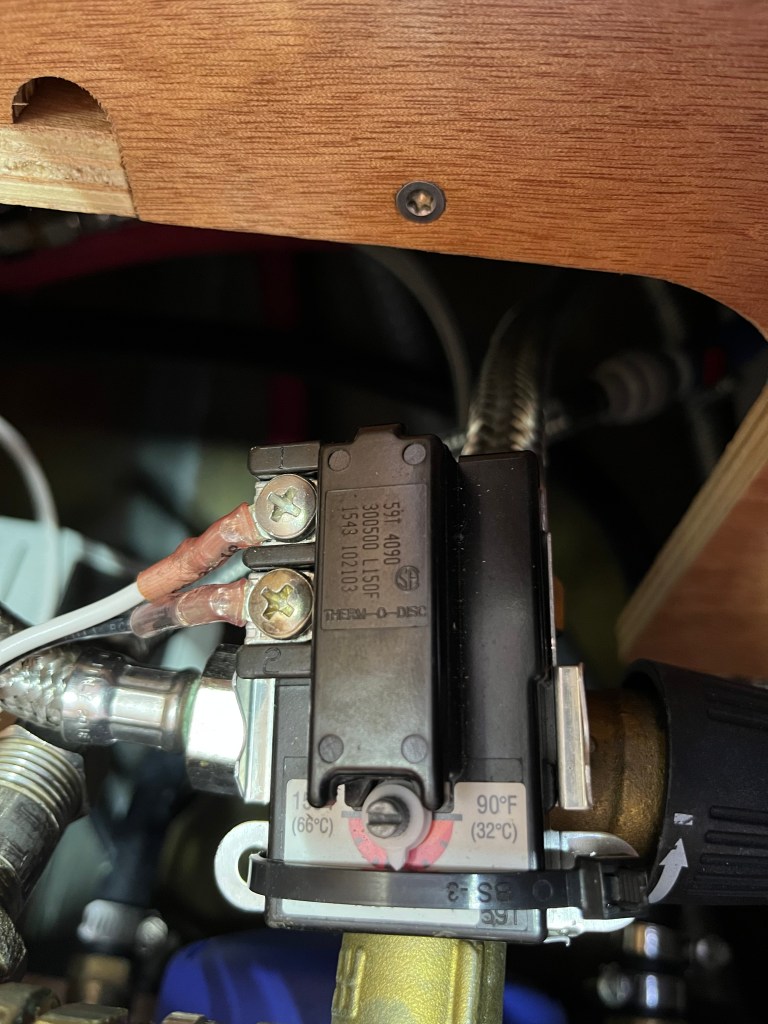
I was cautiously optimistic that I’d found the source of the issue. The reduced thermal load on the port engine must have caused the temperature to read high. I ordered a new thermostat as a spare, and we proceeded around Cape Caution the next day with the port engine back to its normal behavior.
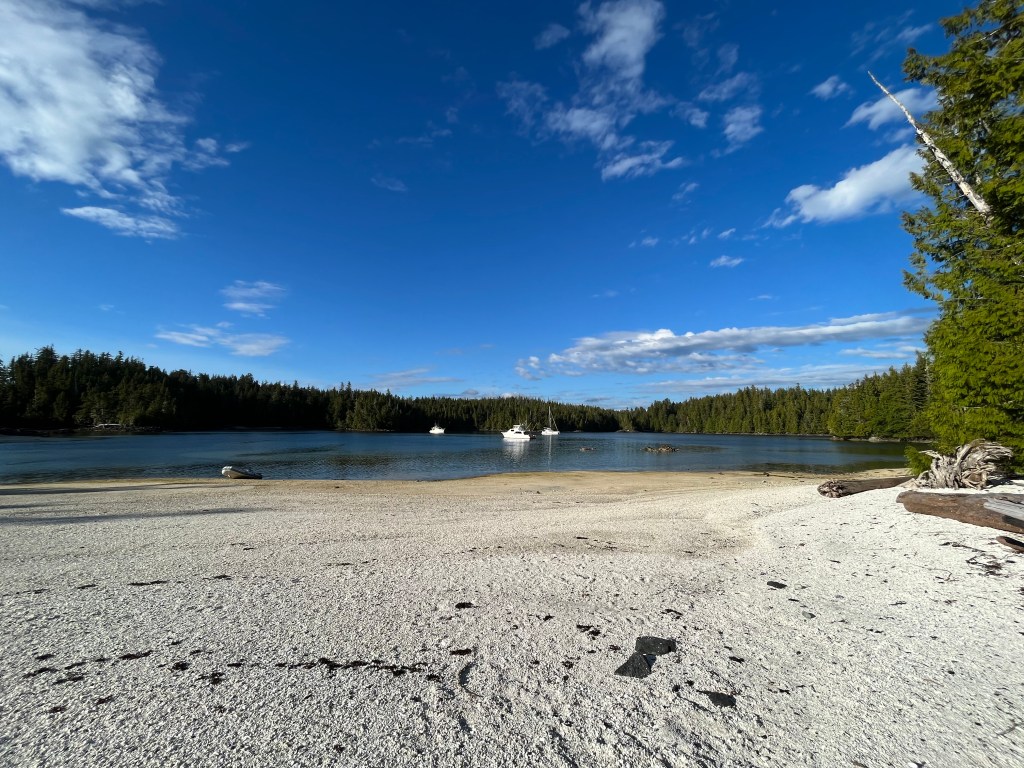
After working on the engine issue and letting my blood pressure fall to more normal levels, we set about exploring Fury Cove. We took the dinghy over to the white beach on the west side of the cove. It is comprised nearly completely of shell fragments and was fascinating to walk upon. The westward window out of the cove provided for a beautiful sunset and a view of conditions in Fitzhugh Sound. I’m glad we made Fury Cove a destination after bypassing it on the way north – one of the cooler anchorages we’d been in and definitely worth the stop!
Our goal for Sunday was to round Cape Caution and head for one of the anchorages on the north side of Queen Charlotte Strait. We’d chosen a nice day for our rounding of the Cape, and found the sea state quite pleasant. I’d wanted to try for Miles Inlet on Bramham Island again, but as we neared I could see a boat up in the anchorage on AIS. Not relishing a tight anchorage, we continued on to Blunden Harbor.
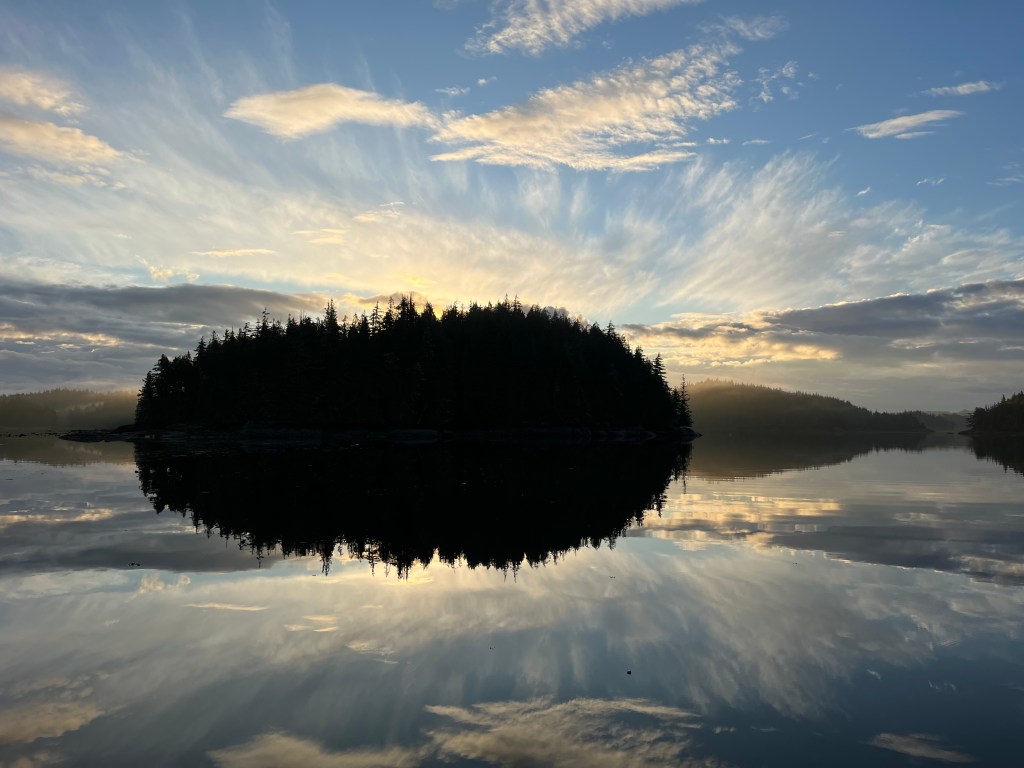
We found Blunden Harbor to be a very nice bay with a wide, shallow anchorage that could accommodate many boats. There were five other boats in the anchorage when we arrived. There is one special spot in the anchorage that gives you a view into Queen Charlotte Strait through a drying gap on the west side of Robinson Island. Sadly this was already occupied – we could see the boat anchored there even from the outside of the bay – so we chose a spot well away from the other boats to give us plenty of room to swing.
We were anchored close to the First Nations site in the bay. We visited this after dinner and marveled at the decaying long house in the trees above the shore.
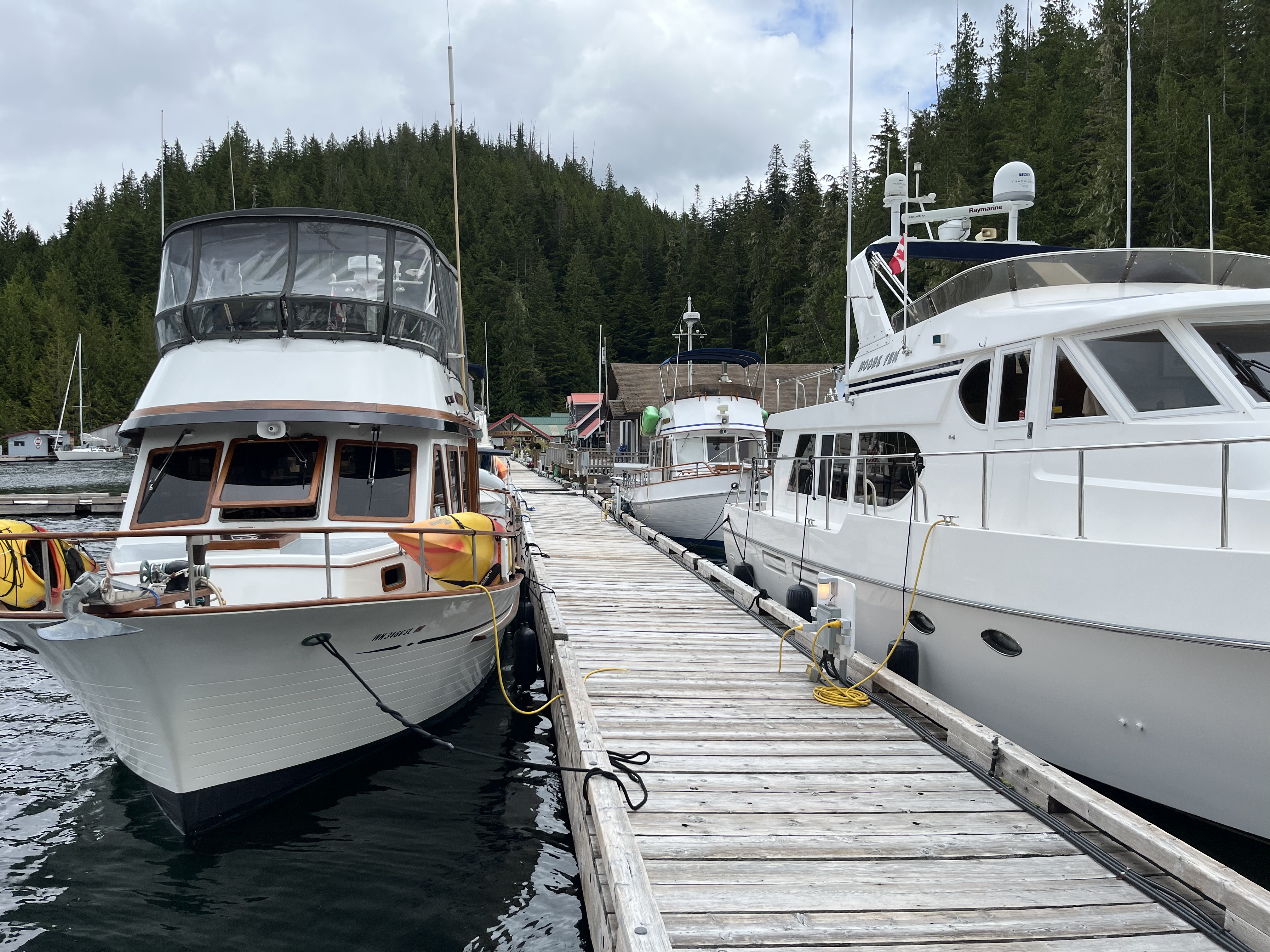
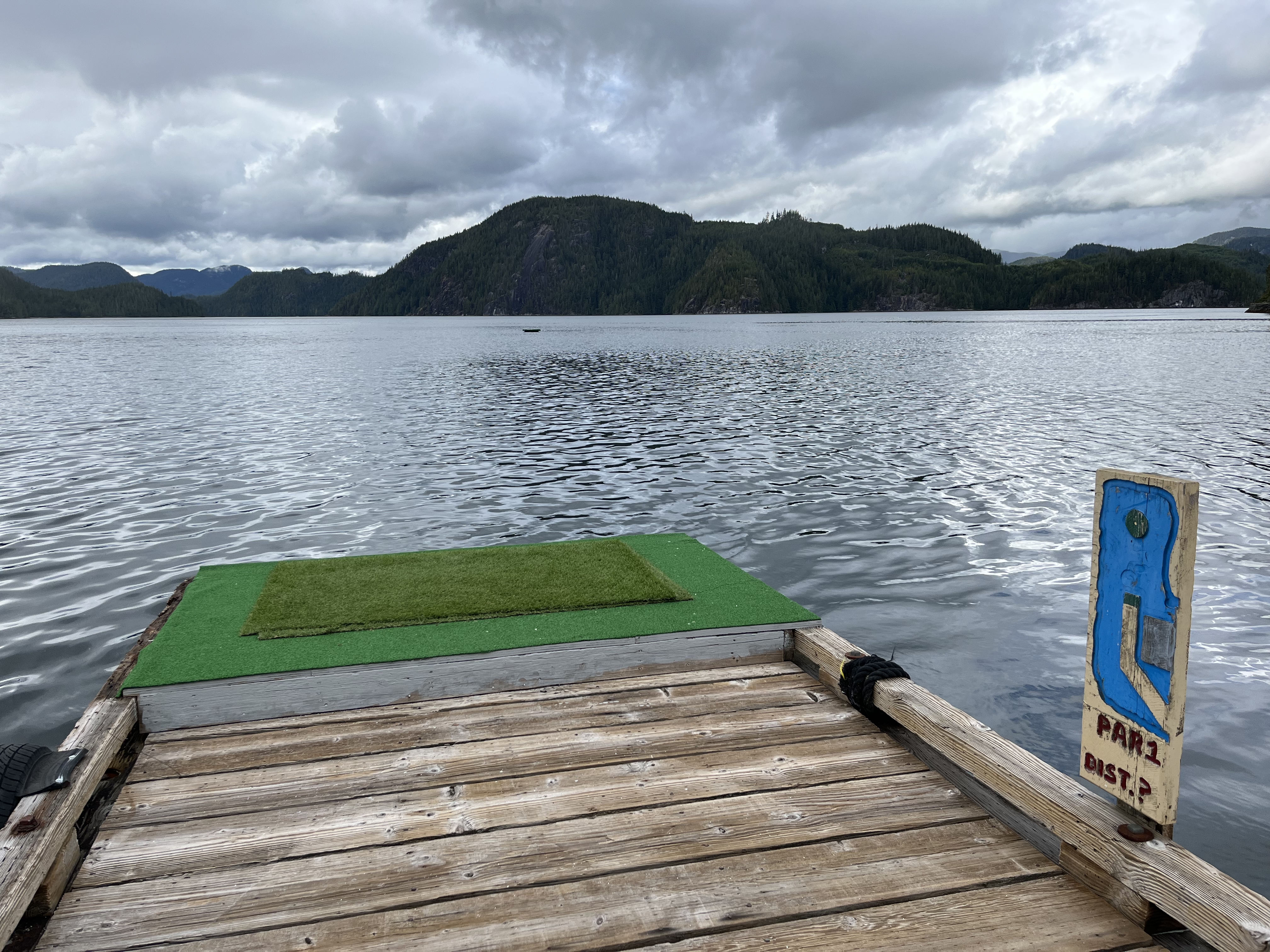
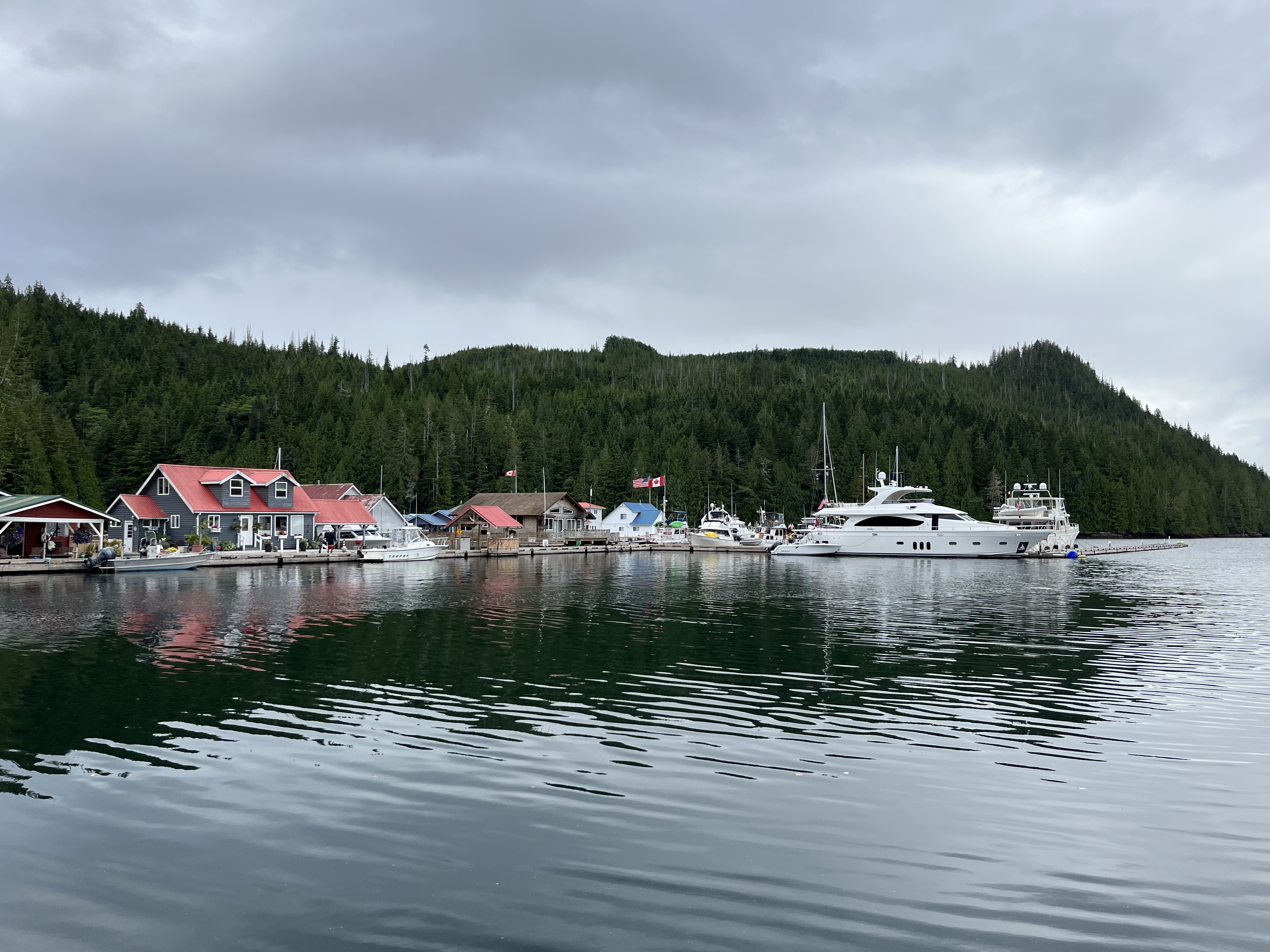
Our next stop was to be Sullivan Bay – cast to be the northern terminus for many cruisers visiting the Broughtons. The marina had space for us on a set of linear docks, and a small set of stores and shops that the crew was excited to visit. I didn’t bother trying to tee up a ball on their “par 1” golf hole – not a shot I was likely to make!
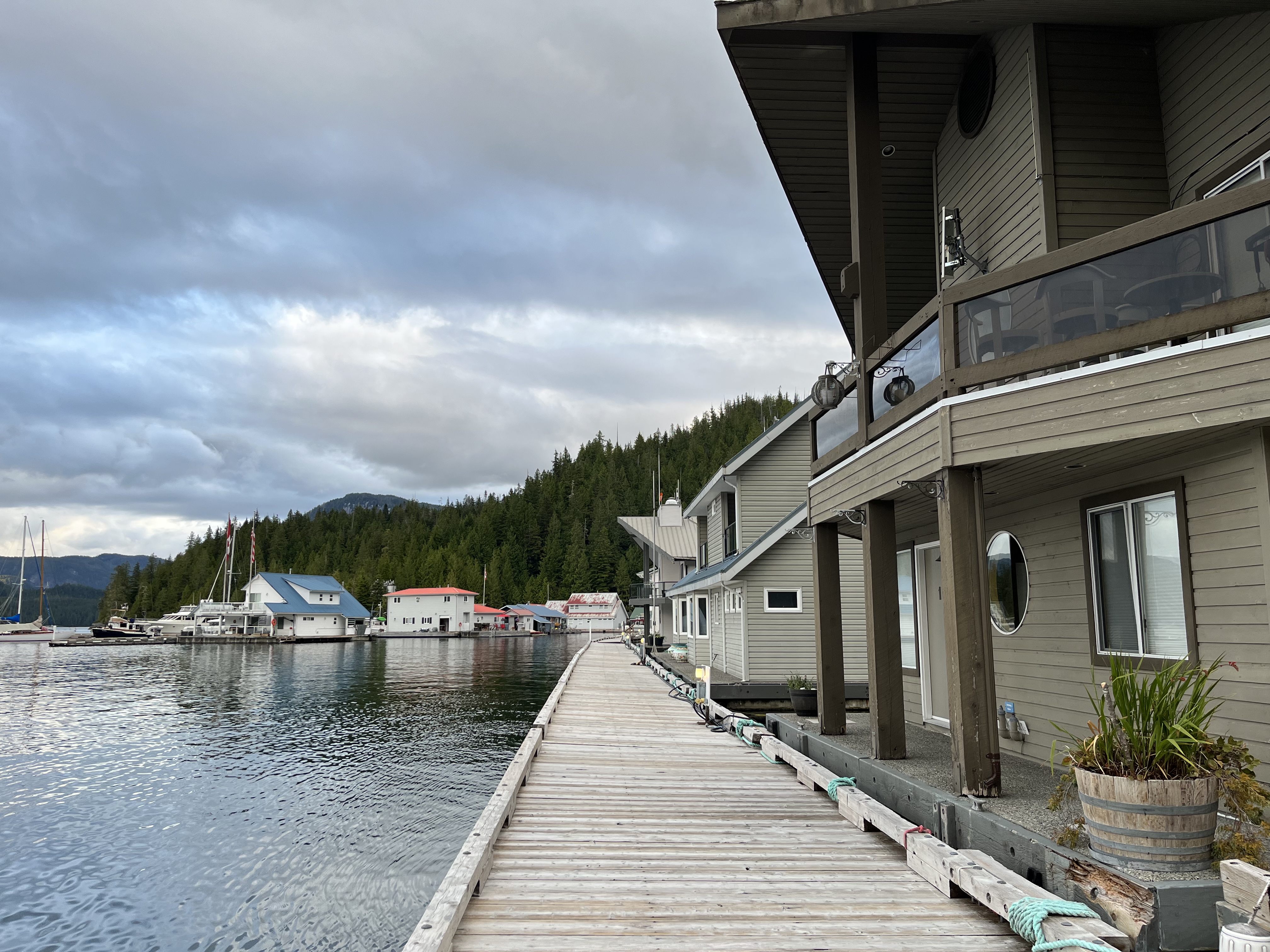
We found the floating homes at the resort to be quite interesting. They appeared to be well manufactured, and of similar design to each other. This type of living could be appealing, getting away from it all.
We were disappointed in the advertised “happy hour” at the resort. We’d read that guests would gather on the dock to drink, share an appetizer, and socialize every day at 5pm. Diligently arriving on time with our tray of snacks, we proceeded to consume them alone. Apparently not a true custom, at least on the day of our visit!
From Sullivan Bay, we made one more stop in the Broughtons before heading back to Vancouver Island. We picked Joe Cove as a midway point, as we had heard good things about it from other cruisers. It was a fine cove with ample anchorage which we shared with a few other boats.
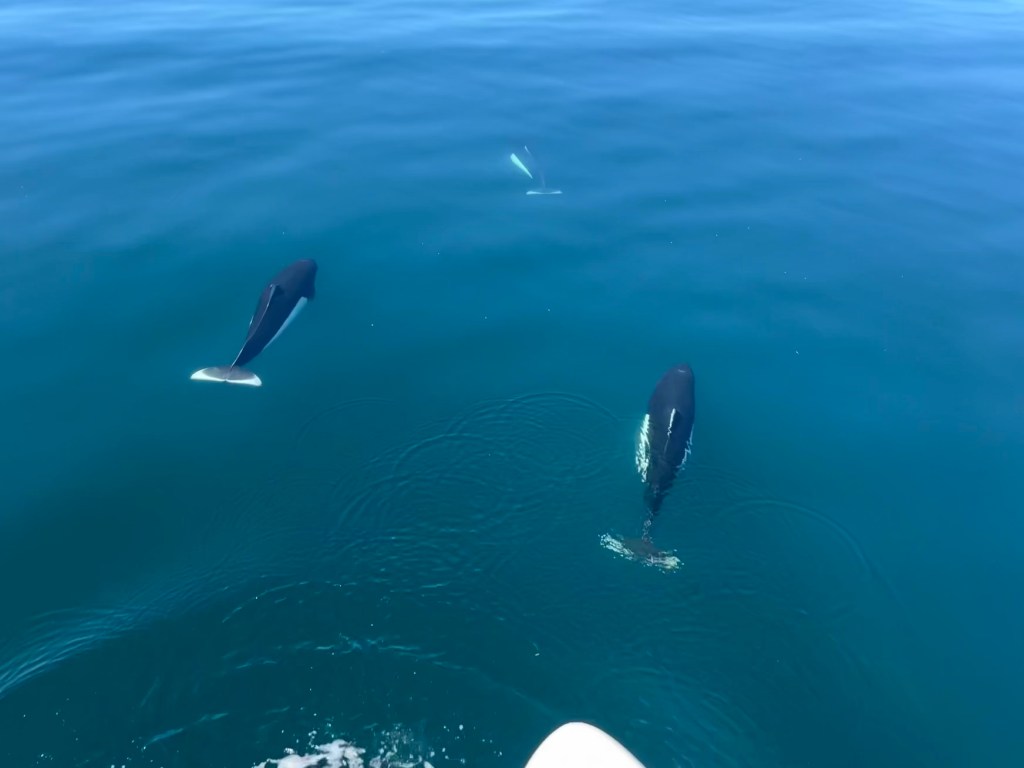
On Wednesday we continued south out of the Broughtons and on to Port McNeil on Vancouver Island. We were excited to get back to an actual “town”, our first since Queen Charlotte City in Haida Gwaii. As we came in south of Malcolm Island, we were greeted by a pod of Dahls porpoises. This particular encounter was magical. The sea was like glass, giving us a very clear view of the animals as they powered through the water. It seemed nearly effortless for them to keep up with the boat, their powerful tails propelling them forward.
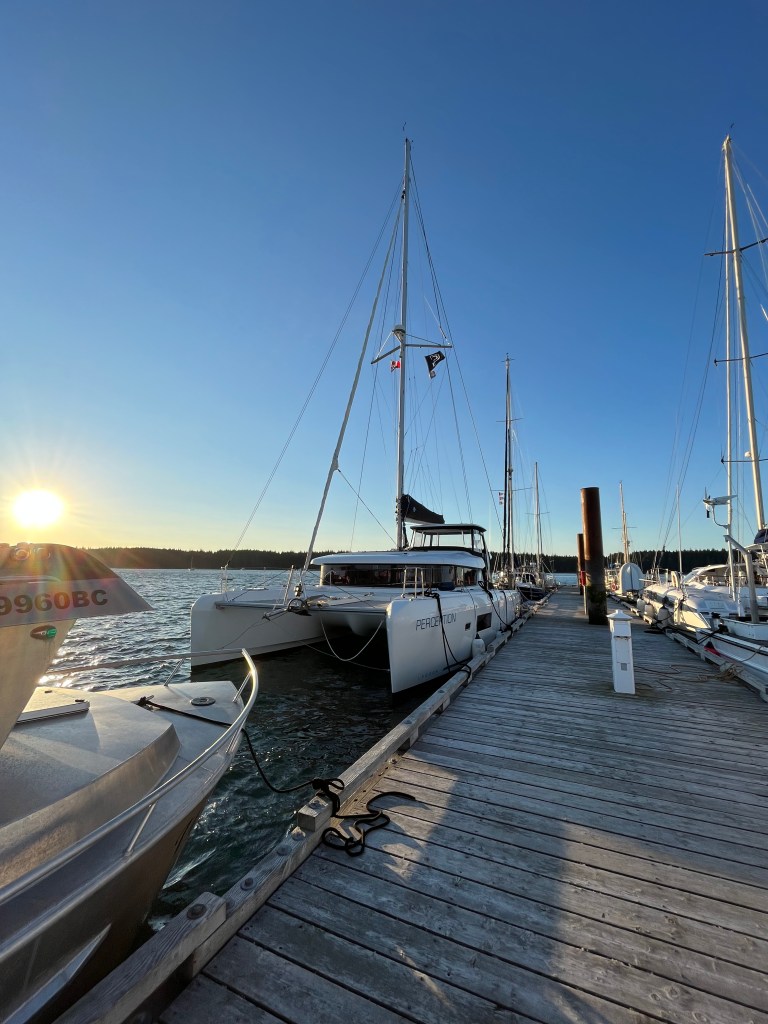
Port McNeil was a welcome rest stop and we spent a couple days there on the Harbor Authority dock. Unfortunately the water was out on the dock, so we filled our tanks at the fuel station but were unable to thoroughly wash down the boat.
It seemed like such a long time ago that we were in Port Hardy, just north of Port McNeil, on our way north into the unknown. Our return south welcomed us into familiar territory. Returning to what seemed to be challenges on the way north brought realization of our growth as a crew. We’d met many hurdles in distance, conditions, anchorages, and isolation along the way, and had so far found ourselves equal to them.
 Sailing Perception