
Crossing the sea to Topolobampo
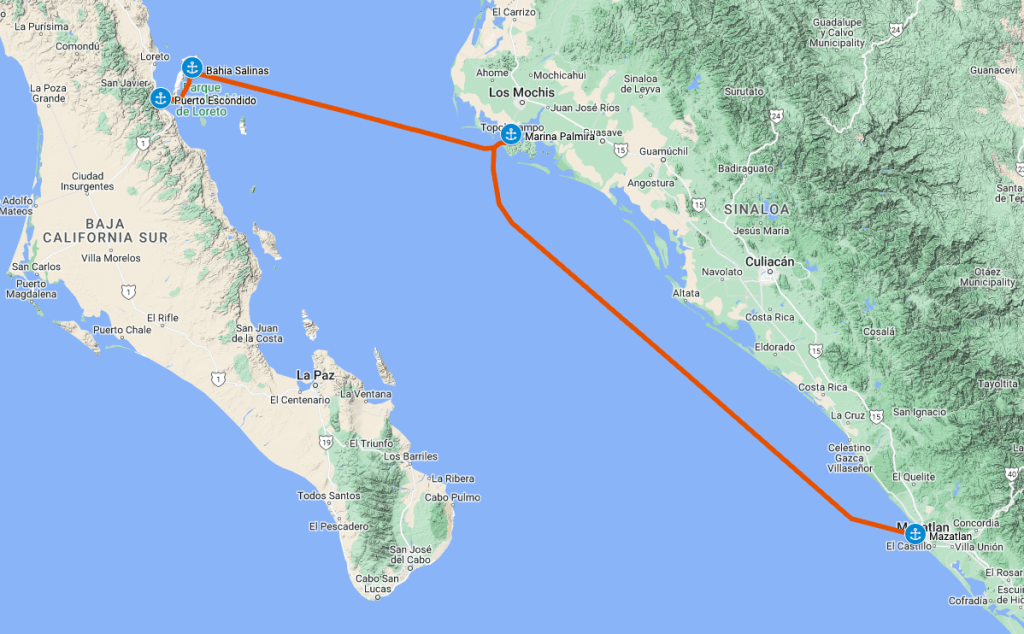
On Monday we started our journey away from Puerto Escondido and across the Sea of Cortez. We had been in Puerto Escondido for ten days, and I was starting to feel the need to move on. Around Thanksgiving we had decided that we would go home to Boise for Christmas, and we now had plane tickets out of Mazatlan that were driving our schedule forward. We had also decided that we would take a train ride on “El Chepe” through the Copper Canyon, and had tickets for the next weekend to do that. Time was pressing on us, a dangerous thing for sailors.
Fortunately the timing for a crossing didn’t look too bad, but neither was it going to be the trip I’d hoped it to be. We had been bashing northwards into the wind ever since we had left Cabo, and I’d envisioned a nice southeasterly sail in north winds across the Sea with fair winds and following seas. The winds for our crossing were set to be still to southeasterly, so we would be beating against light wind on our nose much of the way.
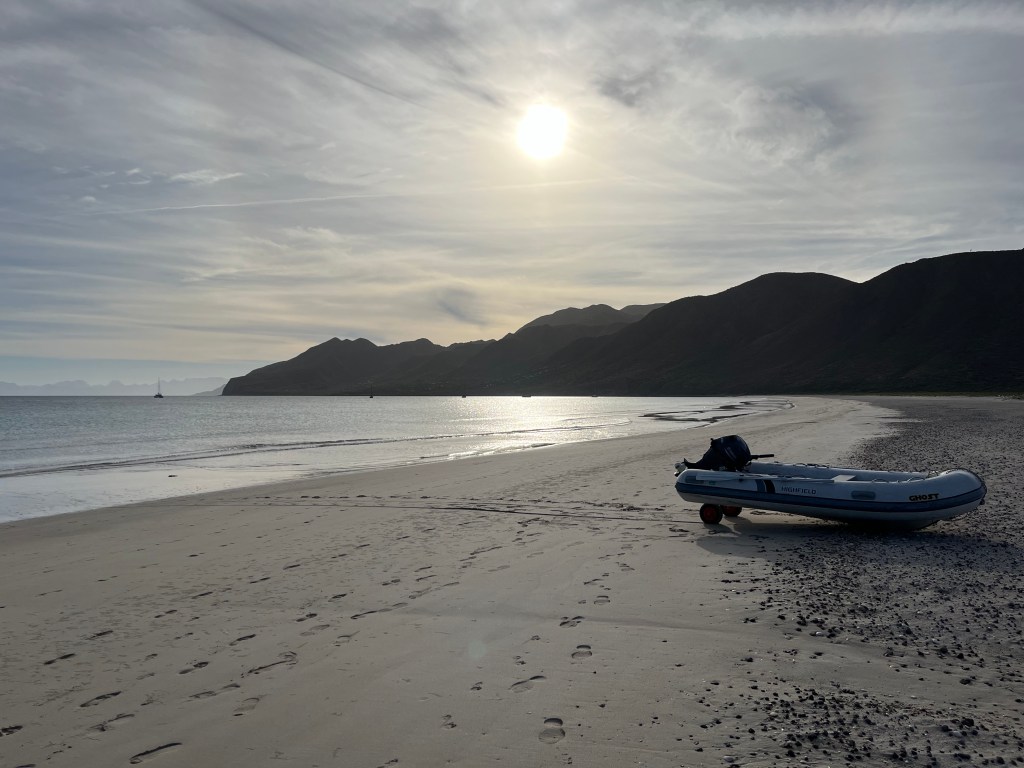
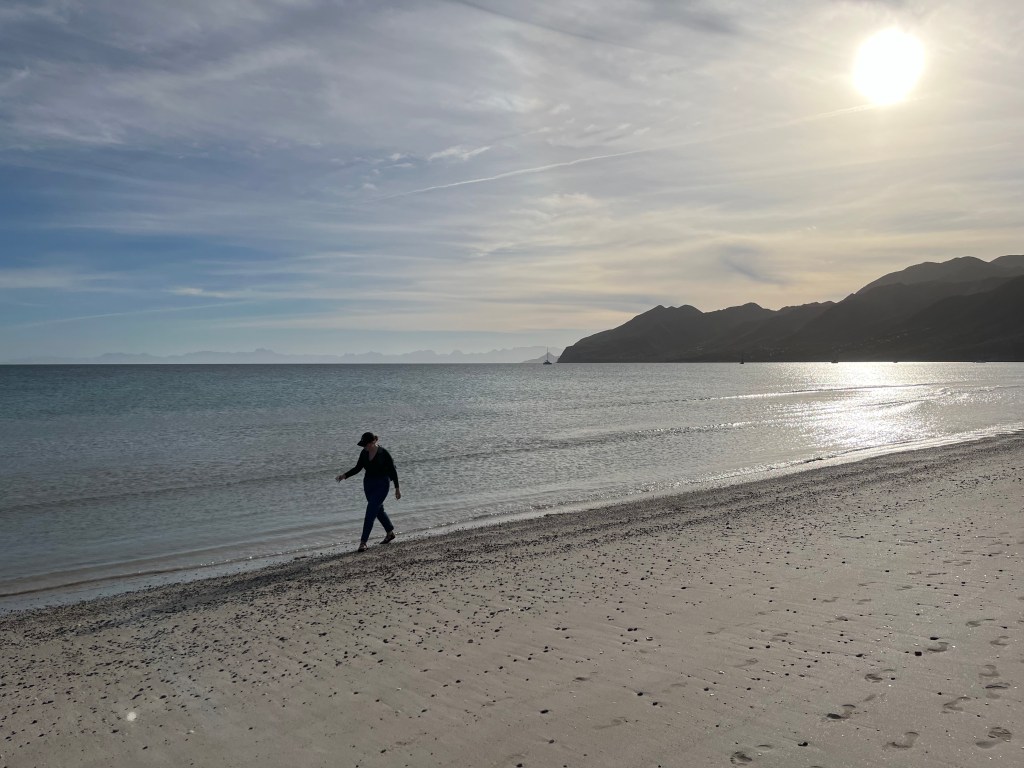
Our first day was just a short hop out to Bahia La Salina on Isla Carmen, the large island to the east of Puerto Escondido and Loreto. This is a nice, broad, gently sloping bay on the northeast side of the island that is protected from the north, and we dropped our hook well out from shore in 20′ of sand.
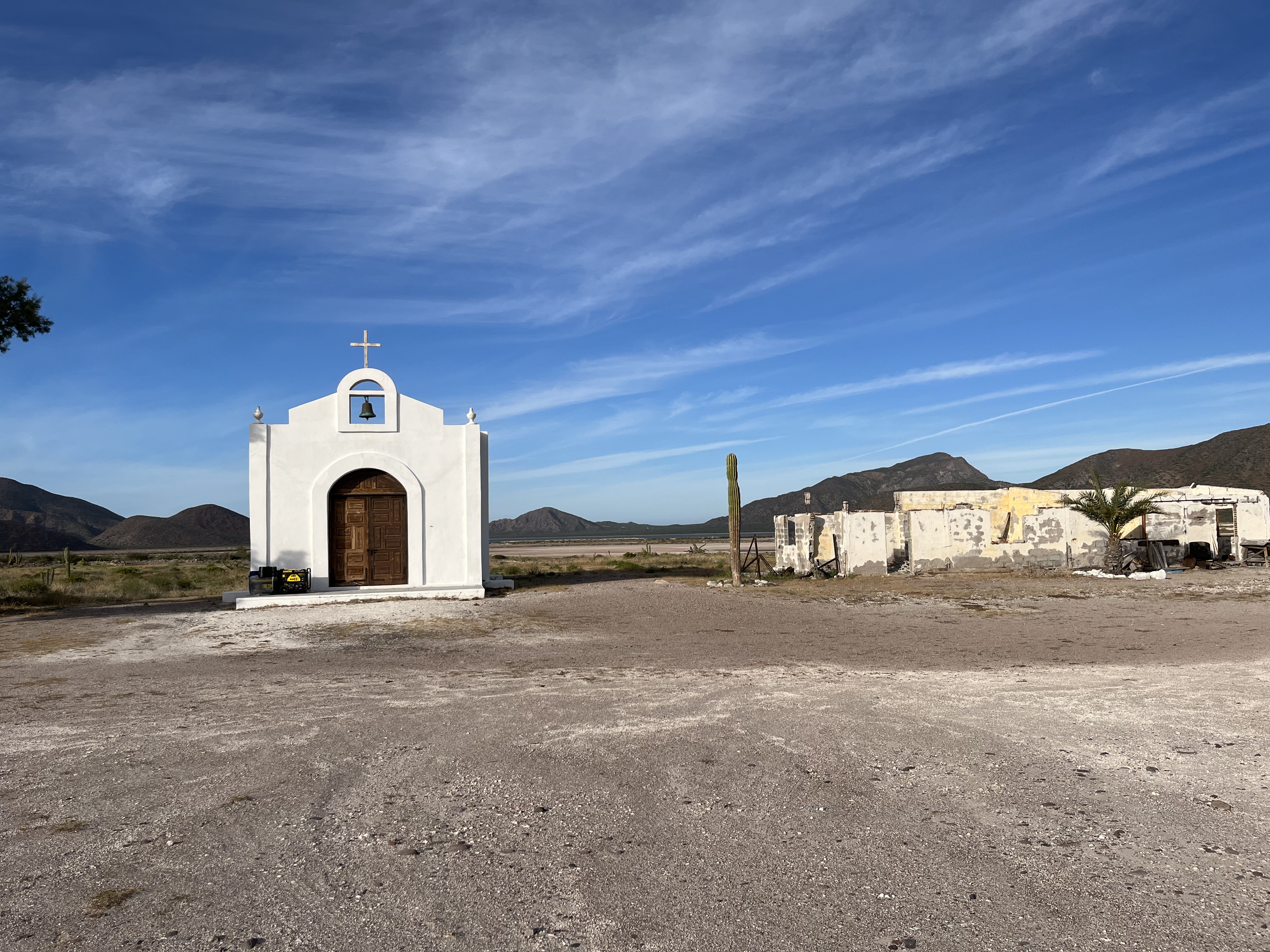
The water was crystal clear in the bay as there is no active settlement ashore and the gentle waves washing ashore didn’t stir up much sand. There had been a salt production facility here in the past, but it had evaporated (ha ha) decades ago when it had become financially unviable. All that remained ashore was a hunters lodge – they hunt big horn sheep here of all things – and a chapel that had been consistently maintained. A caretaker for the hunting lodge lives here permanently, but beyond that the place is deserted.
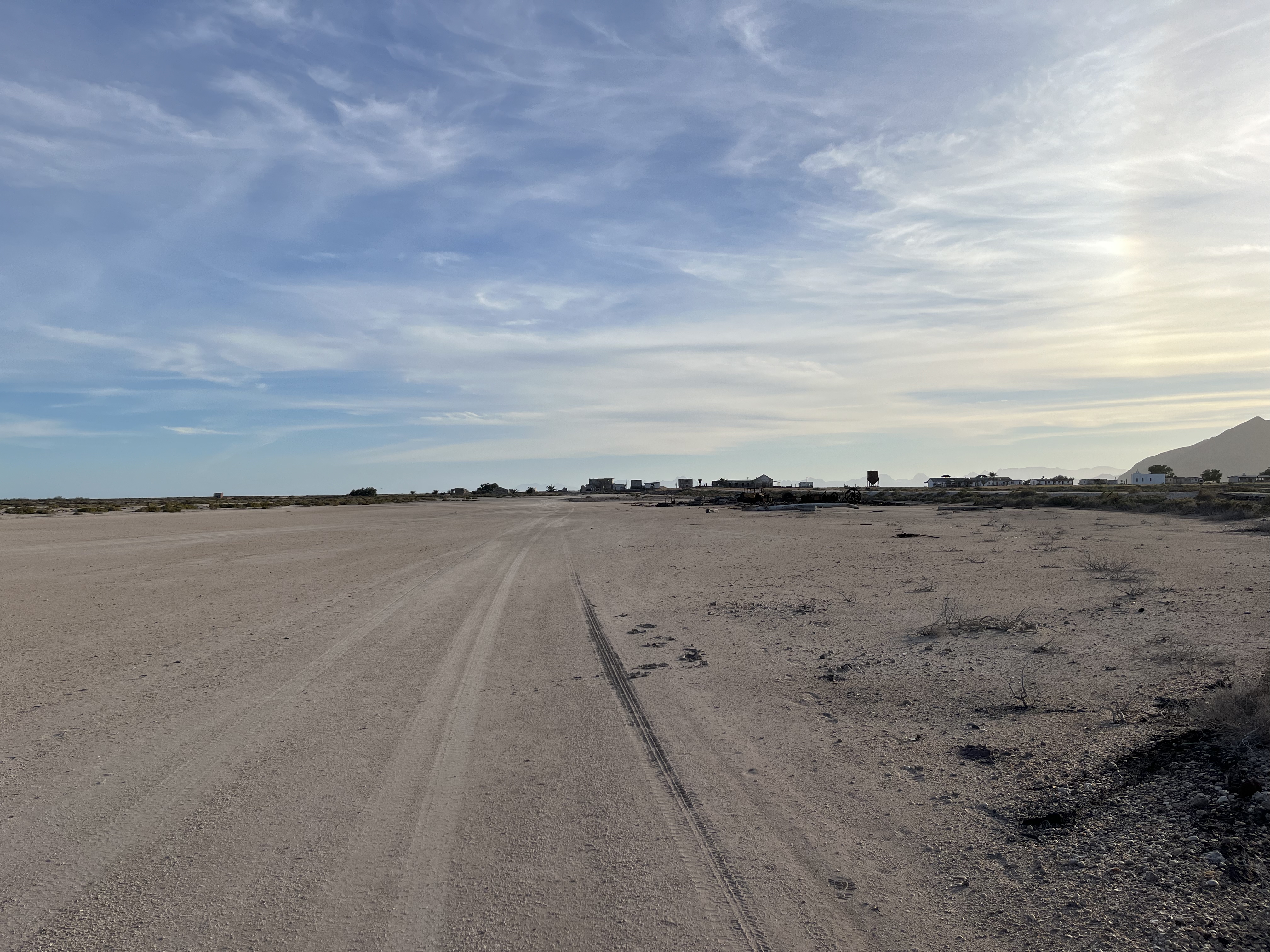
Grace and I decided to take a trip ashore. Melinda was not feeling up to it, so the two of us piled into the dinghy and made an easy beach landing (dinghy wheels!) in the gentle surf. We gawked at the number of shells heaped up on the beach – more than we’d ever seen, with most of them in really good shape. We spotted a few keepers along the way up the shore.
Our main goal here was to see salt pillars that would grow in the inland lagoon where salt had been harvested. These would presumably grow into impressive white forms creating a surreal landscape. We clambered up the beach toward the remnants of the facility and the hunting lodge in front of it.
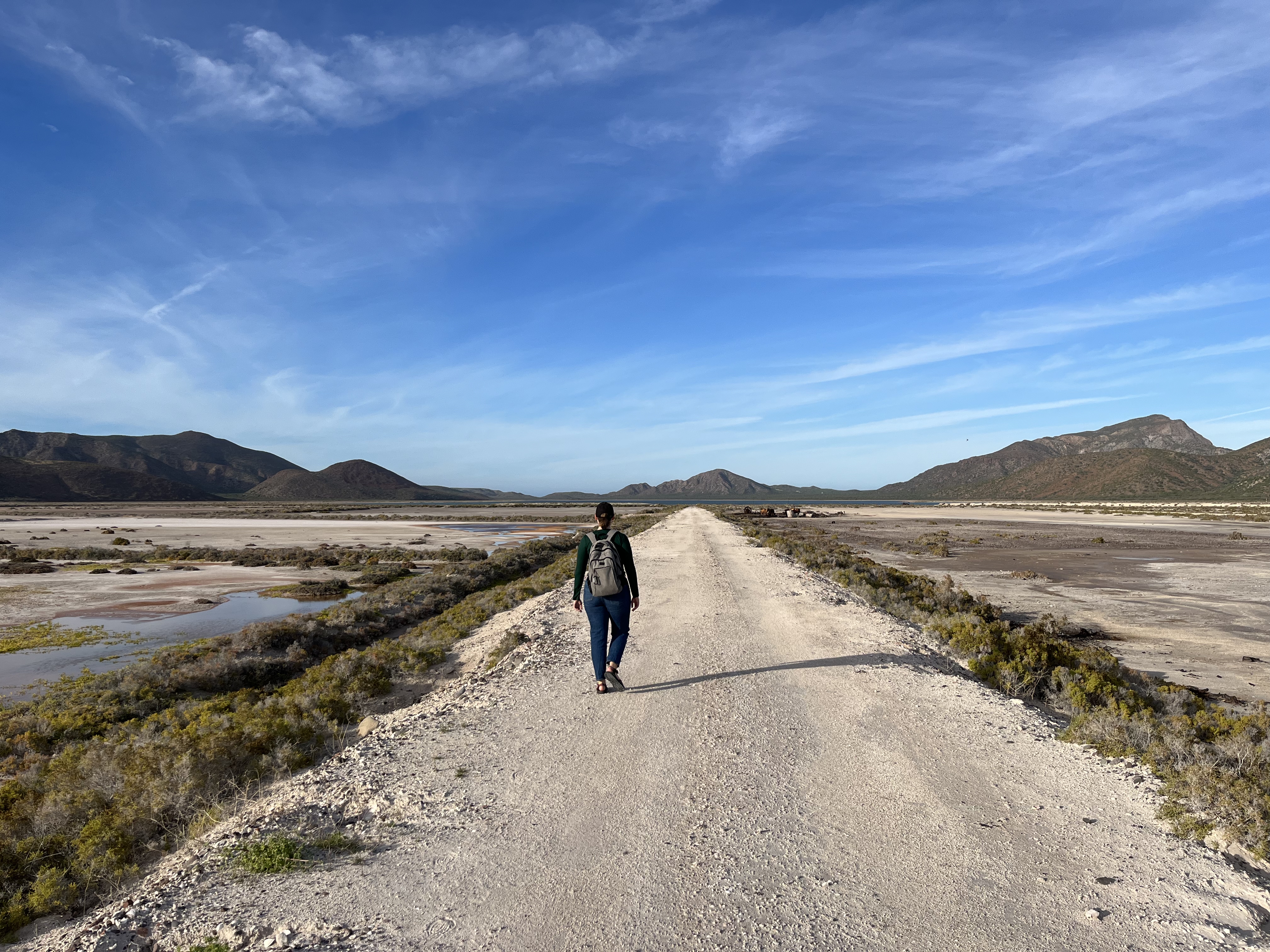
There was no one obviously present at the hunting lodge, and we really didn’t want to poke around in the buildings where people might still be living. We viewed the front of the chapel and walked around the hunting lodge to get to a road leading back to the lagoon. The road was very flat, crunchy, and salt crusted. It seemed a blasted soil, and it was odd to see that salt-tolerant brush could still grow here. We crunched onward towards the lake, but unfortunately could not locate any of the salt pillars.
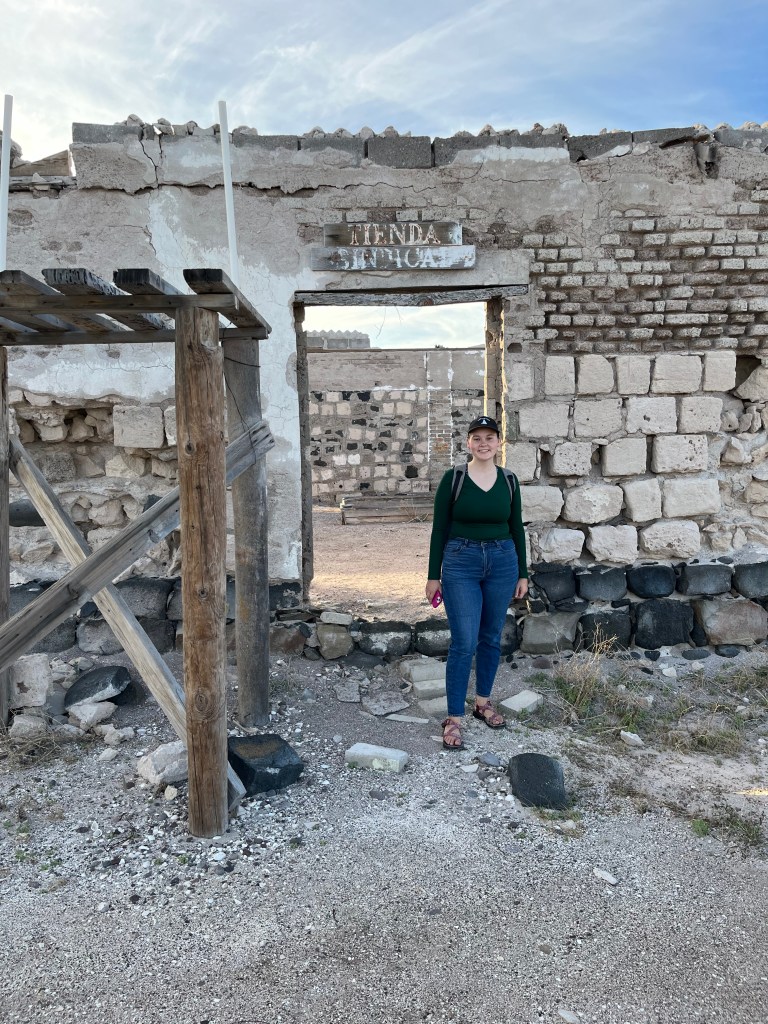
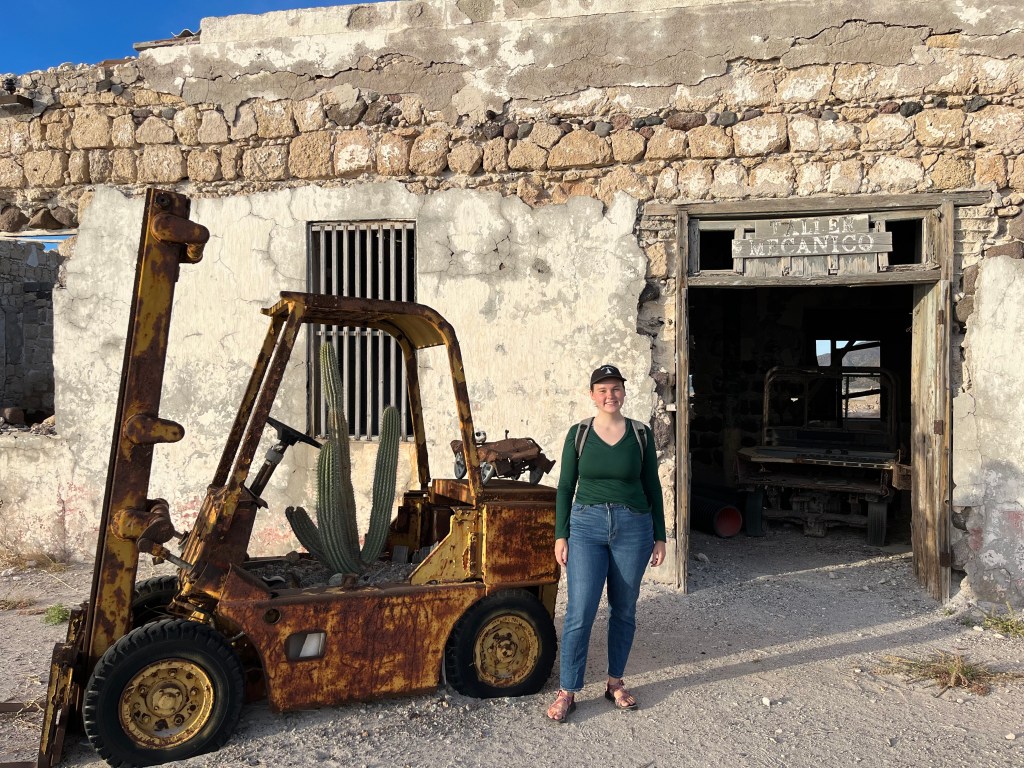
We walked around the edge of the lake for a bit, examining the oddly hard and salted earth. We made our way back to the deserted facility and poked our noses into some of the buildings there. It appeared to have been a relatively well staffed settlement with a commissary and medical facility for the workers. The building ceilings had all collapsed, leaving just the skeletons of walls behind. We enjoyed seeing the two rusted forklifts, each with its own cactus growing in the driver’s seat.
As we passed back by the hunting lodge, we met the caretaker driving his truck out of the group of buildings. We stopped and chatted with him briefly, learning that the salt pillars had disappeared in the last rainy season and would not regrow for several months. Looks like we need to schedule our next visit for late spring!
The next day we raised anchor and headed across the Sea of Cortez. As mentioned above, the wind was really not in our favor, being out of the west-southwest and right on our nose. It was less than 10 knots, so the chop coming at us wasn’t too bad, but it meant a long motor across. As night fell, the wind died, and the sea smoothed out for us.
We had an interesting time that evening listening to some long-range VHF chatter about fishing lines. A boat we’d met back in Puerto Escondido, Crow’s Nest, had left for Mazatlan ahead of us, and was now well down the cost on the mainland side of the Sea of Cortez. I kept hearing them on the VHF, but couldn’t see them anywhere around us. Finally I saw them on AIS almost 100 nm to the southwest of us – I have no idea how their transmission was reaching us at that distance. In any case, they were chatting with a couple other boats about longlines in the area, and the pangas guarding them. Longlines are just that – long fishing lines that are strung between buoys in the ocean, and can become caught on your keel or tangled in your propellors. They can stretch for miles, and are often perpendicular to shore and the path that most cruising boats will take. Sometimes these are patrolled by their fisherman in pangas, and sometimes they are completely unattended. Crow’s Nest had encountered some of the former, and were taking directions from the fishermen regarding how to get around them. I marked their location on the chartplotter for future reference.
As the night grew long, I started the dawn shift that would see us enter the port at Topolobampo. I am never a fan of entering a new port in darkness, but we had made better time motoring than I’d anticipated and we could either start entering the channel in darkness or loiter out in the Sea until daylight.
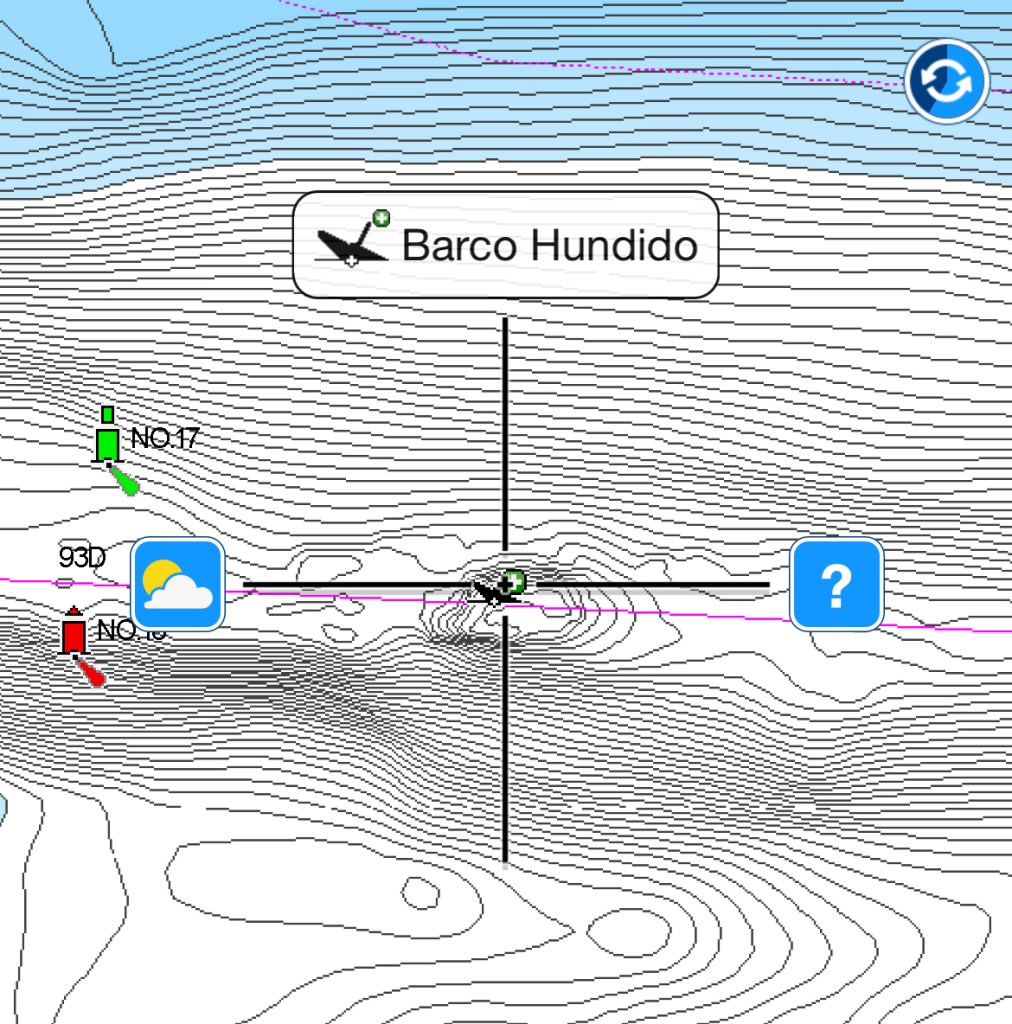
As we approached, I could clearly see the channel markers that were indicated on the charts. The red and green Aids to Navigation (ATONs) were flashing their colors regularly. Since they seemed to line up with the charts, we proceeded to enter in darkness. It was good to note that since there is a refinery offloading point in the harbor, the channel was very well marked. This made coming in at night a breeze for the most part. The only disconcerting part of the entry was the indication of a submerged wreck of the “Barco Hundido” with a “0 feet sounding” right in in the middle of the channel. Presumably this meant you could hit the thing – we never found out, skirting around the spot entirely.
Dawn was lighting up the sky and the land as we pulled into the marina. Besides dodging a few fishing boats on their way out, there wasn’t much traffic to worry us. We found our slip assignment after poking around the dock to find the slip numbers, and pulled Perception safely in to her spot.
Topolobampo and El Chepe y Barrancas del cobre
Melinda
While in Puerto Escondido and sketching out our next steps, Jim mentioned that the Panama Posse recommends visiting Mexico’s Copper Canyon if you have a chance. He also remembered that there was a representative from Marina Topolobampo at the Panama Posse party we attended in Chula Vista, and that was a good launching point for the train trip to the Copper Canyon. The English El Chepe webpage wouldn’t load, but we leveraged Grace’s language skills to book tickets on a Spanish language El Chepe website, and it wasn’t long before we had an itinerary for a December trip inland for our first major land excursion in Mexico.
After waiting out a blow in the Sea of Cortez, we crossed overnight from Isla Carmen to Topolobampo, found our slip and settled in early in the morning. We spent the rest of the day resting and working aboard the boat. Javier, a marina representative dropped by to offer the driving and guide services of the marina and the following day Grace and I planned to go explore Los Mochis. Jim’s colleague from Mexico had warned him to be extra careful in Sinaloa – it is on the US Department of State’s list of DO NOT TRAVEL TO – and cautioned that Grace and I should not go out alone. Feeling that having a marina employee with us qualified as not being alone, off we went for a day of sightseeing. Our first stop was the Jardin Botánico (botanical garden) in Los Mochis, followed by a scenic drive up to the top of a hill in the center of the city, a great lunch, a trip to Walmart for a few provisions, and finally a nopales (cactus fruit) ice cream cone – which is a local specialty. All the while, we got to know Javi and a little about his family. This is something we always enjoy, spending time with someone local is the best way to see an new place. Javi brought us back to the boat and arranged to pick us up to meet the train in the morning.

On Friday morning, we boarded El Chepe at it’s Pacific terminus in Los Mochis for our weekend excursion. From Wikipedia, “The El Chepe train crosses the Sierra Madre Occidental, part of the range that in the United States is called the Rocky Mountains. There is no road covering the trajectory. It runs 673 km (418 mi), traversing the Copper Canyon, a rugged series of canyons that have led some to call this the most scenic railroad trip on the continent. It is both an important transportation system for locals and a draw for tourists. The tracks pass over 37 bridges and through 86 tunnels, rising as high as 2,400 m (7,900 ft) above sea level near Divisadero (the continental divide), a popular lookout spot over the canyons.”
We were set to travel from the sunny, warm coast up to the cold and potentially snowy mountains; and I for one was looking forward to some winter weather. It being just 10 days before Christmas, I was thrilled that the train also played some excellently curated Christmas music in English. The train ride was spectacular. We were awed by the scenery at every turn. The dining car was a special treat, it had panoramic windows and we took a booth on the second floor of the car where we especially enjoyed our dining hour vistas.
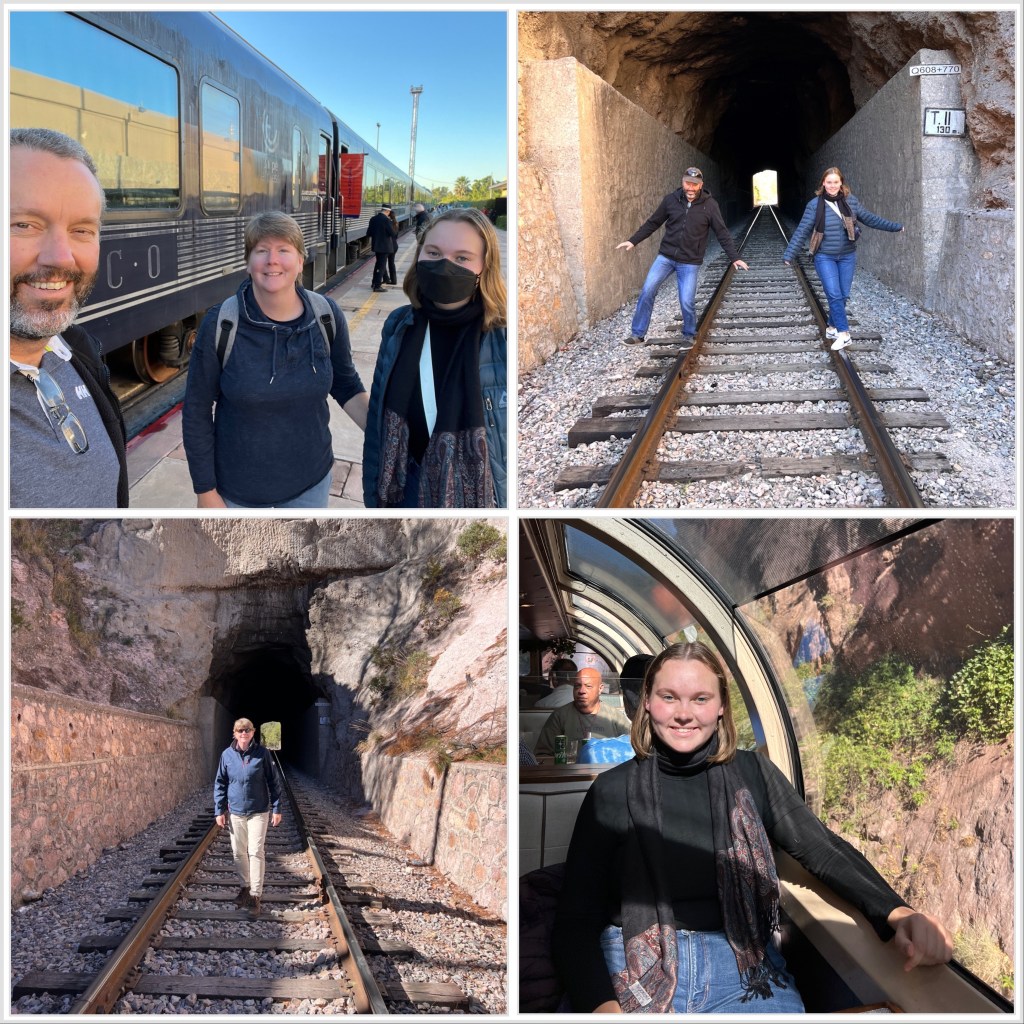
After riding for about 9 hours to Creel, Chihuahua, we disembarked to spend the night in Creel. Creel is a former logging town of about 5,000 people largely inhabited by the Rarámuri or Tarahumara people. This group of Indigenous people of the Americas are renowned for their long-distance running ability. We stayed the night and the next day arranged a guide/driver to take us back to the Divisidero (Continental Divide) where we could access the Copper Canyon. The drive was about 45 minutes, and along the way our driver stopped to show us another divide. The often reclusive Tarahumara people were having a reunion in the area and hundreds of people were gathered about in small family units awaiting the festivities. I had hoped we would see some kids along the way and had brought a sack of fun-sized candy bars from the US for the occasion. We handed out candy and decks of playing cards to the families we encountered. They politely accepted our small gifts.
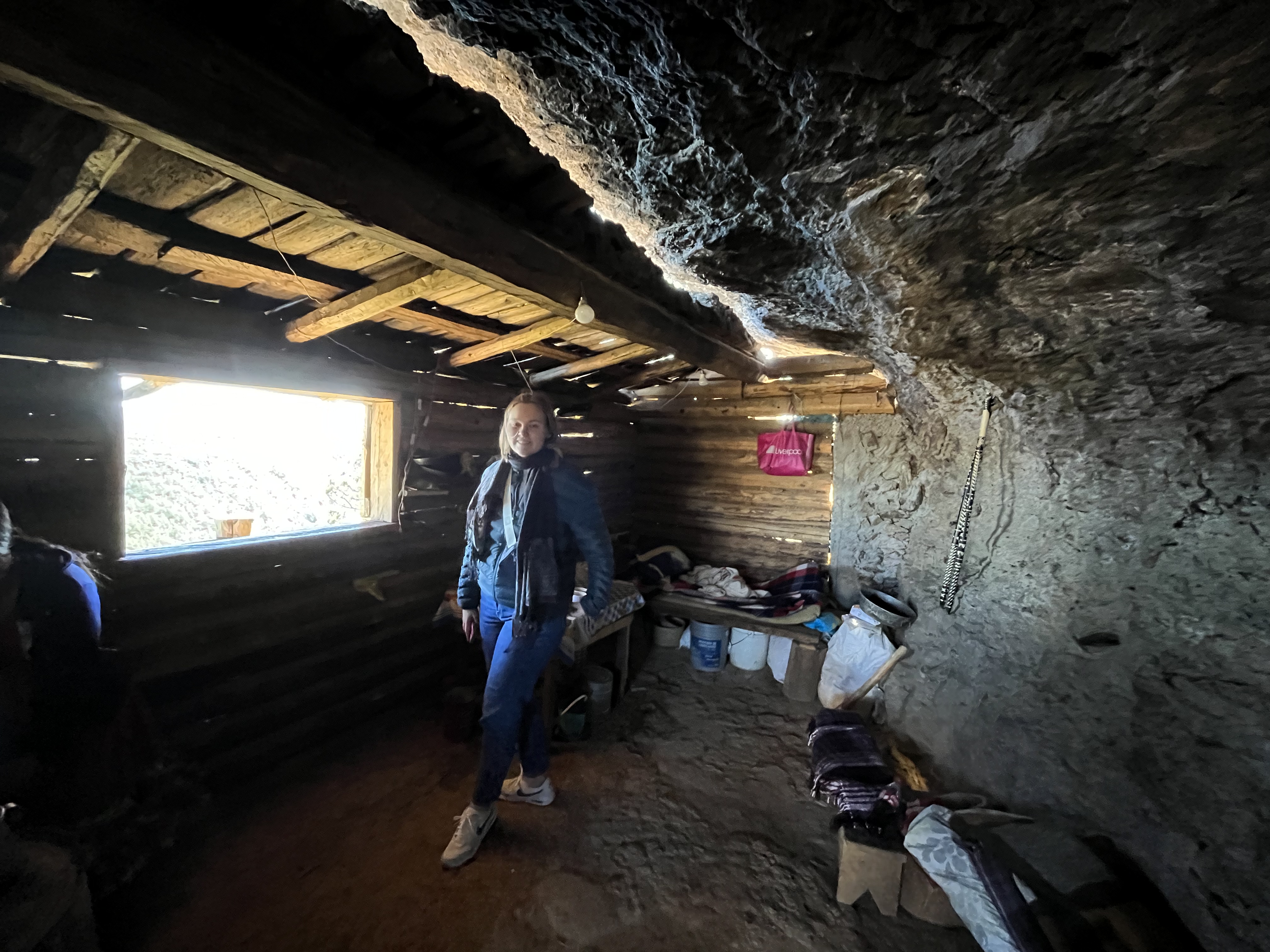
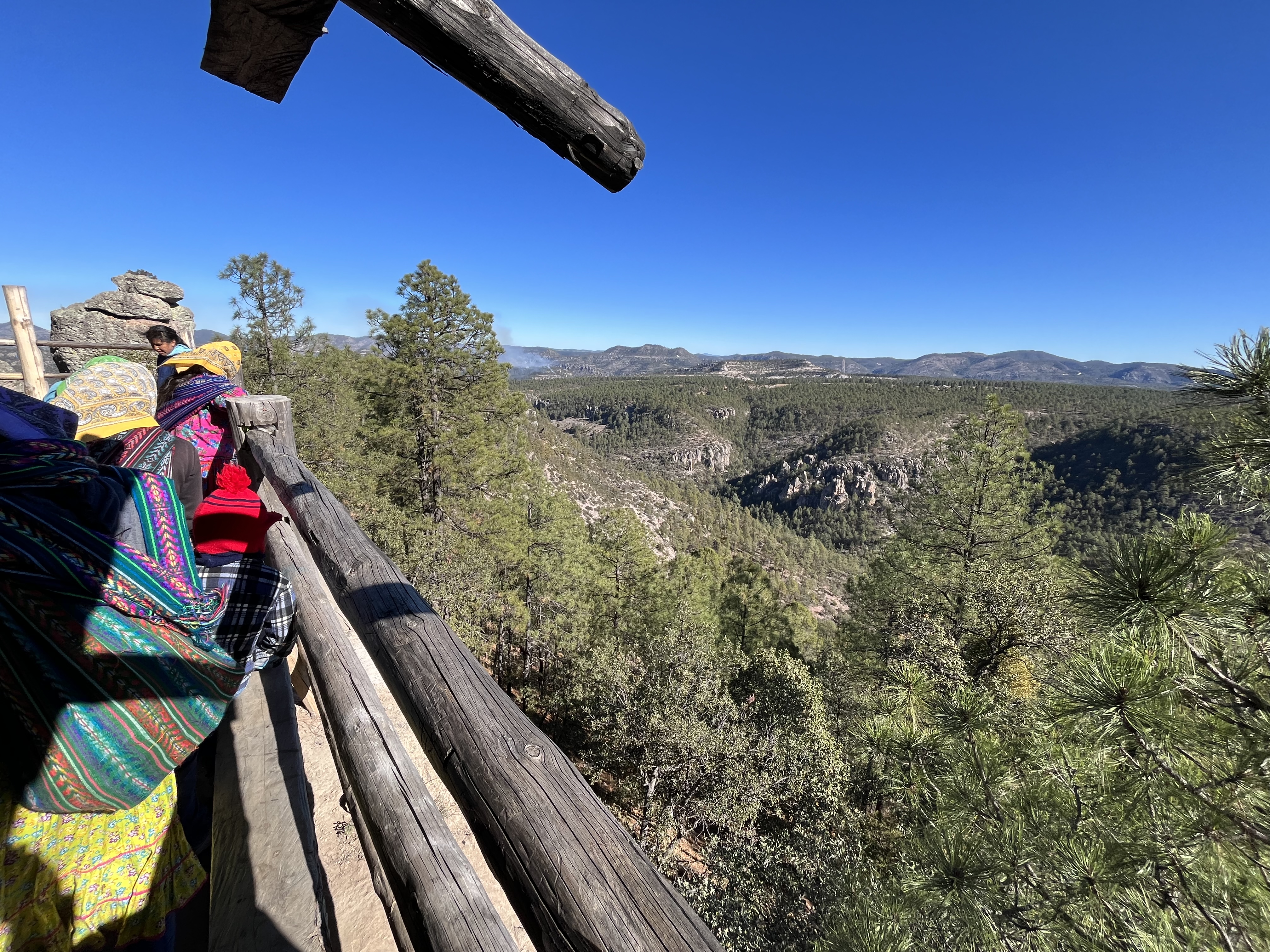
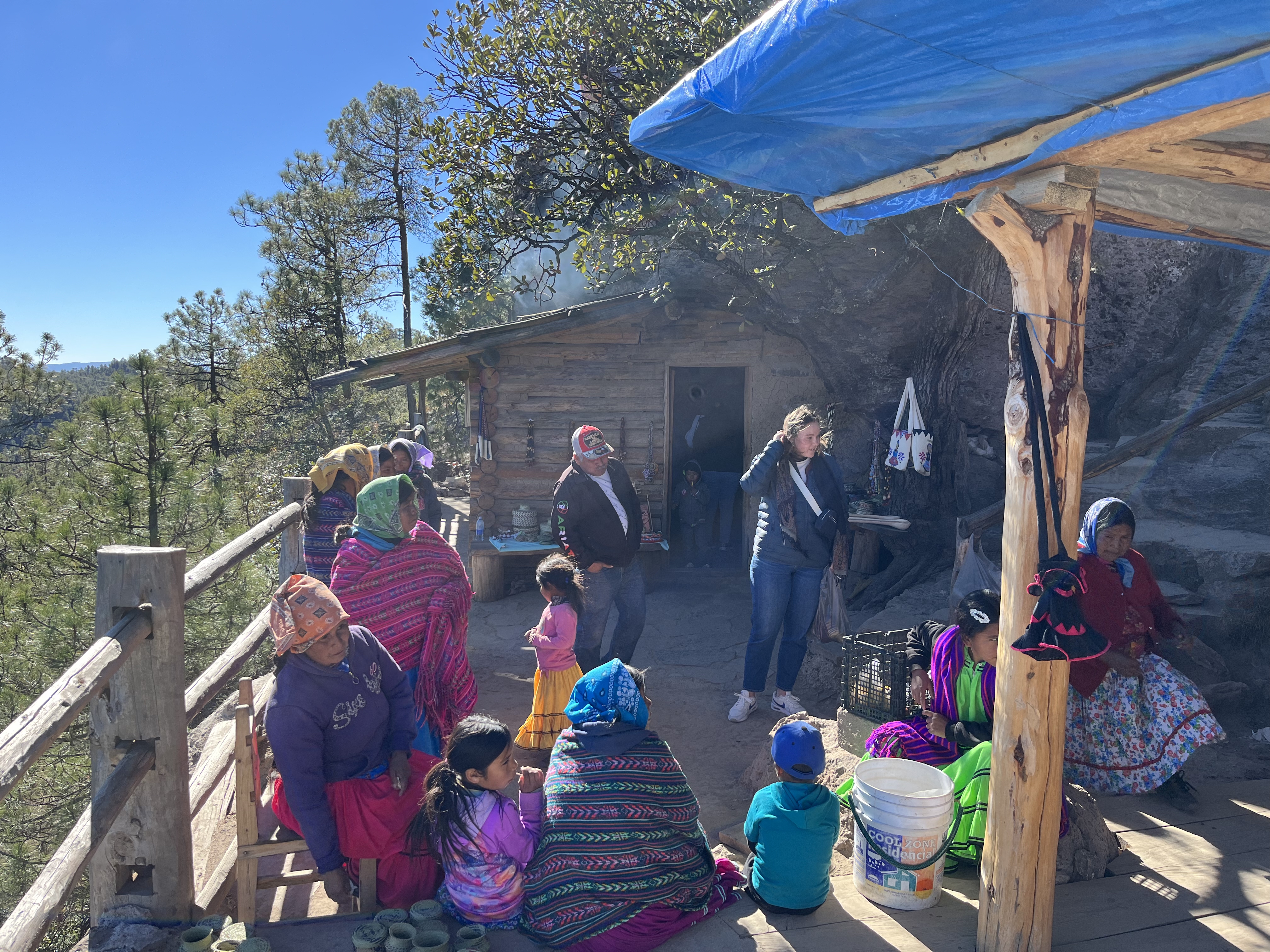
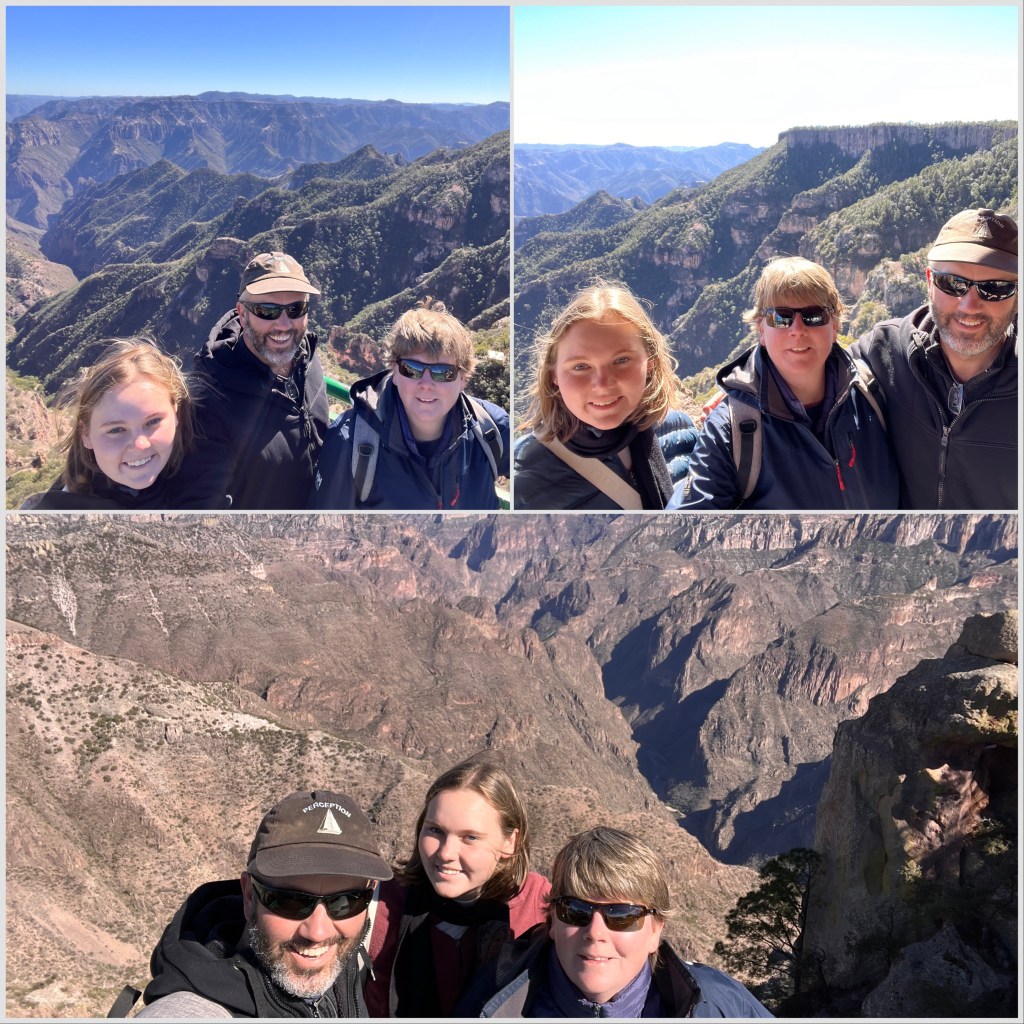
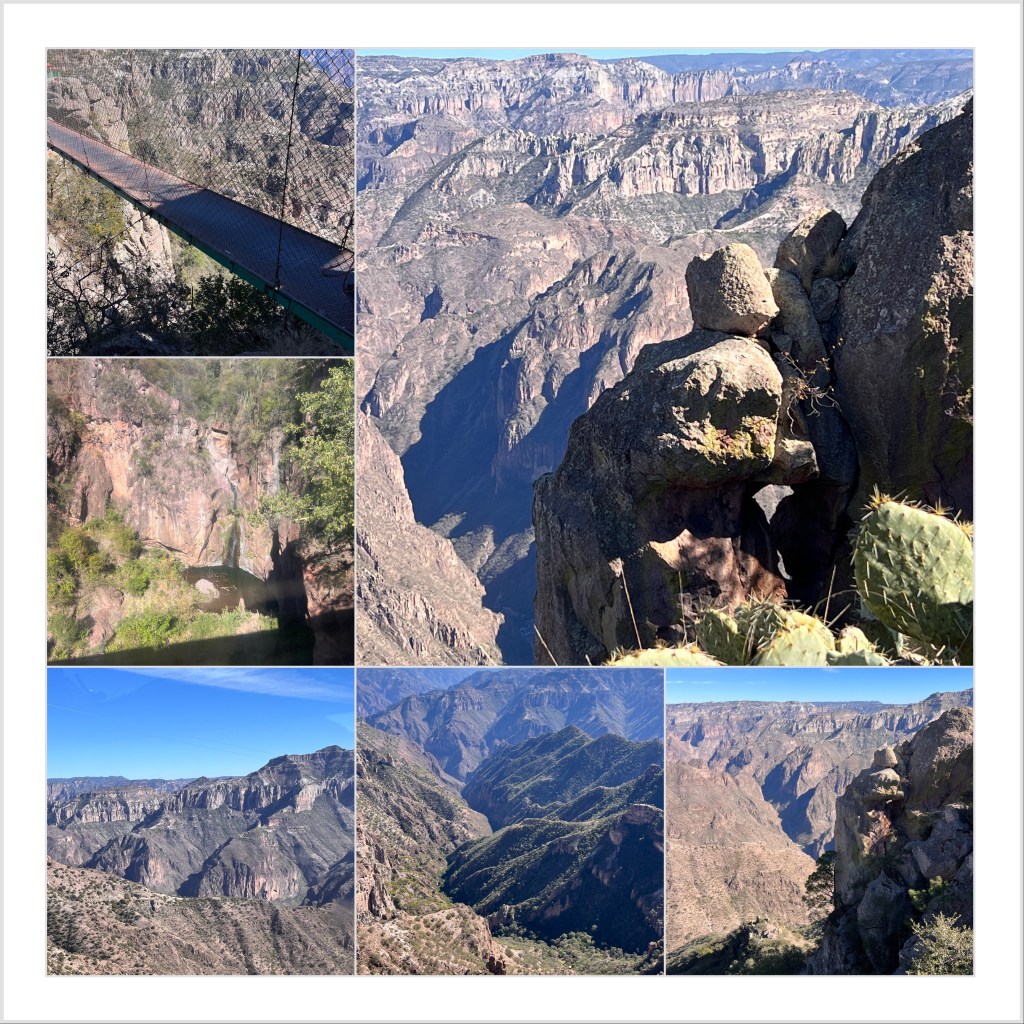
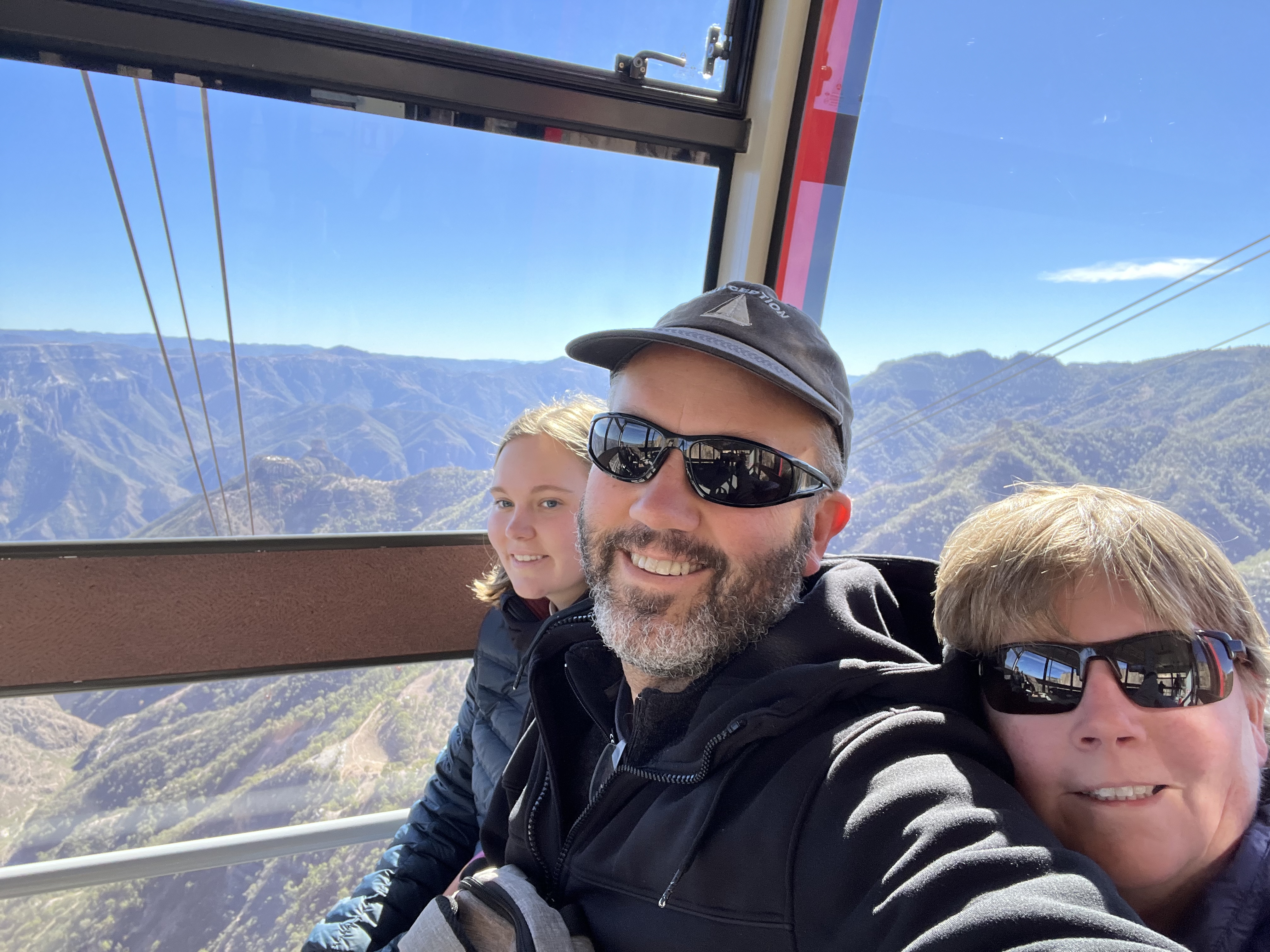
Our guide led us into a cave above the canyon where people were obviously living and we felt like we were intruding. I can’t imagine what they must have thought of us and gave them the remaining candy bars in hopes of making up for our likely unwelcome intrusion. We piled back in the car and our next stop was the spectacular Barrancas del Cobre, or Copper Canyon. The tracks of El Chepe and the Divisidero Station sit right on the divide and once you cross the platform, the Copper Canyon opens up before your eyes. It is an astounding view. The Barrancas del Cobre covers 25,000 square miles – 4 times the size of the Grand Canyon. At Divisadero, you can take the world’s 2nd longest zipline (8,350 feet!) or the 3rd longest gondola to the saddle for 360 degree views of the canyon. We opted for the gondola ride and it did not disappoint. At the end of the day, we returned to Creel and the next morning reboarded El Chepe to return to the boat.
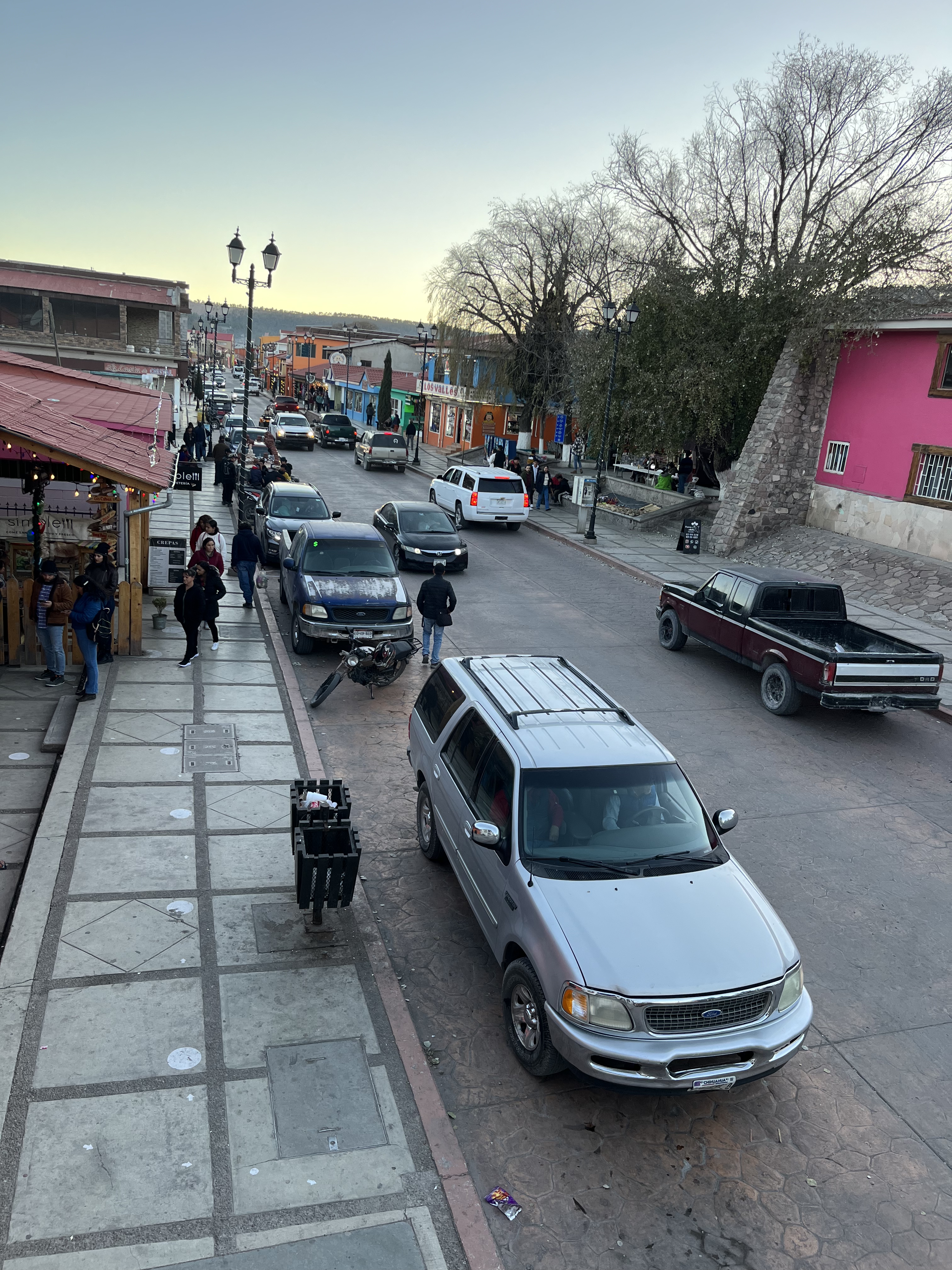
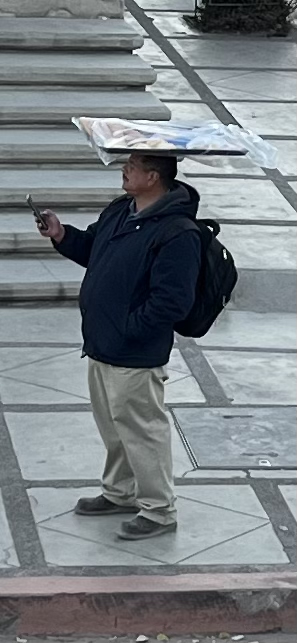
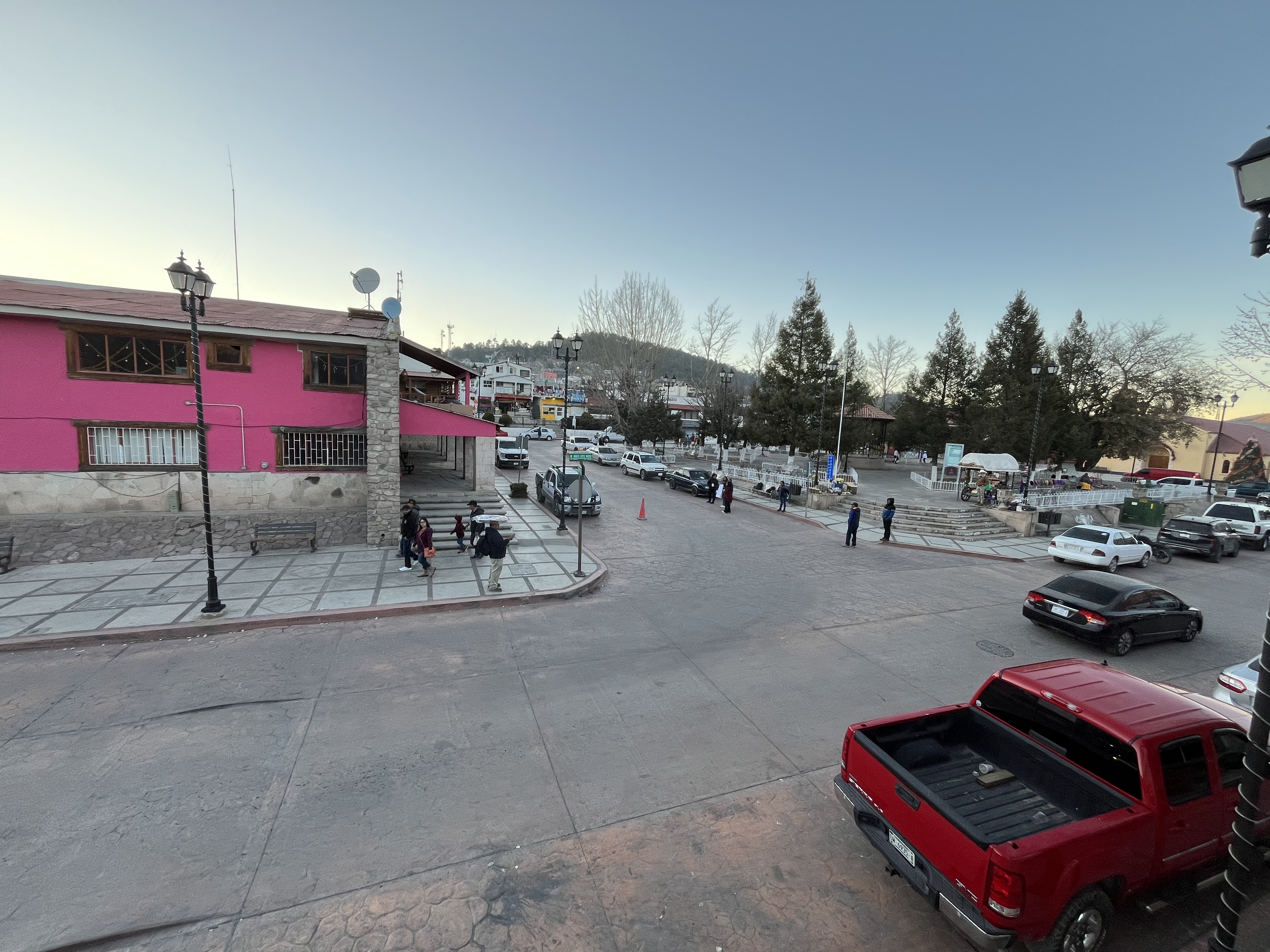
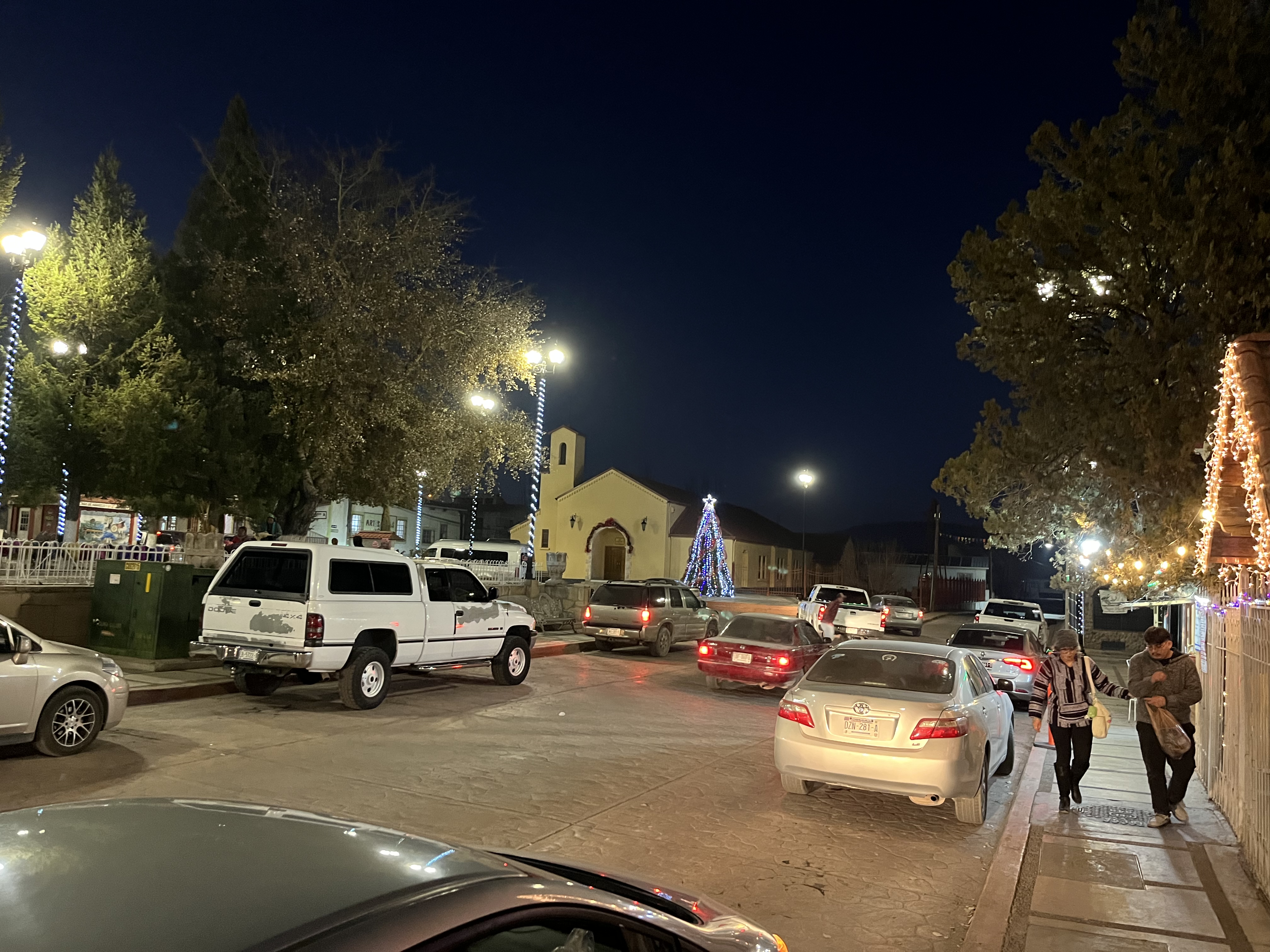
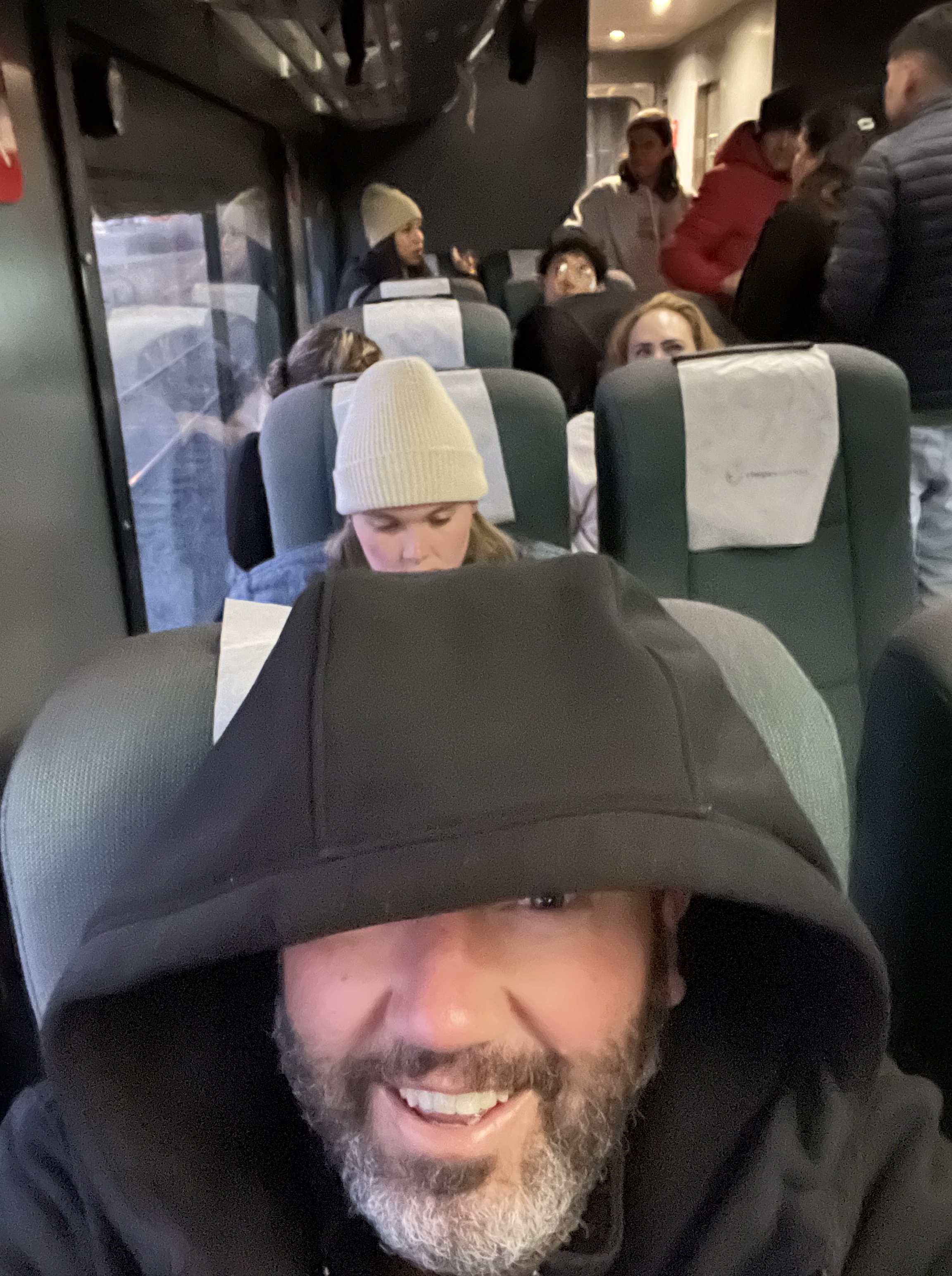
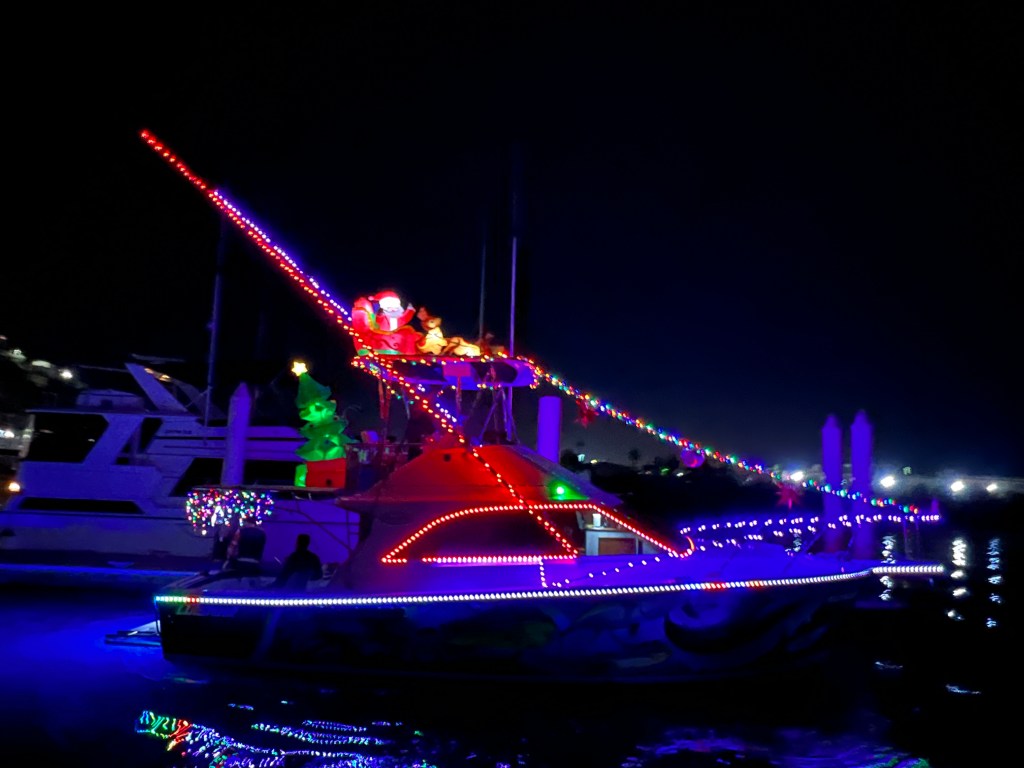
Upon our arrival in Los Mochis, Nelson, the marina manager, and Javier picked us up. They took us to get a burger at a place that was remarkably like Five Guys which we all enjoyed tremendously. A Christmas parade was about to start in Los Mochis, and an astounding number of people were out and ready to watch. We made our way to the highway to take us back to Topolobampo but found ourselves still in heavy traffic. It turns out that Los Mochis we also having a parade – a lighted yacht parade on the waterfront, but it had supposedly taken place earlier in the evening. As we approached the small marina town, it became clearer what the traffic was all about – the town was overrun with parade goers gridlocked on the narrow streets and an extensive police blockade was forcing everyone to turn around and return to Los Mochis, no exceptions. As we approached, the crew of Perception grew increasingly concerned – it was almost 10 p.m. by now and we were due to leave at 6 a.m. for a passage to Mazatlán where we had airline tickets home for Christmas. It turns out our fears were in vain as Nelson’s relationship with the police and town officials was our ticket through the blockade. We were stopped 3 more times and 3 more times waved on through and within a few minutes we were back in the marina and reunited with Perception. Had we been in a taxi, we would have had no choice but return again to Los Mochis for a miserable wait for the road to open back up – potentially delaying our departure and putting our Christmas trip home in jeopardy. The worst thing you can have aboard a sailboat is an airline ticket. Strict schedules and sailing do not mix, and the pressure to make it someplace to not lose expensive reservations or meet a visitor can result in making poor choices that can be dangerous. This time it turned out fine, but we vowed to not make such close connections again.
On to Mazatlan
The morning after our return from the Copper Canyon was Monday, and we were eager to head south to Mazatlan to be in place for our flights out to Boise on Friday the 22nd. We had reservations in Marina El Cid in Mazatlan which we hoped would be a nice place to leave Perception while we were away. Shortly after daybreak we pulled away from the dock and headed back out into the Topolobampo channel.
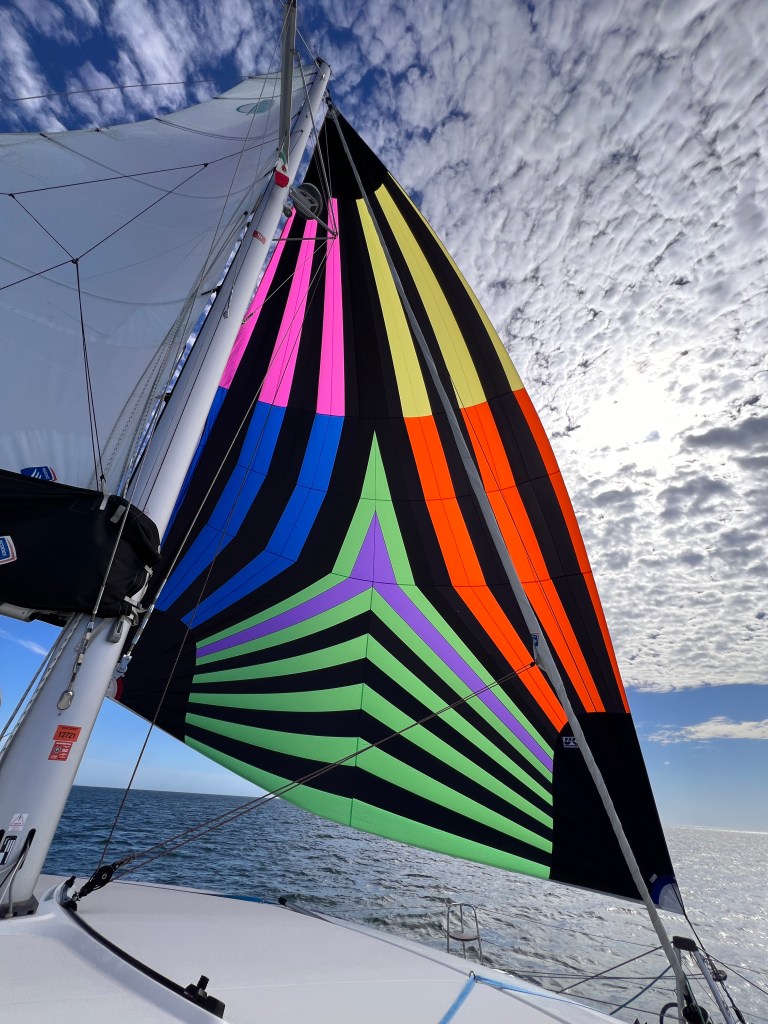
Once we exited into the Sea of Cortez, we found that we had a decent following wind for sailing. We put up the spinnaker and for a few hours really flew southwards. The wind continued to build, and once it started gusting over 15 knots we dropped the spinnaker and continued sailing with the jib and main. As evening approached we lost the wind, and started up our engines to move during the night. As night rolled around and the miles passed under our keels, we slowly made our way towards Mazatlan.
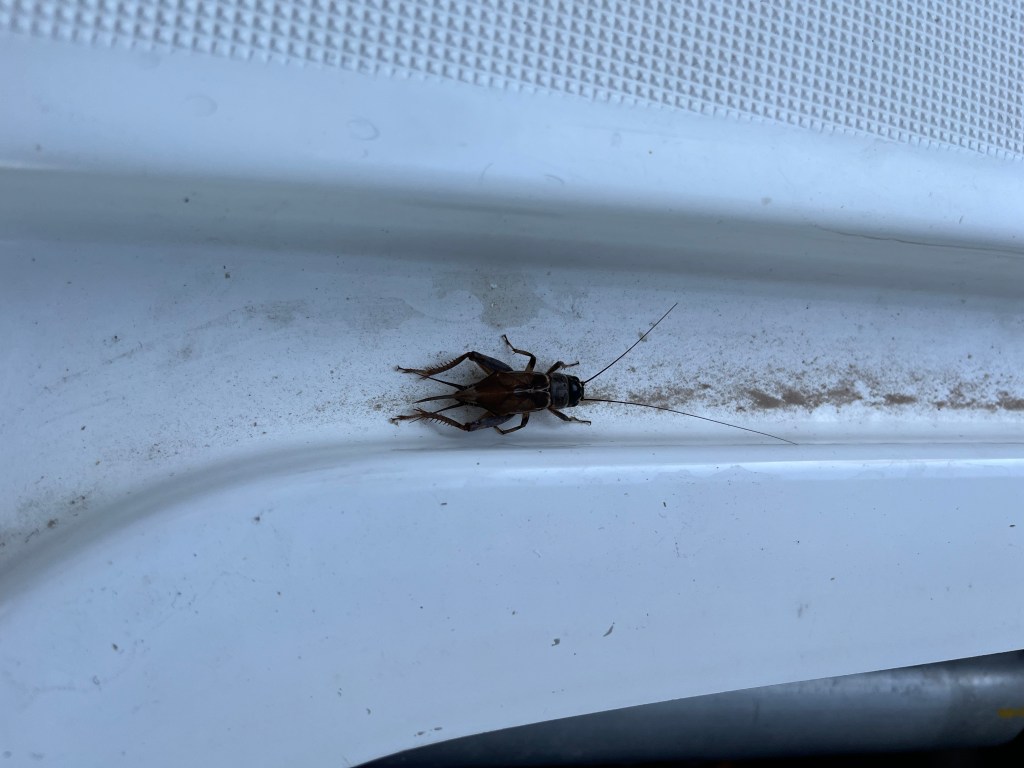
In the early morning hours my shift started. I had been hearing a new squeaking sound coming from somewhere at the back of the boat, and it was driving me nuts. I really don’t like new noises, as my worrisome mind immediately thinks it is indicating some imminent mechanical failure. I walked about with my head cocked, trying to pinpoint its location. My only clue as to its source was that when I stood on the starboard engine compartment, I didn’t seem to ever hear it. Eventually I opened the hatch to the engine compartment to look inside, and found that a hitchhiker had been the source of my squeak! From then on I enjoyed hearing my little cricket friend as he called out from his hiding place.
We were planning for this to be a two-night sail, but again we were approaching our destination faster than I’d anticipated. At our cruising speed we would be there close to 11 PM the second day. I had been perusing information about Marina El Cid on the way down, and found a number of recommendations to enter only at high tide, or at worst during a flood tide. Apparently the swell could break inside the entrance making for a dangerous surfing experience between the rock breakwaters. High tide was due to be at 9PM that evening, so on our current trajectory we would be coming in at an ebb. We chose to speed things up a bit to try to make it in nearer to high-tide, and fired up both engines to cruising speed.
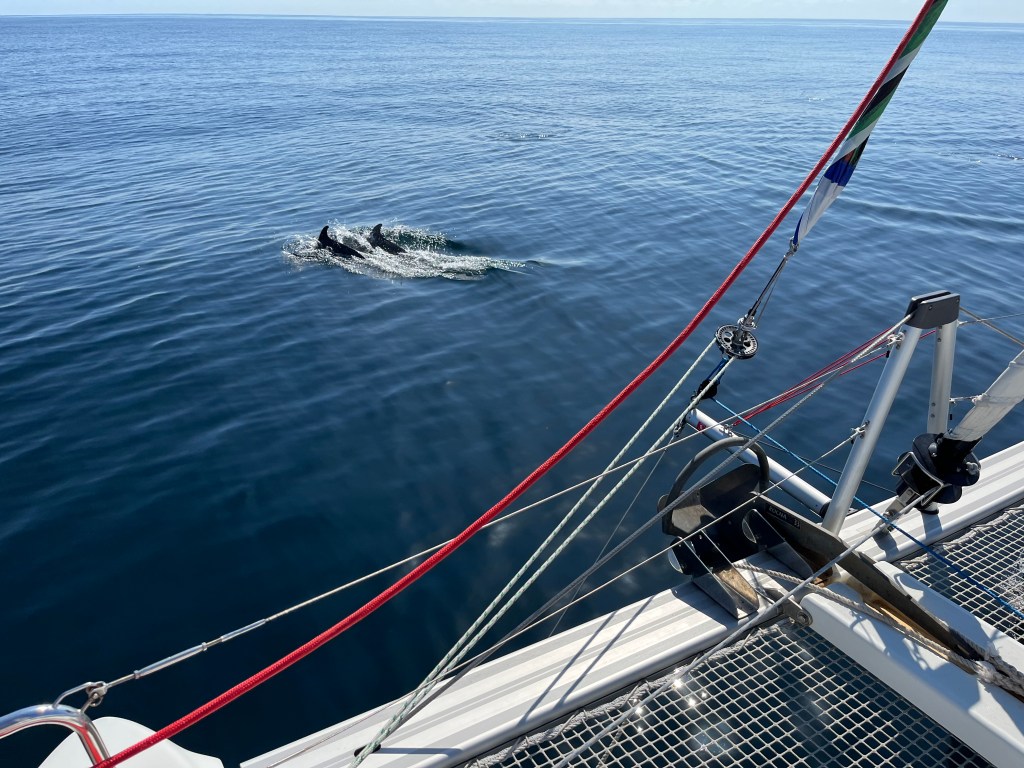
As we approached Mazatlan we were joined by a pod of dolphins. This never gets old, having them swim off our bows and through our wake. Their puffs of exhalation as they surface are often the first indication we have of their presence.
Darkness fell, and soon after we began to see the lights of the city ahead. It’s often disconcerting for me to approach a city at night, and try to guess what land features might correspond to points on our nautical charts. I find that I am almost always wrong from a distance unless I can clearly see a tower or a navigation light.
As we came near to the marina, Melinda had started a chat with the crew of Chinook Sunset, one of our Coho buddy boats, which was moored in El Cid. They gave us some timely advice regarding the location of a dredge in the marina which would be in our path. Luckily the swell wasn’t high, so we didn’t do much surfing as we entered the channel. I watched the depth gauge nervously as we passed through, but in the end we had plenty of clearance.
Mike, the captain of Chinook Sunset, was on the dock waiting for us as we came in. He caught our lines, helped us tie down, and then gave us the 5-minute tour of the marina. It is a great feeling to come in off the open sea to a safe marina and friends waiting.
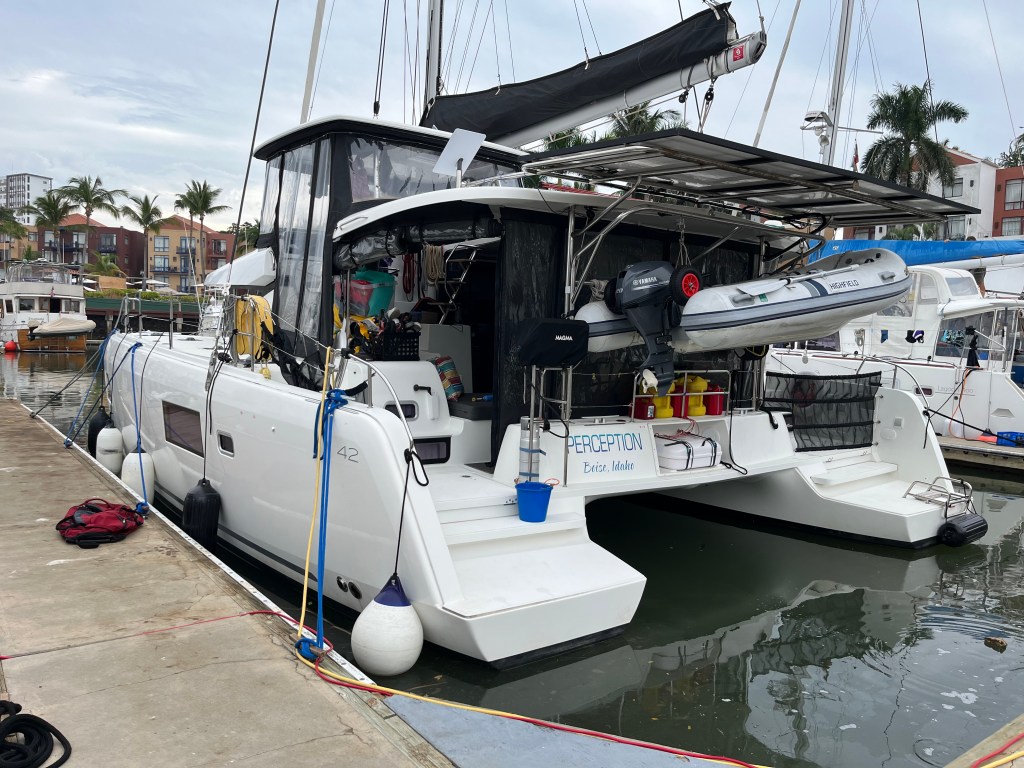
We were headed out to the airport the morning of December 22nd, ready to board a flight for a Christmas homecoming. Perception was bundled up with care at the dock in a slip that had just been dredged with redundant lines tied from all corners. We were parked between Chinook Sunset and Kealani, two friend Coho boats, and others in the marina that we had recently befriended. We would be away from our cat for the holiday, but she couldn’t be better looked after.
Our latest trip from Puerto Escondido had been fun and eventful, with our first crossing of the Sea of Cortez, our first major shore excursion, and a couple of nighttime port entries. We were ready for a good break from the boat and couldn’t have landed in a better spot for it than Mazatlan.
 Sailing Perception