
When we joined the Panama Posse sailing group, one of the things that its leader Captain Dietmar told us was to beware “getting trapped” in a place. This warning had nothing to do with risk to boat or body and everything to do with enjoying a place so much that you stay longer than planned. Some sailors reportedly get “trapped” in a place and never leave, eventually buying a home ashore and moving there permanently.
We had our first small experience with this in Mazatlán. We had reached El Cid Marina just before our trip back to Boise for the holidays and planned to head further south about a week into the new year. When we returned to the boat, however, we had time to really enjoy Mazatlán and the resort surrounding the marina. We quickly fell into the habit of exploring or working in the mornings, and then retiring to the hot tub and pool in the late afternoons. There were a number of other cruising boats in the marina with whom we had come south from Puget Sound, and some new friends we’d made along the way. The afternoon happy hours together were something to look forward to every day. It just felt too soon to leave!
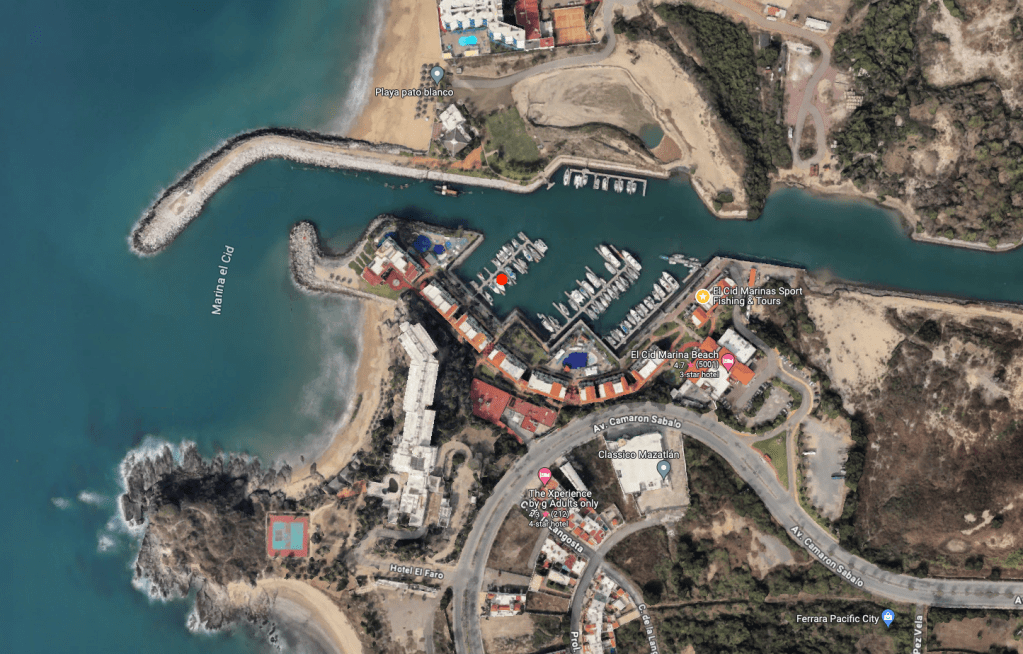
On top of this we discovered that the per-day cost of staying in the marina dropped significantly at one month, and the sum at about 20 days was equivalent to the sum for staying the rest of the month. Who would pass up another 10 days in a marina for no additional cost?
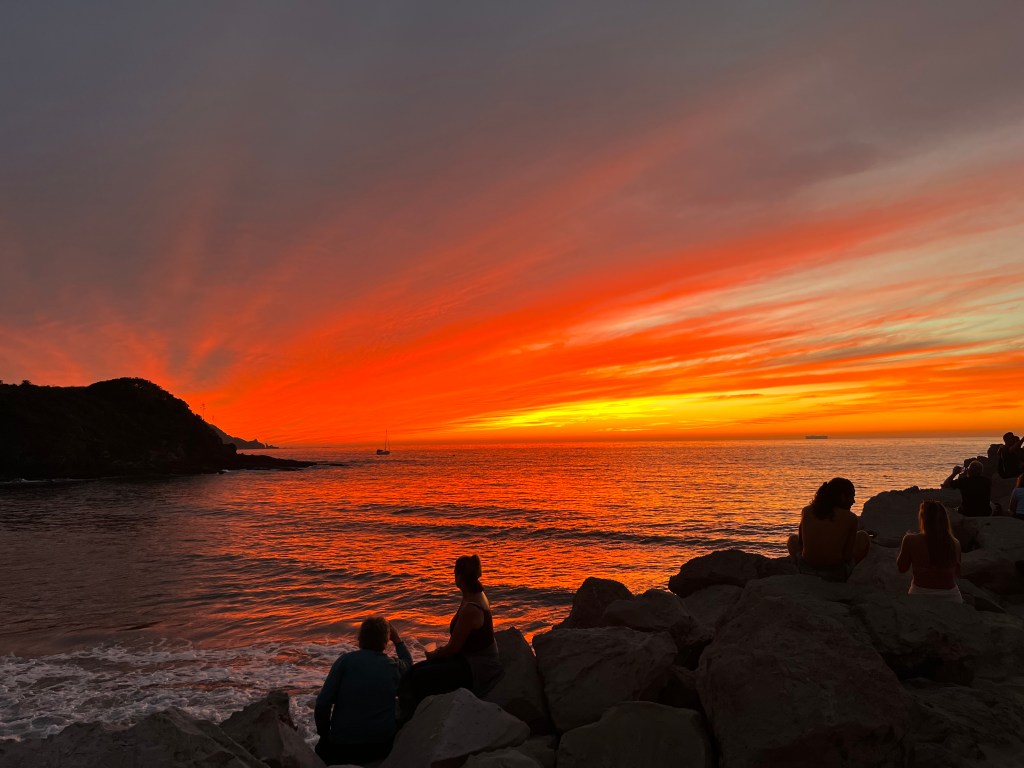
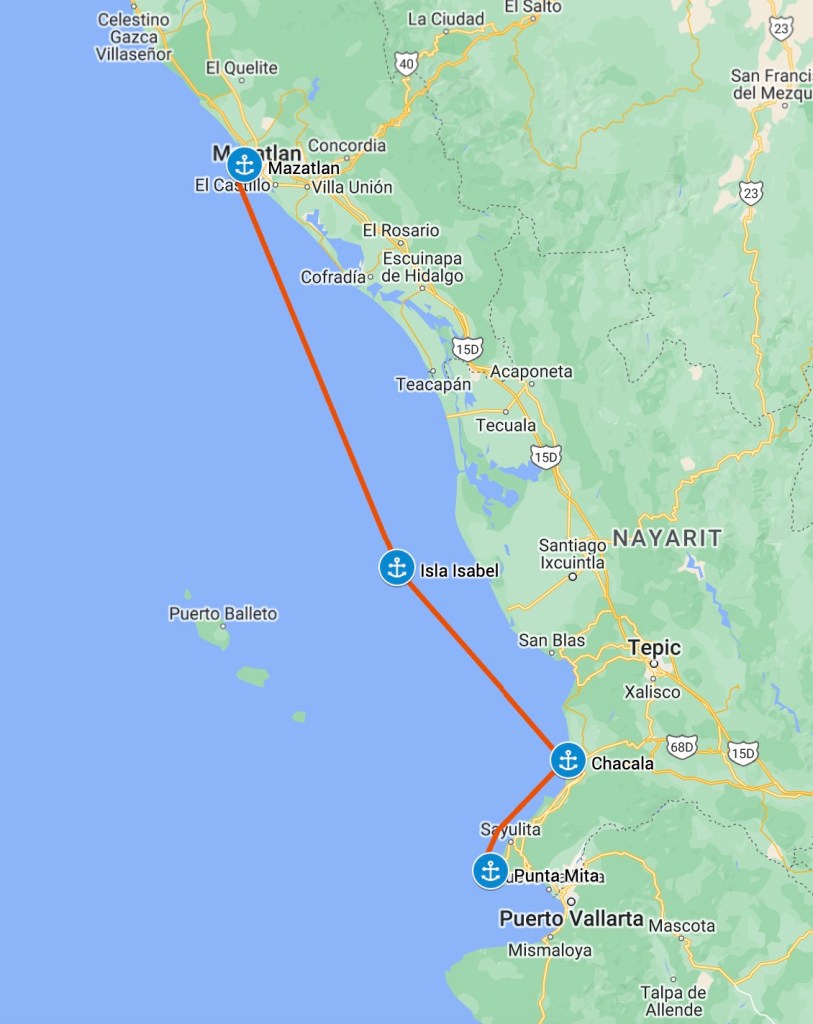
As the final days of our stay rolled by the whole crew was itching to be on the move, and the weather was firming up for a comfortable passage south. It was about 90 nautical miles from Mazatlán to Isla Isabel – more distance than we could cover in a single day between dawn and sunset. So we planned for an overnight that would get us out of the marina in daylight Saturday evening and have us arriving at the island comfortably after sunrise Sunday morning.
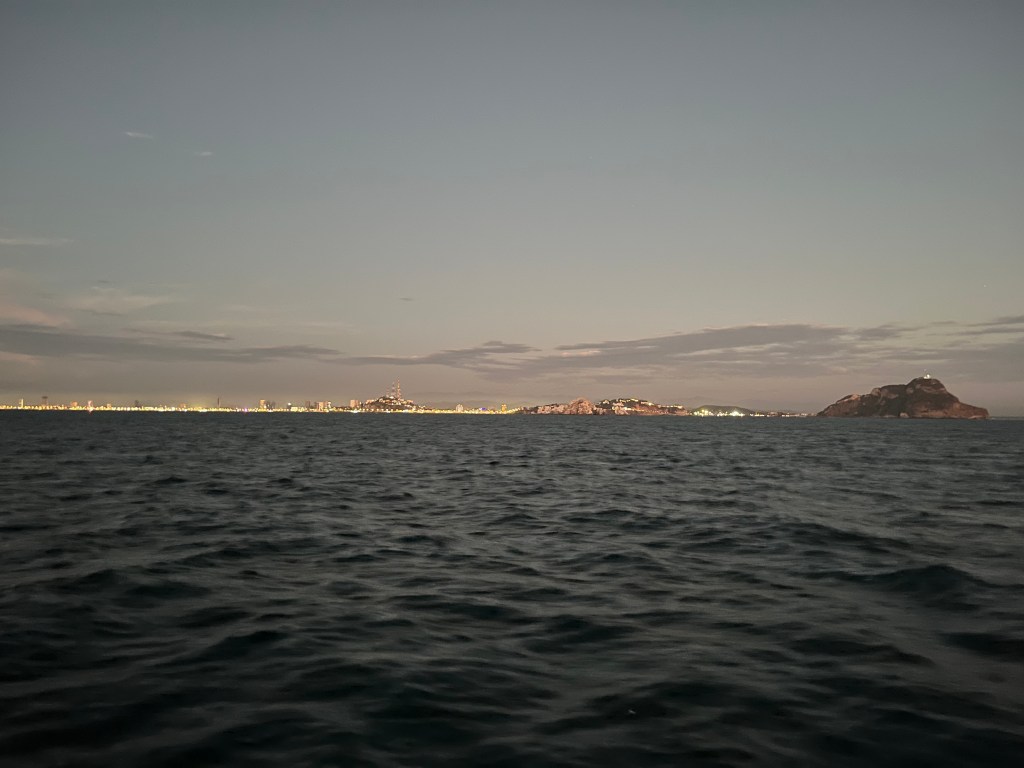
We headed out of the marina past the dredge as the sun was setting. Perception pointed south, cutting between the islands offshore and skirting along the skyline of the city. The lights made for a magnificent view as the sun faded into darkness. We cleared the shipping lanes and all signs of civilization faded into the night.
We stood our watches overnight, and as dawn started to break we could see Isla Isabel ahead of us on the horizon. We had good intel on the island from other Posse boaters and went directly to the eastern anchorage. Four boats were already on the hook there, but we still found room to drop our anchor in 40’ of water. Conditions were calm during our stay, with light winds from the NW that died completely at times. Even so, there was always some long-period ocean swell in the anchorage, but it was quite tolerable on our catamaran.
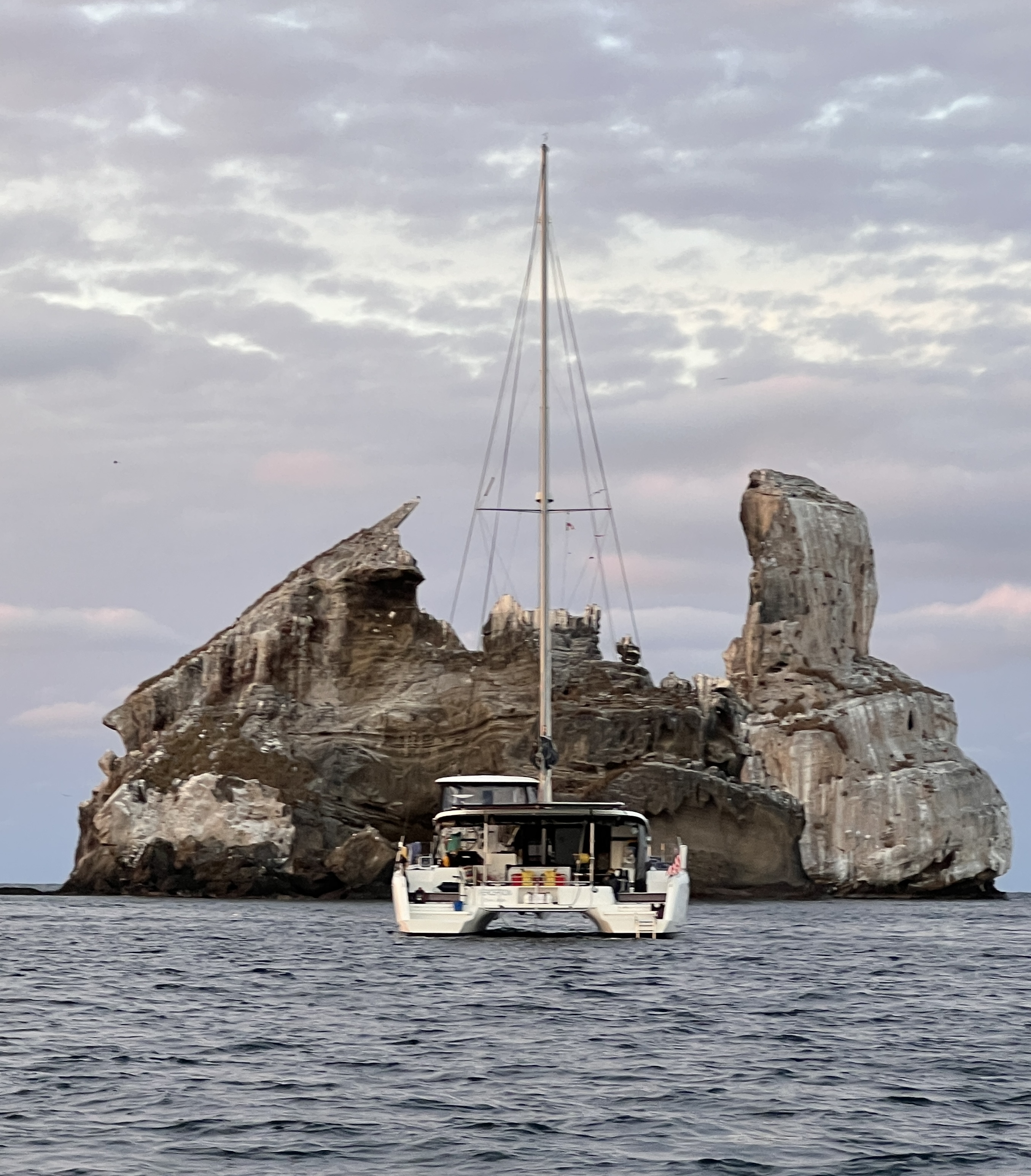
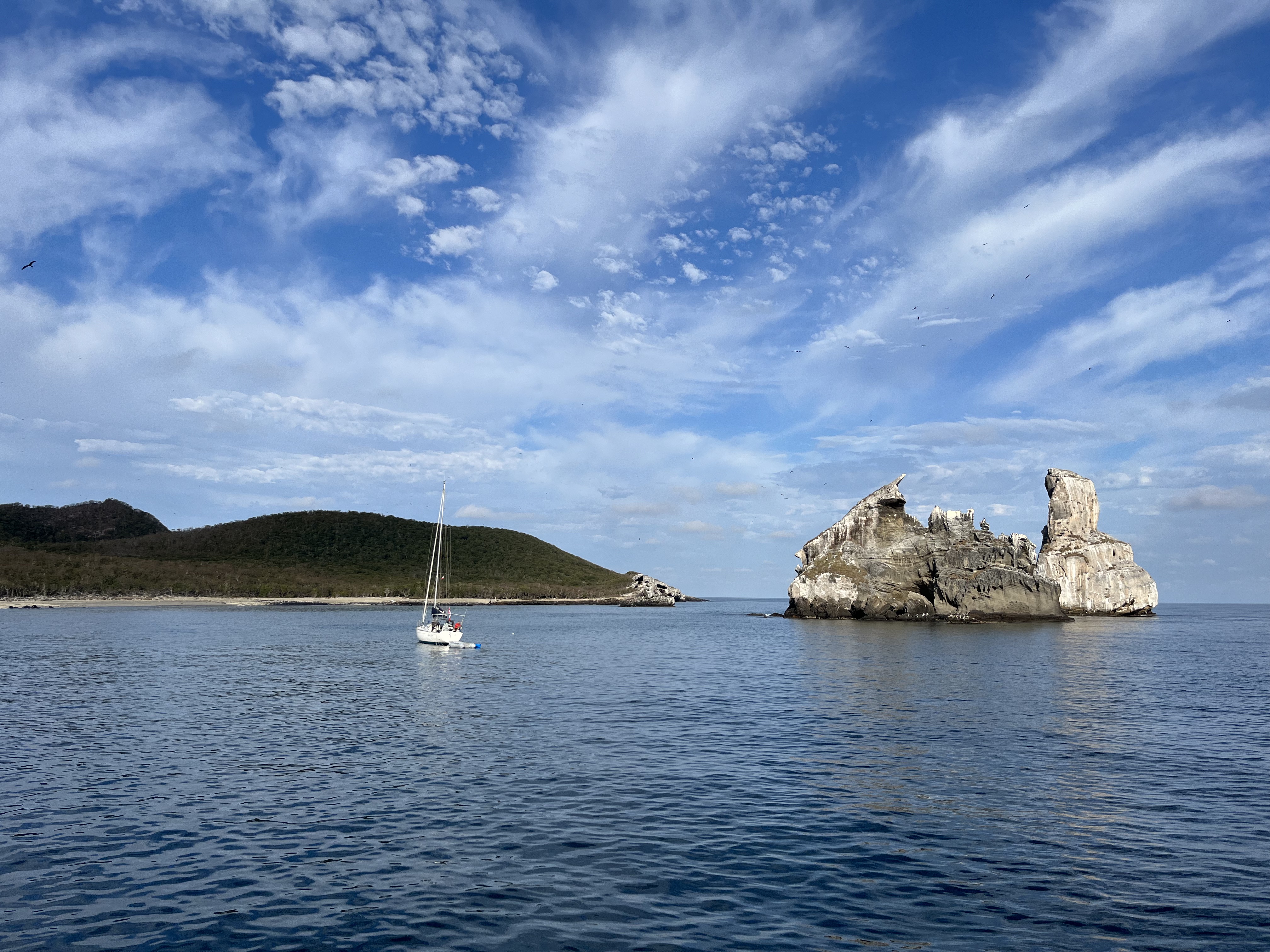
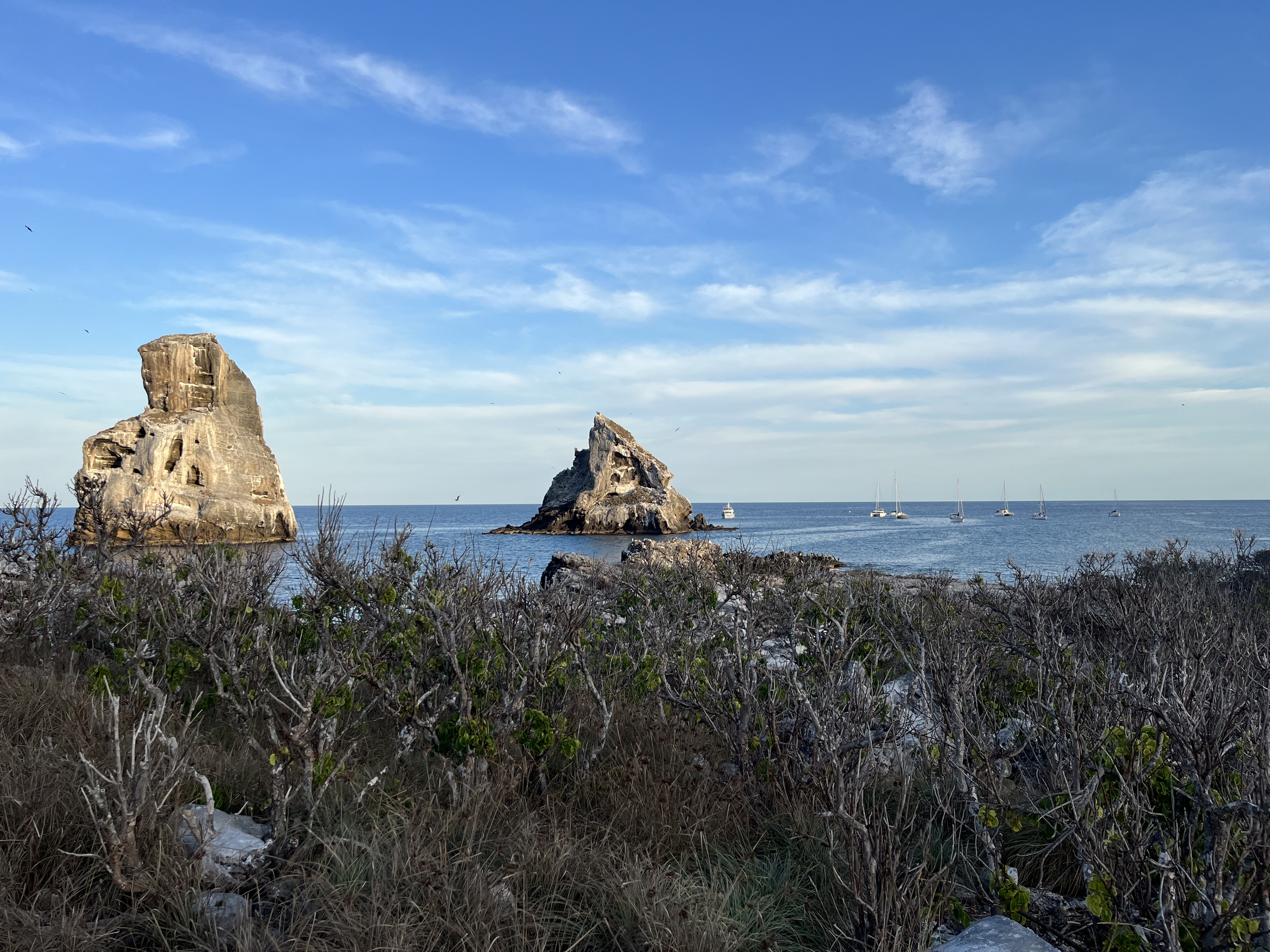
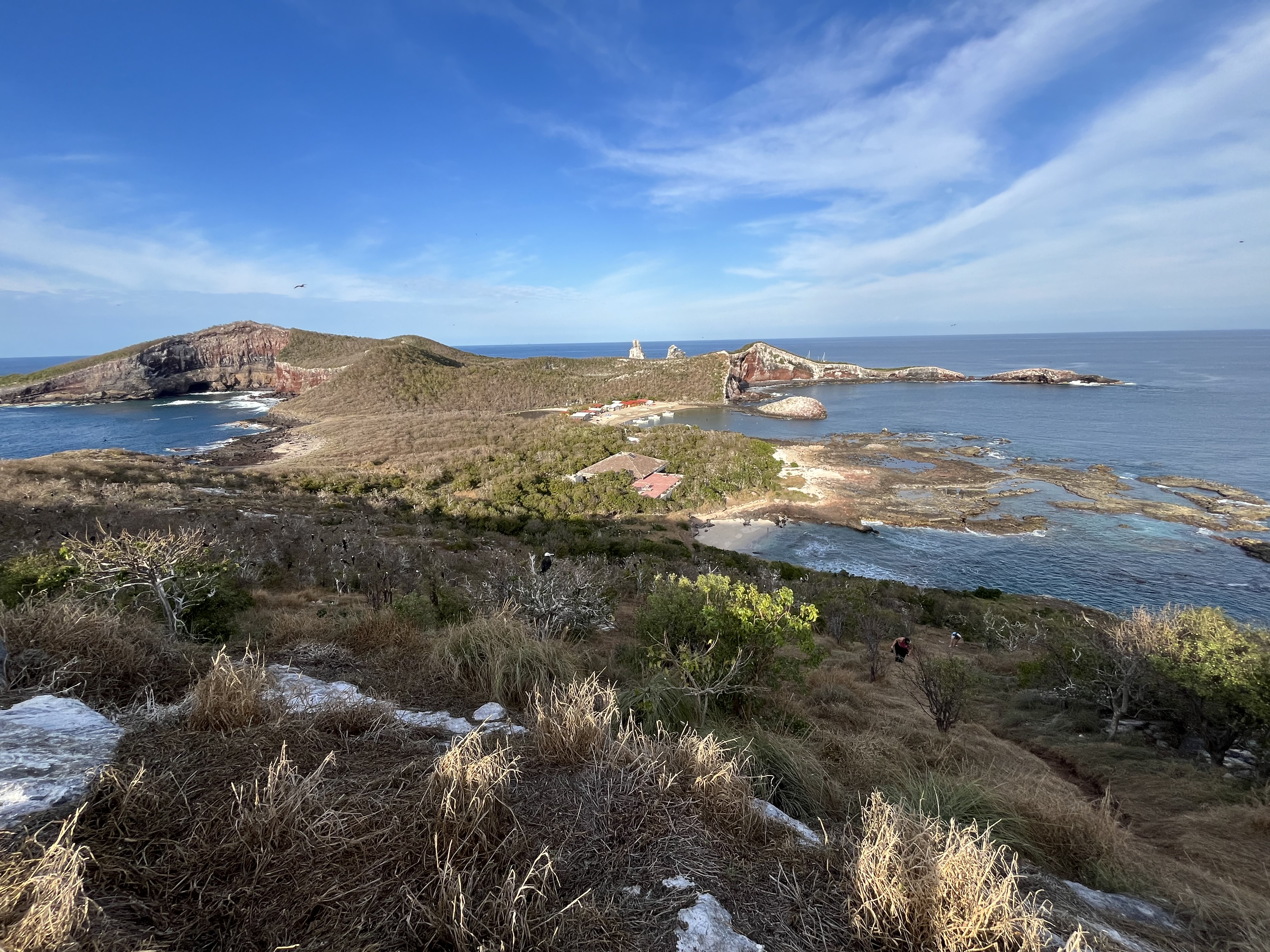
The anchorage was just incredible. The massive rocks off the east coast of the island were stunning and the wildlife was off the scale for us. As we approached the island in the morning light we began to see humpbacks in the distance, and even a few breaches which we had previously seen only a handful of times on our voyage so far. The air over the island and offshore rocks was thick with frigatebirds and boobies. We understand now why the island is referred to as the “Galapagos of Mexico”.
Once we were anchored, it soon became commonplace to hear the thunderous slap of a breaching whale in the distance. At any given time you could scan the horizon and see one or more humpbacks at the surface. We even caught the video above of a double-breach!
The remainder of our first day was spent relaxing on the boat after the overnight passage. The next day we dinghied to the southern anchorage to go ashore. The anchorage itself looked a bit scary with large swell wrapping around the southern end of the island and crashing into the rocks on the east side of the anchorage. There was a large motor yacht anchored here that seemed to be doing OK, but I didn’t envy them the swell. Conversely, the dinghy landing in the southern anchorage was very protected with no breaking waves, much better than that on the eastern side which had low breaking waves that scared us off from attempting to land there.
A small fishing village is tucked back into the deepest, calmest part of the bay. As we puttered towards the beach we had to dodge and fend off multiple panga mooring lines that ran from shore to anchor blocks out in the bay. Some of the lines were just below the surface, a hazard for our outboard, so we pulled up the motor and rowed in the last twenty feet. Our fabulous dinghy wheels helped us get the launch up above the tide line to await our return.
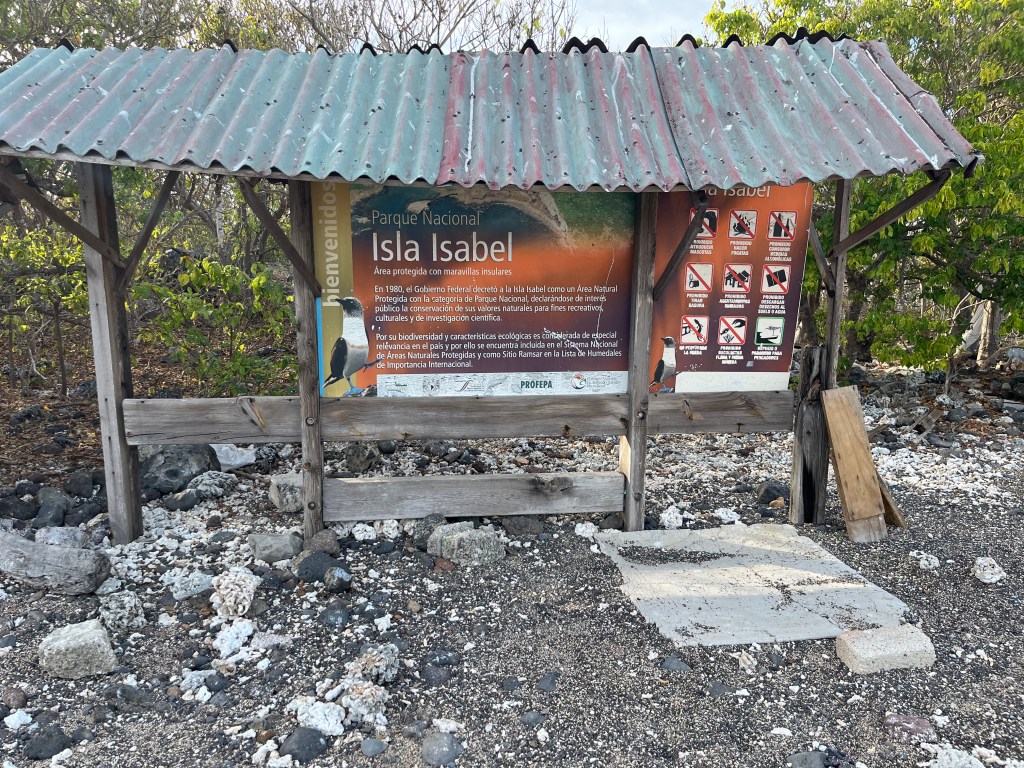
The island was touted to have a few walking trails but we had trouble finding them from our starting point on the beach. It was easy enough to find the park sign at the western end of the beach, but it really wasn’t clear where to go next. After a bit of fruitless searching, we asked some of the locals who happily pointed us the way.
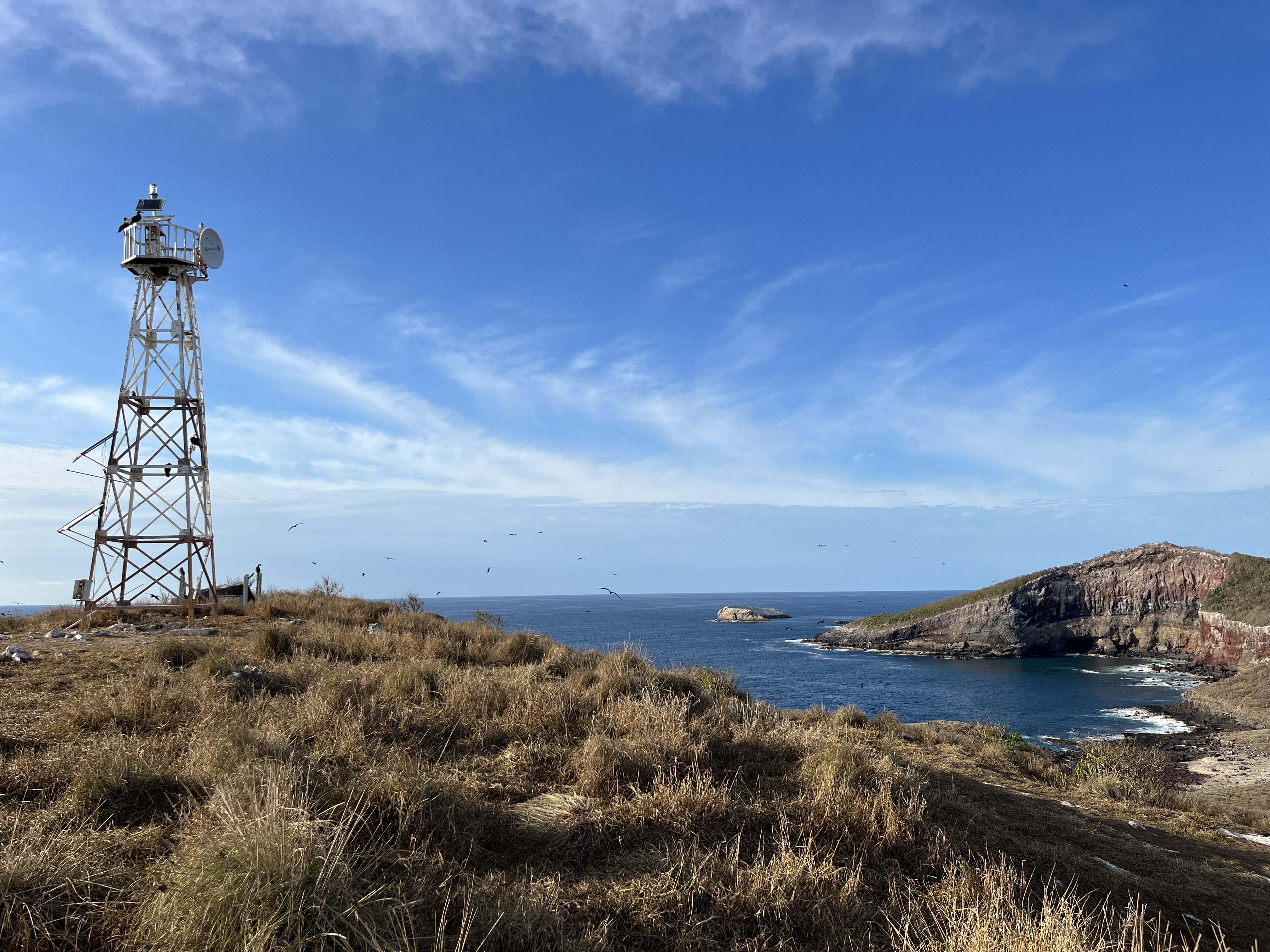
We first made our way up to the southern summit of the island, where the navigation light is located. We had to pass through the abandoned research center on the island to get to the base of the trail. At the top of the hill there were many blue-footed boobies nesting. We enjoyed the stunning view of the island and the comical behavior of the birds.
We then passed behind the fishing village to find the trail that would take us to the northeast past the extinct volcano crater in the middle of the island. The iguanas we saw on the island seemed to favor the area behind the fishing village, which was clearly a dumping ground for the inhabitants. We climbed a rough-poured concrete staircase up the hillside between a plethora of outhouses to escape the village and head into the crater.
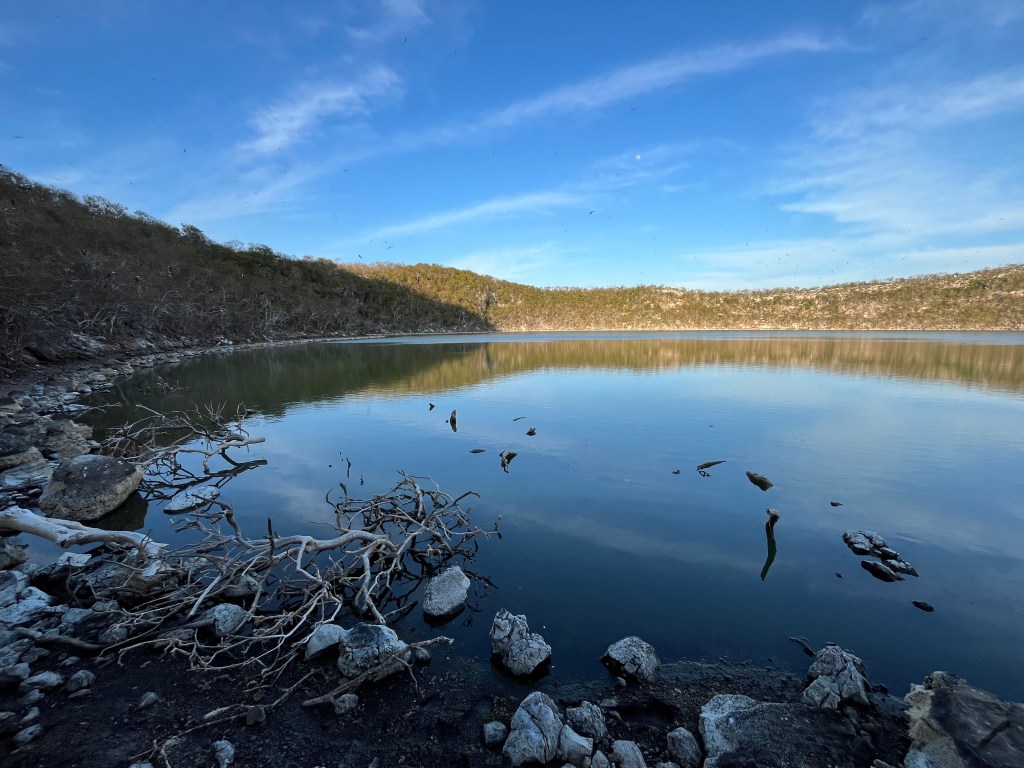
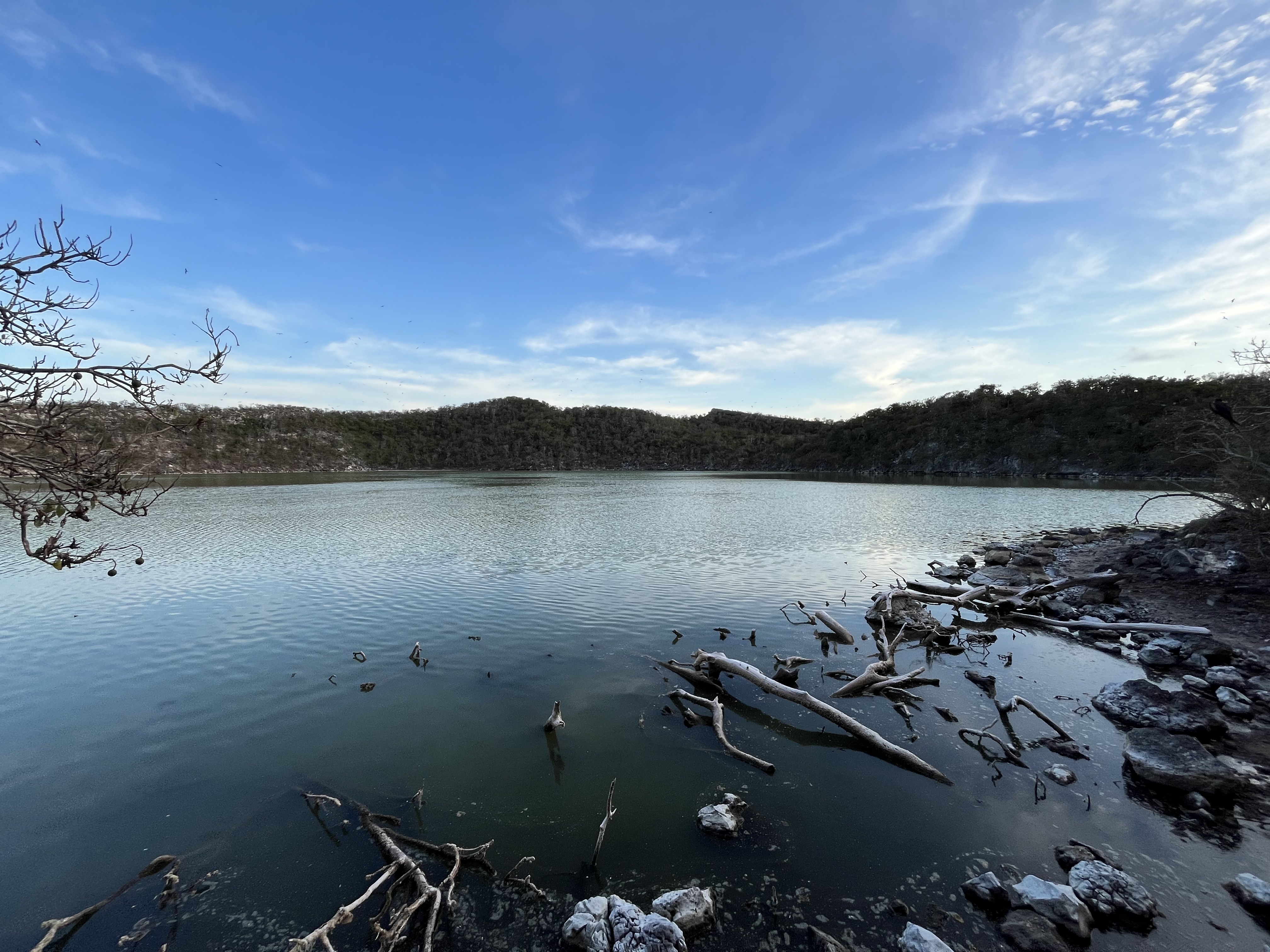
The crater lake, while beautiful, appeared to be quite stagnant. The shore was littered with rotting branches and was the final resting place for a number of frigatebirds. We wondered how a handheld water filter would do sucking from this foul pool.
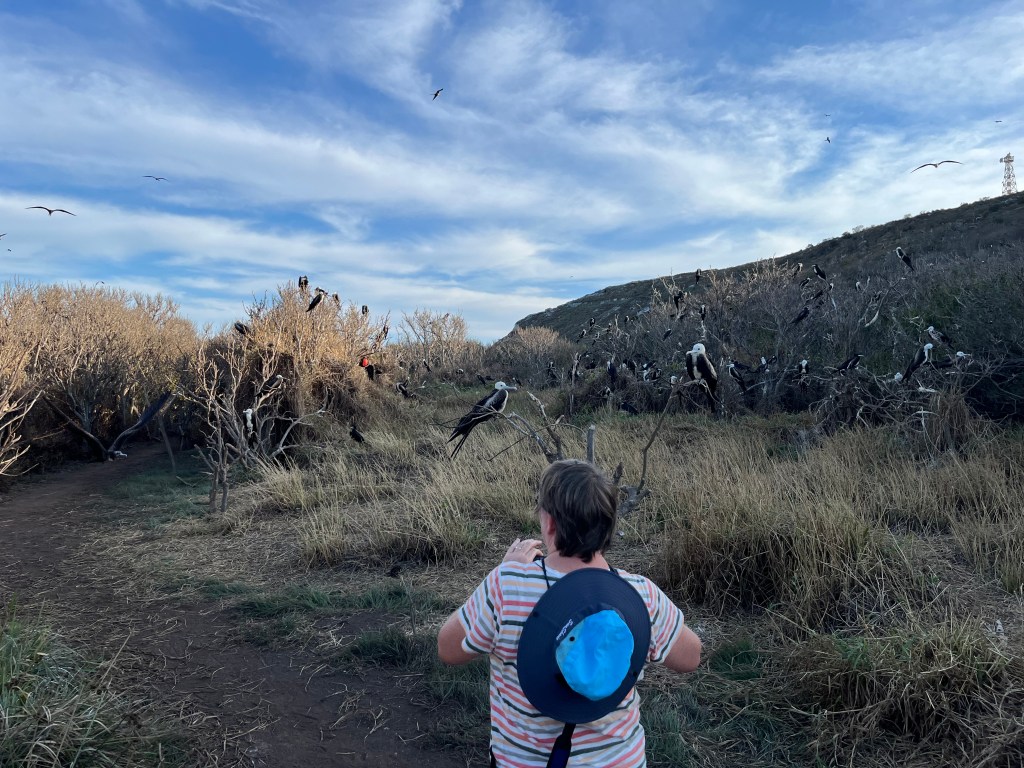
The number of birds on Isla Isabel was absolutely insane. There were frigatebirds in every tree, often just above head height. They didn’t seem at all afraid of people. I was regularly startled if I kept my eyes on the trail too long, looking back up to find one of the sharp-billed birds just a few feet from my face. In the picture below, Melinda has her choice of birds at which to point the camera, including one male with his bright red “gular pouch” inflated.
We saw many nesting birds and really didn’t have to seek out opportunities to get close. There were so many nests that even sticking to the trails one couldn’t help but pass perilously near some of them. The blue-footed boobies in the pictures below were nesting just feet from the trail, and while they clearly didn’t enjoy having us passing so close by, they didn’t bother to leave their nests.
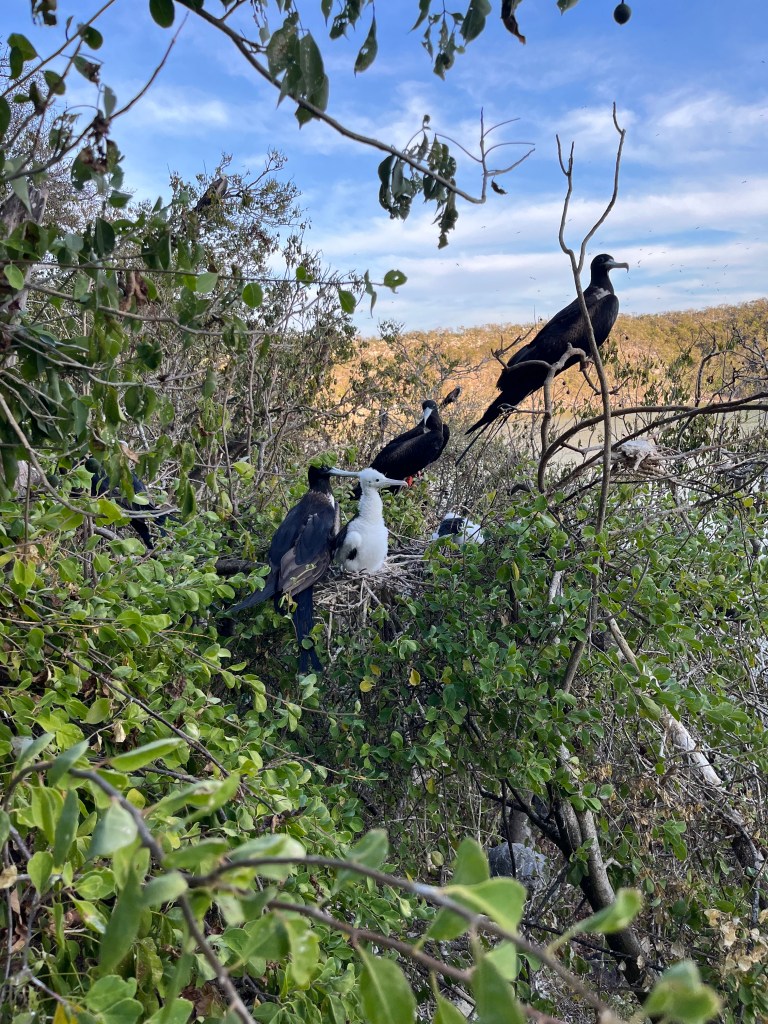
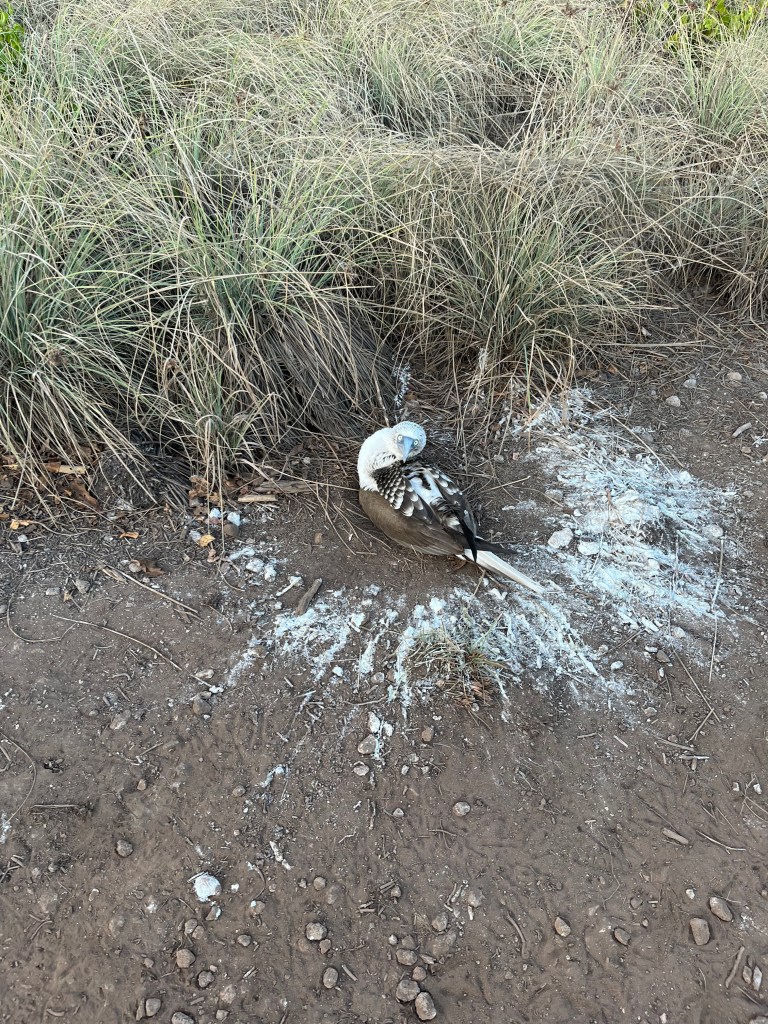
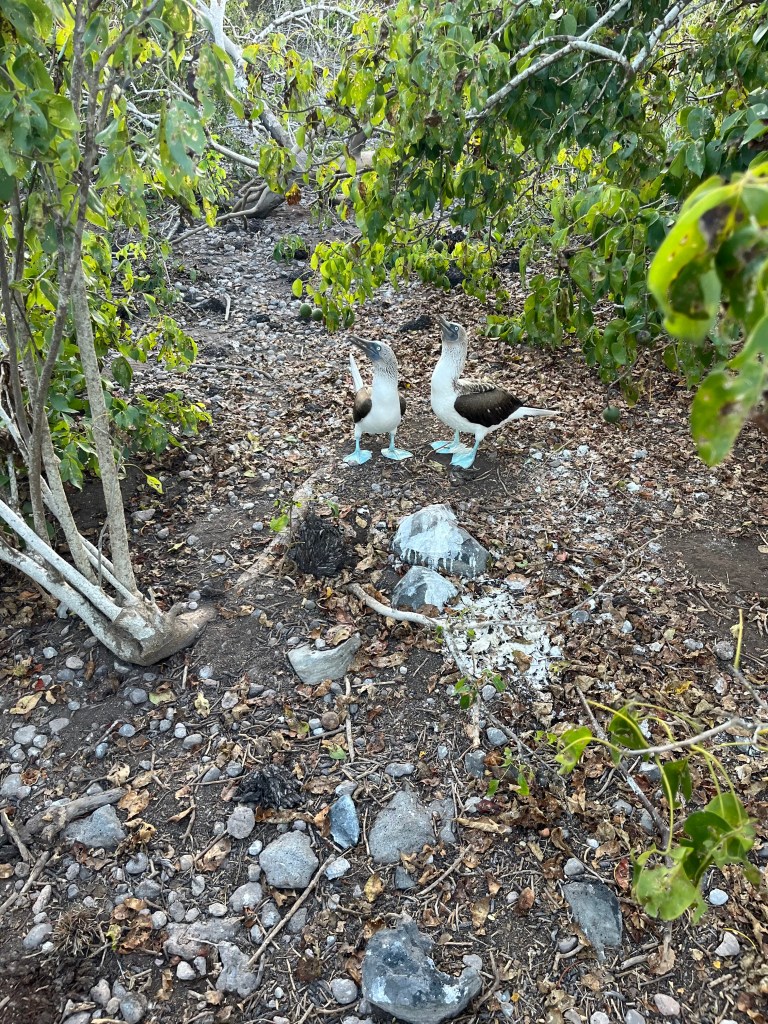
We felt that our visit to Isla Isabel was one of the more fantastic stops of our voyage so far. With its remoteness, we were likely only to ever visit by private boat. We could have easily stayed another day or two, but the weather was lining up to be good for us to continue on southward.
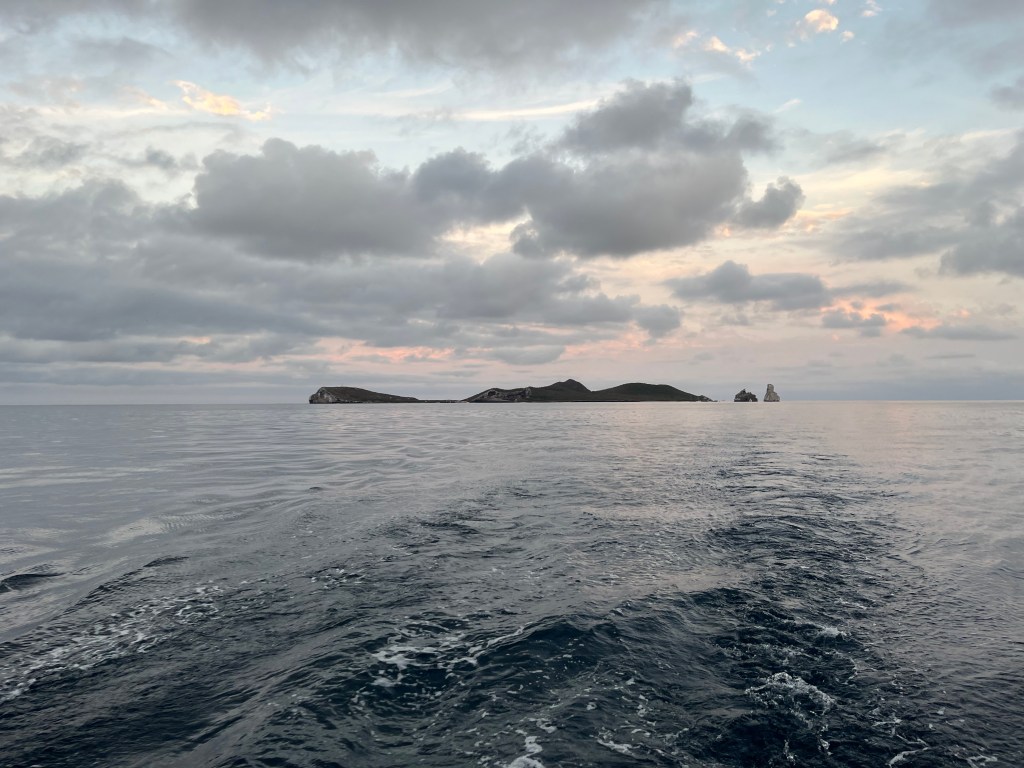
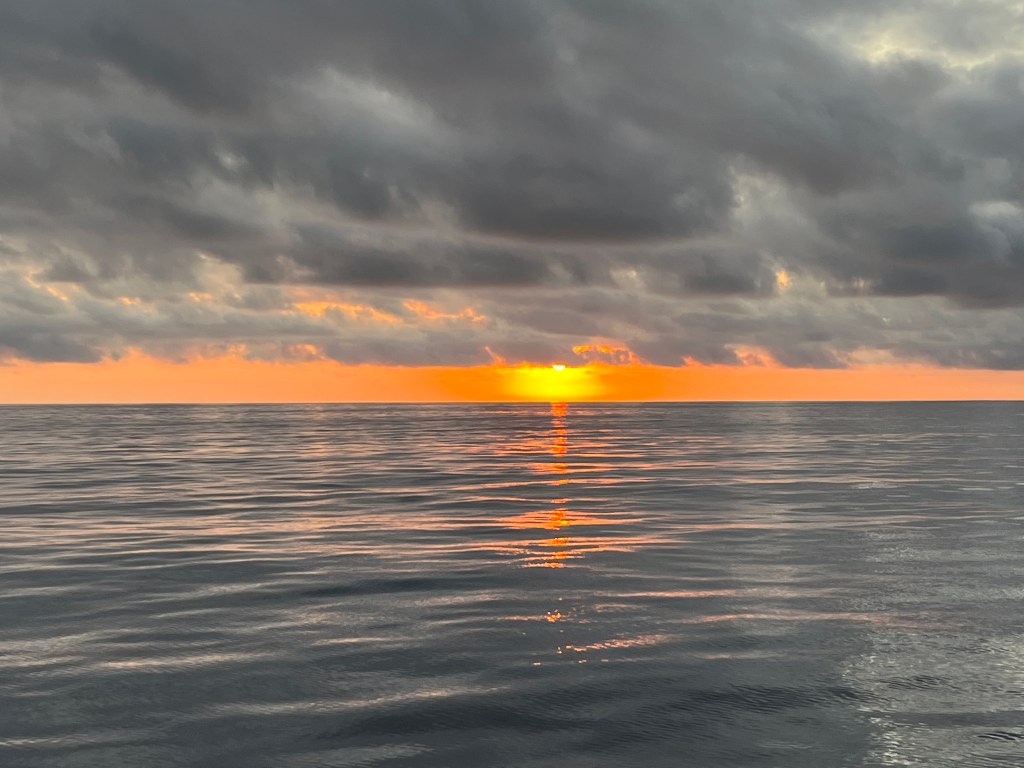
Tuesday morning we rose before sunrise and weighed anchor. We had a long day’s sail of about 55 nm to Chacala on the mainland, and wanted to be sure to get in before dark. The sea was a flat, windless calm, so we motored the distance to shore. I never seem to tire of the scenery at sea, especially the pre-dawn pastels as the clouds start to light up or the orange furnace when the sun finally peeks above the horizon.
As the afternoon grew long, we found ourselves pulling into the open bay at Chacala. There were already a few boats in the bay, tucked up into the most protected space on the north end of the bay. The swell wasn’t horrible, so we anchored in front of the beach next to another cat and enjoyed the view.
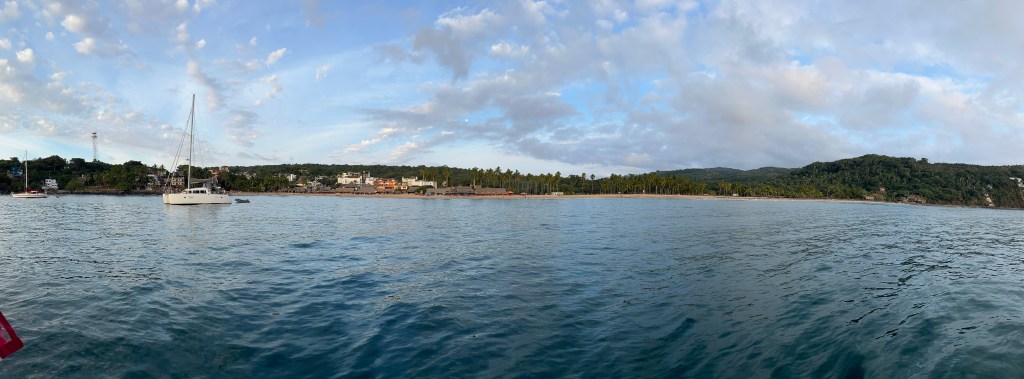
With the weather stable, these types of anchorages are just fine. The boat generally stays relatively flat in the ocean swell, and things only get “interesting” when we are sideways to it. When the wind dies at night this can often be the case – but the rocking motion does wonders for my sleep.
Wednesday we pulled anchor early and made our way down the sandy coast, around Punta Mita, and on into Banderas Bay. The wind just began to rise as we rounded the point, but we didn’t bother raising the sails as we were so close to our anchorage for the night. We had picked another great weather window for Perception, but it had meant motoring the whole way from Mazatlán.
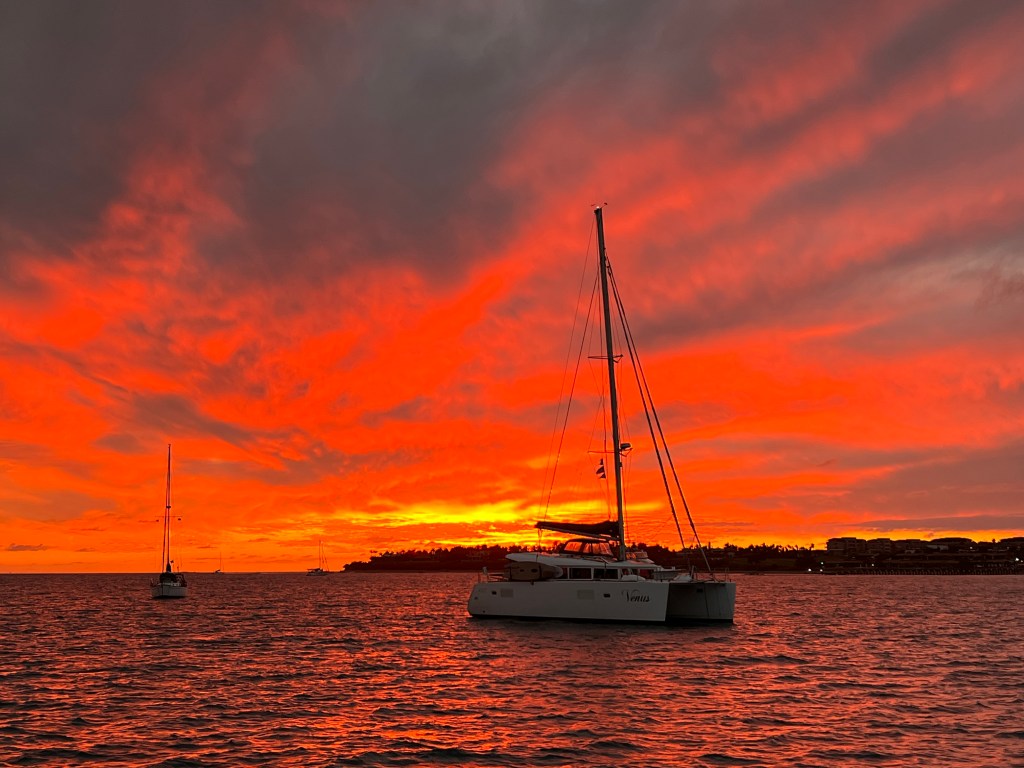
We anchored in the wide open bay south of Punta Mita, joining tens of other boats anchored there. The bay offered a huge area for anchoring in 20-30 feet over sand, so we picked an open spot and settled in. About an hour later our neighbor catamaran Venus from Chacala pulled in next to us, and we invited them over for what would be a pleasant sundowner watching the sunset onboard Perception.
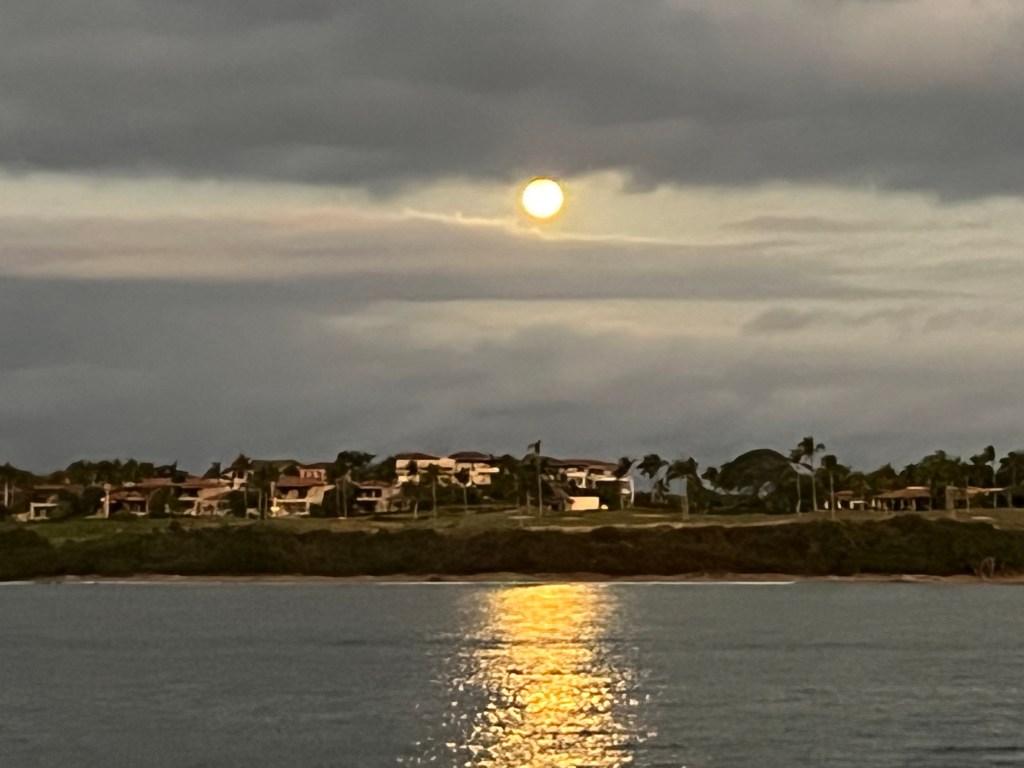

The next morning we awoke to whales in the anchorage. Some swam very close to Perception including one pair of humpbacks that appeared to be a mother and baby.
We had been unable to secure a reservation at any of the marinas in Banderas Bay over the preceding weeks, and had resigned ourselves to being on the hook for much of our time in the bay. To our delight Melinda called in to Paradise Village and found they had an opening for us that day. So instead of hanging on the hook, we found ourselves motoring into the resort-marina that would be our home for the next week.
 Sailing Perception