
Barra de Navidad had been a fun stop for the Perception crew, letting us catch up with some good friends and spend more time by a pool with drinks in hands. I can see why people get stuck in that situation – but after just a week our drive to move onwards had us underway once more. Sunday the 18th of February we fueled up and headed out into the Pacific Ocean once again.
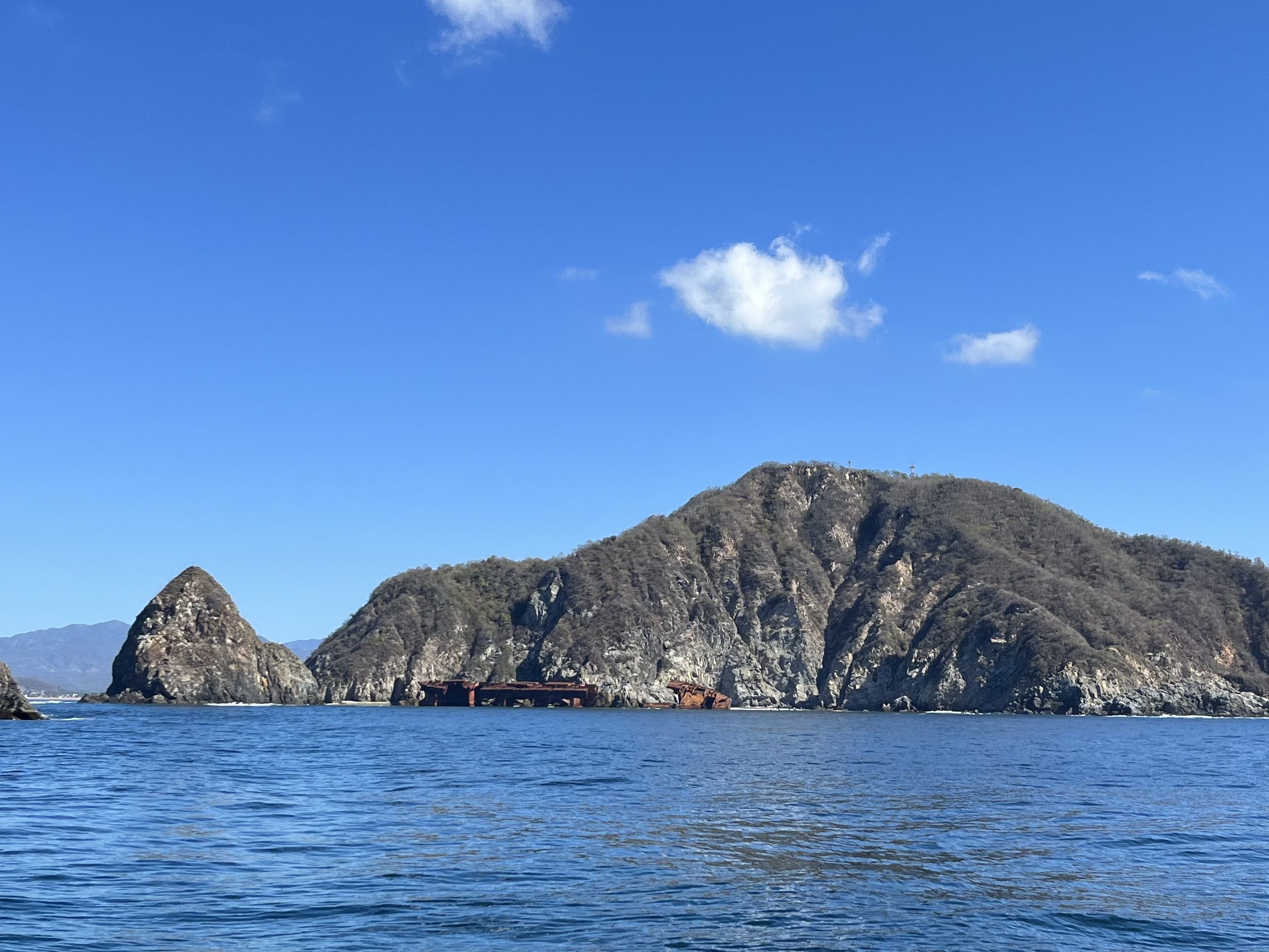
Pretty much the first thing we noticed as we rounded the point outside Barra de Navidad was a massive wreck on the rocks. The Los Llanitos was a 215 meter bulk carrier that was blown ashore during Hurricane Patricia in 2015. The boat could not be practically removed from the shore, so there she sits. Enough of her is missing that presumably the scrappers have been working on her. You could hear a creepy metallic screeching coming from the wreck as parts of her moved in the swell.
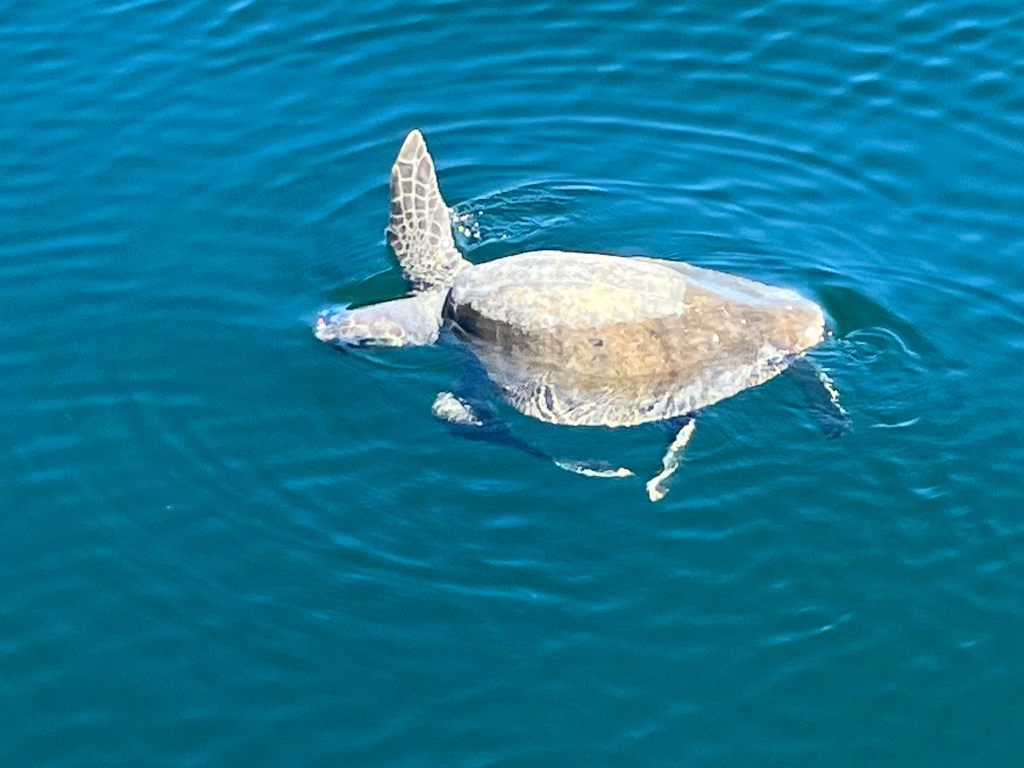
Ever since we left Mazatlán we had been passing turtles in the water, and this area was no different. At times they would be lined up with one of the hulls, and whoever was at the helm would be obliged to try and avoid them. It seems like they would dive before being struck, but they weren’t the fastest creatures to respond. The turtles seem to enjoy floating on the surface in hundreds of feet of water – though I’m not sure what the attraction might be.
We were also visited by a number of pods of dolphins. We would often see them in the distance heading for our boat. They swim with us for a while, splashing off the bows, then disappear as quickly as they came. We didn’t see many whales in the area, especially compared to Banderas Bay and Isla Isabel.
Our next major stop was to be Marina Ixtapa, about 210nm away. Most of the coastline between Barra and Ixtapa offered little in the way of protected anchorages. We were leaving Barra relatively late in the morning since we had to fuel up, and I worried we wouldn’t be able to get into Ixtapa before sunset of the second day. So we made our first day a short hop down to Bahía Santiago just 25 nm away. This would chew off a few hours of the transit and allow us to get a proper early start for our two-day voyage to Ixtapa.
Bahía Santiago was another beautiful bay on Costalegre, and we joined several other cruising boats already in the anchorage. We spent the afternoon watching the tourists on the beach and in the water. The next morning we rose before the sun and got underway. The sunrise greeted our sails as we popped out of the bay on a nice beam reach.
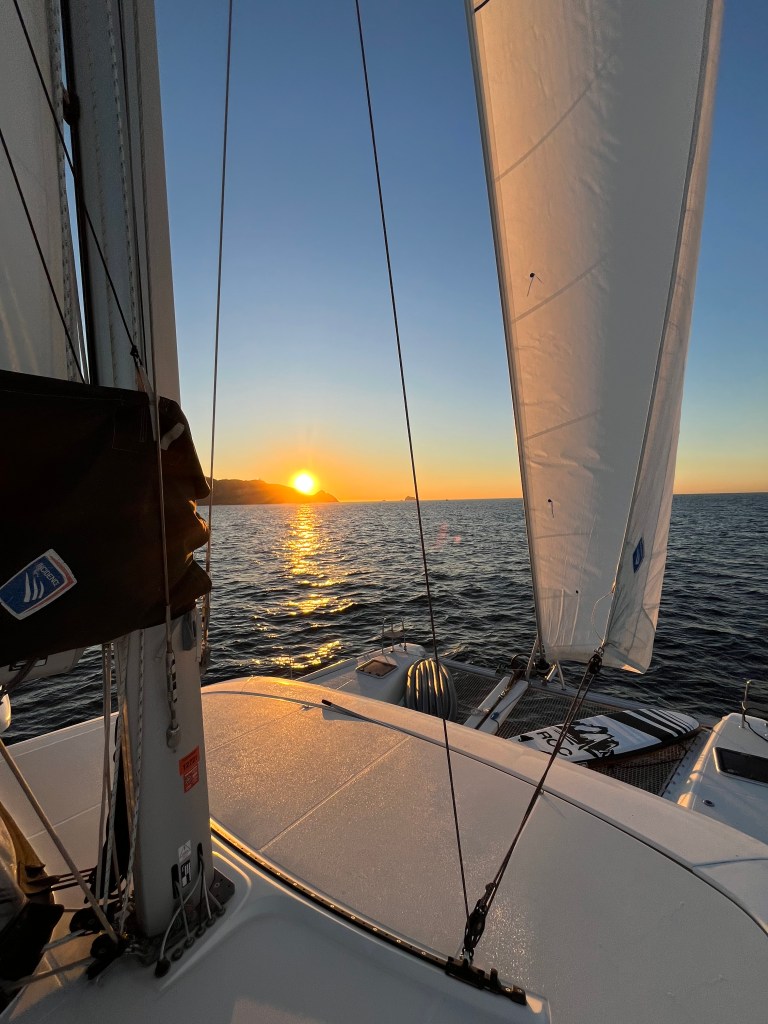
We had a good passage down to Ixtapa, but winds were light and beyond our start from Bahía Santiago we didn’t have the patience to sail. For these long passages, making way at just three knots or so in the swell is pretty miserable and has the potential to double the time of the trip. Without much wind pressure the swell will make the sails and boom slap around, and it really feels like you aren’t going anywhere. We weren’t able to keep our speed up with the light winds so motored much of this leg.
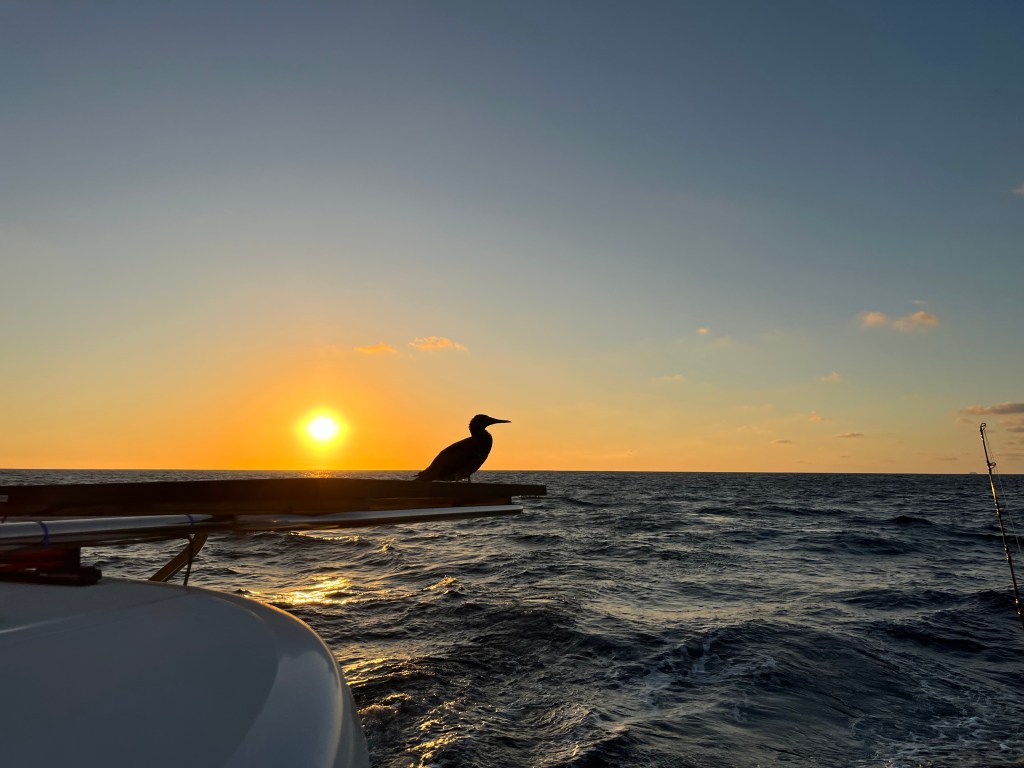
Near sunset we picked up a hitchhiker in the form of a booby. We aren’t exactly sure when he joined us, but noticed him hanging out on the solar panels. He stayed with us all night, and the novelty of bird passengers quickly wore off with the mess he left behind. He would be our first and last welcome avian guest on the boat…
We were making good time down the coast, and by early afternoon we were approaching Ixtapa. Now the fun really began. The marina entrance was subject to fairly significant swell, and you could get breaking waves on your stern as you came in. The channel was also narrow and shallow in places. Timing our entrance and controlling the boat well would be of prime importance.
We set ourselves up and attempted to surf in between wave sets, and fortunately avoided the worst of the waves. As we came in the channel literally looked like a little creek draining out of the marina. We trusted the channel markers and went for it. As we passed through the middle of the channel, Grace called out that she could see bottom just below the surface on the port side. The sand was really encroaching into the channel there, and we veered off a bit to starboard to avoid grounding. A bit of a harrowing experience, and probably tops our list of exciting marina entrances so far!
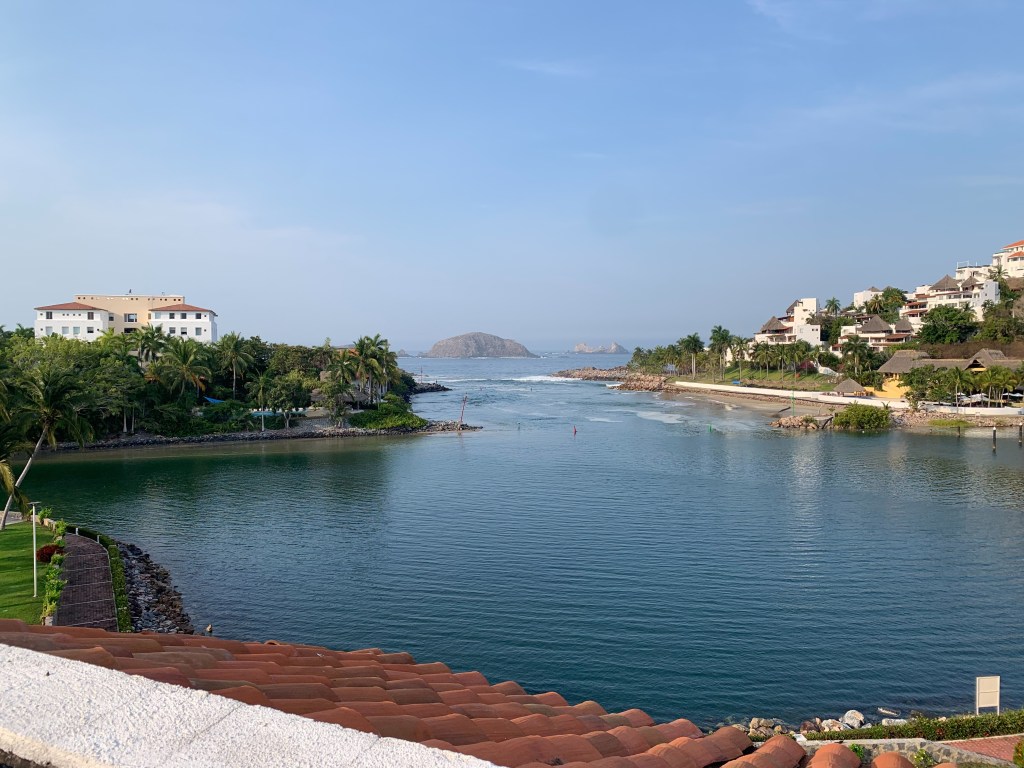
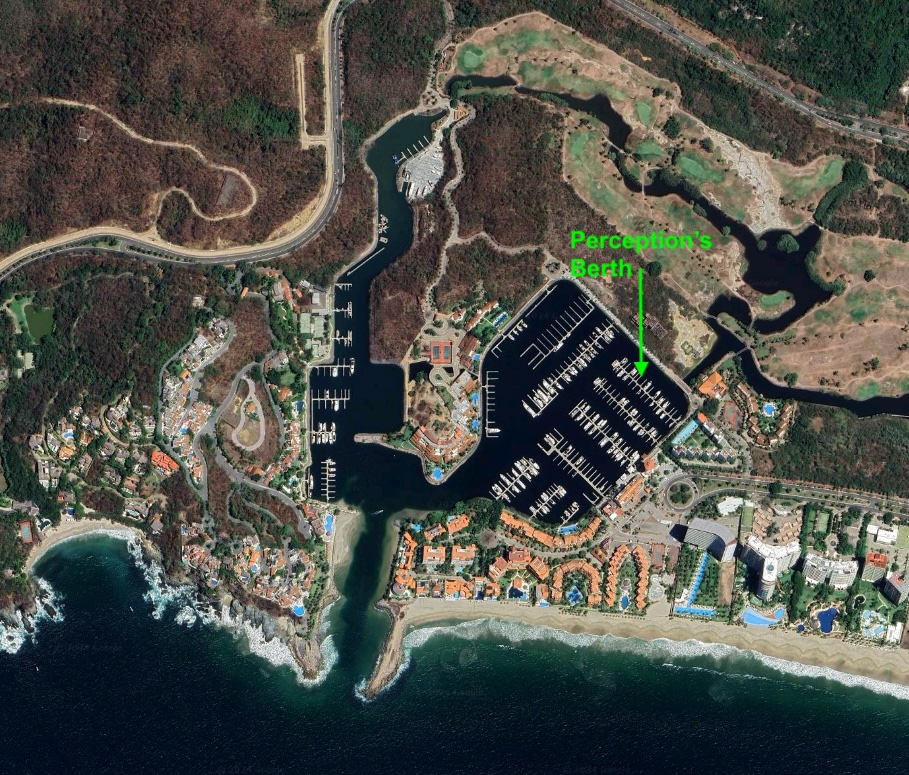
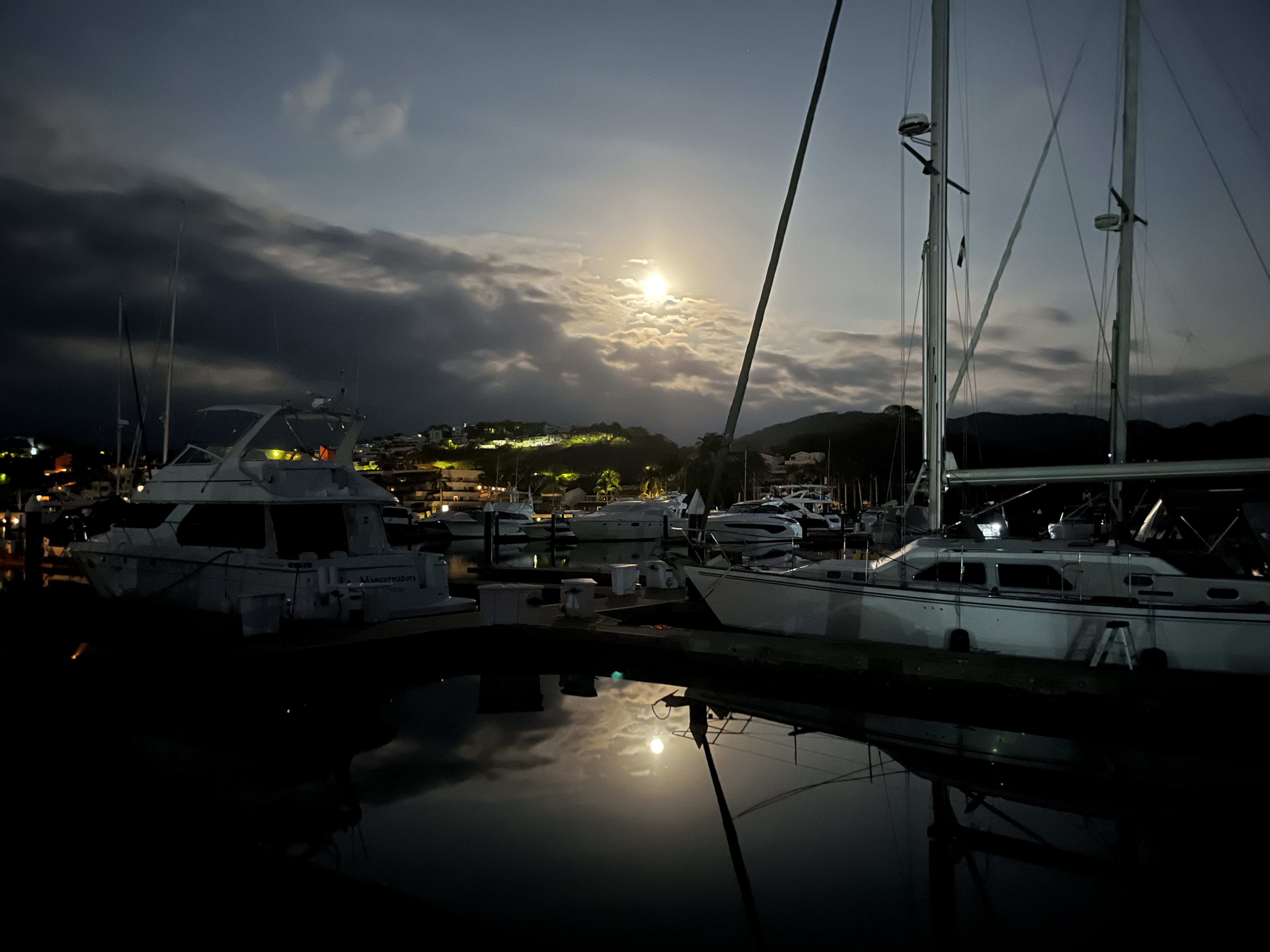
Our slip assignment was at the back of the marina, so we motored on through (past the fuel dock without stopping – ugh!) and took our spot in a comfortable slip on the docks. The marina was encircled by a paved pathway that passed just behind our slip, giving us a light stream of subjects for people watching much of the day. Condominiums and resort hotels lined the beach to the east, but sadly we didn’t have access to any of the pools or other facilities. Not a bad place, but definitely a step down in that respect from Barra, Paradise Village, and El Cid.
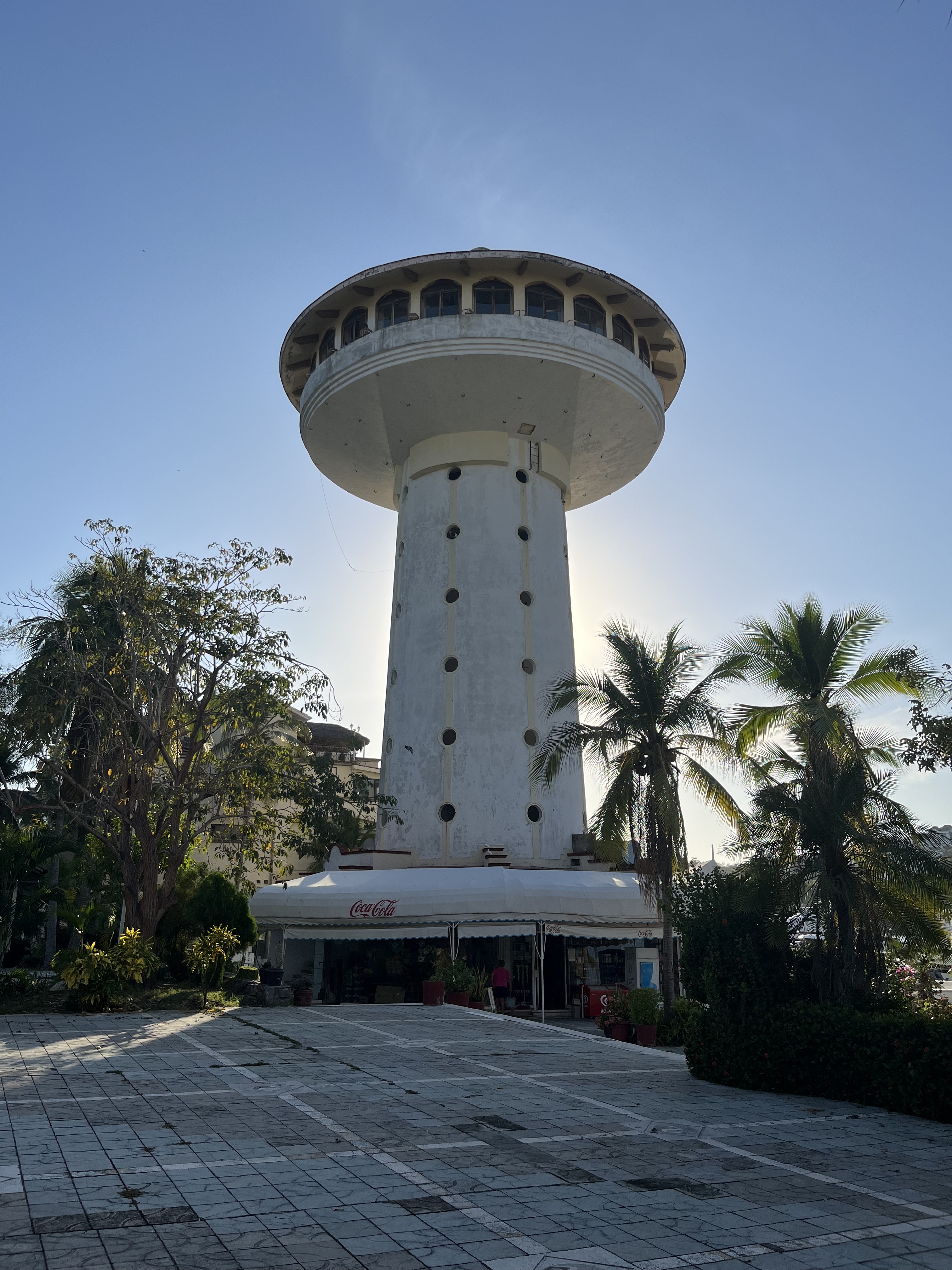
The iconic tower at the marina was not something you could go up into. The closer you got to it, the worse the thing looked. The base of the tower had a small grocery in it – we attempted unsuccessfully to get an ice cream there after dinner a couple of times, just missing their closing. We did eventually get in for a cool treat, just had to make a point of it since they closed so early in the evening.
One of the more interesting denizens of Marina Ixtapa was Fred, the local saltwater crocodile who could be seen steathily cruising through the marina waters. He slowly pushes himself forward with his tail, making no noise as he glides by. One more good reason not to get in the water in this marina!
Sadly we didn’t do all that much exploring in Ixtapa or nearby Zihuatanejo. Melinda spent a few days out to do some shopping and sightseeing. She also found a dentist to take a look at a tooth that had been giving her trouble since San Diego, but was unable to resolve the issue. We went out for dinner to an Italian restaurant one evening in Ixtapa, and walked about to see a few of the sights.
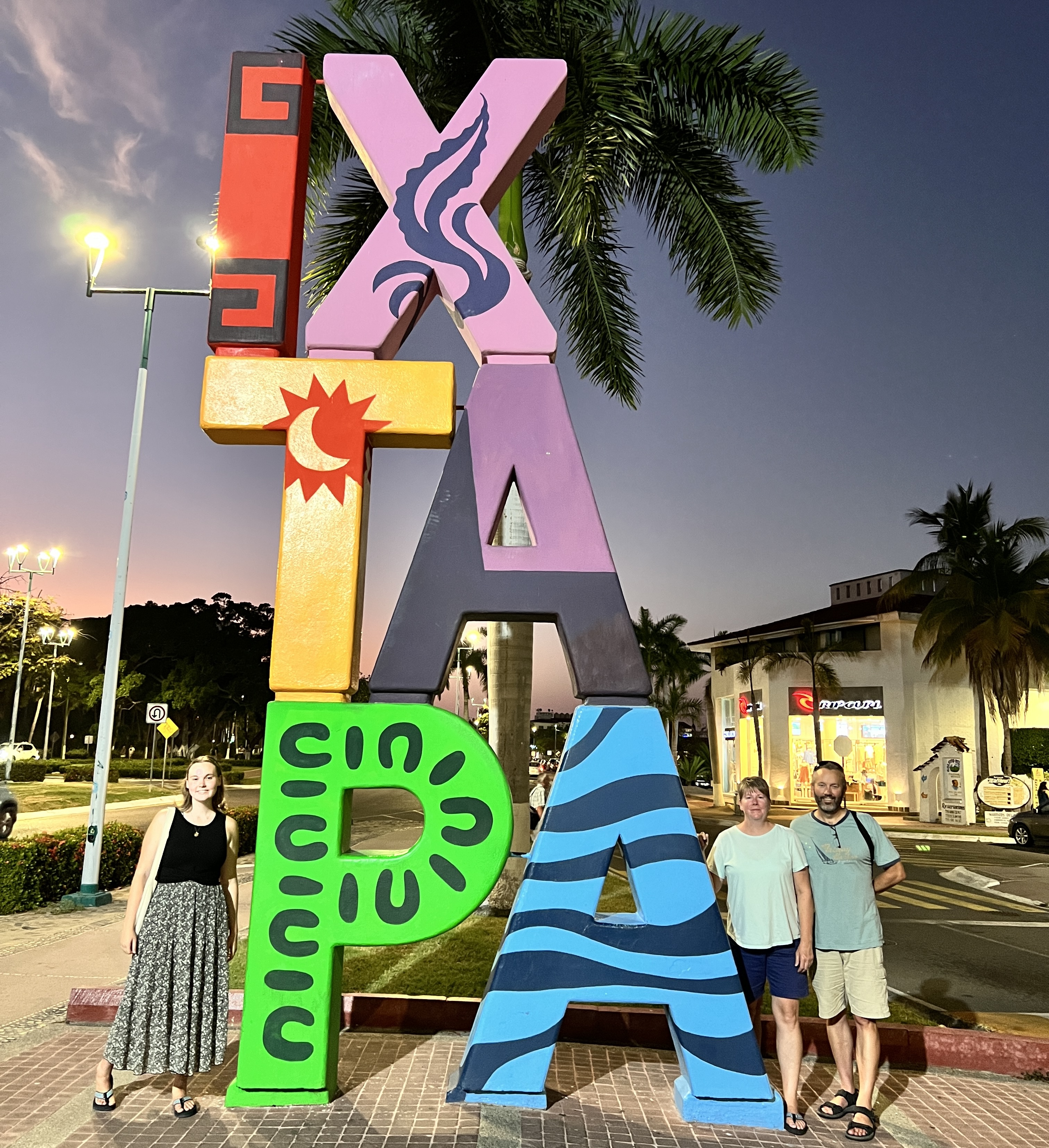

We had arrived on a Tuesday, but in the end decided not to stay the weekend for more exploring. Since we had a couple of long days ahead of us to get to Acapulco, we decided to leave on Saturday to try and get in ahead of the work week.
Our departure from Marina Ixtapa was exciting. On the positive side we were better able to manage getting through the narrow channel at the entrance since we weren’t trying to race the waves coming in. On the negative side, we now had to cross over the incoming waves to get out. Timing was critical again, and we attempted to get out when the swell eased off. In the end, we got out without much trouble, and didn’t hit a big breaking wave on the way out. We made our way past the islands dotting the bay in front of the marina, and out into the Pacific.
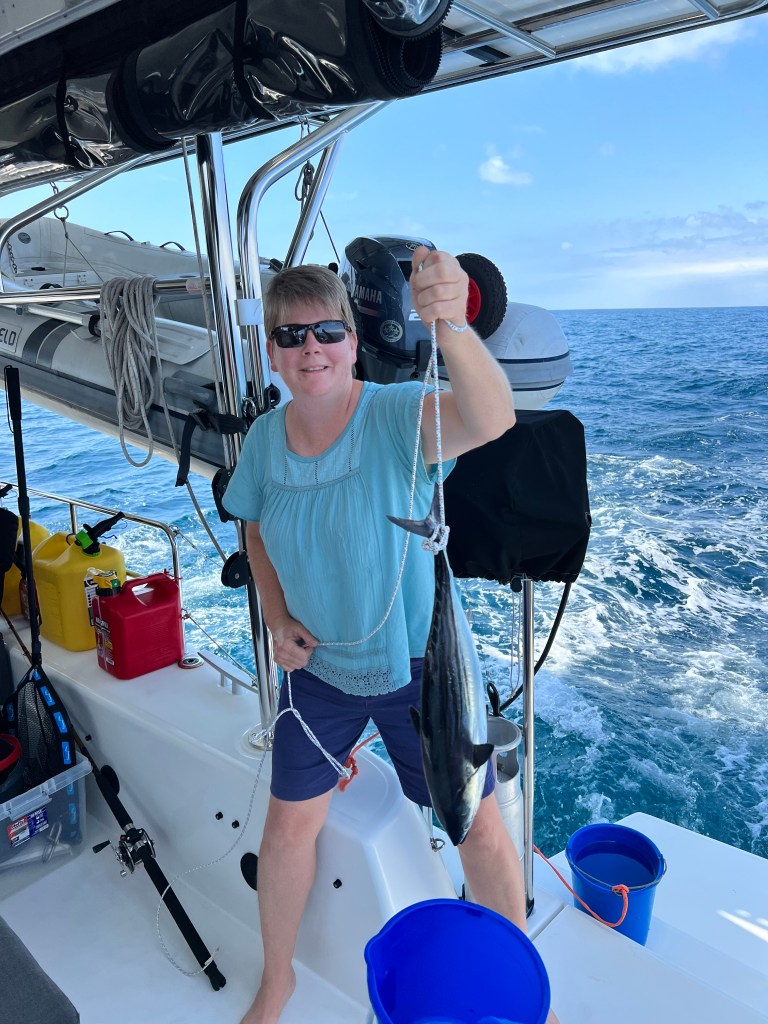
We were motoring again in relatively light winds, so Melinda put out our line with our pink squiddy on it to see if we could catch something. We almost hooked a mahi-mahi, something had taken the bait but shortly after Melinda picked up the rod we saw the fish jump and throw the hook. A bit later she got another strike and pulled in a nice little skipjack. Many other fisherman in the Posse seem to think skipjack isn’t worth eating, but we think they are just fine with a dark red meat that goes down well as poké or seared steaks.
Our target for the day was Punta Papanoa, which is a point protruding into the Pacific about 40nm down the coast from Ixtapa. I had struggled with whether we should try anchoring inside the breakwater of Papanoa Harbor on the north side of the point, or in the bay off Playa Escondido on the south side. Some prior boats had reported poor anchor holding and tight conditions inside the breakwater, but it would likely provide more protection from the swell. The bay to the south would potentially protect you even more if the direction of the swell was more westerly than southerly.
In our case, we chose for expediency. The swell was coming from the WSW, but we would get to the harbor at Papanoa Harbor first. I figured we might as well check out the harbor first and use the southern bay as a fallback.
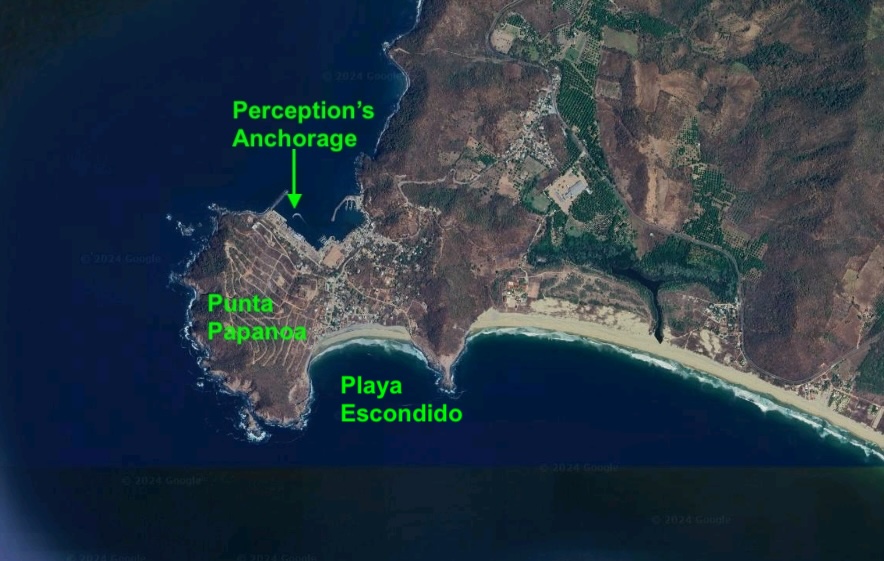
In reality the harbor was just fine, and we threw down our hook in the western corner with room to swing off the breakwater. At first things were a bit nuts, as there seemed to be some kind of festival going on in the harbor with pangas dragging screaming kids around on inner-tubes. It was fun to watch, though I was a bit nervous that one of them would get out of control and sling someone into the side of the boat. As the afternoon waned, things settled down and we relaxed as we were serenaded by music from the beach.
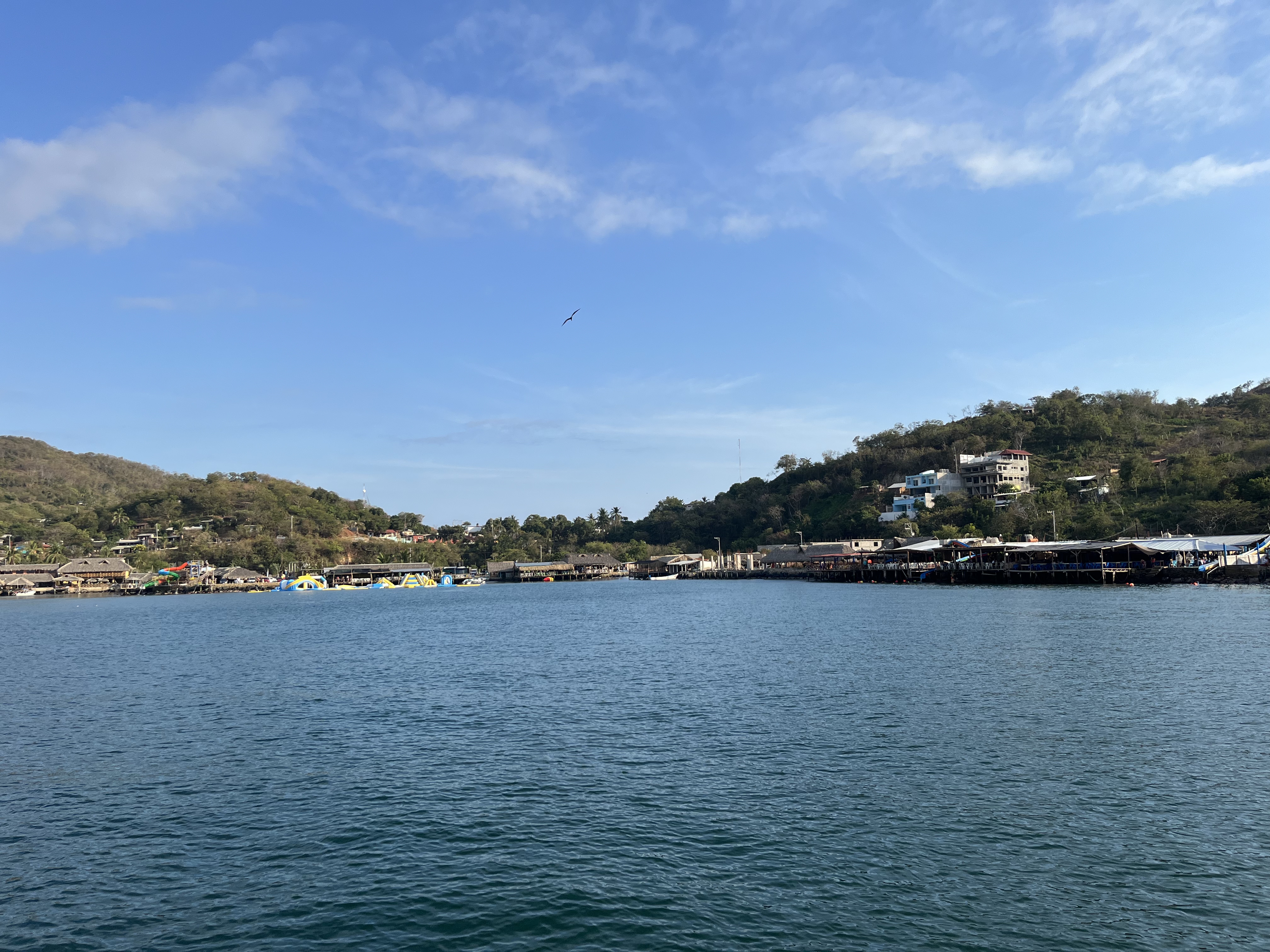
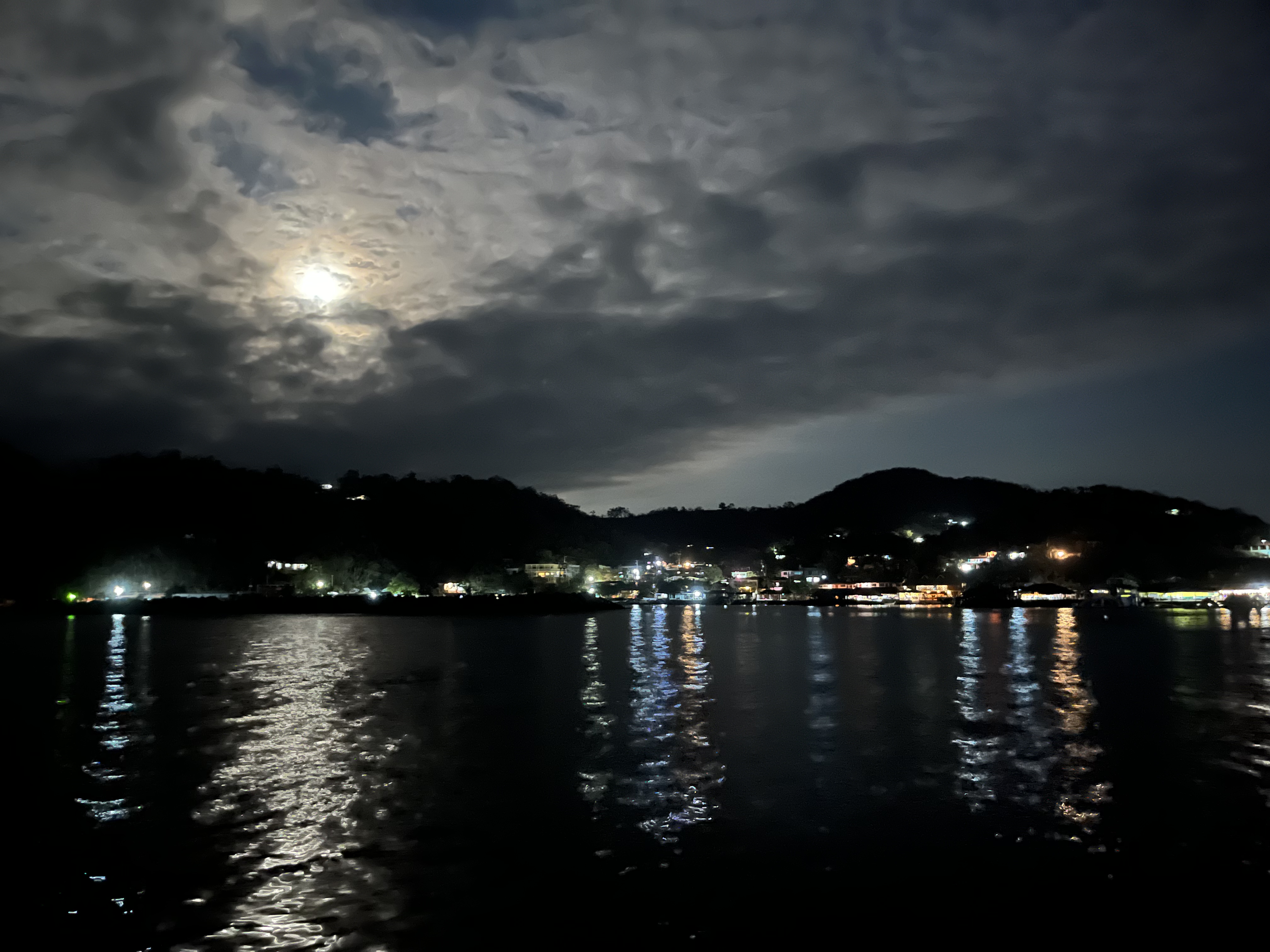
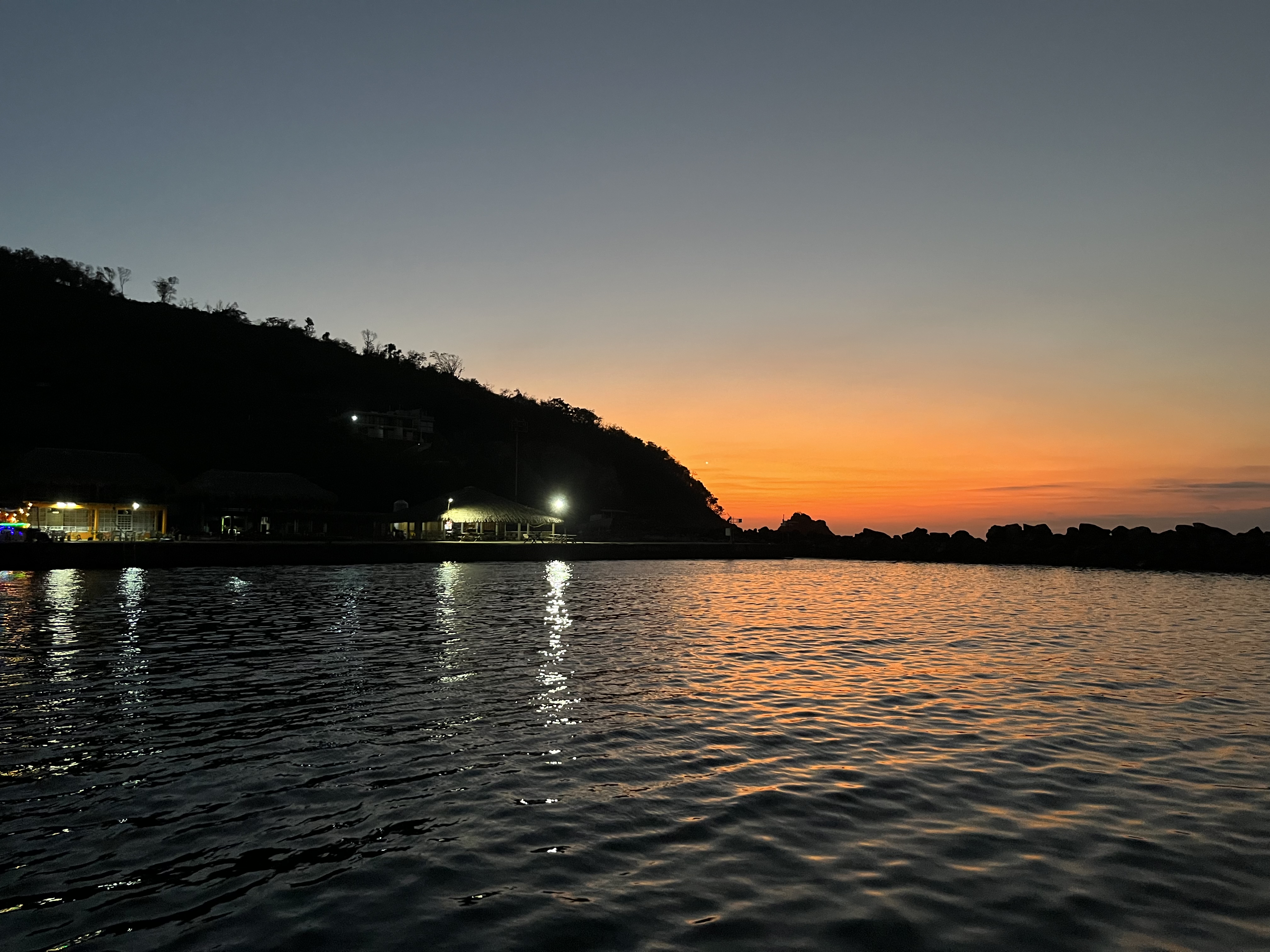
The harbor was ringed with open-air restaurants, most of which seemed to include a water slide for entering the bay. We could see a number of people swimming in the water below the restaurants – not a place we’d typically want to be in the water, but they seemed to be having a good time.
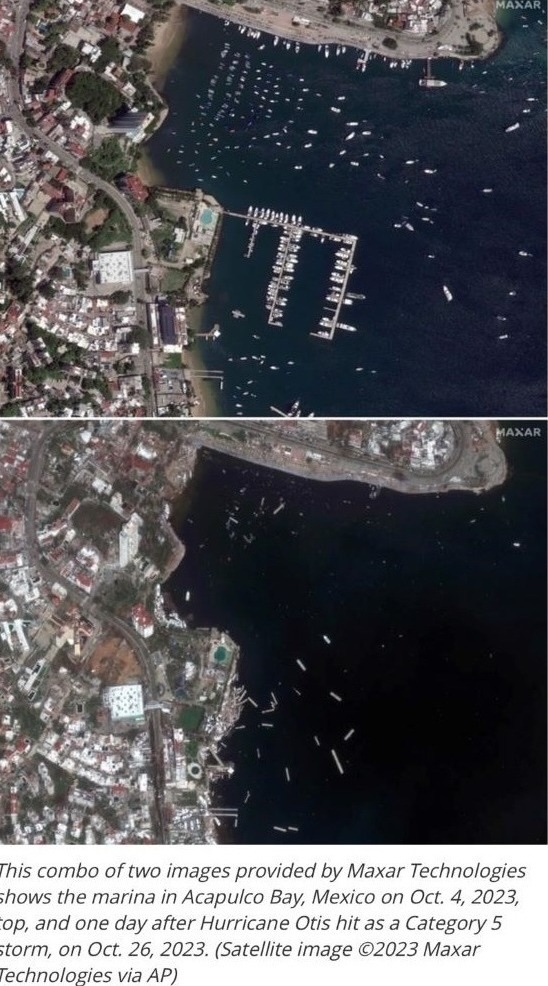
This was a nice stop to break up the long trip to Acapulco, and saved us from having to do an overnight passage. We did, however, rise at 4AM the next morning to get an early start. We had 77nm to go to get to Acapulco that day, and I wanted no chance that we’d get in after dark. The city had taken a direct hit from the category 5 Hurricane Otis at the end of October and conditions in the city and its bay were still evolving.
Prior to Otis, I had always planned on stopping in Acapulco on this leg of our trip. The Panama Posse had a great relationship with a local sailor named Vincente, who had a set of moorings and pangas in Acapulco Bay. Vincente’s experience with Otis was tragic. The local community initially thought that the storm would not reach an extreme intensity before passing by the city. Vincente and his family decided to take their boat out of the harbor to ride out the storm. Sadly, Otis rapidly intensified from a Category 1 to Category 5 storm as it approached Acapulco, with sustained winds of 165 mph. The storm slammed into the coast just west of the city and a series of 20 foot waves entered the harbor. Vincente’s boat was lost, and as he had sent his family below while he helmed the boat, his family was lost as well. Vincente was the only one to escape, washing ashore after his boat capsized. At the time of our visit his boat and the remains of his family members had still not been located.
The Posse community rallied to help Vincente, raising money to help him get back on his feet and to help with the search for his family. We definitely wanted to visit to patronize his business. There had been some concerns early on with the state of the community and whether or not it would be safe for visiting yachts. Things had stabilized in the months after the storm and other Posse boats had been visiting ahead of us, so we felt no significant concern with safety.
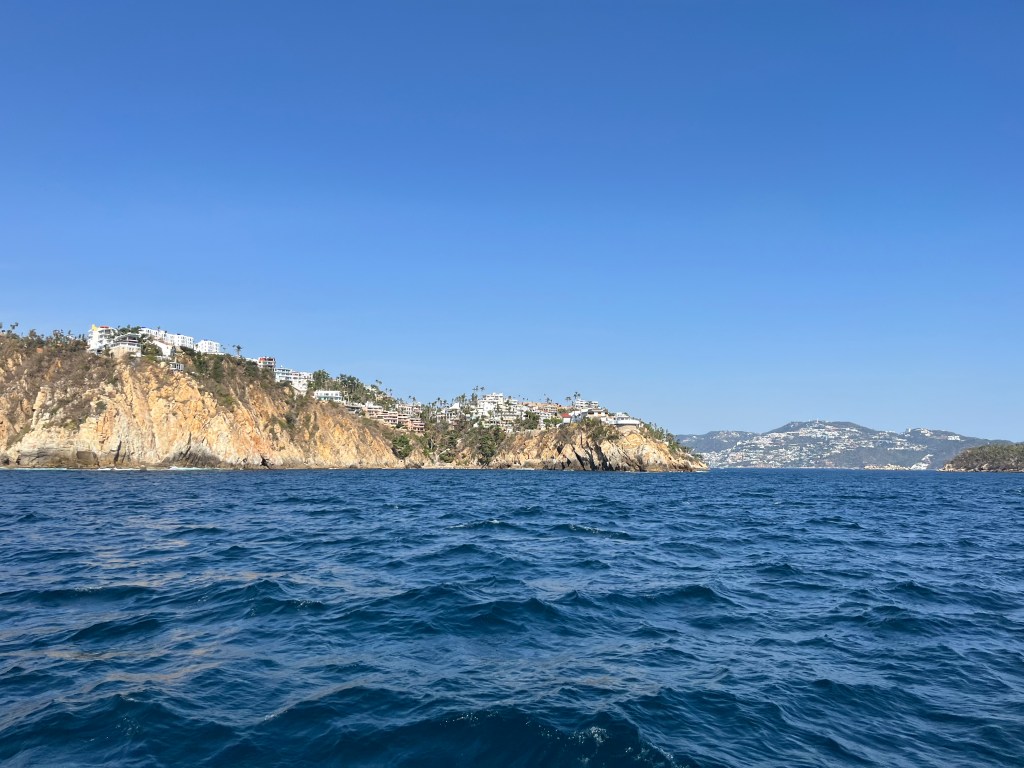
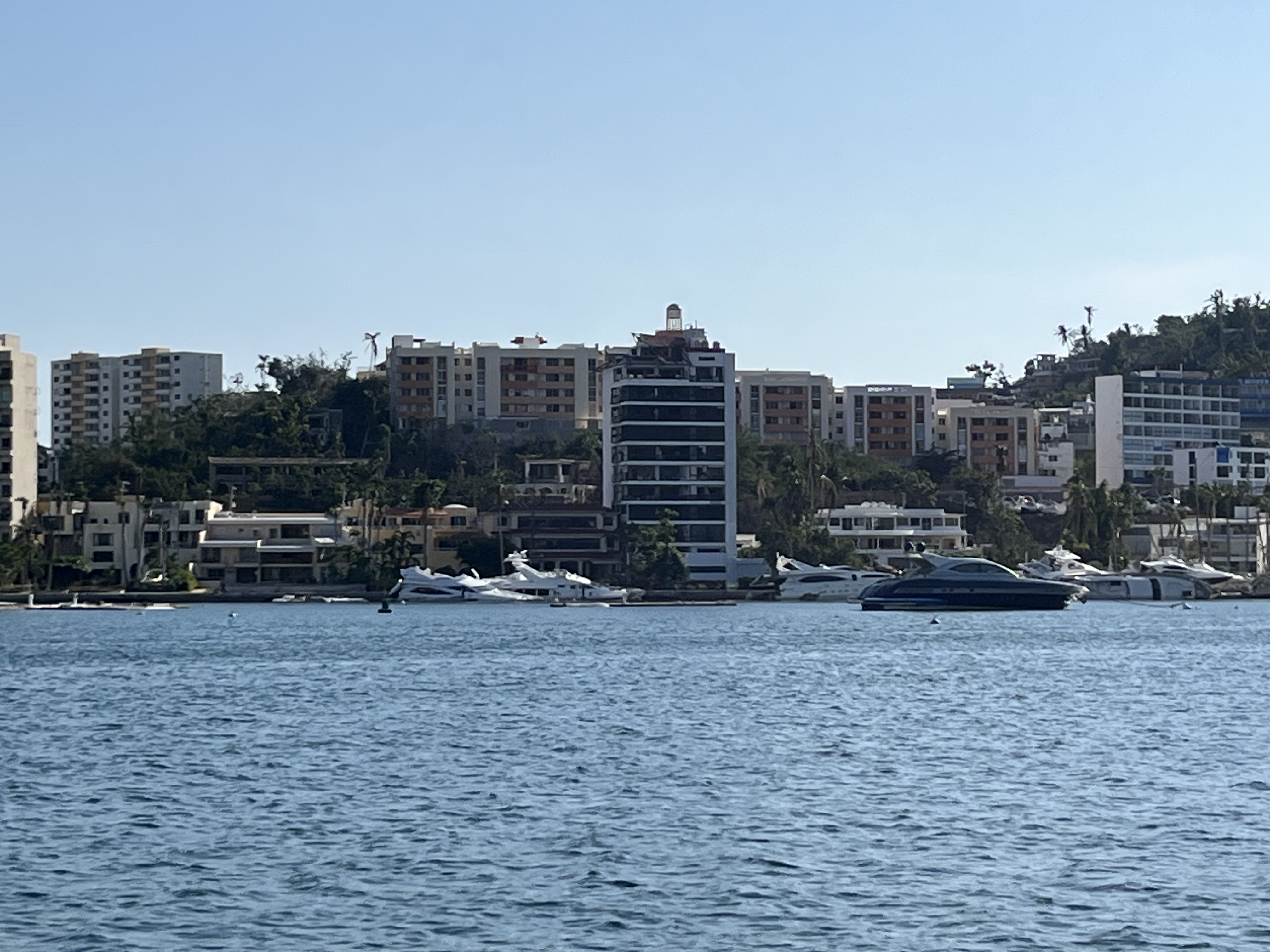
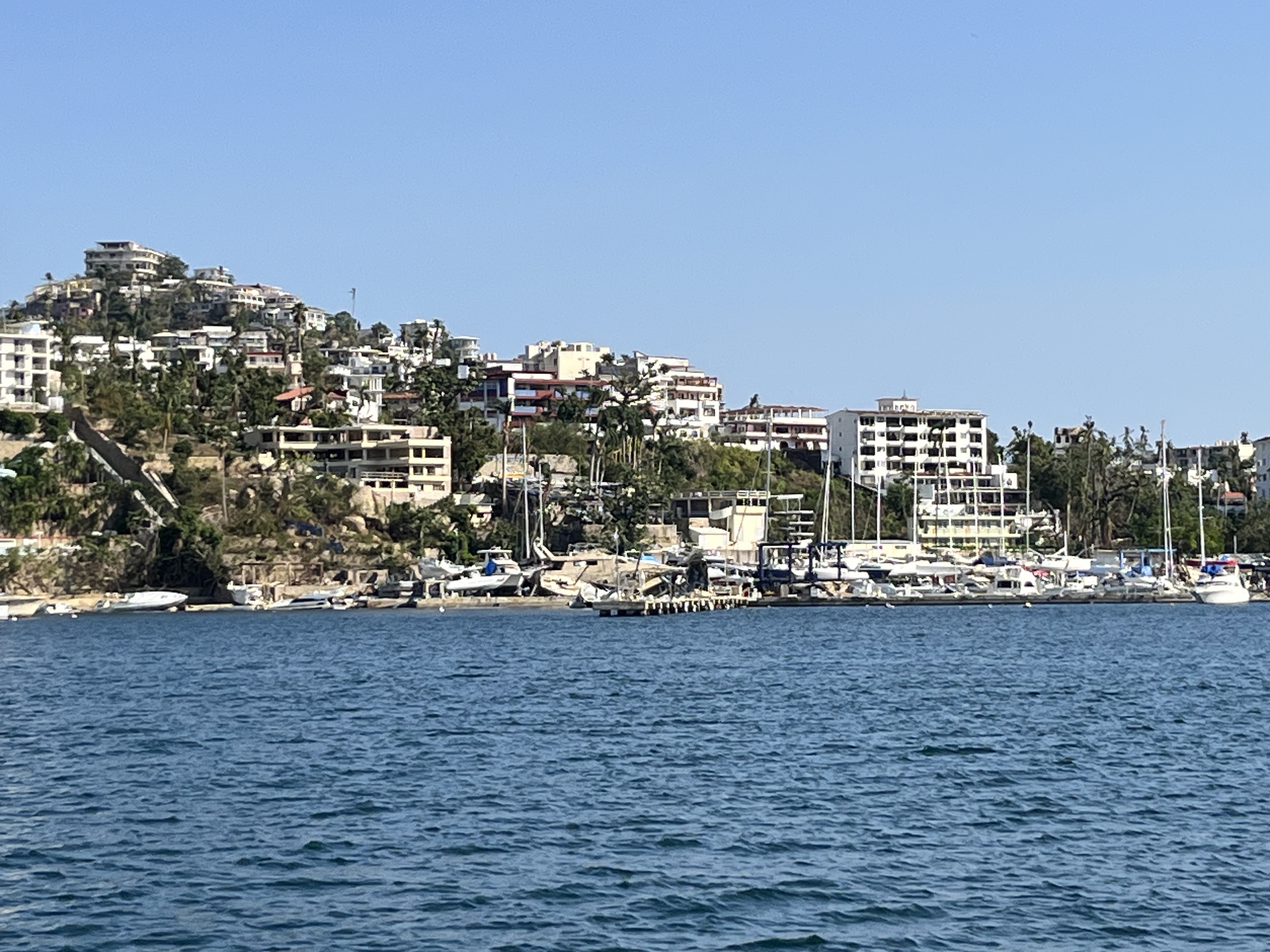
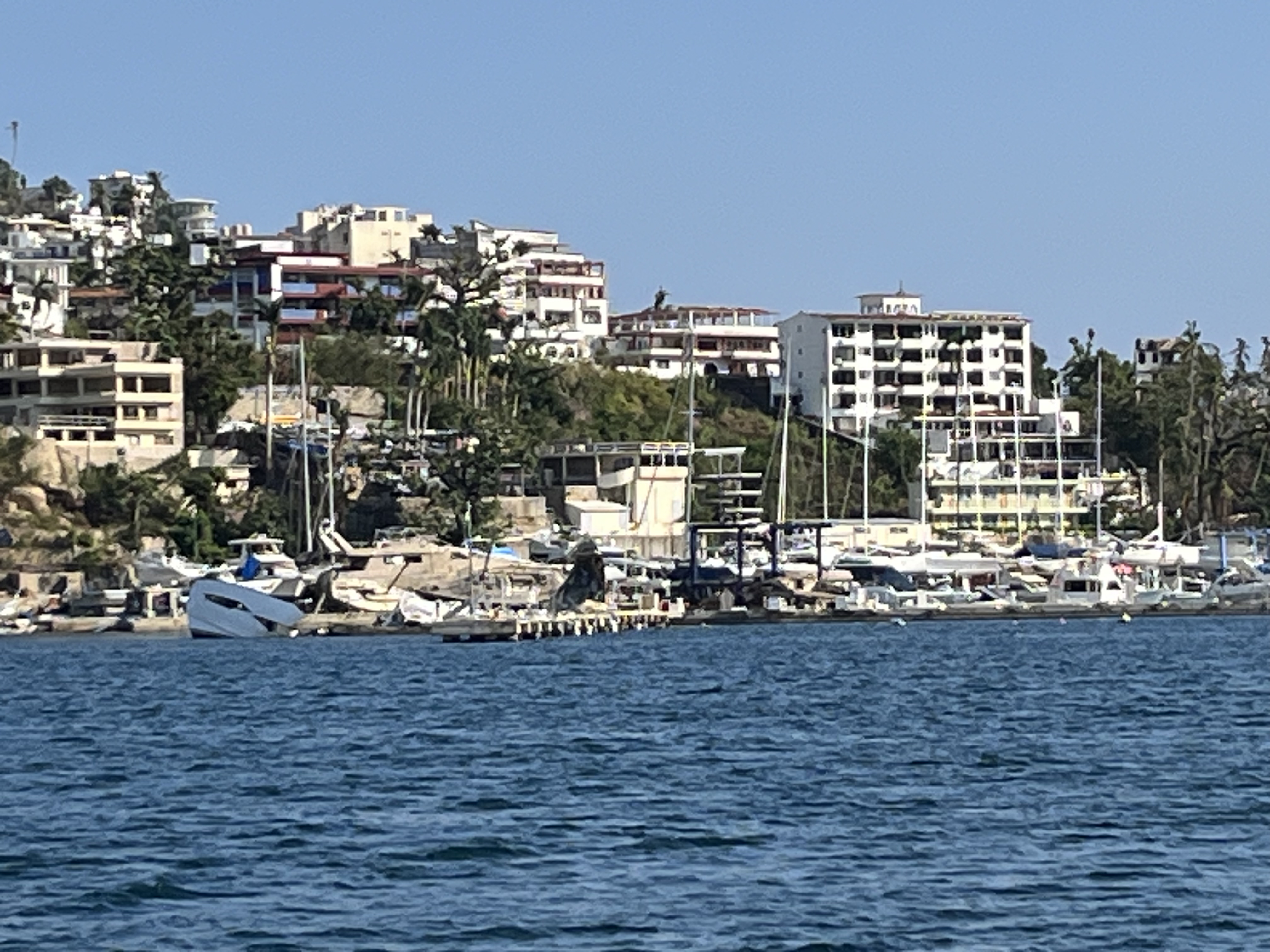
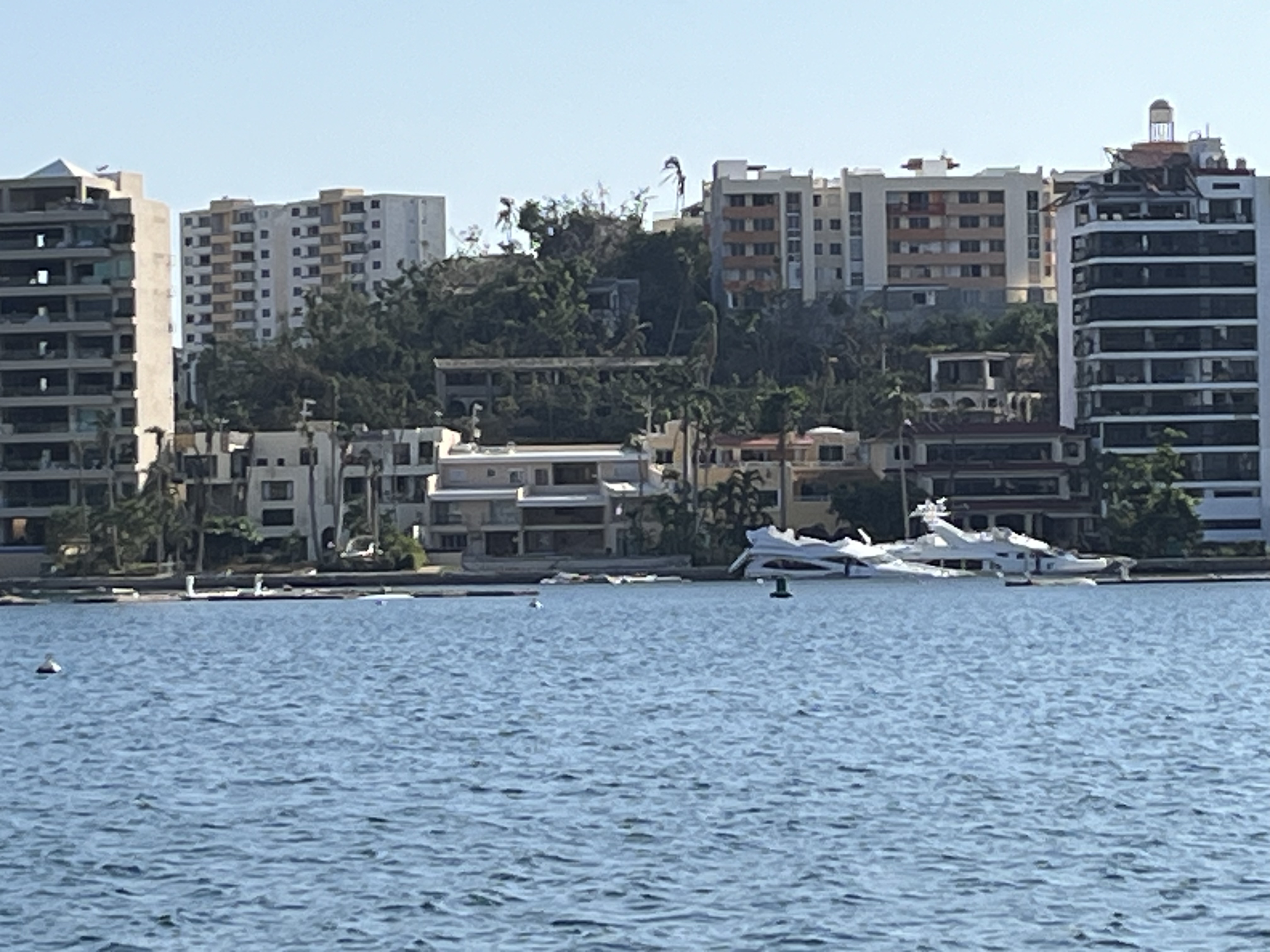
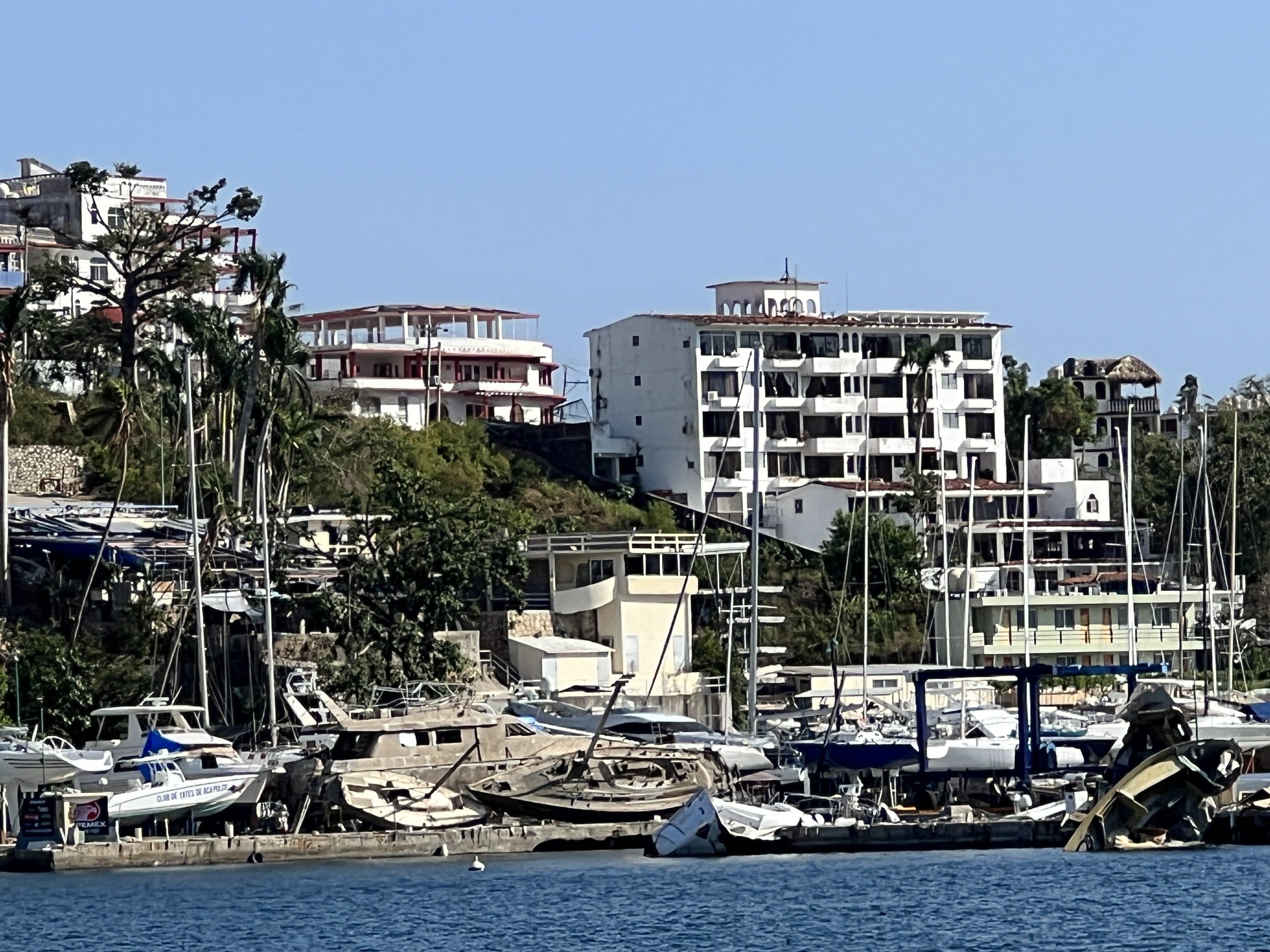
We called Vincente as we approached Acapulco, and he said we could take one of his moorings. It was Sunday, but one of his guys would be there to meet us in a panga. As we nosed into the channel between Acapulco and its neighboring island, La Roqueta, we could see white buildings on the cliffs above the sea. As we got closer and closer, the damage to the buildings started to become apparent. Most windows were either blown out or boarded up. The trees had been stripped and twisted by the winds. Boats could be seen half-submerged in the water or completely washed ashore.
But the people were persisting. We could see some inhabitants ashore, and some who were clearly tourists playing in the water. There were also a number of tour boats plying the waters, one with band music playing. It was good to see the city starting to get back on track.
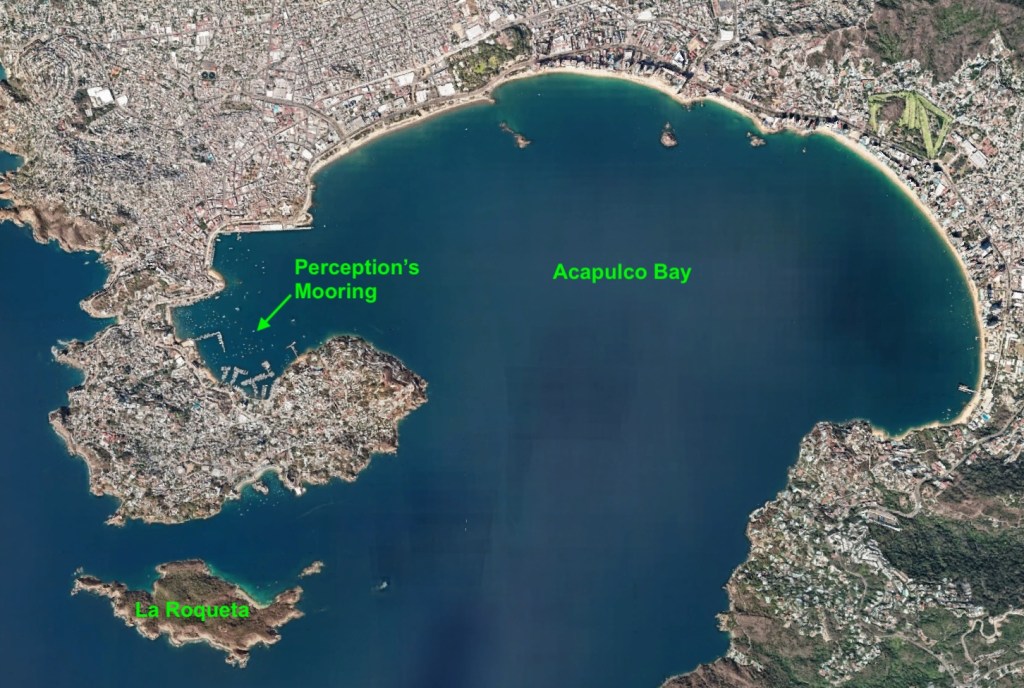
We pulled into the inner bay where Vincente told us to go, and soon a panga was racing out to meet us. There were only a few other boats moored in the marina, but many more were stacked on land or submerged near shore. Beyond pangas, most of the local fleet was still out of operation.
Most of our concerns about safety melted away over time. We stayed in the bay for three days, and there were regular patrols by the harbor police. There were also a few dive boats in operation, clearly working on salvage operations in the bay. There were a number of buoys scattered through the area, and correlating with the diver activity it became clear that at least some of them were marking wrecks on the bottom.

On Monday we arranged to meet Vincente ashore, and I ferried Melinda over in our dinghy. Two of the other boats in the harbor were also with the Panama Posse, and all needed to visit the port captain to officially check in. Vincente drove the group of them around to do this and several other errands. He definitely takes good care of his customers, and it was nice for Melinda to get an intro to Acapulco from the safety of a trusted vehicle and guide.
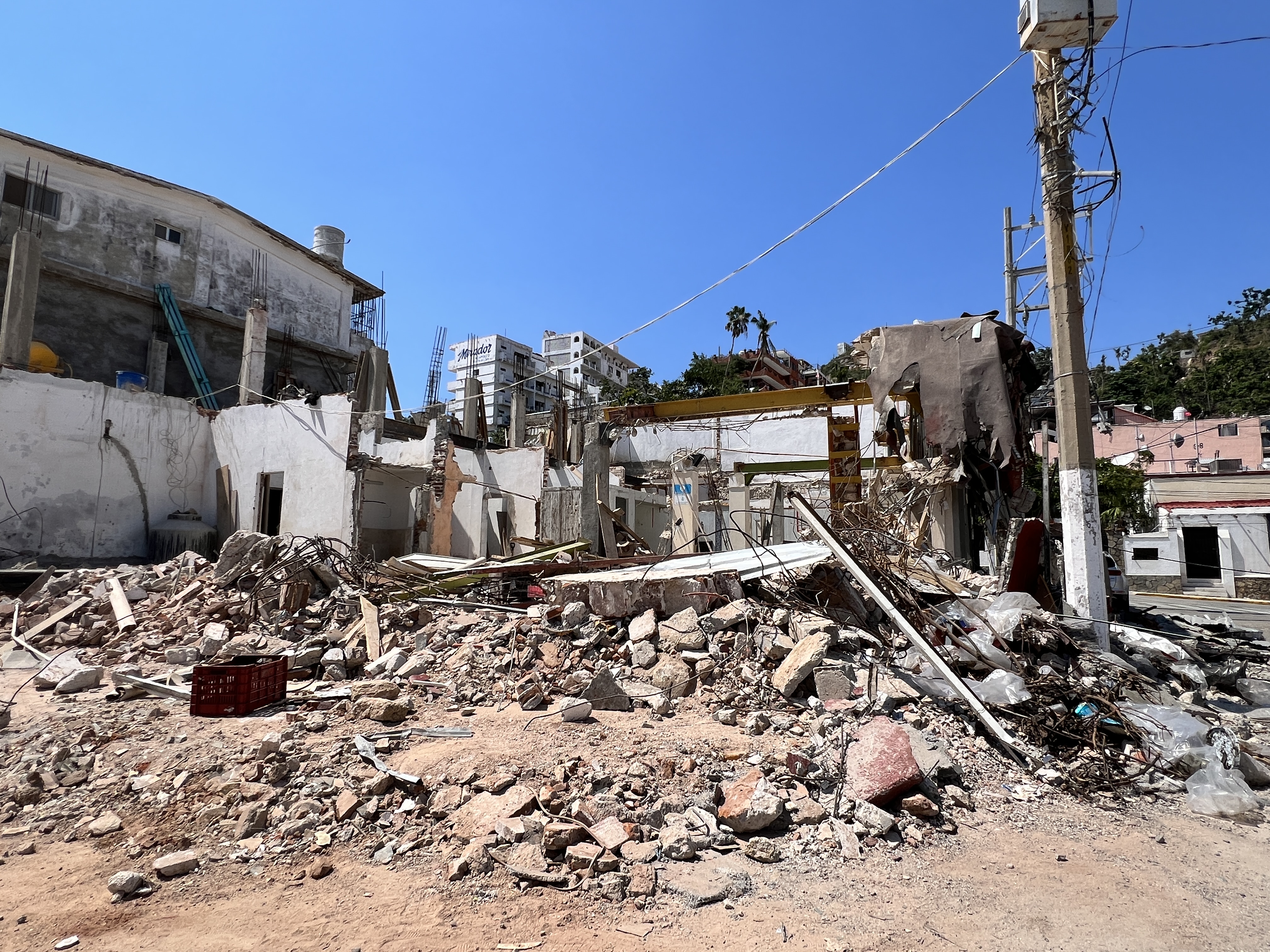
After Melinda finished up with the port captain, she decided to take a taxi tour of the city. The driver took her up to see the famous Acapulco cliff divers, then on around the bay to show her some of the sites of the city. Most of the hotels ringing the bay were still out of operation and still exhibited clear signs of damage from the storm. At night you could see by the lack of lights that entire buildings were still out of commission. But it was clear that the city was coming back. It will likely take them years to fully recover, but if Vincente is any indicator, they are strong, hard-working people who will not give up.
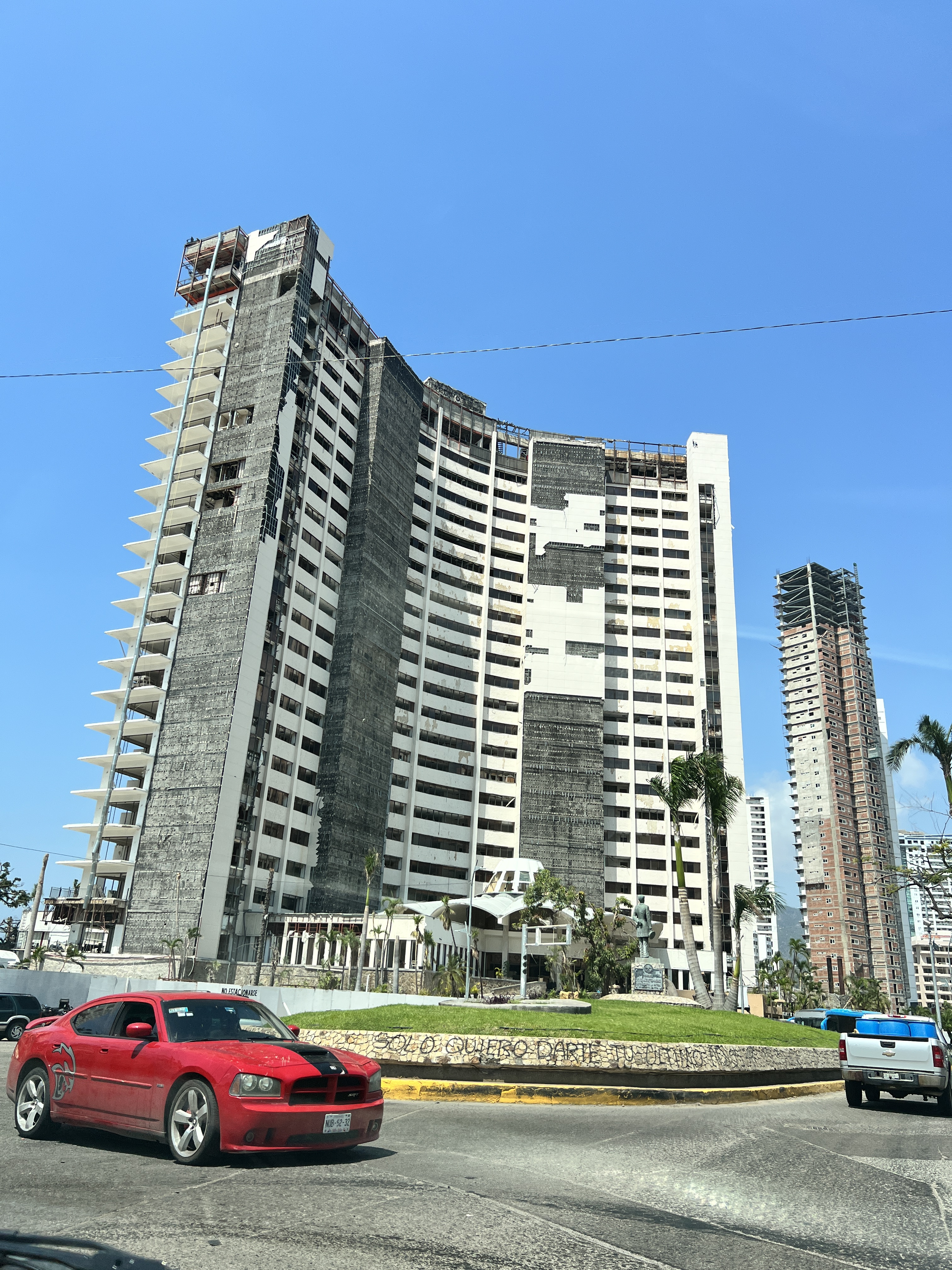
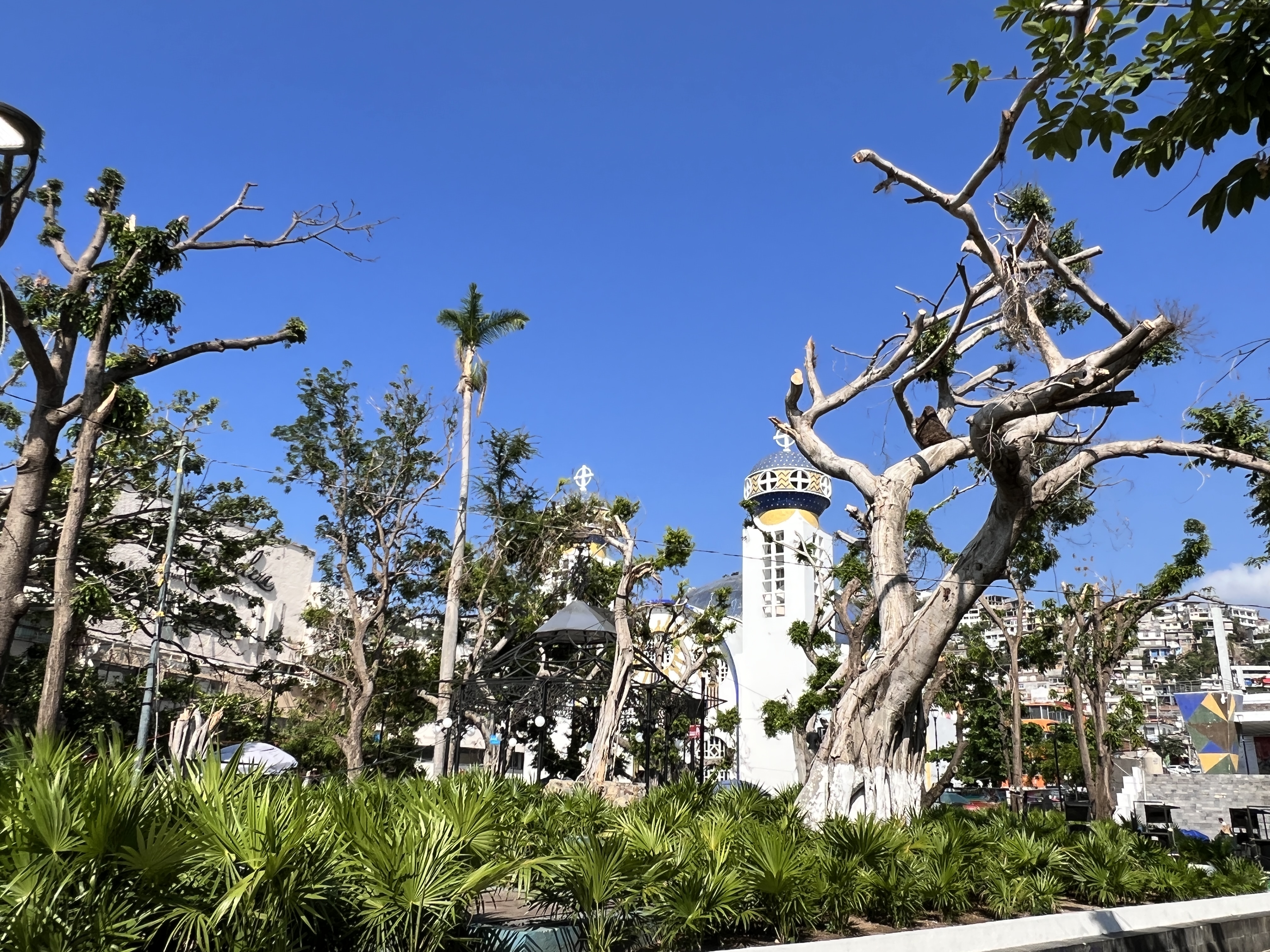
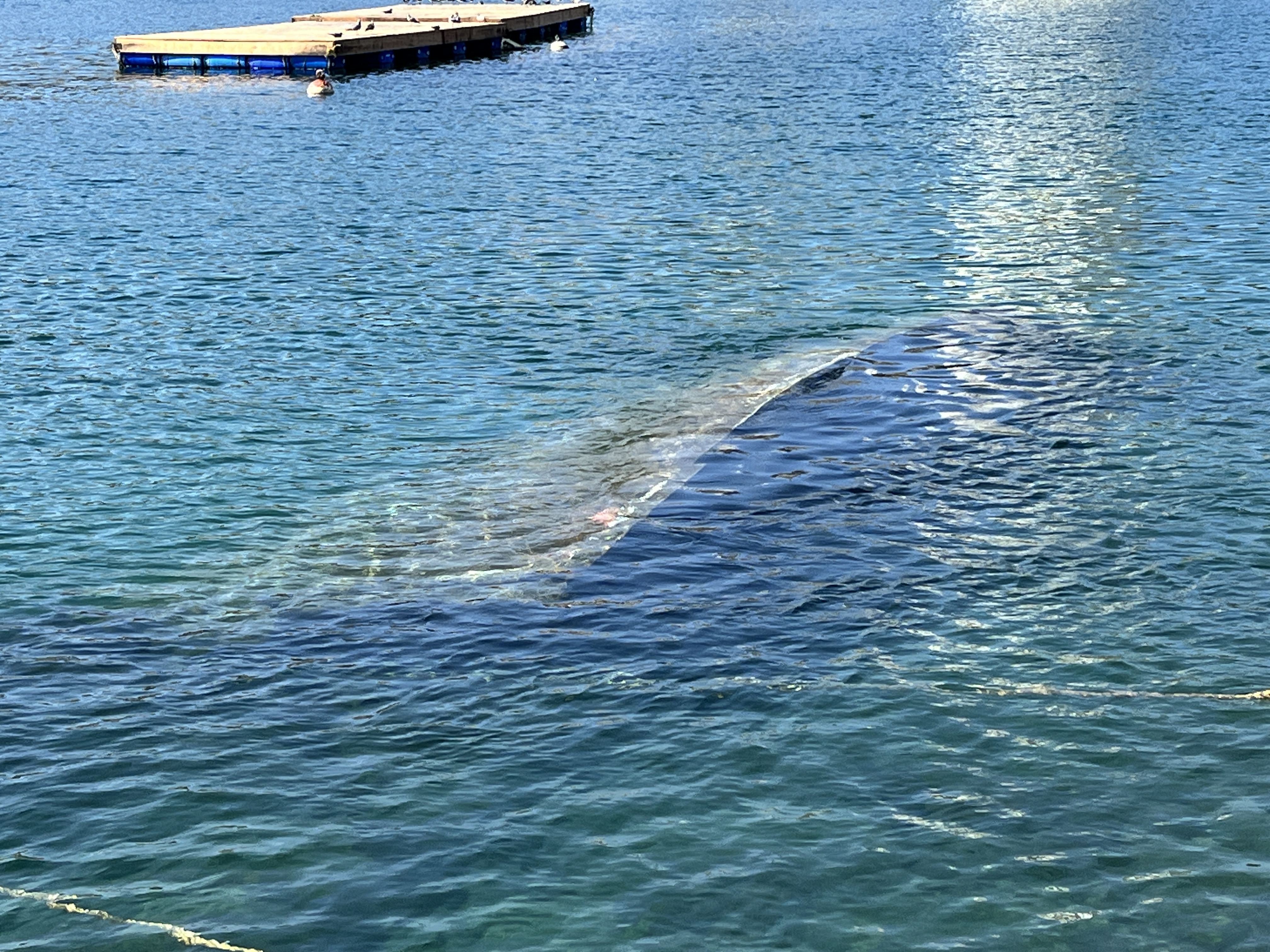
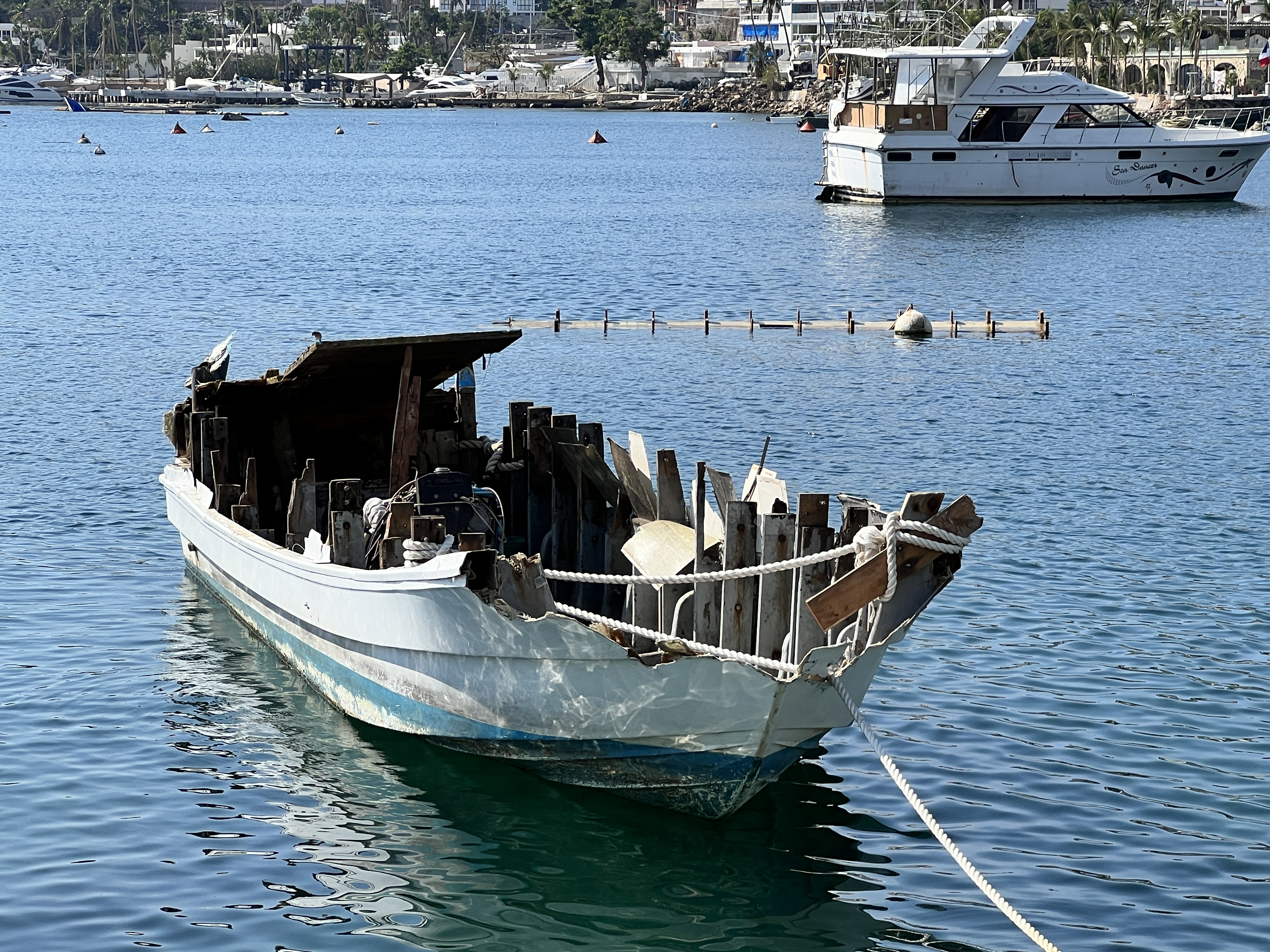
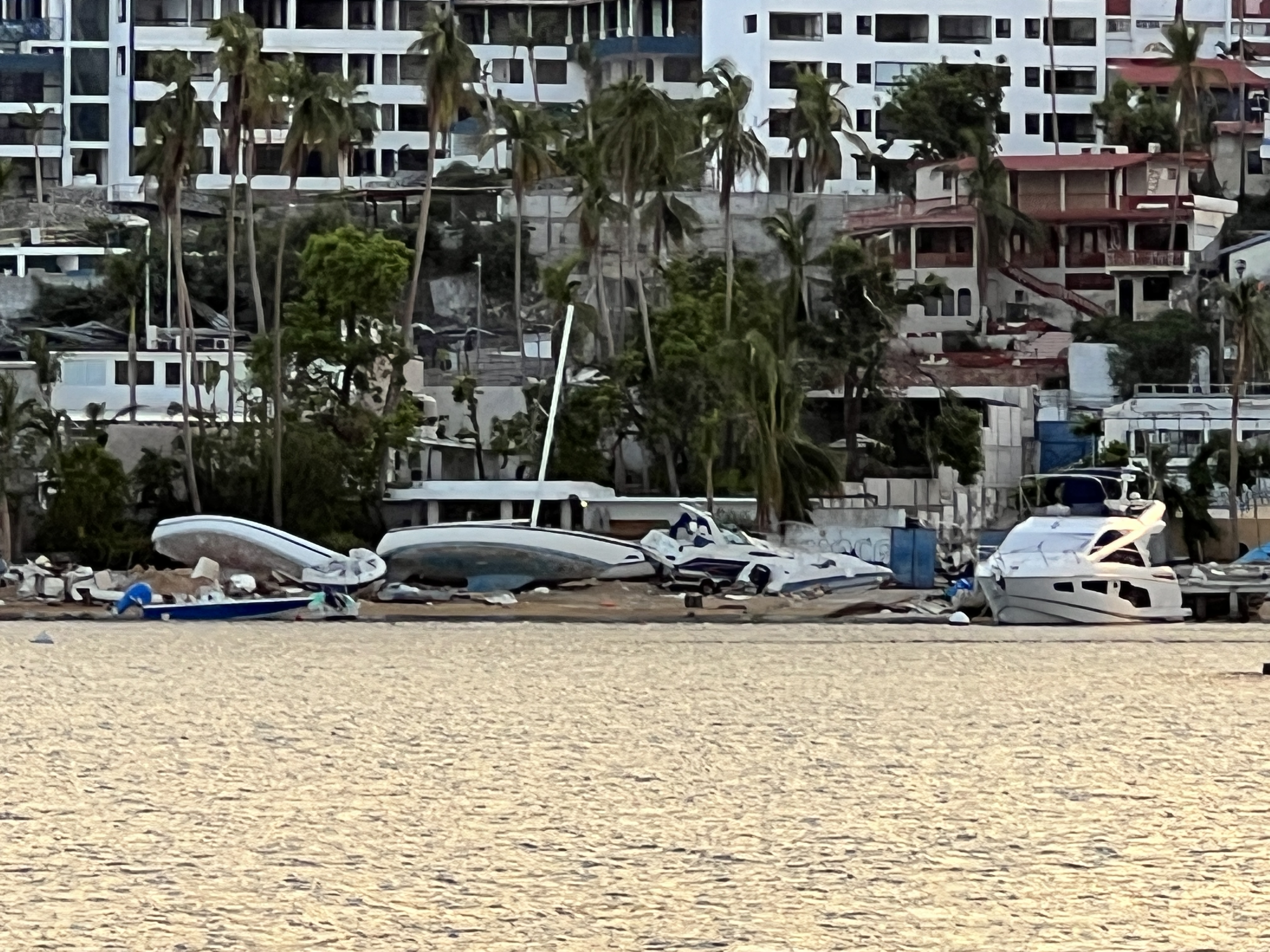
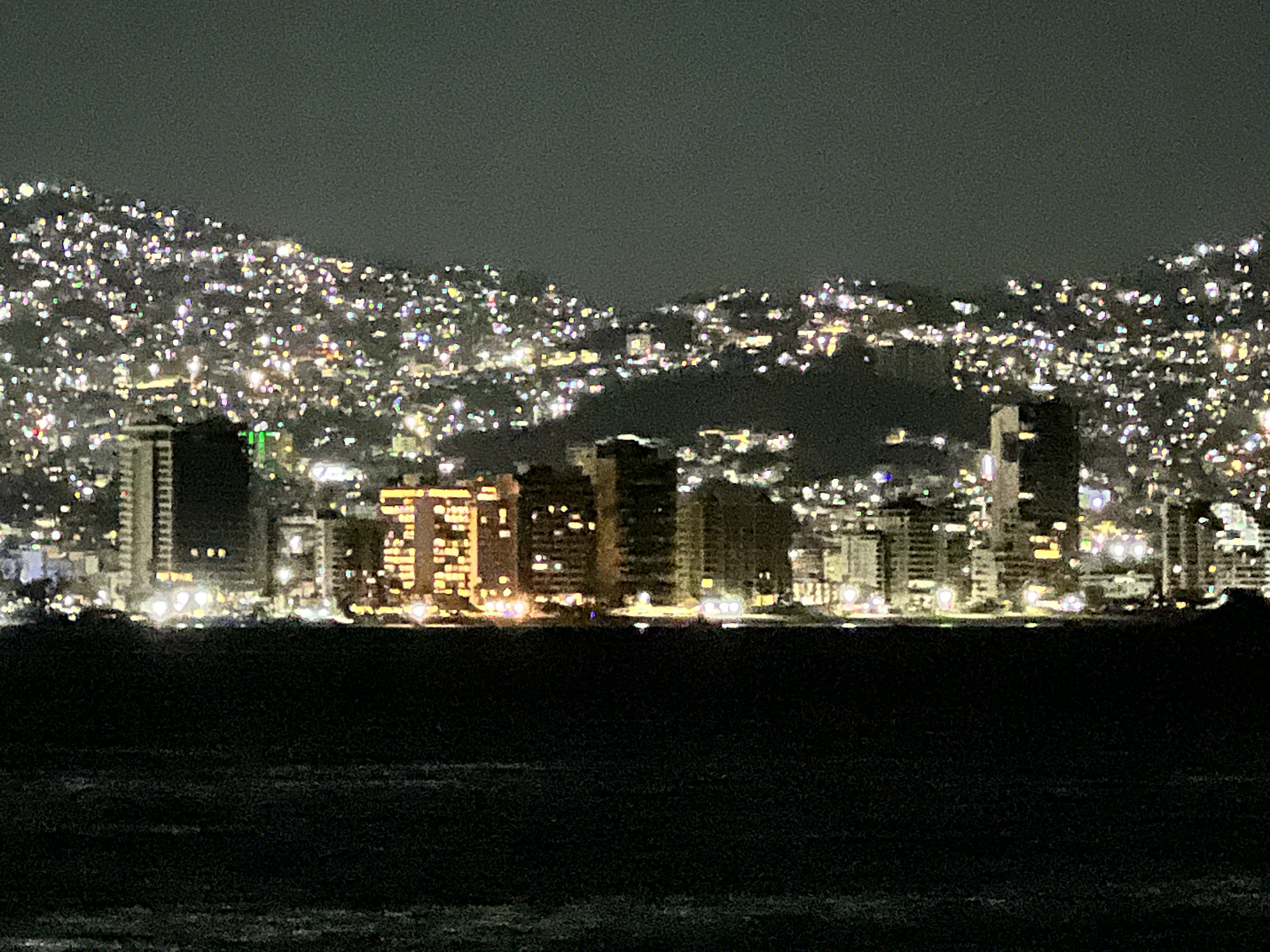
In Acapulco we started to really notice the temperature rise. I’d been concerned with this as we headed south from Mazatlan, but it really hadn’t been too bad in Banderas Bay or even at Barra de Navidad. In Acapulco it seemed like for the first time we really couldn’t get much relief from it. We didn’t really want to swim in the bay given all the wrecks in the water, and even though we would have some breeze in the evening the heat was stifling. We all began looking forward to our evening showers to cool down before hitting the rack. Hot water was certainly no longer something you wanted for washing. We all knew it would likely be getting worse the further south we went.
For dinner our final night in Acapulco, we decided to go ashore and sample one of the local restaurants. We tied the dinghy up to the remains of the dock – now just the concrete base of the dock – and made our way up to the street. We locked the dinghy just to be safe, and put a couple of fenders alongside to protect her from the rough concrete of the pier.
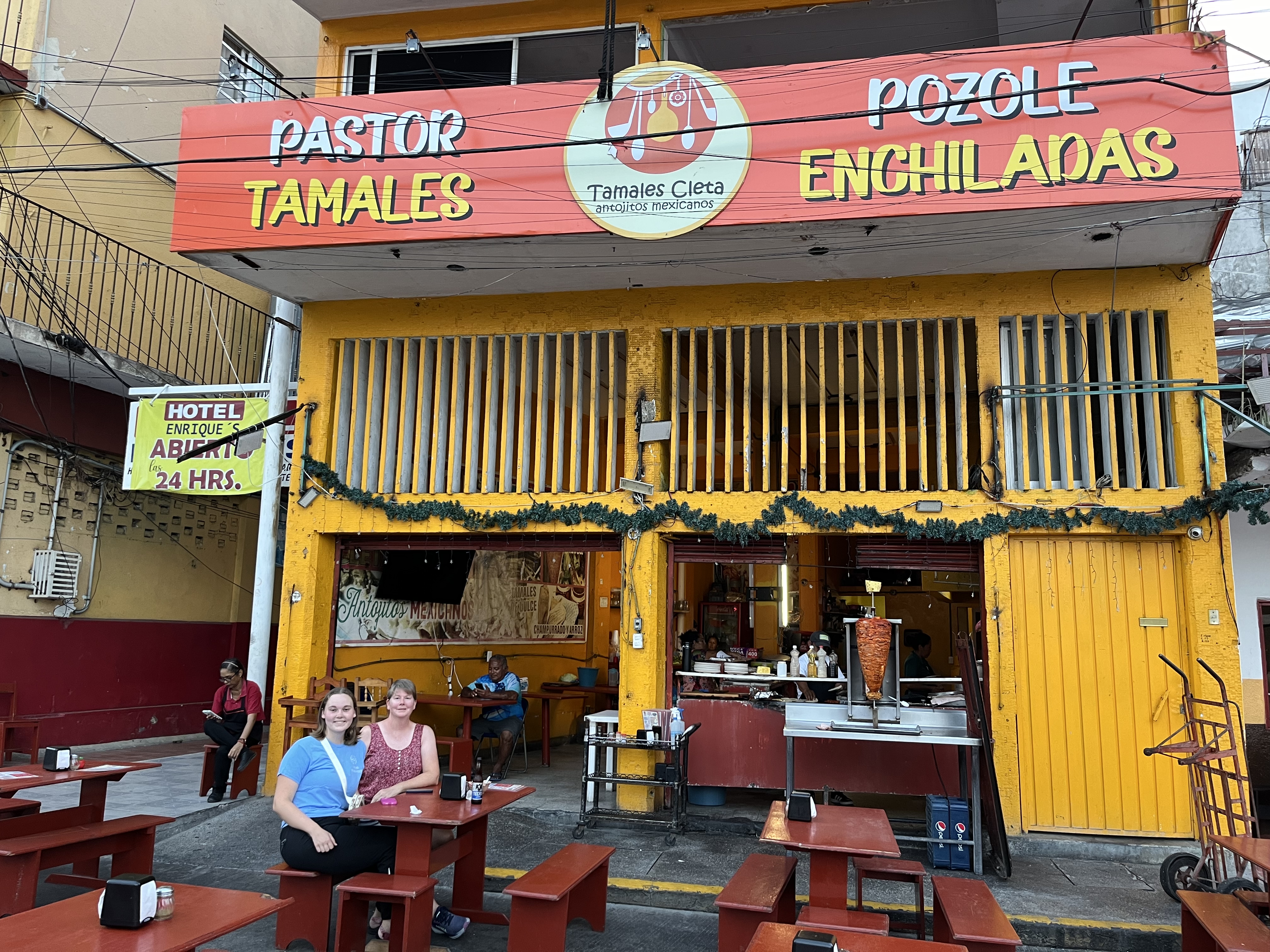
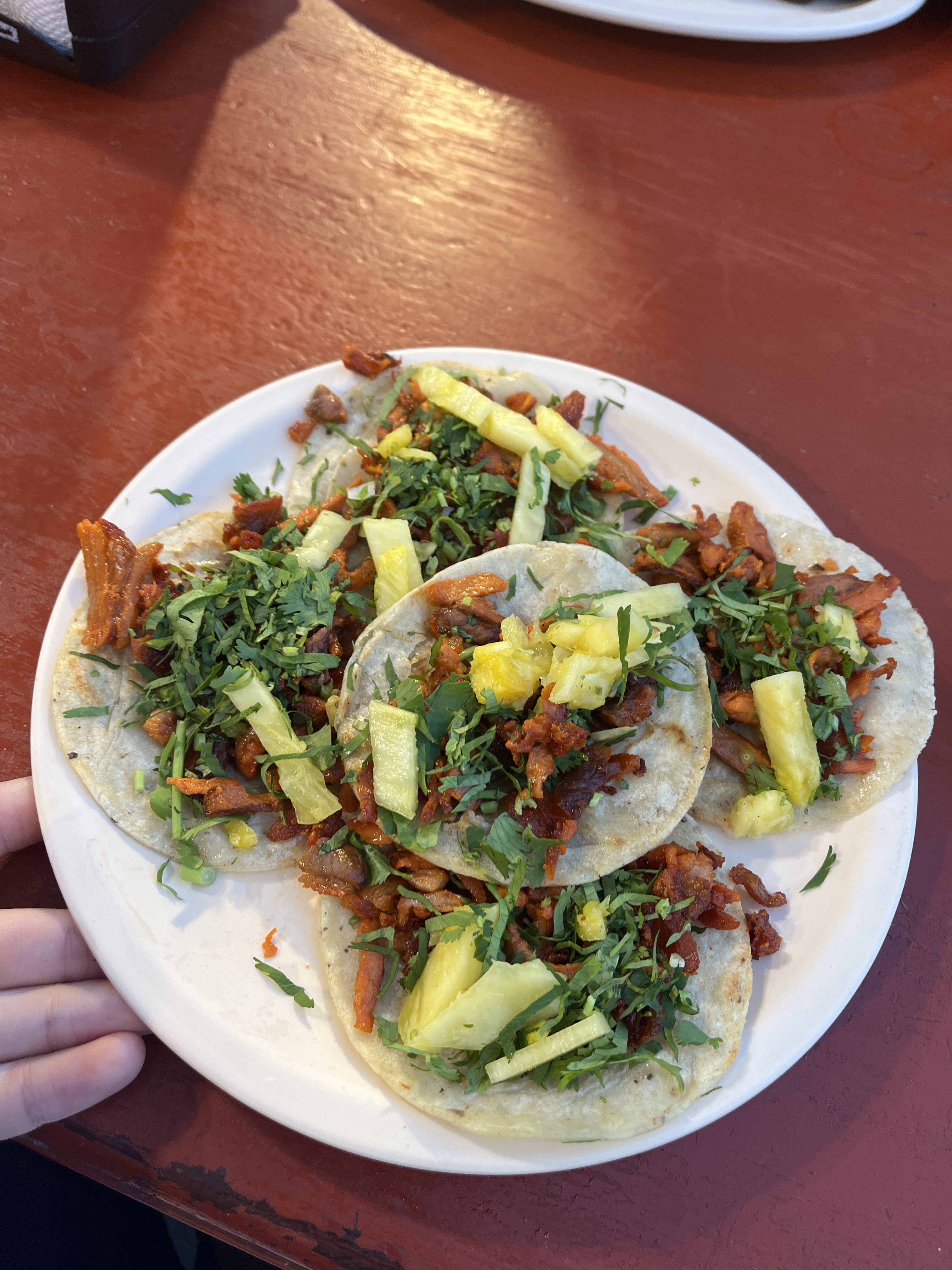
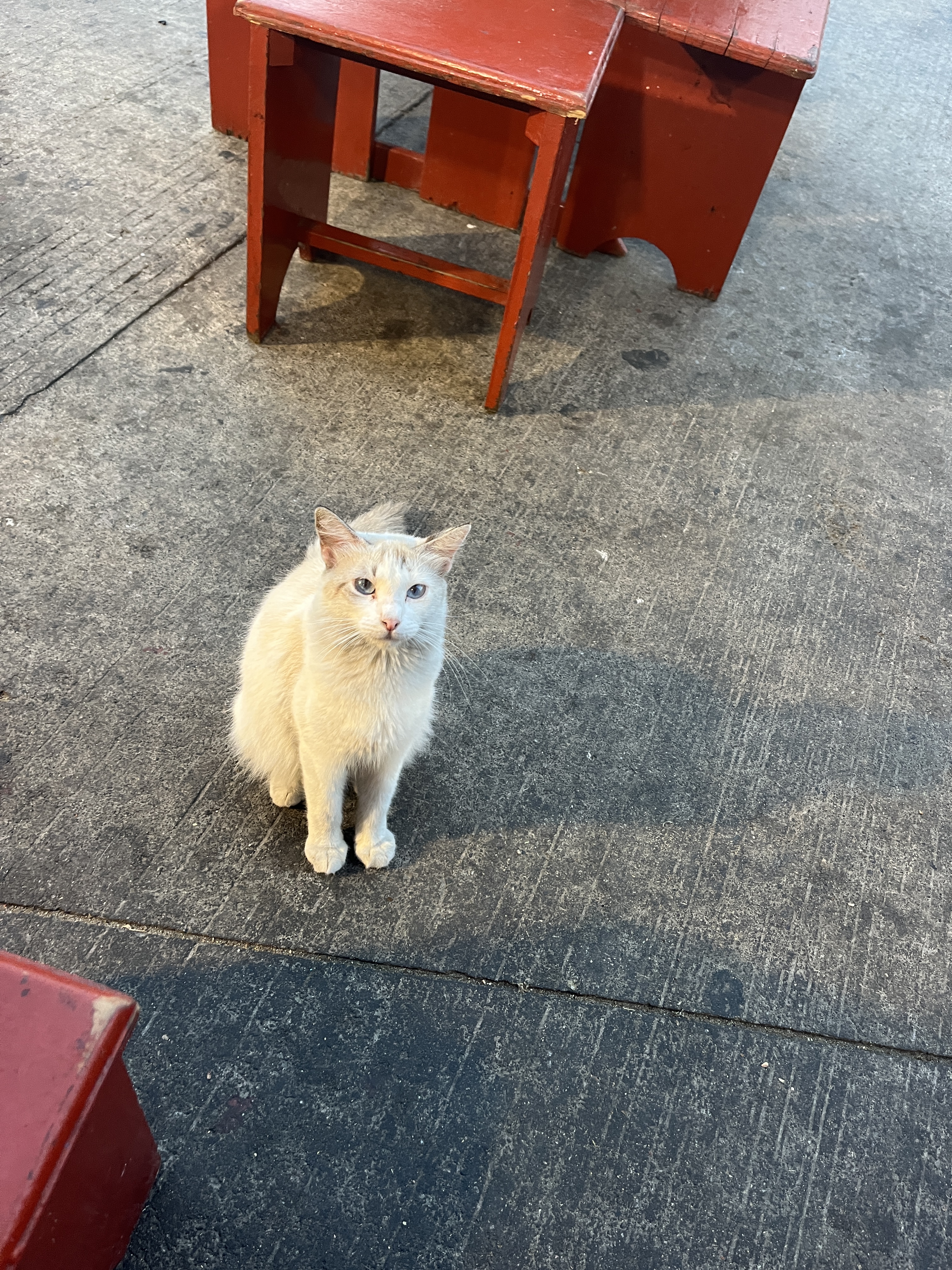
Just up the road was an open-air restaurant that was serving tamales, enchiladas, and other Mexican food. We took a table outside and settled in for an authentic meal. Wow, the tamales were outstanding. I had one for dinner, then we picked up several more to take back for Perception’s freezer. Grace made friends with a local cat by giving it some of her taco meat. Delicious and well worth the trip ashore. We should do this more often!
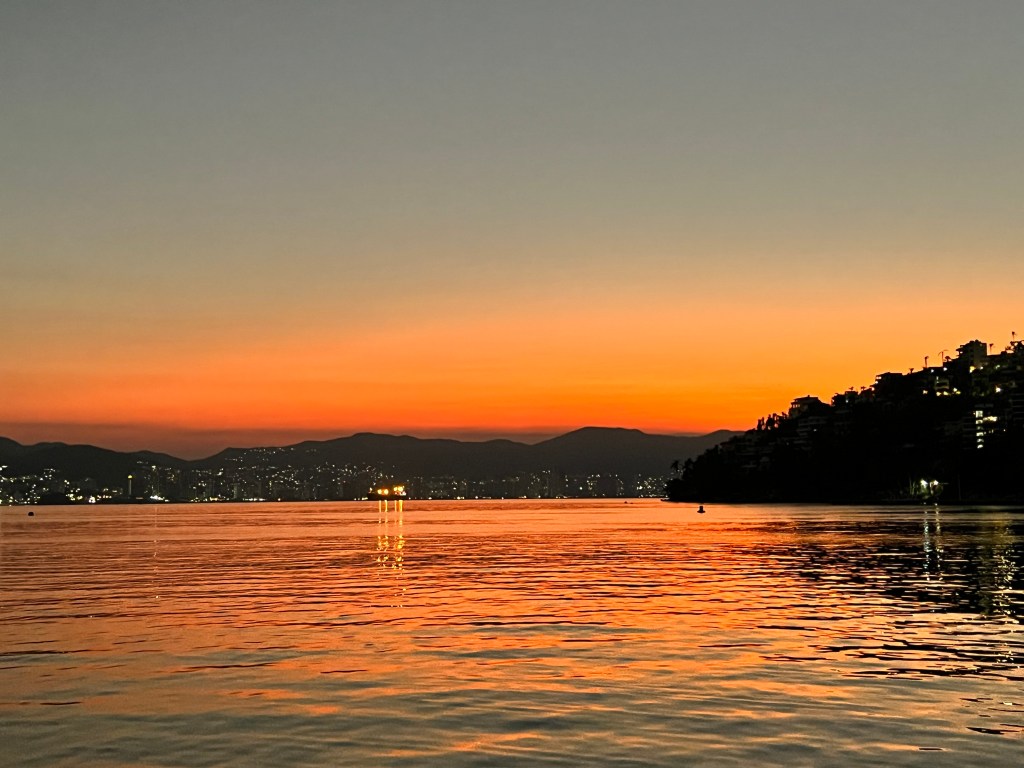
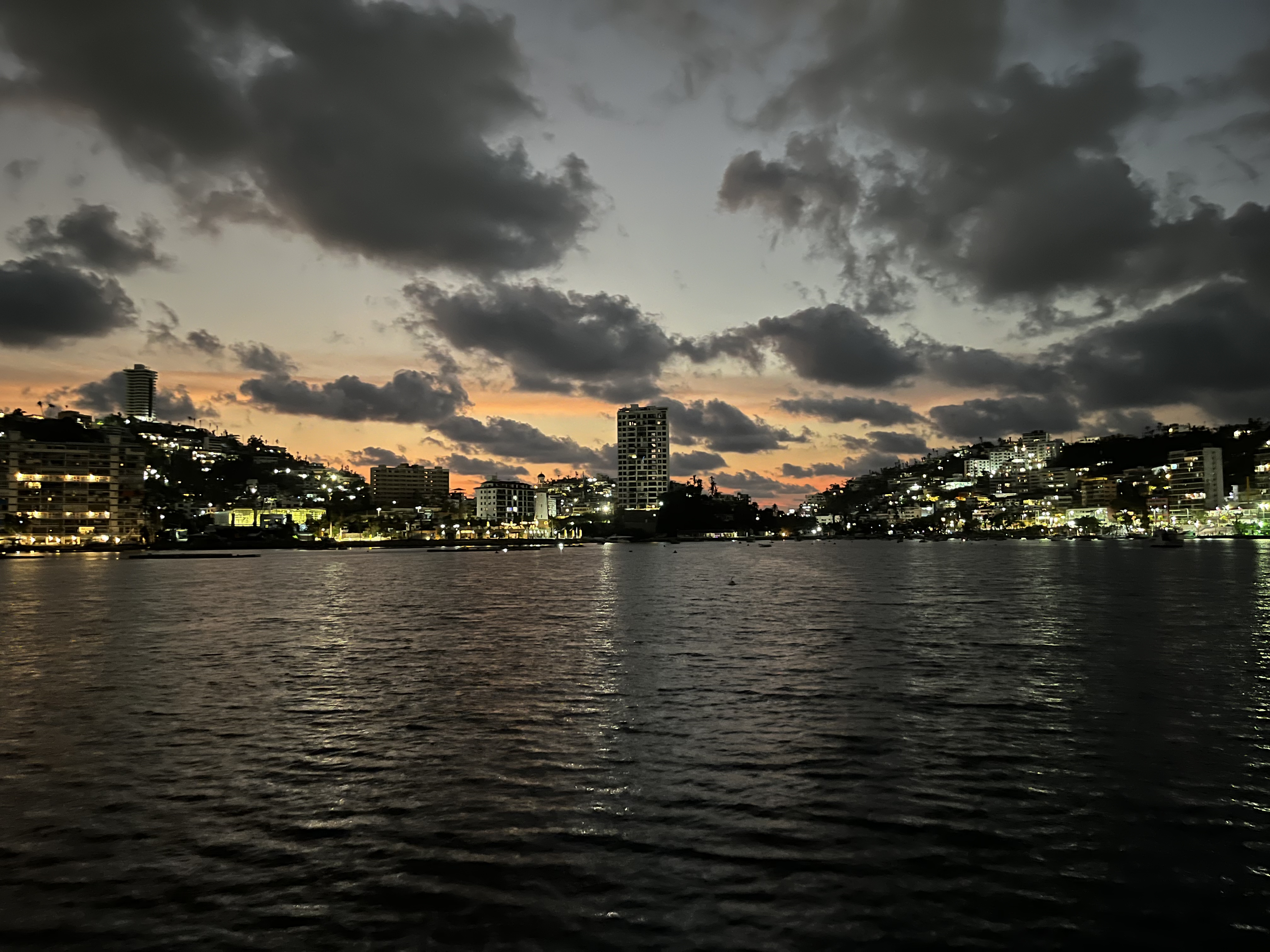
Back aboard Perception, we passed out with full bellies and had a long night’s sleep in preparation for our departure in the morning. The dawn brought us a beautiful sunrise, and we pulled out of the harbor to start our next leg of the trip.
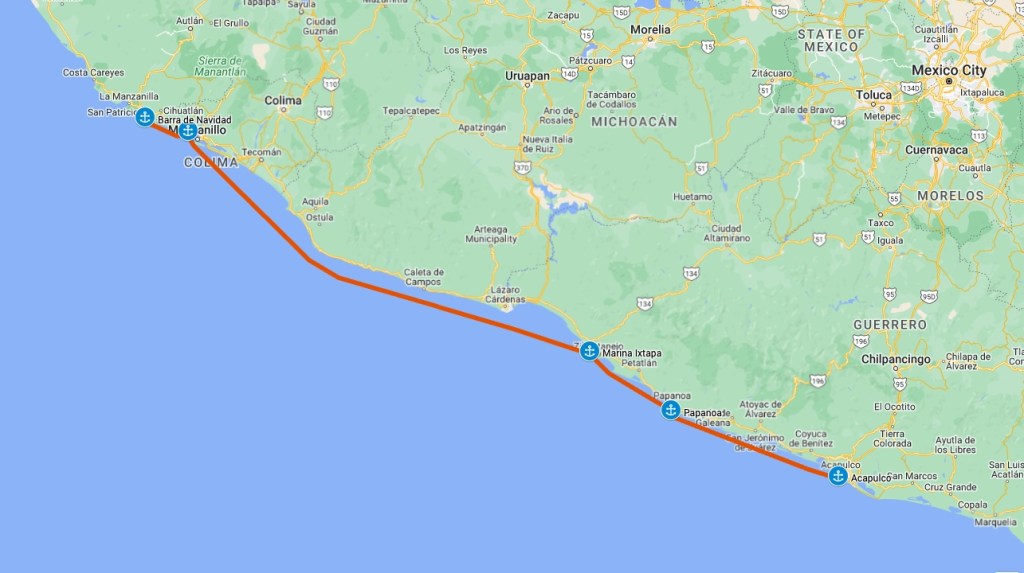
We’d survived another long stretch of the coast, had seen many new places, and made new friends. It was great though also heartbreaking to finally meet Vincente in person. We were ready to get on down the coast to Chahué, and hopefully make an inland tour to Oaxaca. More adventure ahead!
 Sailing Perception