
Marina Mayhem
Ugh, when has a marina ever caused this skipper more stress than it alleviated? Well, never, at least not until Puerto Escondido. Normally there’s nothing more relaxing than being tied up to a nice dock, with unlimited power and water. Many of the daily cares managing the boat’s safety and resources melt away. Not so this time.
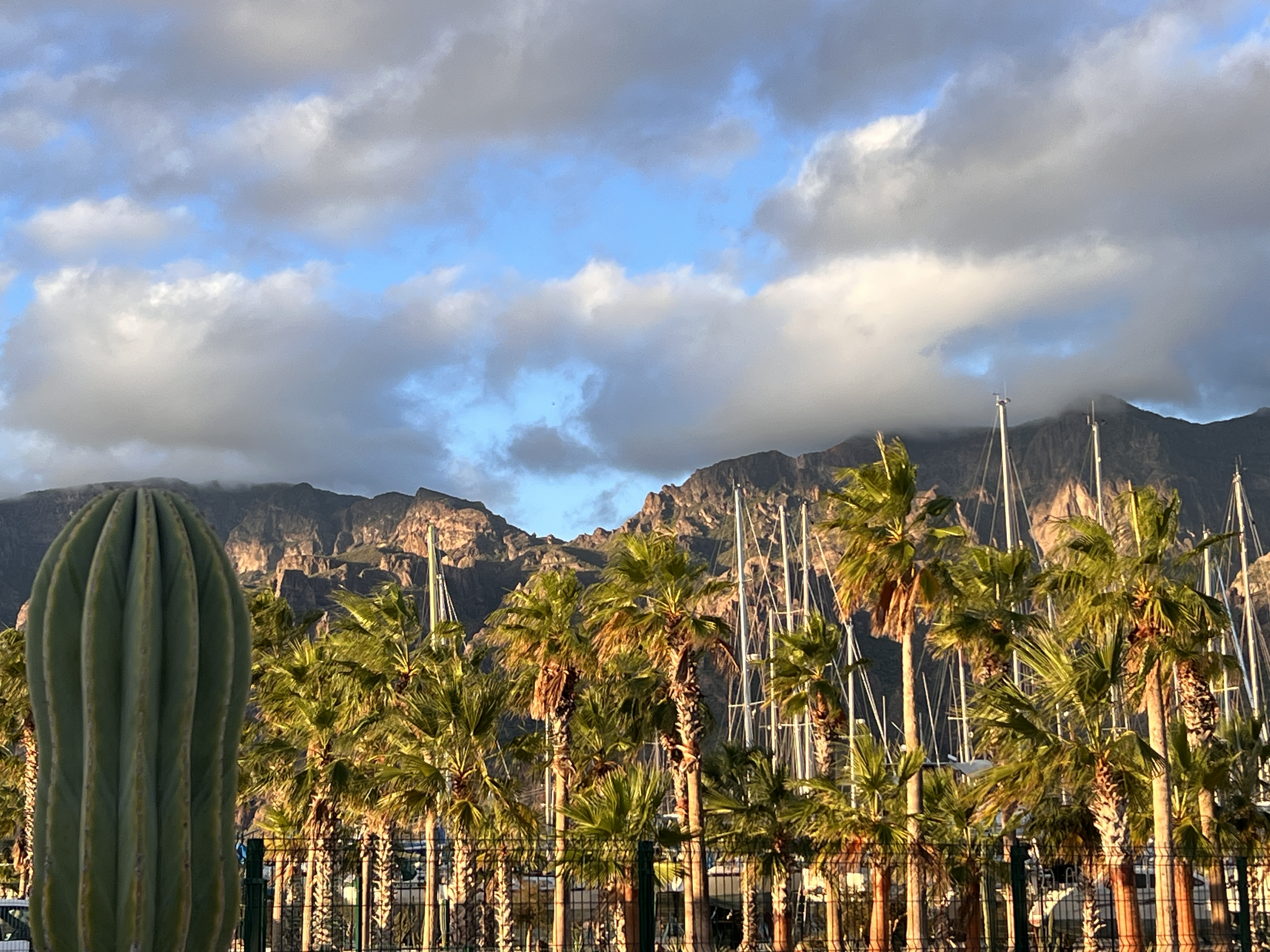
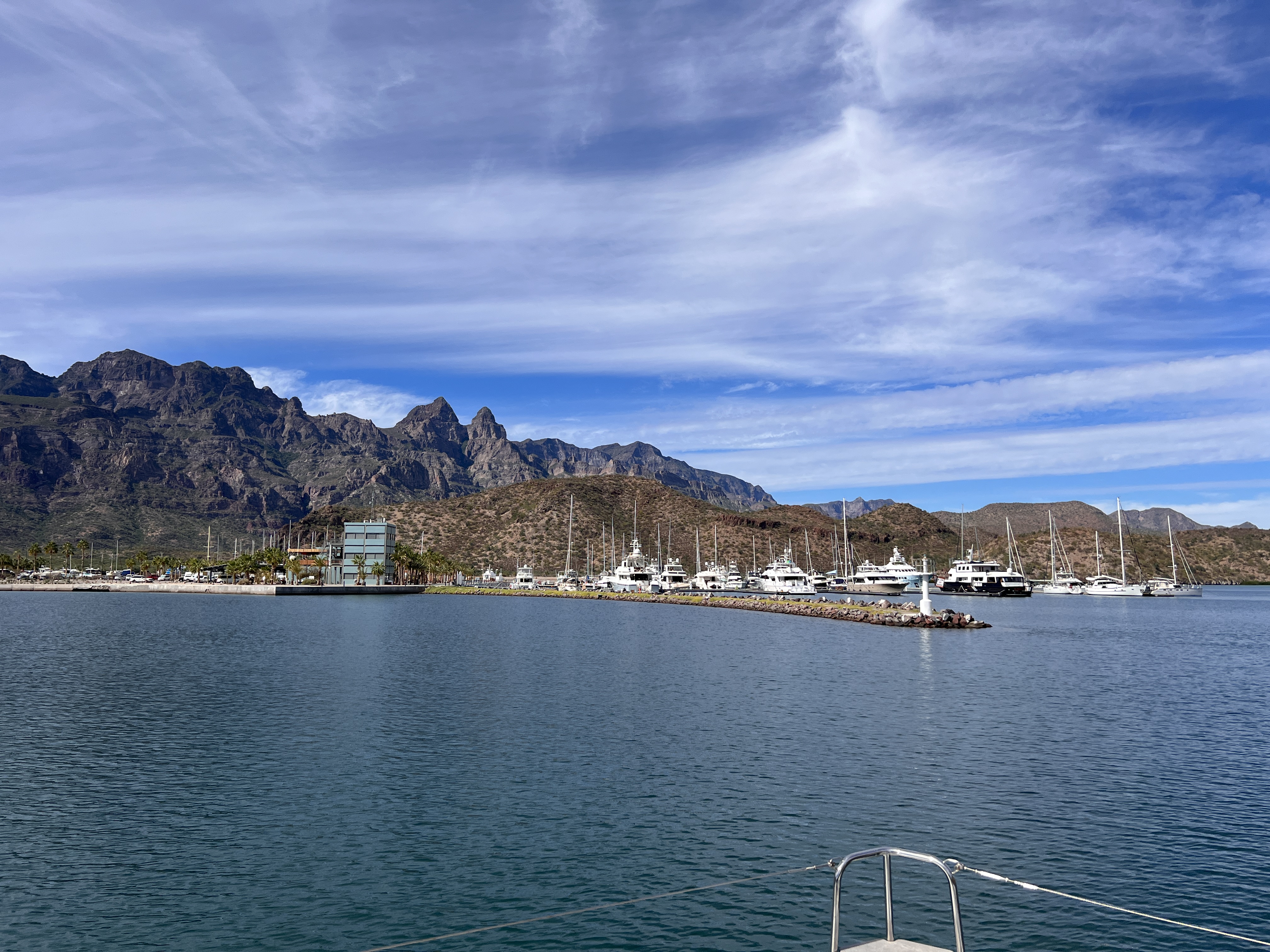
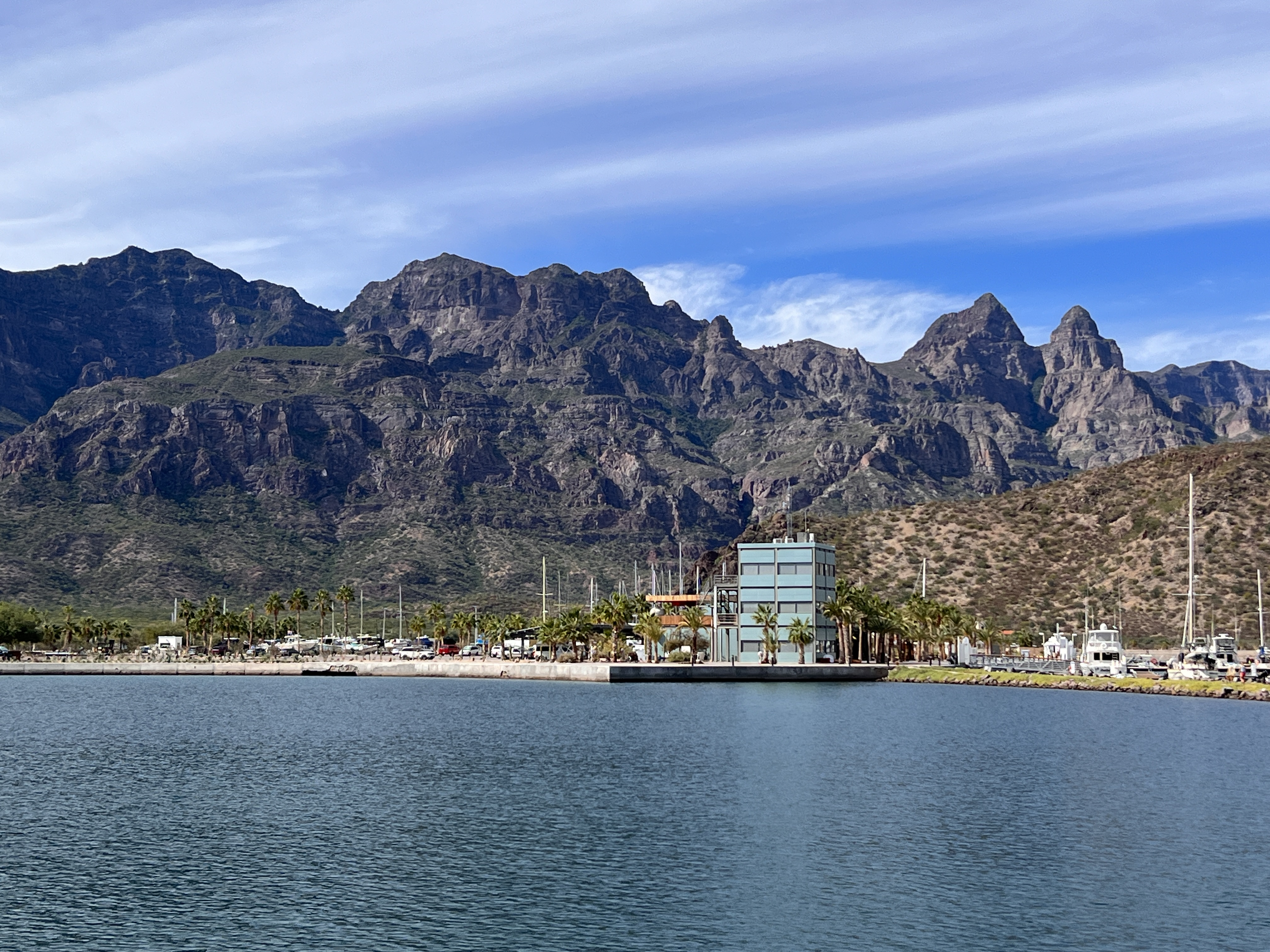
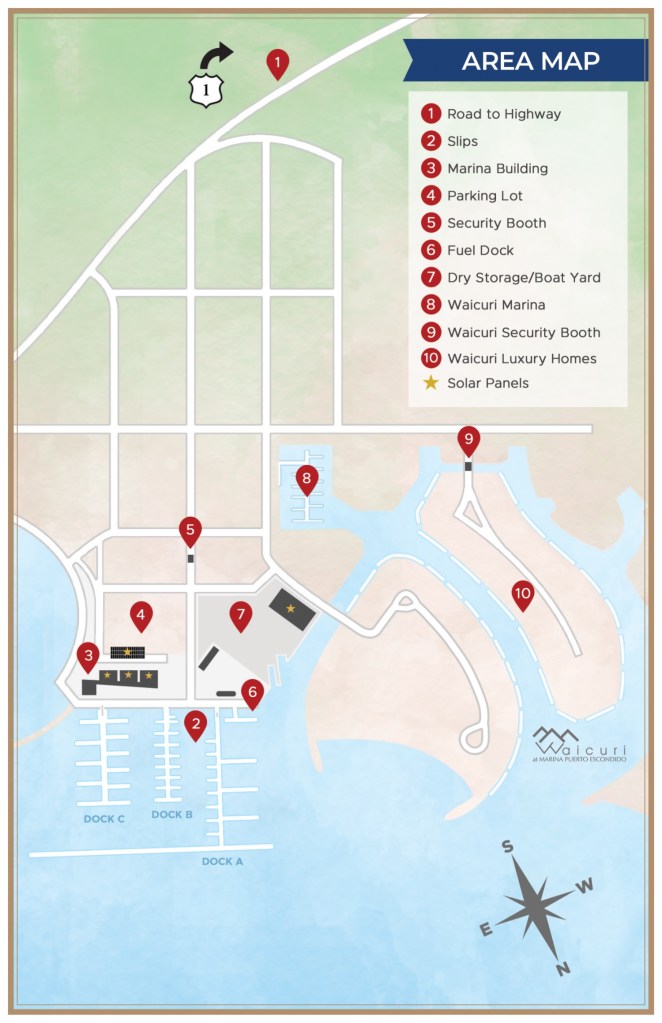
At first all was well. As reported in our last post, we got ourselves situated in the mandatory med-moor attitude, with our stern firmly lashed to the long linear “Dock A” and our bow held out in the water perpendicular to the dock with a “slime line” anchor provided by the marina. The wind was light when we arrived on Friday, and we spent a pleasant evening in peace and quiet thinking all was well.
Early Saturday morning I awoke to the sound of the wind howling. I got up and went outside to assess conditions. It actually wasn’t blowing all that hard, maybe gusting up to 10 knots. Unfortunately a large ketch tied across the dock to us was making a horrid noise. It’s main and mizzen sails were mast-furling, and it sounded like the slots in the masts were forming resonant cavities with the wind blowing across them. At 10 knots of true wind, the sound coming from them was like a blowing gale. Not terribly annoying on the face of it, but for a sailor that constant noise was enough to keep my nerves elevated.
That day I planned to work on boat projects, starting with a look at our new solar installation. I wanted to get our two new solar controllers installed in the starboard engine compartment, so began poking around at this. Melinda and Grace decided to head off to the nearby town of Loreto to explore and reprovision.
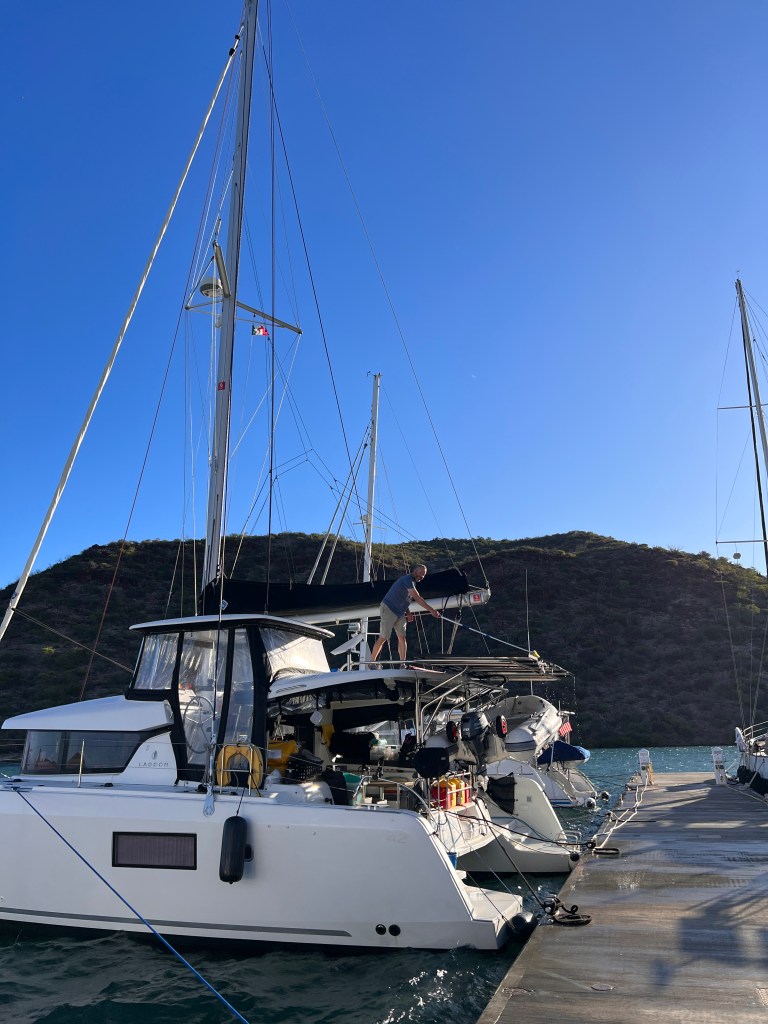
All was going well for me at the boat, but as the noon hour approached the north wind steadily increased. We were expecting a norther to roll in, but hoped that our situation in the protected anchorage of Puerto Escondido would make it a non-event. The unfortunate truth of our situation on the outside of Dock A was that we were exposed to significant fetch from wind blowing across the lagoon to the north.
That morning we had attempted to put our anchor out in addition to the slime line, since the line was only attached to our port bow and was pulling off-center to the left of perpendicular from the dock. The marina staff had helpfully carried our anchor out ahead of the boat in their panga, about 150′ ahead of us, and we’d attempted to set it just using the windlass. I was pretty sure this hadn’t helped much, but hoped it would be enough.
Soon waves were building and slapping against the dock behind us. Perception was bouncing forward and backward on our slime line anchor, with our starboard stern regularly smushing its fender against the dock with alarming force. By mid-afternoon the wind was gusting up to 20 knots. Waves were sloshing up onto the dock and splashing back onto Perception’s transoms. We needed to move before we damaged our stern!
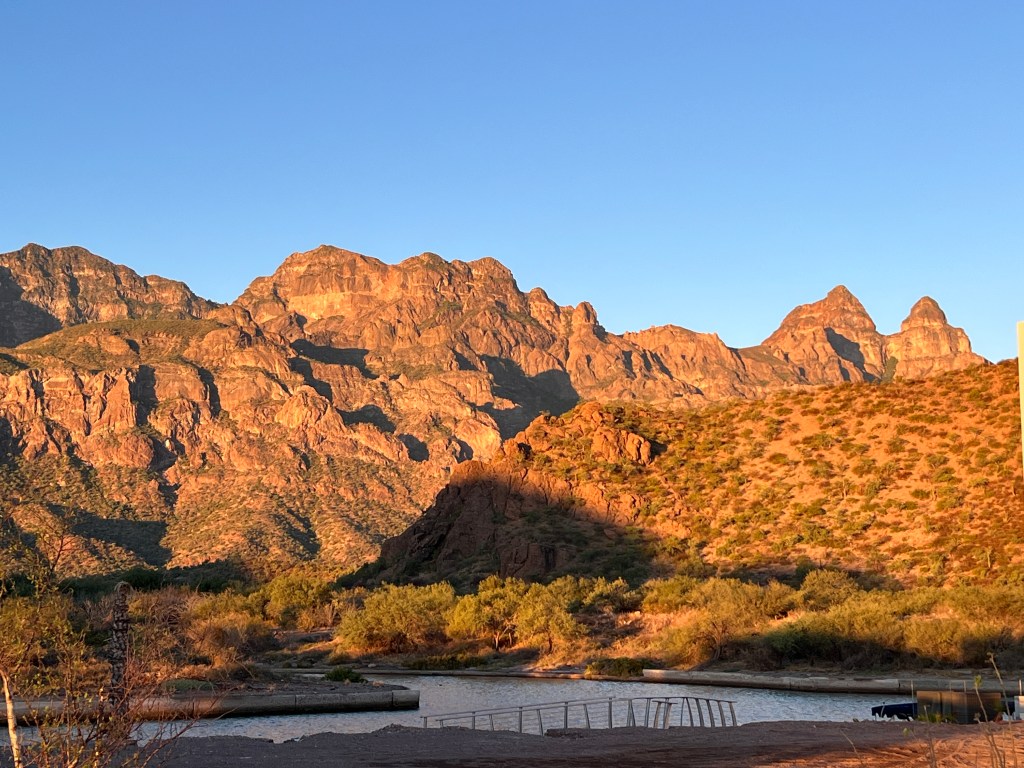
Melinda and Grace were headed back to Perception, so I readied us to get off the dock. Luckily, while on her way back to the boat, Melinda was able to get the marina to let us move into the Waicuri section of their development. This area was meant to be a little suburb of expensive homes in a man-made waterway with dedicated linear docks. None of the homes appeared to be occupied, and a number of the docks were unused.
Once all the crew was aboard, two of the dock staff untied us, and we were able to disconnect from the slime line while raising anchor. Quite the production in high wind! We pulled away from the dock and circled around into the Waicuri waterway. The dock staff ran around to meet us, and was there to catch our lines when we pulled in. This was a much better situation for us, side-tied to a dock with little fetch entering the waterway. We stayed this way for a few days, able to rest and recuperate for a while.
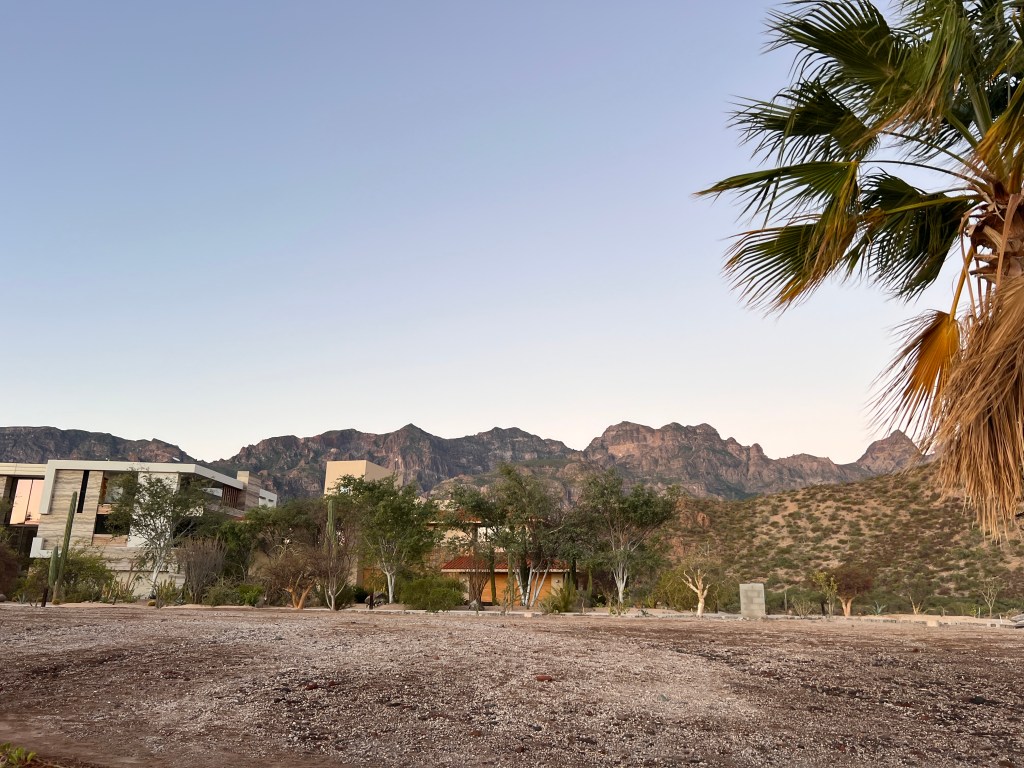
Unfortunately, the marina asked us to move back onto Dock A a few days later. We’d felt grateful that they had let us move into Waicuri while the wind was blowing, and wanted to oblige them. On Tuesday we moved back over to Dock A. This time we made a valiant attempt to drop our anchor and set it in addition to connecting to the slime line. We pulled back to the dock with more confidence that we were secure.
By Friday the wind was rising again. Yet another Norther was coming through, and the fetch from the lagoon began building once more. It soon became clear that our anchor was not holding well, and we began to yaw to starboard again as the slime line was pulling off-center from the port bow. As the situation became untenable, we once again received permission to retreat into Waicuri.
This time our release from the dock was a near disaster. We only had a single dock attendant, and I didn’t think through how he should really let go the stern lines. The wind was coming in across our port bow, pushing our starboard stern in towards the dock.
We had four dock lines holding us back into the dock, and our attendant began releasing them in exactly the wrong order. He pulled our port-most stern line first, and our starboard stern immediately pushed hard into the dock. We had fenders protecting it, but the force was considerable. And the yelling began, with the skipper shouting to get all the stern lines off ASAP and the crew shouting to pull the starboard side forward. I tried to keep our starboard stern away from the dock by putting the port engine into reverse, since going starboard forward just exacerbated our yaw. It was a tense few minutes while the dock attendant worked his way down the lines.
Finally we were free, and I was able to pull us away from the dock. We collected the anchor, dropped the slime line, and moved around into Waicuri. It’s amazing how fast things broke down for us, and how quickly I lost my cool when things went bad. It was a humiliating experience – this skipper is still learning!
This time we just stayed parked in Waicuri until we left Puerto Escondido. I was certainly done with that marina, and swore I would never stay at Dock A again unless perhaps I was there for just a day with very settled weather. While we were there we witnessed other boats facing the same problems we did. Our friends on Okisollo, happily moored on the inside of Dock A, spoke of regularly loaning their fenders to boats bashing into the windward side of Dock A, and helping them reset their lines and anchors when things got really bad. We were ultimately just lucky that Melinda is so good getting what she wants out of marina staff – our stay certainly would have been much shorter if we couldn’t have moved into Waicuri.
The Canipole Cave Paintings, Loreto, and the first missions in Baja California
Melinda
I’m no expert, but since our resident anthropologist is otherwise occupied studying for the LSAT, I am going to give you some highlights of our adventures in Loreto and the surrounding area.
Historians believe that Loreto is the oldest human settlement in Baja California and estimate that people began living there 12,000 years ago. (Wikipedia). Our guidebook stated the Canipole Cave paintings were interesting if you had a day for an excursion. Grace located a guide that would take us to this very remote site and we persuaded our boat buddies, Jeannie and Dan on Okisollo to join us. We piled into a rickety van, picked up a few more adventurous souls from local hotels and set off into the desert. We drove about 40 miles outside of the city and abruptly turned off the road onto a dirt road we later found out was named Highway 1. Highway 1 was a dry riverbed and we proceeded to ramble up it for several miles until turning off to drive up a dry stream bed for a few more miles. When the streambed got too narrow and the boulders too large to navigate around, we got out and walked for about 30 minutes up to the site. Our guides were very knowledgeable about the many plants and animals that we passed, explaining what each plant could be used for – some were medicinal, some poisonous, and some that you could get enough water from to survive if you were stranded. They showed us tarantula and scorpion holes and how to get cactus spines stuck in fingers out by running your hands through your hair.
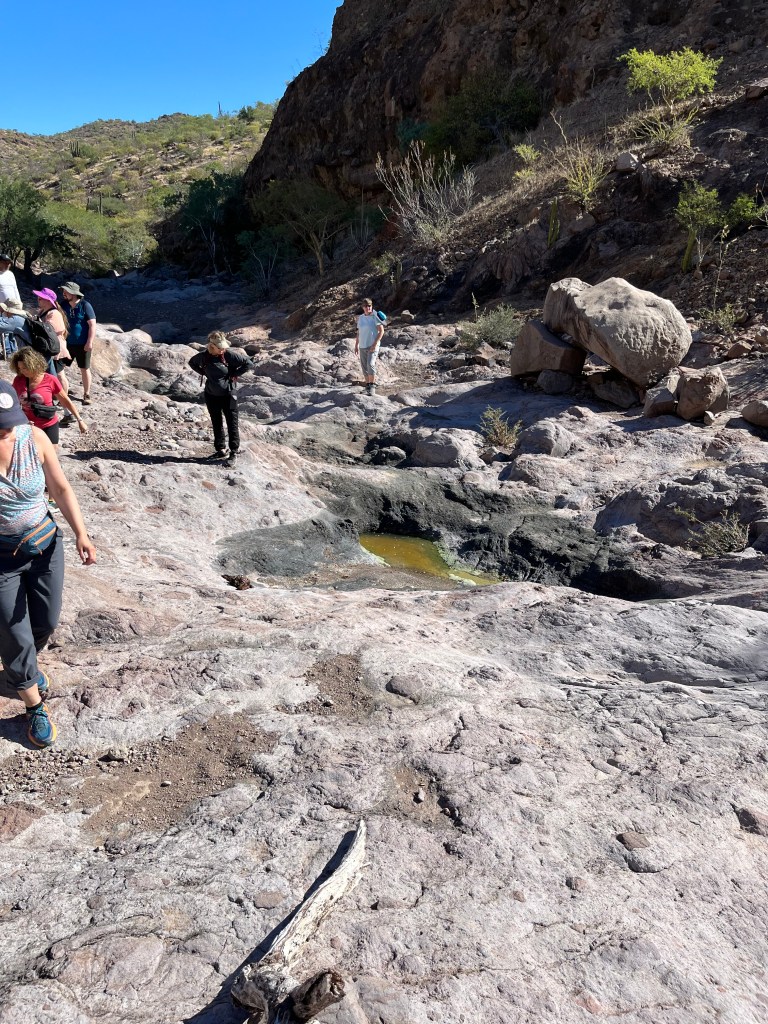
We finally made it to the overhang where many pictographs and petroglyphs could be seen. They were prolific in number and while many we believe are legitimate, some had colors that were unusual and quite vibrant compared to the traditional red and yellow ochres, black and white. It is a protected site, however we did not see anything or anyone there to protect it, and there’s a decent chance some of the paintings are not old enough to be prehistoric. (I can imagine the Loreto senior class of 2005 out there on their senior sneak filling in some of the blank spaces drawing rainbows and alligators.) The petroglyphs were numerous and well persevered, many visible on the rocks nearby and along the stream bed. Upon returning to the van, the guides set out a wonderful lunch of tamales and fresh fruit that we ate in the shade of the van.
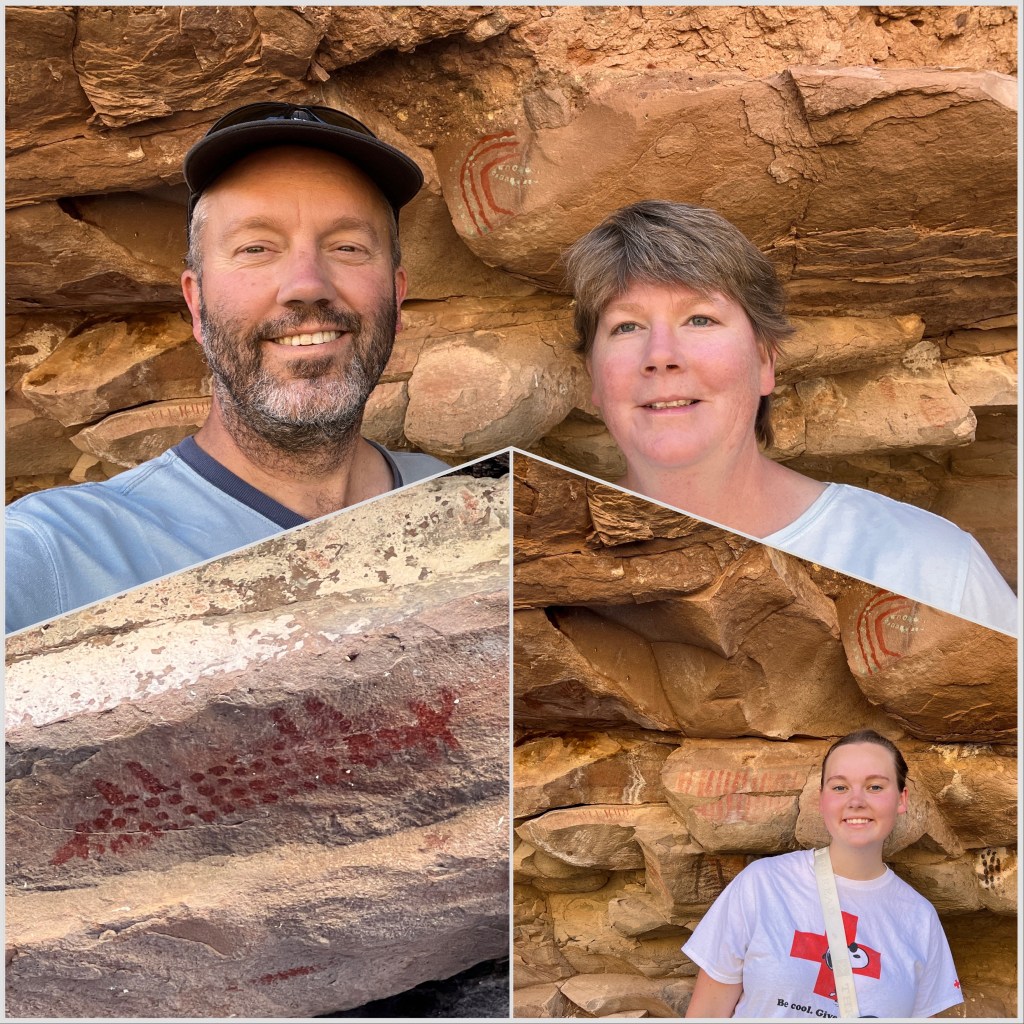
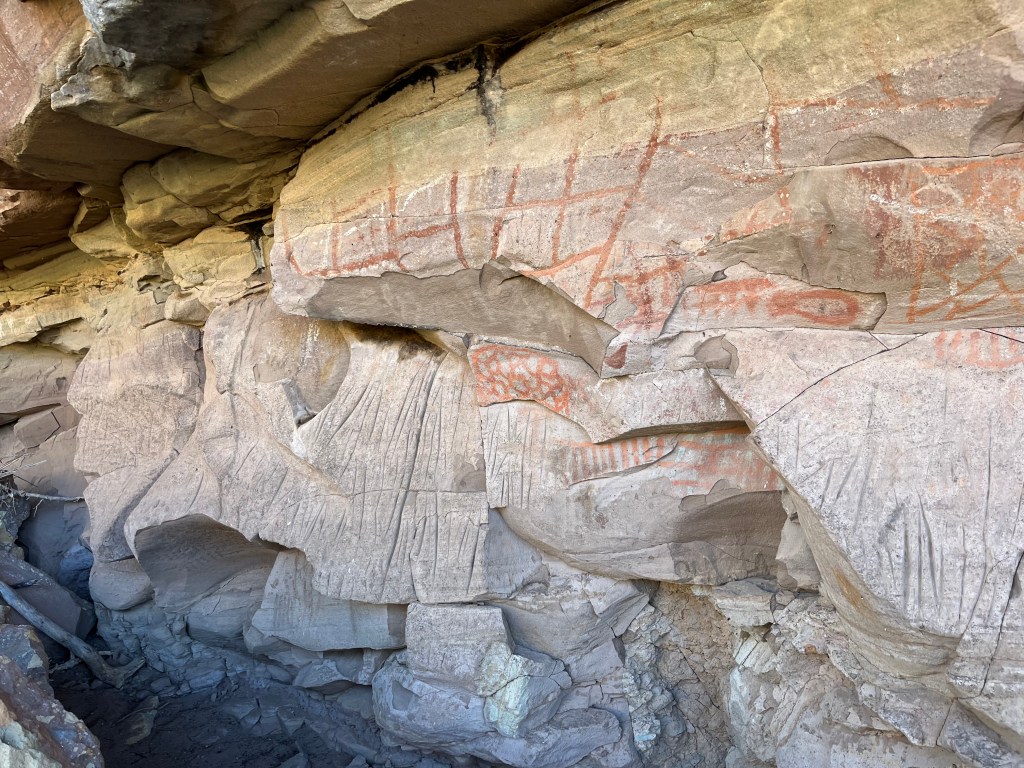
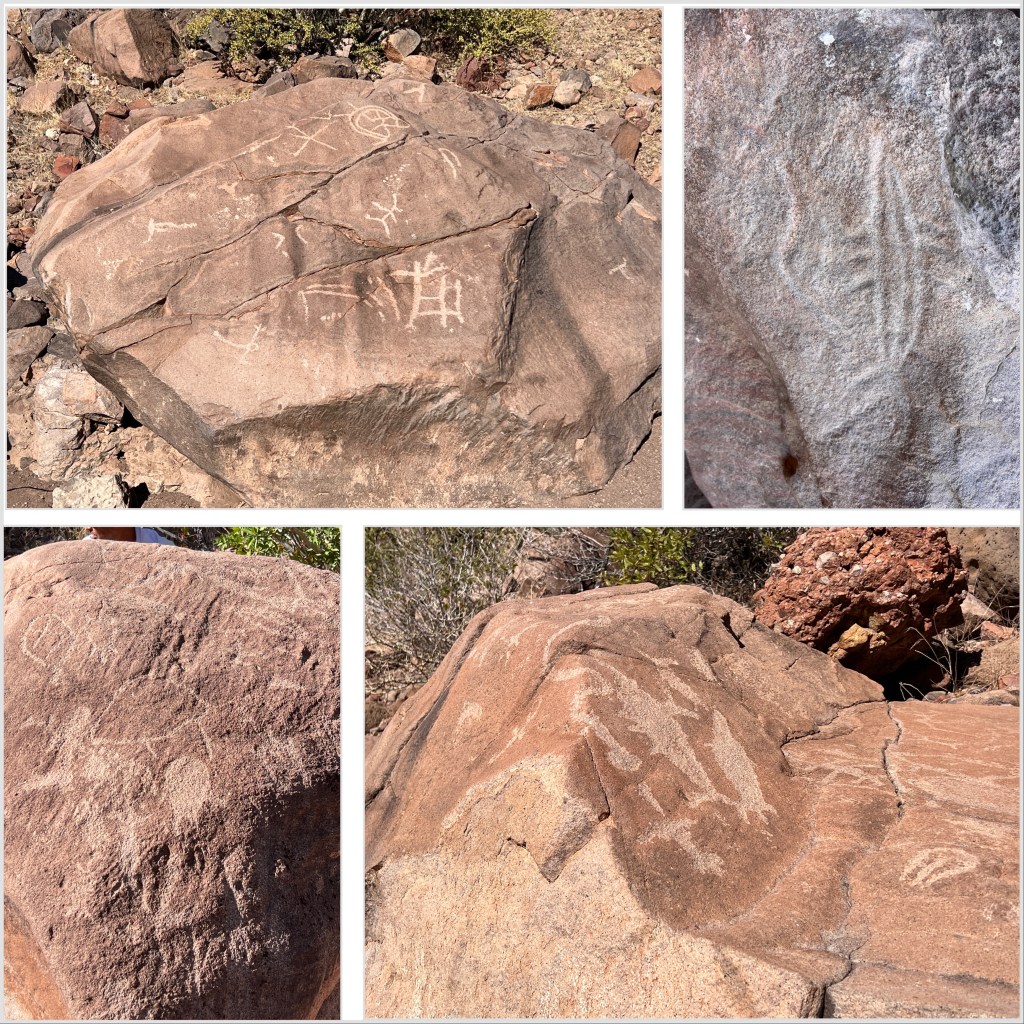
All in all, it was a very cool excursion and we were happy we went. On the return trip, we learned from our guides a little about the historic missions in the area as it happened to be the weekend of the Festival of San Javier. San Javier is the second mission built in Baja California. The first mission constructed in Baja California was Misión Nuestra Señora de Loreto Concho in Loreto in 1697. San Javier followed between 1744 and 1759. They are roughly 25 miles apart, and this is significant because the founders purportedly wanted missions to be a day’s walking distance apart. The Festival of San Javier is celebrated by three days of non-stop partying kicked off by pilgrims walking from the first mission to the second mission – and they walk on their knees for the final kilometer. We saw an older man with large holes in the front of his jeans surrounding his knees the guide suspected of being one of the pilgrims. Can you imagine walking on your knees on a road for a kilometer?!
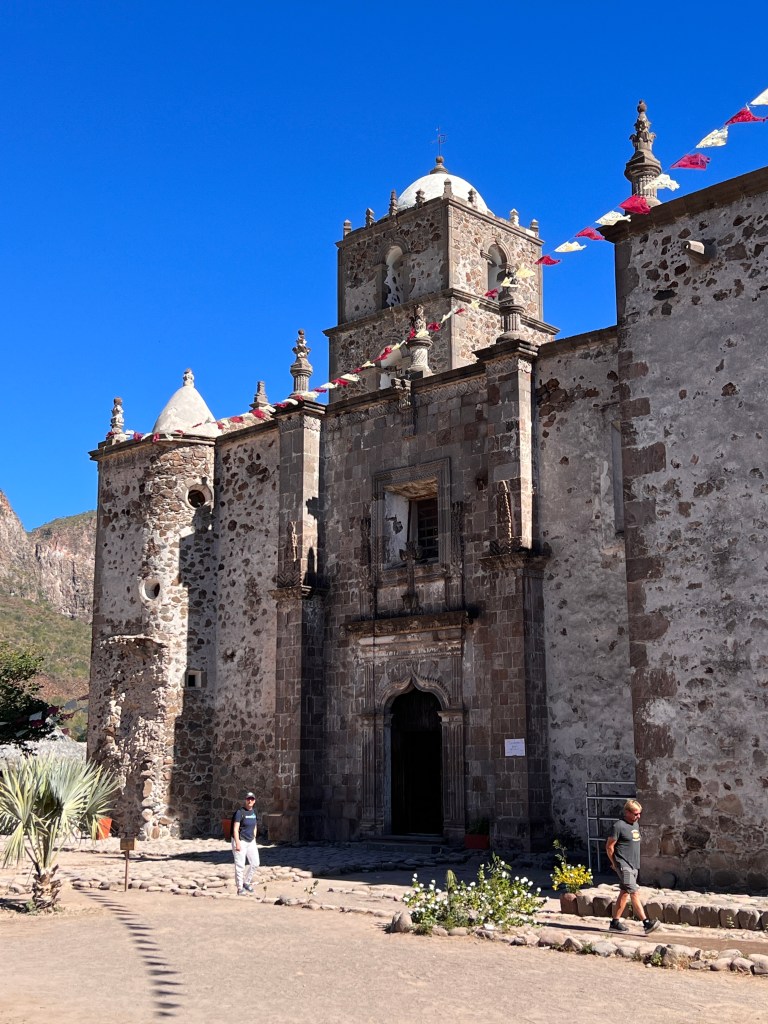
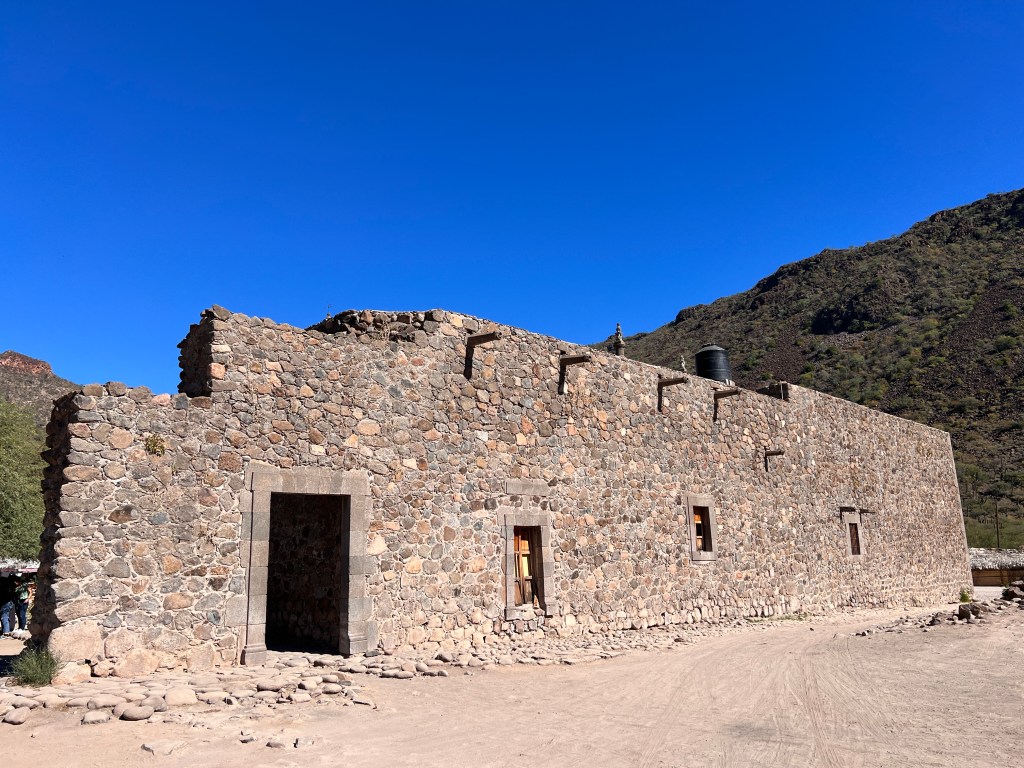
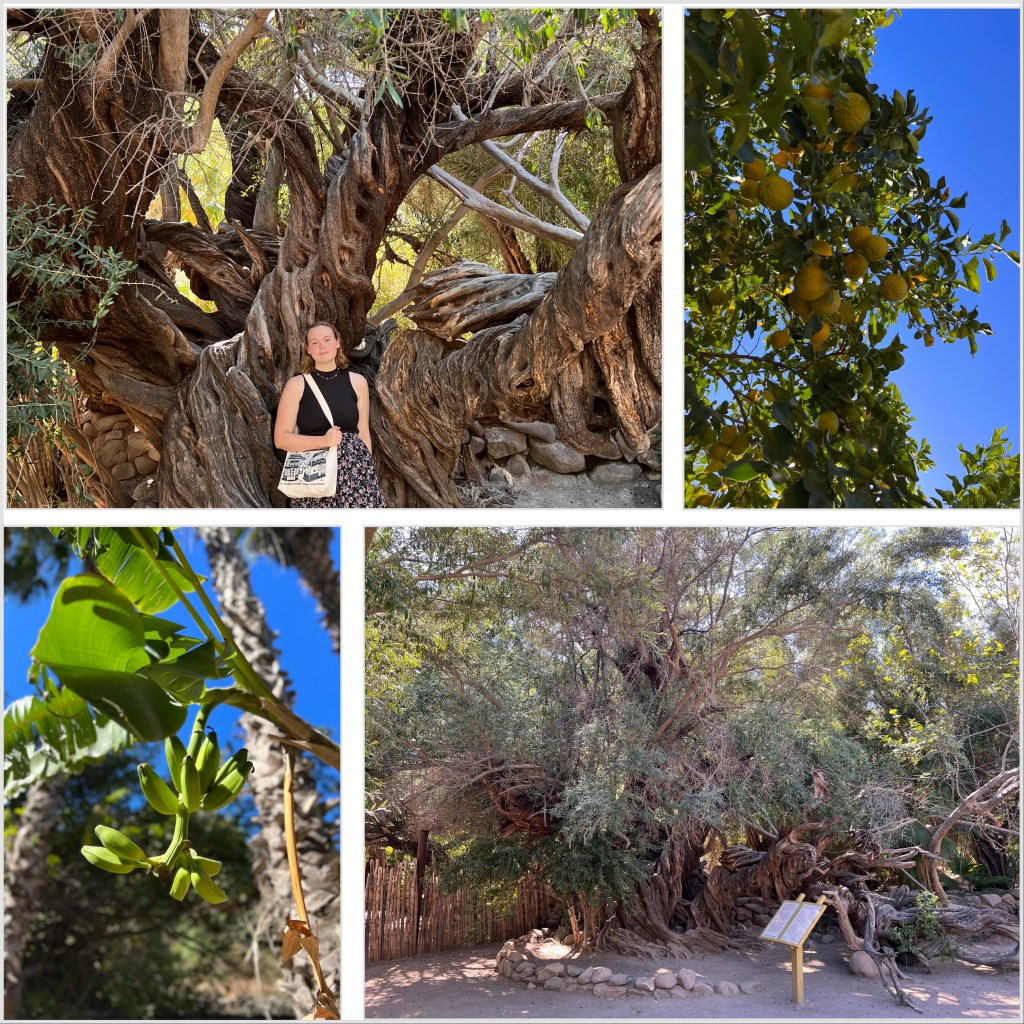
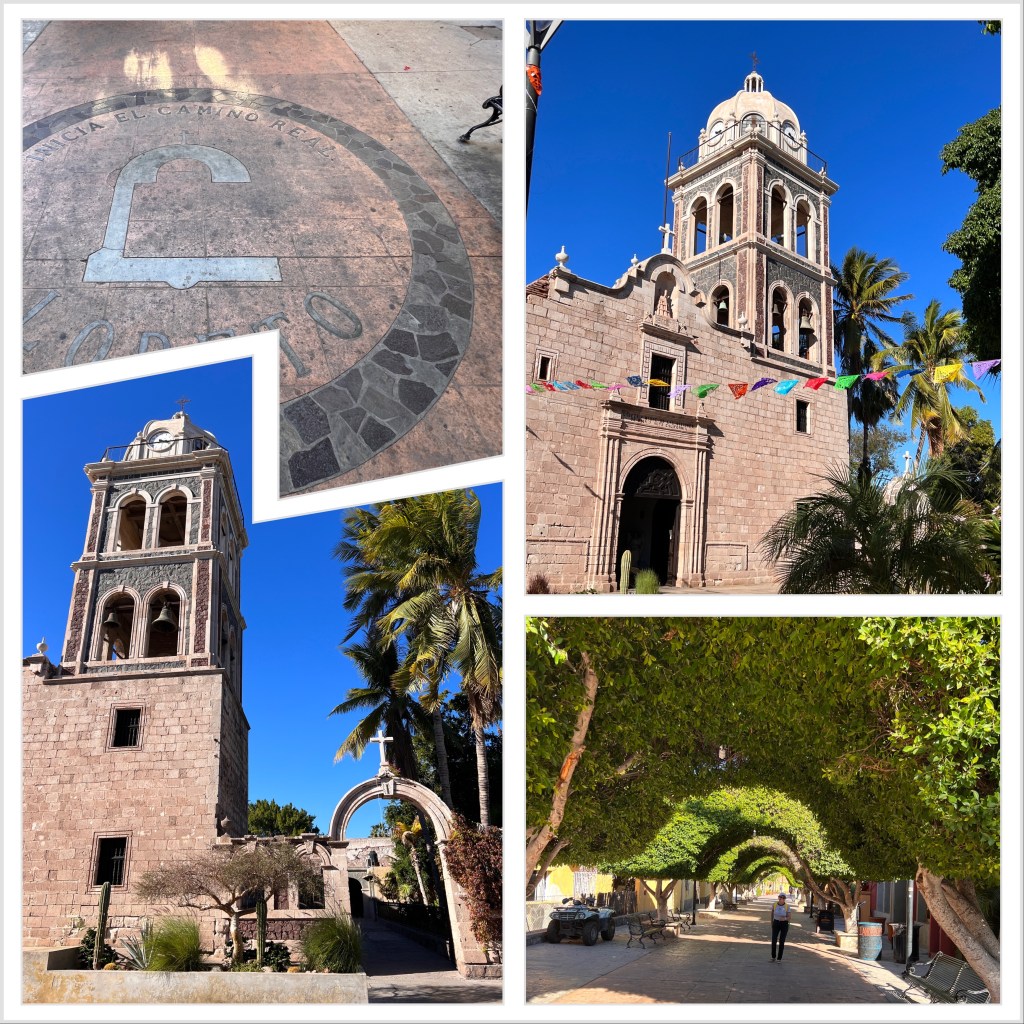
The following week we made trips to both the town of Loreto, Misión Nuestra Señora de Loreto Concho, and out to see San Javier, which notably has the first orchard in Baja and is home to a nearly 300 year old olive tree that still bears fruit. Loreto is a small, quaint town that has not yet been ruined by the likes of us. It retains a much quieter nature and charm that we did not see in Cabo or La Paz and we welcomed the stark contrast. We were able to resupply some of our provisions and enjoy a couple of great restaurants. Definitely worth a visit.
Although the med-mooring at Marina Puerto Escondido was not ideal, I really enjoyed being on the docks after a month at anchor. We are pretty self-sufficient, but washing the boat requires a dock hose to do a good job and Perception was sorely in need of a bath. We can do laundry on the boat, but it does take power and water. So if it is overcast, or we are in a particularly dirty anchorage, we may be conserving water or power. Being at a dock means we have unlimited water and power, so everything gets nice and clean again. The ability to walk off the boat and go to a restaurant or store without deploying the dinghy is an indulgence I miss when at anchor for long stretches, so I relished our stay!
 Sailing Perception