
(Grace)
The city of Ketchikan is the southern gateway into Alaska, not just for little pleasure crafts like ours but for all of the big cruise ships, too. Four massive berths line the downtown waterfront and there’s room for a few more to anchor out and bring passengers ashore on tenders. According to the locals, six or seven cruise ships pass through Ketchikan every single day during the summer tourist season!

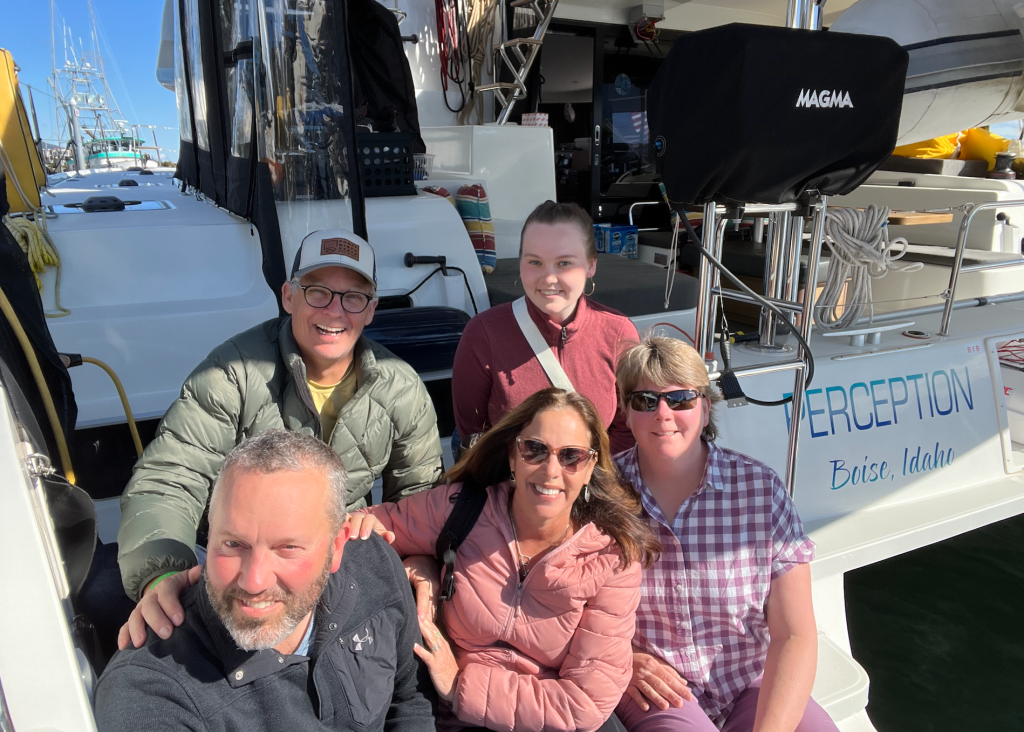
Coincidentally, one of these cruise ships (a Norwegian Jewel) carried some familiar faces ashore. Stephanie and Jim Bennett, who have sailed with my parents in the British Virgin Islands, joined us for a while to catch up and see our boat.
As a result of the constant stream of sightseers from cruise ships, sailboats, and motor yachts, the tourism industry has dominion over most of the downtown area. All day the streets are abuzz with tourists at its countless souvenir shops and jewelry stores, but around five o’clock—the time most cruise ships make their “all aboard!” calls—the city becomes a ghost town; the sidewalks empty, the stores shutter, and the cruise ship berths are abandoned.
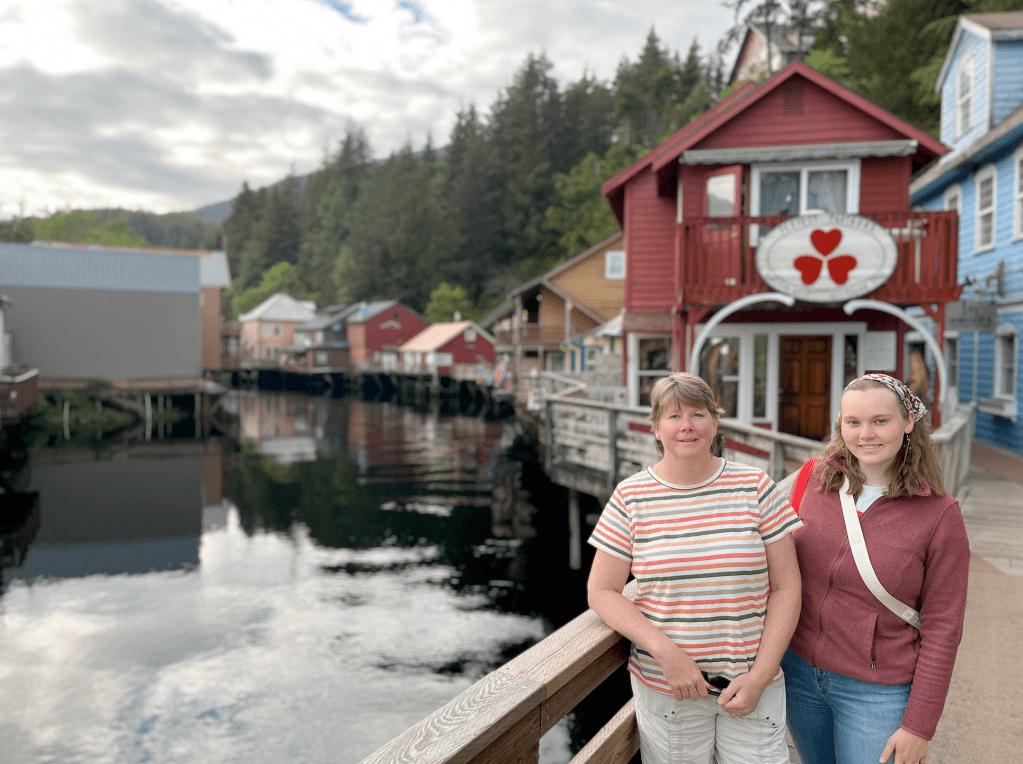
Creek Street, Ketchikan’s historic red light district turned boardwalk shopping district, is a perfect example of this boom and bust cycle. On the night of our arrival, Creek Street was literally empty, but when we returned during daytime hours with Stephanie and Jim, the boardwalk was packed with other tourists.

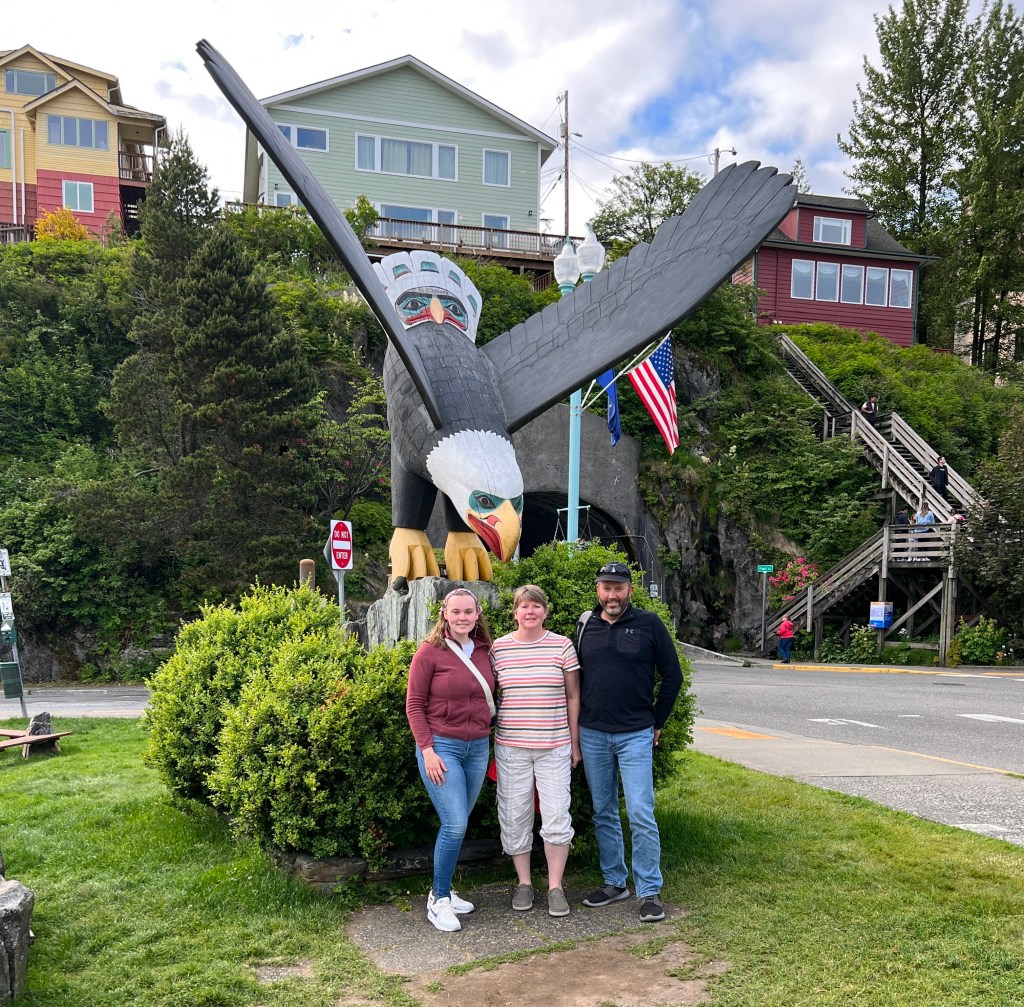
As the lengthy street of former brothels might suggest, Ketchikan was historically a town of working men. Piscine work like fishing, salting, and canning were the main trades of town until the Gold Rush lured prospectors to the nearby mines. A monument in downtown Ketchikan harkens back to some of the important archetypal figures that had a hand in creating the town, including a fisherman and a miner. There’s also a logger, a bush pilot, an indigenous drummer, and a frontierswoman (not, interestingly, a prostitute). The monument also includes a statue of Chief Johnson, who led a group of indigenous people back to settle in Ketchikan in the late nineteenth century.

Long before Ketchikan was the cruise ship hub of today or the mining town of yesterday, the area was an important resource site for the people of the Tlingit Nation, an indigenous culture native to the southeastern Alaskan panhandle. The name Ketchikan was derived from Kitschk-hin, the Tlingit name for a nearby creek (which may to be the very creek that Creek Street is built along?).
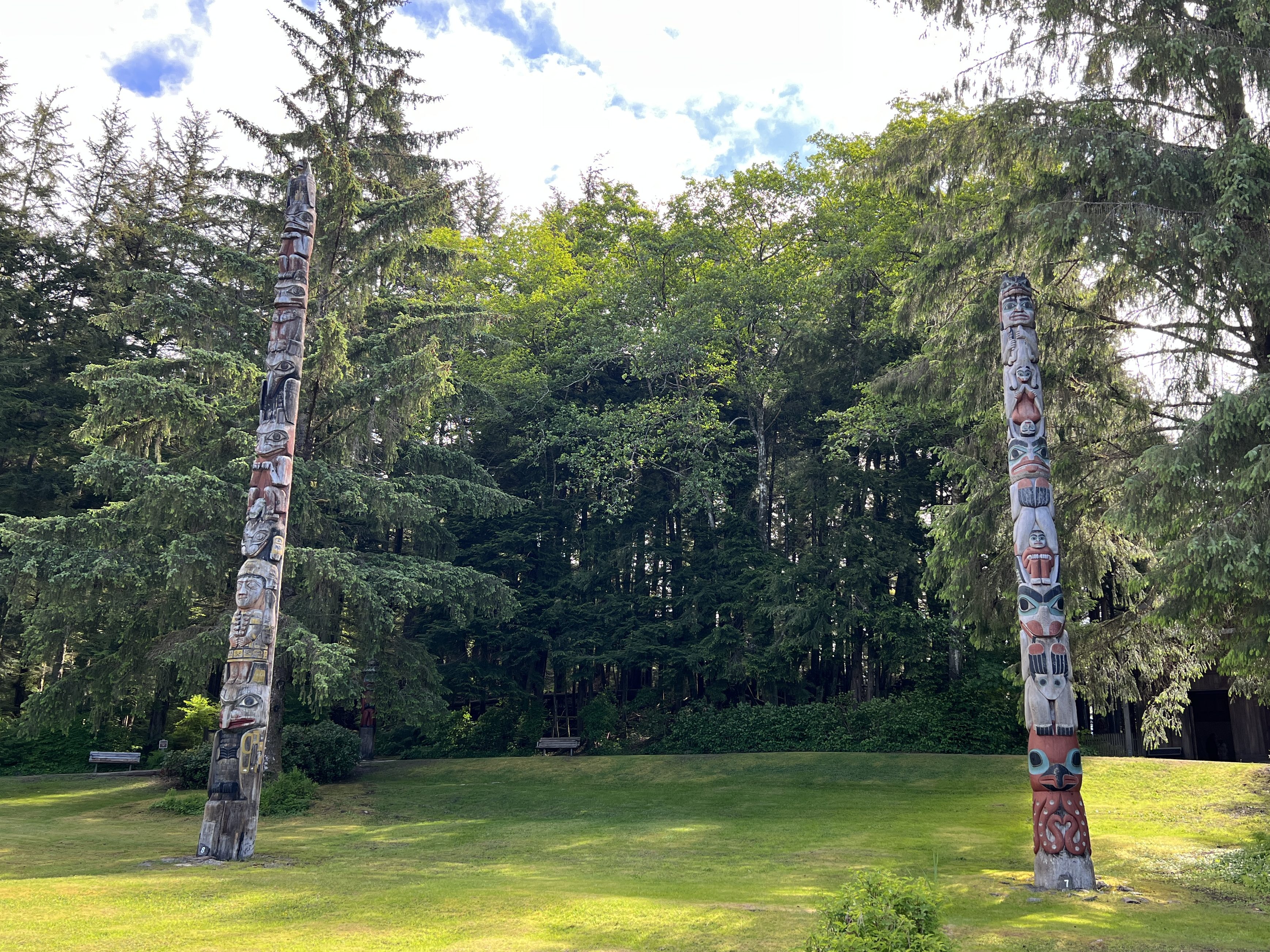
Ketchikan is still an important cultural site for the Tlingit today as the city boasts the largest collection of standing totem poles in the world. These totem poles are scattered throughout the city and its two totem pole parks — Totem Bight State Historical Park and Potlatch Totem Park.
Totem Bight and Potlatch Totem Park are next-door neighbors and pretty much twins. Both parks are outdoor paths that wind through totem poles, a longhouse, and a totem carving building. There’s a lot to learn from both, but Totem Bight has literature and informational signs that can help you understand the meanings of the various totem poles, so I would recommend starting there.
In addition to the Tlingit totem poles, Totem Bight also has a number of Haida totem poles. In addition to the famous Haida Gwaii archipelago, the Haida Nation historically held territory on the southern part of the Alexander Archipelago — mainly Prince of Wales island and Dall island — fairly close to Ketchikan.
The presence of both Tlingit and Haida totem poles in Ketchikan today is largely due to the efforts of indigenous elders in the twenties and thirties who advocated for deteriorating totem poles to be salvaged and for the dying art of totem pole carving to be revitalized. Heeding these calls, the Civilian Conservation Corps (CCC) hired indigenous men in Alaska to find and restore totem poles and to carve several entirely new totem poles. The survival of many totem poles in Alaska today can be credited to the CCC’s initiative and the elders that initially championed the cause.
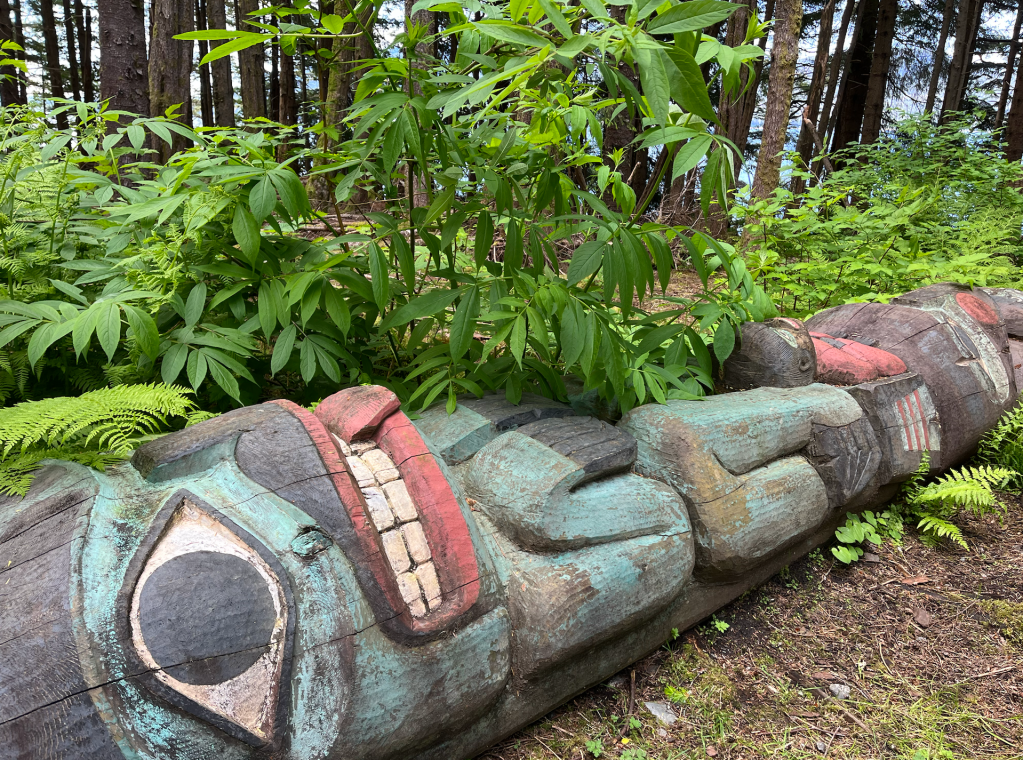
The carving of totem poles is motif seen across many cultures of the Pacific North. They often feature figures important in daily life or mythology such as bears, wolves, eagles, ravens, thunderbirds, frogs, fish, and whales. Human figures can also be found on many totem poles. Some of these human figures represent real people, but many depict characters from myths and legends or watchmen, who would look out for enemies and protect the village.
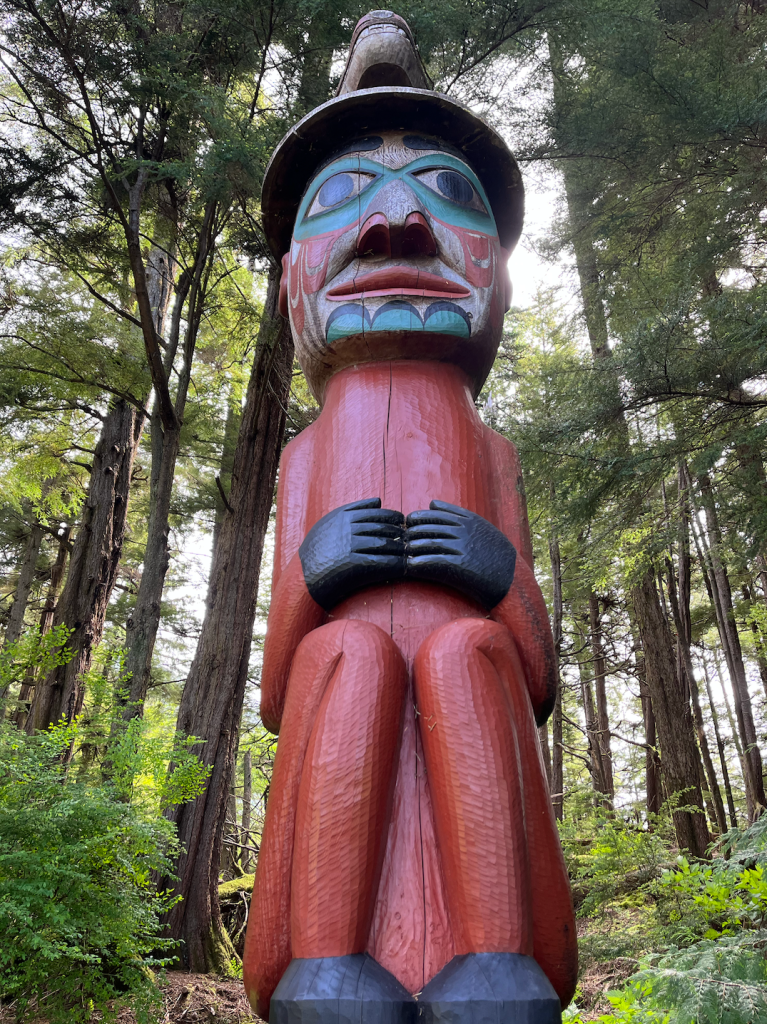
Traditional Tlingit and Haida societies were in need of watchmen—both real and carved in totem poles—to watch out for enemy invaders. War was a common occurrence, and parties of warriors might arrive unannounced to raid the village at any time. Watchmen were responsible for spotting these raiders, who often came by sea, before they could reach land.
The high levels of warfare in traditional Tlingit and Haida societies could be linked to their high levels of stratification. Typically, hunting and gathering or marine foraging societies have low levels of stratification, meaning they were relatively egalitarian. This was not the case among the Tlingit and Haida. Members of both societies existed in a hierarchical spectrum of power and privilege with enslaved people at the bottom and ruling nobles at the top. People largely inherited their position along this spectrum from their parents.
Lineage was (and, for some, still is) the basis of social organization. Tlingit and Haida societies were both split into two descent groups called moieties. Every individual in society from slave to chief belonged to one of these two moieties. In both Tlingit and Haida societies, these two moieties were Raven and Eagle. In addition to their moiety, a person also belonged to a smaller descent group called a clan or a house. A clan would include other members of their kin group and village that share a common ancestor. For example, a Tlingit woman might belong to the Raven moiety and the S’ax Hít, or the Starfish house.
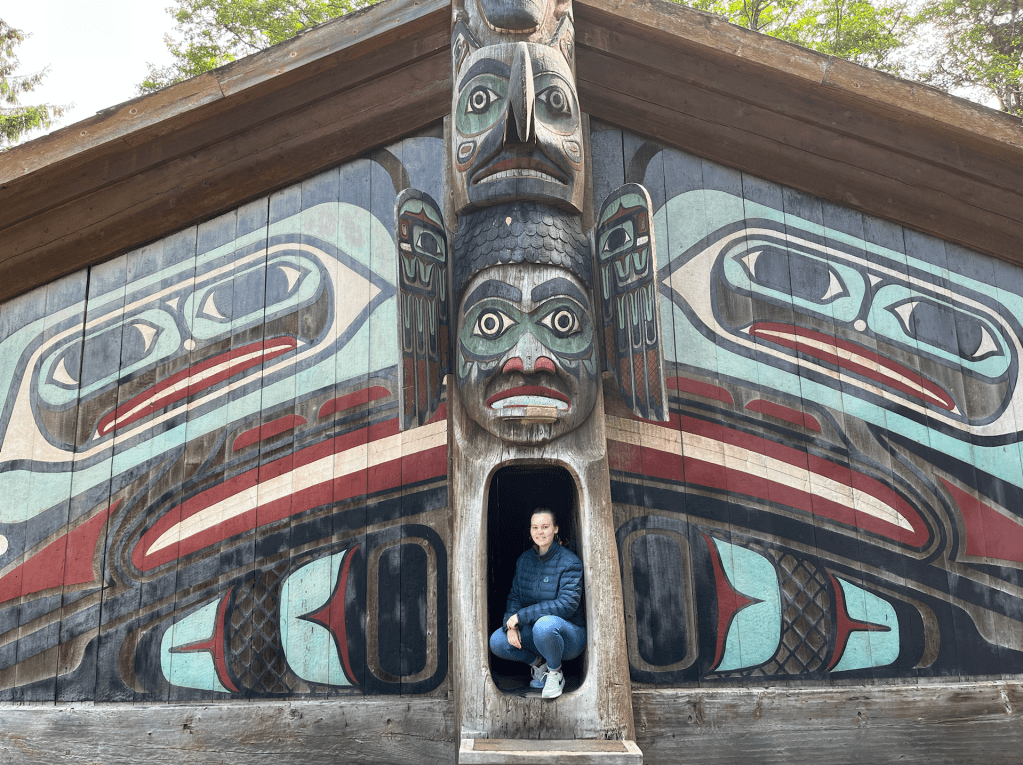
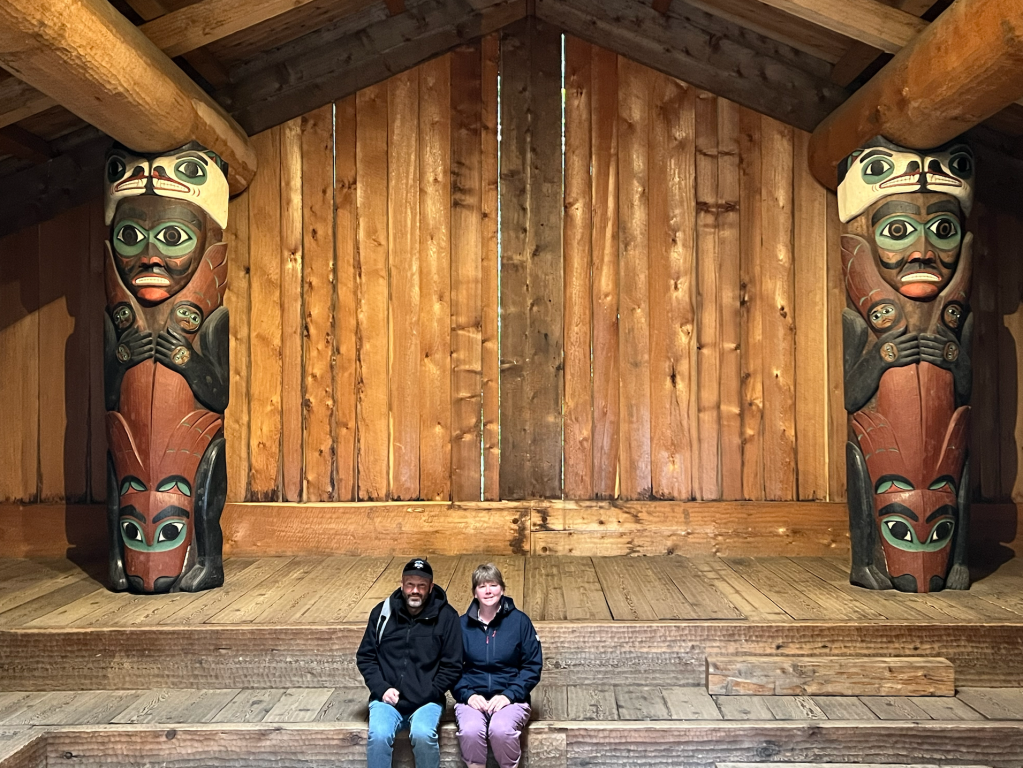
In much of the U.S. and Canada, we trace our lineage through the patriline, or the line of male descent. This means that, although we typically recognize both paternal and maternal relatives as kin, we take our fathers’ last names and join his lineage (at least until marriage, in the cases of many women). The Tlingit and Haida do things differently; lineage is traced through the matriline, or the line of female descent. Children belong to their mother’s lineage and subsequently her clan and moiety.
Traditionally, Tlingit and Haida marriages were strictly exogamous, meaning outside of the group. This means that individuals could not marry someone of their own clan or moiety. Our hypothetical Raven and S’ax Hít woman would have to marry an Eagle man if she was to marry at all. Neither she nor her husband would change their moiety or clan affiliation one they were married.
When matrilineality and exogamy appear together within a given society, they have the tendency to create an interesting pattern of social structures. Children have a weakened connection with their father and his kin, all of whom are members of a clan and moiety different than their own, so the important male figure in a child’s life is their maternal uncle—or mother’s brother—instead of their father. Often, boys especially have an important relationship with their maternal uncle or uncles, who will teach him the traditionally masculine labor of their culture. In traditional Tlingit and Haida society, this strong avuncular bond was extremely important. Boys were educated and trained by their maternal uncles. For Tlingit and Haida girls, the maternal aunt or aunts were equally important figures, akin to their biological mothers.
Although the Tlingit and Haida cultures are matrilineal, they are not and were never matriarchies. Matriarchy — meaning rule by women — does not, in my opinion, exist anywhere in the world, at least to the extent that patriarchy — rule by men — does. Tlingit and Haida women had a certain power by virtue of being the ones that carry on their clan’s bloodline, power which may give them some sway when decisions were made within their clan, but those decisions were ultimately made by men. Male chiefs led their clans, men led their families, and women were subject to their authority.
Speaking of power in Tlingit and Haida societies, it is necessary to talk about the way that power was historically gained and maintained: the potlatch. “Potlatch” is a Chinook word that has come to describe a specific event that occurs in many indigenous cultures across the Pacific North. Essentially, a potlatch is a large gathering, usually over a period of several days, hosted by one clan and attended by members of other clans at which the hosting clan organizes feasts, provides entertainment, and gives gifts to all of its guests. It comes a tremendous expense to the hosting clan, which gives away many valuable possessions like blankets, clothing, boats, copper, and slaves.
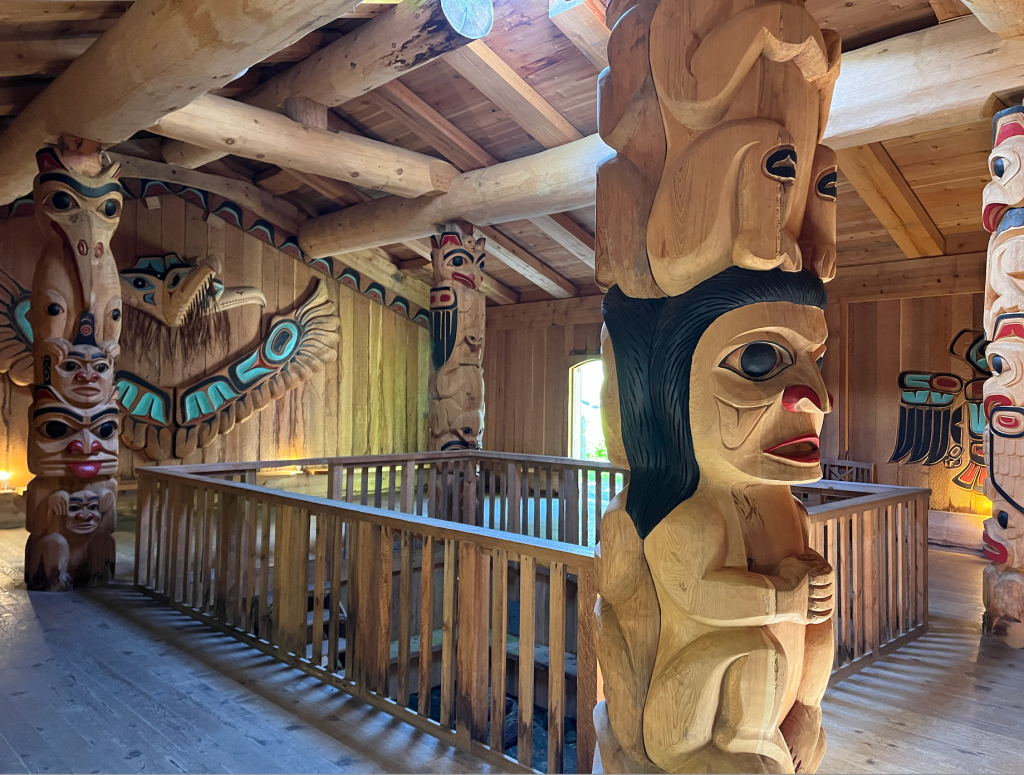
The hosting of a potlatch is a great achievement that garners respect and authority for the hosting chief and demonstrates the strength of his clan. It shows that they not only have wealth and power enough to provide for themselves but also that they can give lavishly to others who may very well be their enemies. In the same vein, some potlatches featured the burning or destruction of valuable items. Through the potlatch, power is ultimately measured by how much one can afford to rid themselves of rather than how much one can accumulate.
The potlatch also allowed a chief the opportunity to use his power. It was essentially the government of Tlingit and Haida societies. All important business decisions, marriage arrangements, and legal settlements were proposed, organized, or finalized at potlatches. The feasting and gift-giving, which attracted many common people into attendance, was an important aspect of this; if a new agreement was made, the people who had attended the potlatch were expected to serve as witness if the agreement was challenged and promote the new order of things.
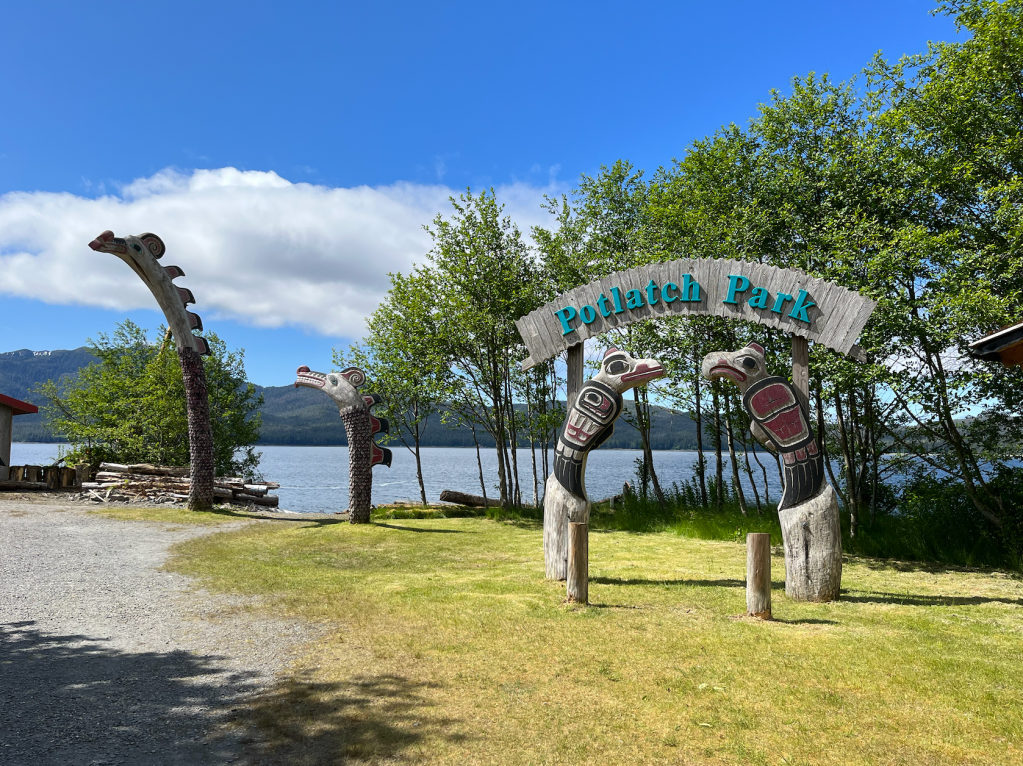
Potlatches were banned in the U.S. and Canada in the late nineteenth century and were not unbanned until 1934 in the U.S. and 1951 in Canada. This ban was enforced by both government agents and Christian missionaries, who deemed the potlatch “wasteful, unproductive, and contrary to ‘civilized’ values.” Ethnocentrism and racism aside, these bans did a deeper harm by undermining indigenous sovereignty. Banning the potlatch was equivalent to banning a nation from holding court or congress; it made self-governance legally impossible.
Many Tlingit, Haida, and other indigenous clans continued to hold potlatches despite the ban, risking and sometimes even facing prosecution. This tenacity can be credited for the survival of the potlatch in many cultures to this day, not only the Tlingit and Haida cultures but the Kwakwakaʼwakw, Nuu-Chah-Nulth, and many others in the Pacific North.
All said, Ketchikan and its totem parks were interesting places to visit that inspired a lot of further research on my part. As we move further north into Alaska and eventually westward to Haida Gwaii, I hope to learn more about the indigenous peoples of this fascinating region.
 Sailing Perception
2 responses to “June 9-10, 2023: Ketchikan, Totem Poles, and Potlatch”
Very interesting Grace! Thanks for all the research and sharing it with us.
LikeLiked by 1 person
Hi Grace. Your write up was very interesting and informative.about not only the native Alaskian culture but alos how their cultures compared to othes in other parts of the world. I’m looking forward to your impressions after you have had a chance to visit more af cultures in other parts of Alaska and Canada.
LikeLike