
After the fireworks settled down in Neah Bay, the Perception crew was able to get a final night’s sleep before heading out into the Pacific. With the new morning we pulled anchor and headed out of Neah Bay towards Cape Flattery. The wind was light that Saturday and the incoming tide was against us, so we motored until we reached open waters beyond the Cape.
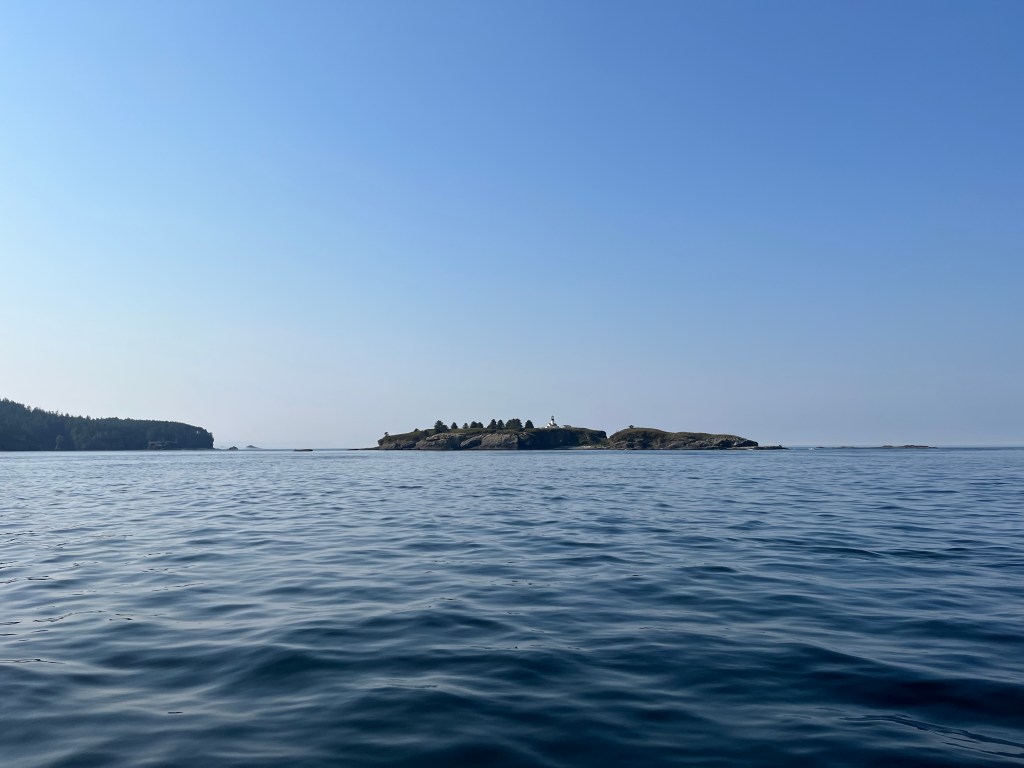
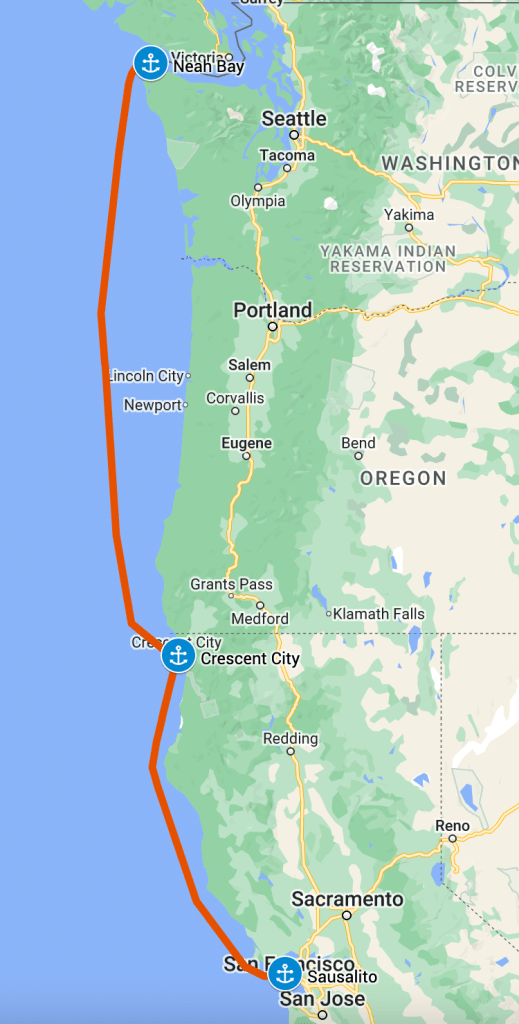
Our general strategy for heading down the coast was to head offshore in a southwesterly direction to the edge of the continental shelf and then follow the deep water south to San Francisco. We would stay out as long as we could, and head to shore only if there were significant weather events that would impact our comfort and safety.
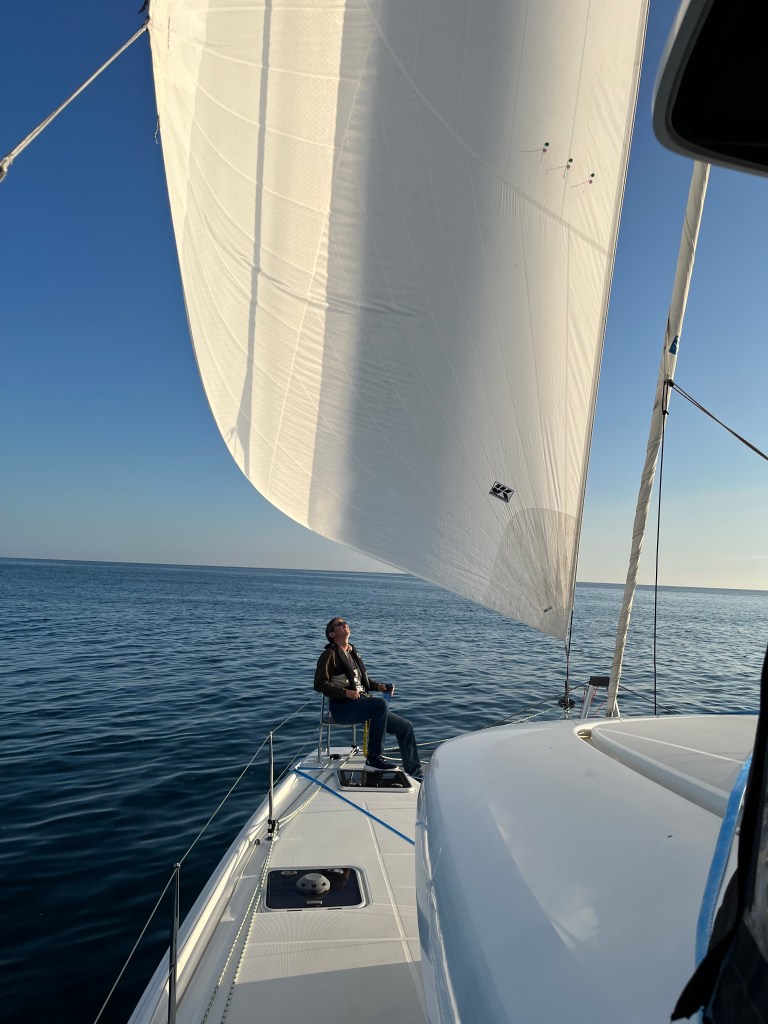
Our first few days were a mixture of sailing and motoring, but mostly motoring. The wind would come up some during the day, enough to keep the sails filled and the boat moving forward. We would try to eek out as much speed as we could with our large “screecher” headsail. By evening the wind would fall and we’d fire up the “iron wind” to keep making progress.
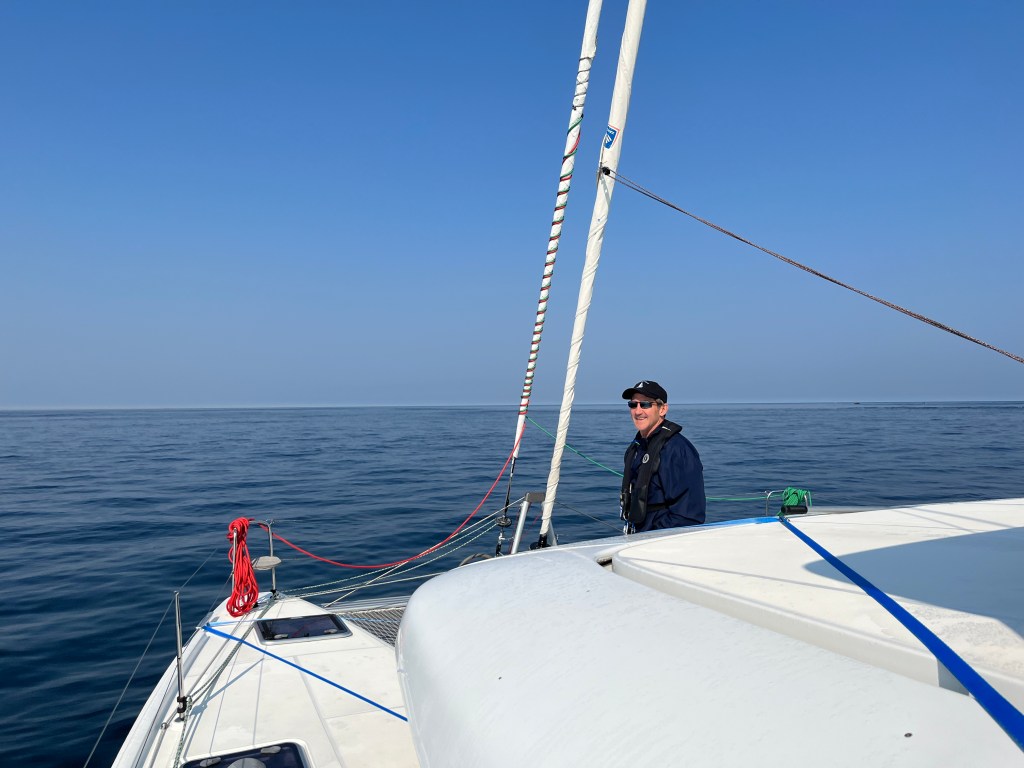
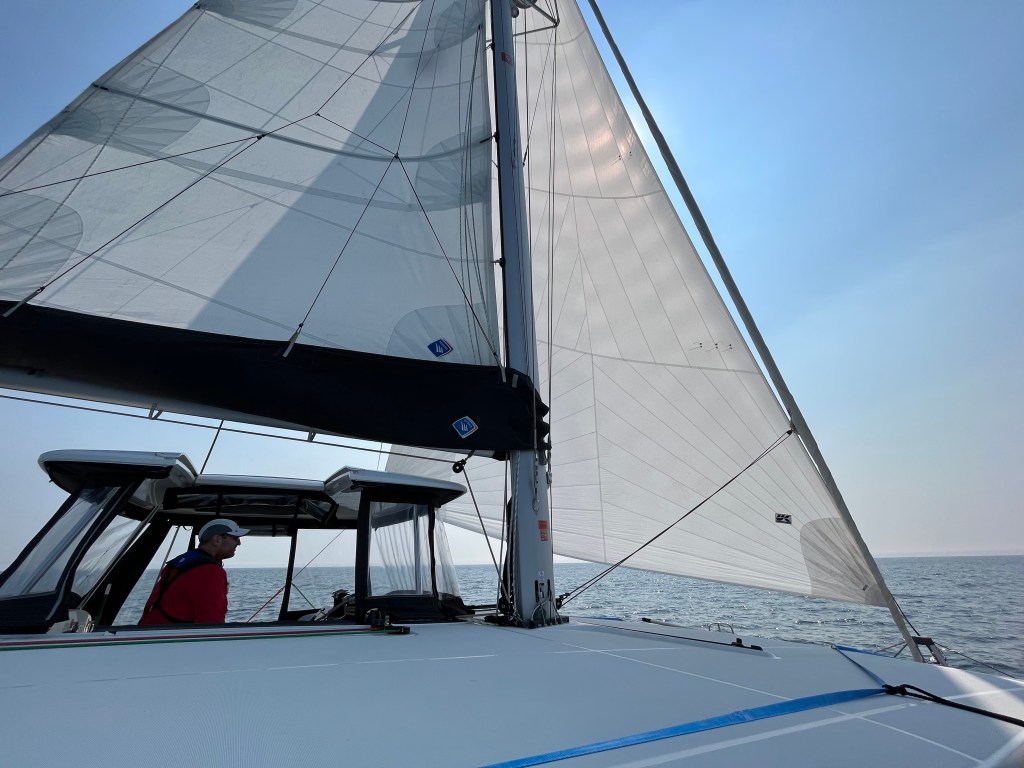
We started our watch schedule as we left, with each crew member doing a 2 hour watch at night and a 4 hour watch during the day. This let us generally get a fair amount of sleep at night, and worked well for us. As skipper I took the prime spots that most resembled my normal schedule, to try and stay as mentally fresh as possible.
- 4 AM – 8 AM: Jim
- 8 AM – 12 PM: Grace
- 12 PM – 4 PM Marty
- 4 PM – 8 PM Tom
- 8 PM to 10 PM Jim
- 10 PM to 12 AM Grace
- 12 AM to 2 AM Marty
- 2 AM to 4 AM Tom
This was the first time doing night watches for any of us, and it could be extremely creepy. Before moonrise or with cloud cover, it would be pitch black, making it impossible to get any indication of what lay ahead of the boat. You could not see the waves or make out any detail on the surface of the sea. Even thought we were just doing about 6 knots, it felt like barreling forward to an unseeable collision. We really just play on the probabilities – there aren’t many large, random objects floating in the ocean, and all boats you might encounter should be lit up according to regulation. We spent the time looking for lights on the water, and watching the radar.
We found ourselves overlapping a bit at night, with fresh crew coming up early and stale crew lingering. We would especially do this when we had other traffic around at night. There were times when the fishing vessels seemed to be numerous and crossing our path even though we were tens of miles offshore.
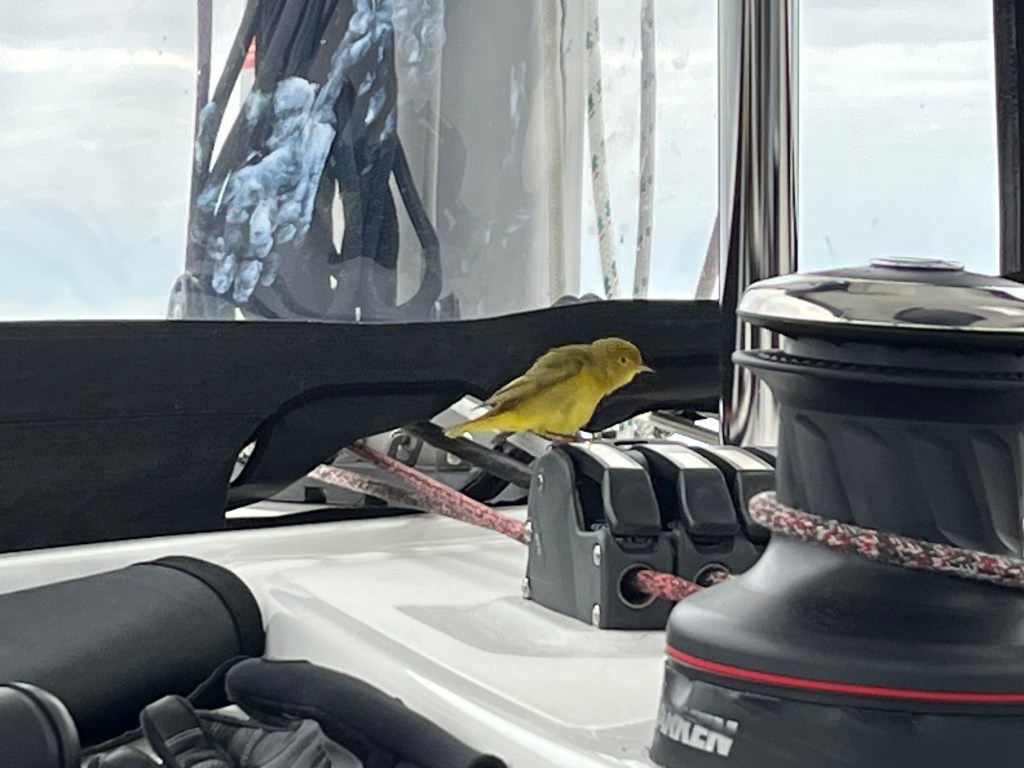
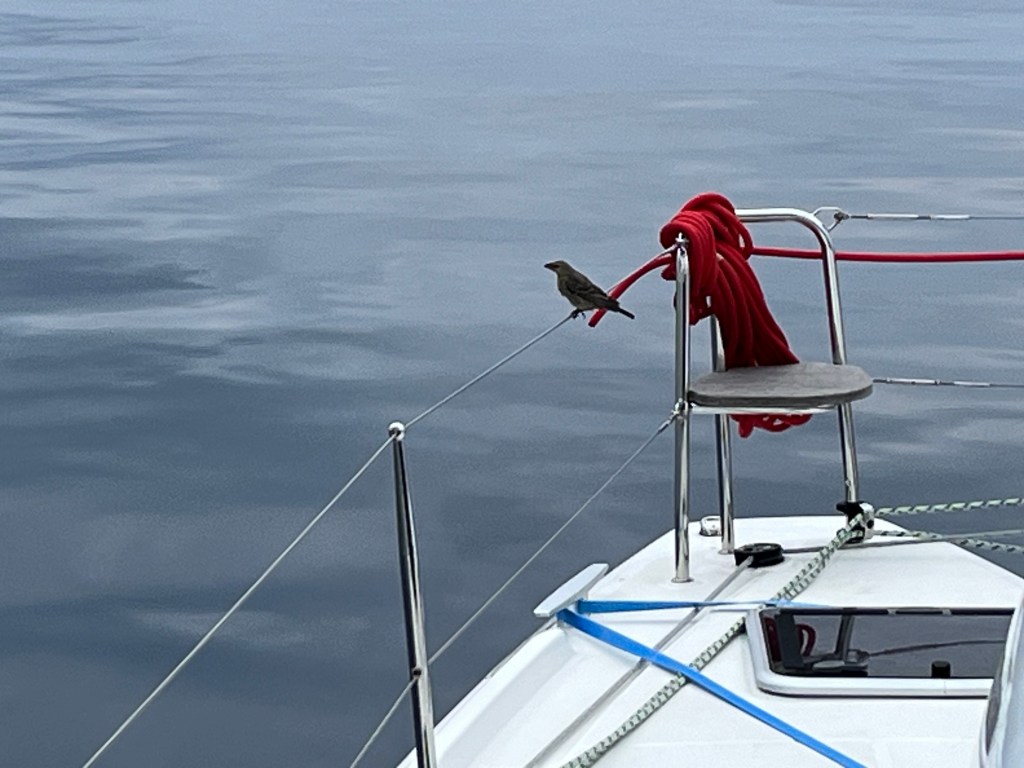
We had some hitchhikers the second morning. Despite being about 30 miles offshore, a couple of songbirds joined us for a rest. I’m not sure where they were headed or whether they ultimately survived, but I was happy they found some reprieve with Perception.
We also threw out our fishing lures. We had a metal fish lure on from our last attempts at salmon fishing in Canada, and I threw that out. It wasn’t long before we had something on. I reeled it in to the boat close enough to see it’s silver shape flashing under the surface, but as we tried to land it, it threw the hook. I’d unfortunately forgotten that we had barbless hooks on the lure per regulation in Canada!
I quickly replaced the hook with a fresh barbed version and put the lure back out. Again it wasn’t long before we had a strike, but as soon as I attempted to tighten the reel to stop line paying out the 30 lbs test snapped – must have been a monster! I grabbed another similar lure and put it back out – again, line snapped on a strike!
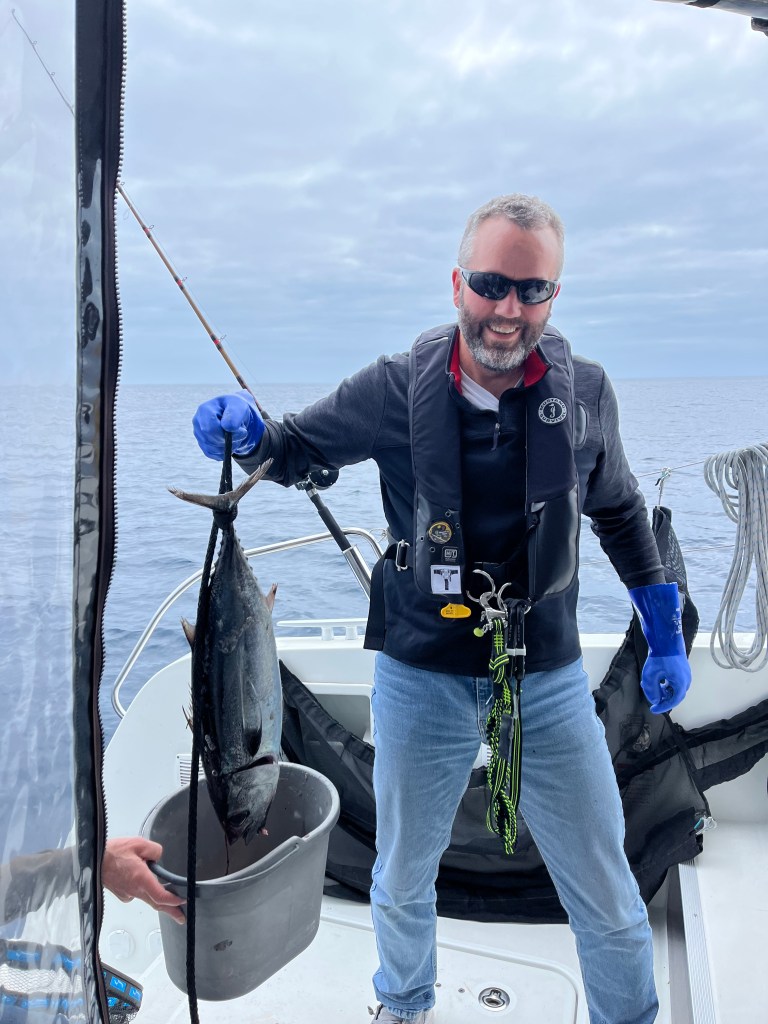
Tired of losing expensive metal lures, I grabbed one of our cheap pink squiddy lures and put it out. Finally, success! We had a fish on, I carefully tightened the reel as Grace slowed the boat. We were able to reel in a nice 12 lbs bluefin tuna! Suddenly lunch went from canned chili to poke and seared tuna steaks! Grace worked her culinary magic and we feasted like kings.
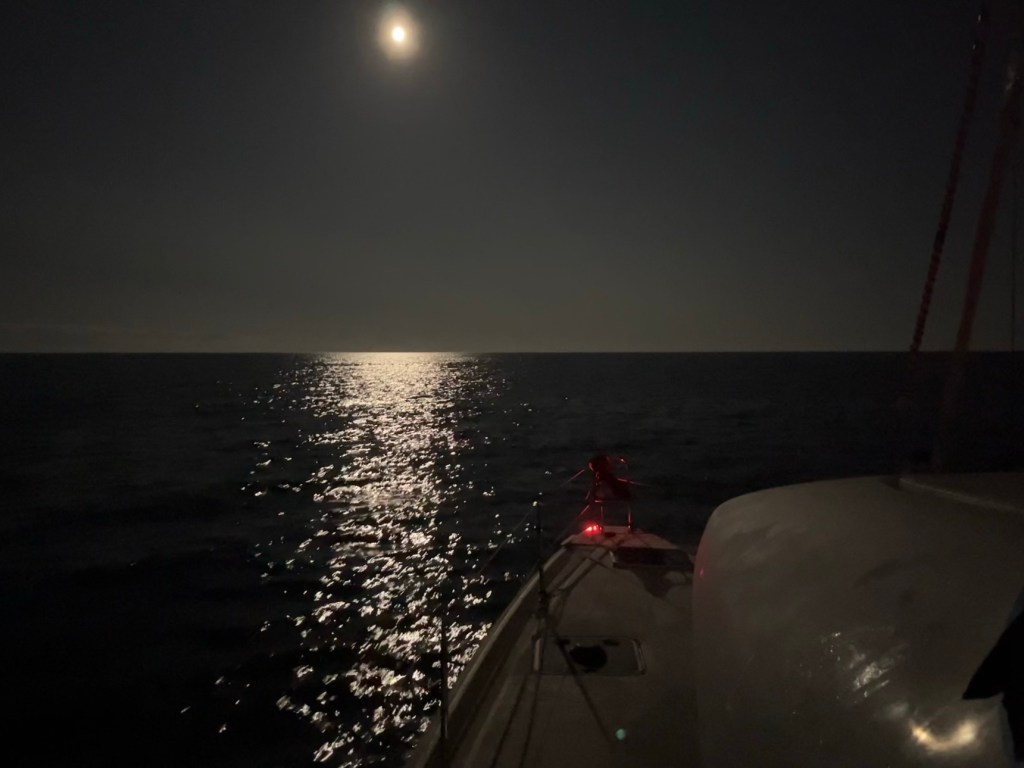
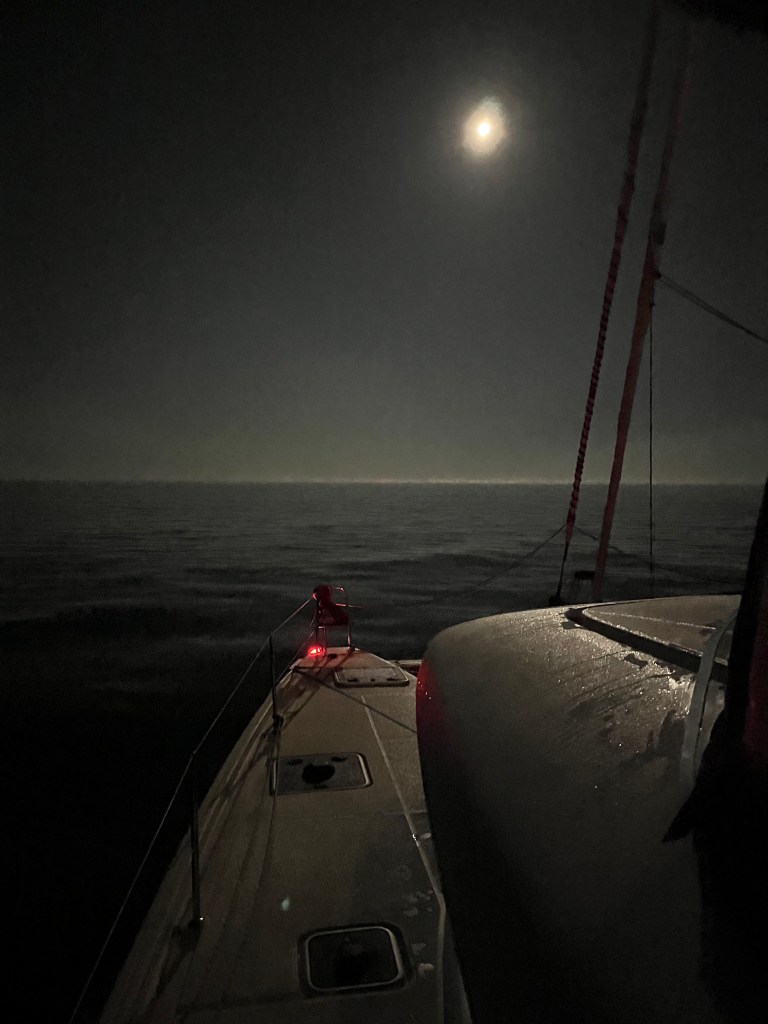
The sea state was remarkably flat during our first days. We had a several hours with some swell on the starboard beam, but it was light and not terribly uncomfortable. The third night as we neared the California border, the wind died completely and leaving a sea surface like black glass under a waning moon.
As we proceeded down the coast we closely watched the weather forecasts via Starlink. The GRIB files were predicting high northwesterly winds along the coast with speeds reaching 30+ knots for the next few days, and we were keen to be tucked in somewhere before this. Early Tuesday morning we were nearing Crescent City, so pointed our bows toward shore to wait out the blow.
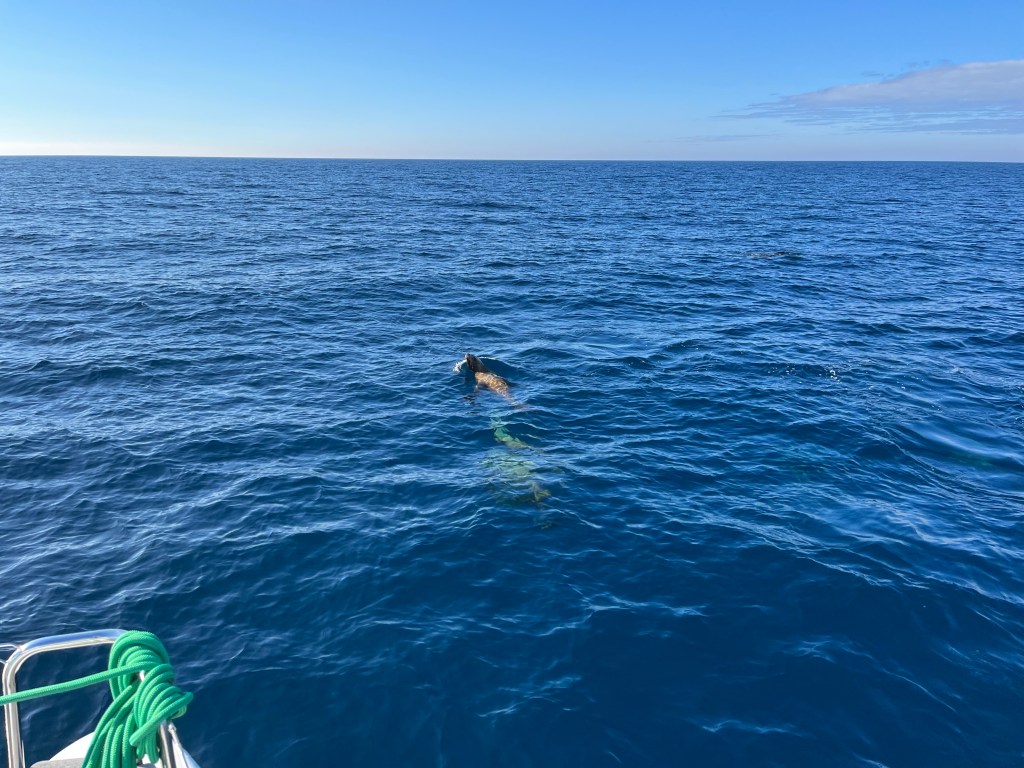
We enjoyed the scenery and wildlife as we approached the continent. Our first welcoming committee was encountered about 10 miles offshore, with a small group of sea lions swimming by barking at us. I was a bit surprised to see them so far from shore, but presumably they are quite comfortable out in the deep. We later encountered multiple groups of sea lions closer to shore, and passed through a super-pod of Risso’s dolphins.
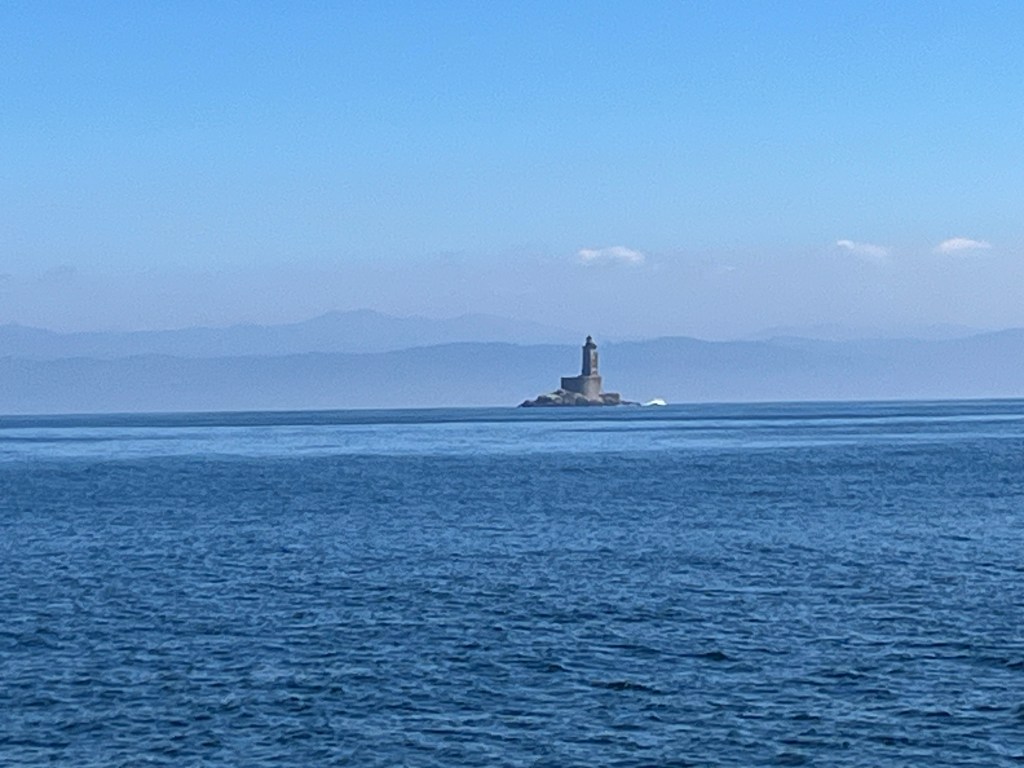
The ocean near to shore was socked-in with smoke, presumably from wildfires burning in the redwood forests in Northern California. The sea breeze chased the smoke away before us, slowly unveiling the land and water ahead. Out of the smoke emerged the St. George Reef Lighthouse, an impressive finger of a building built out on a small islet in the ocean. You could see even our light swell breaking on the shore – it must be impressive to see in a storm!
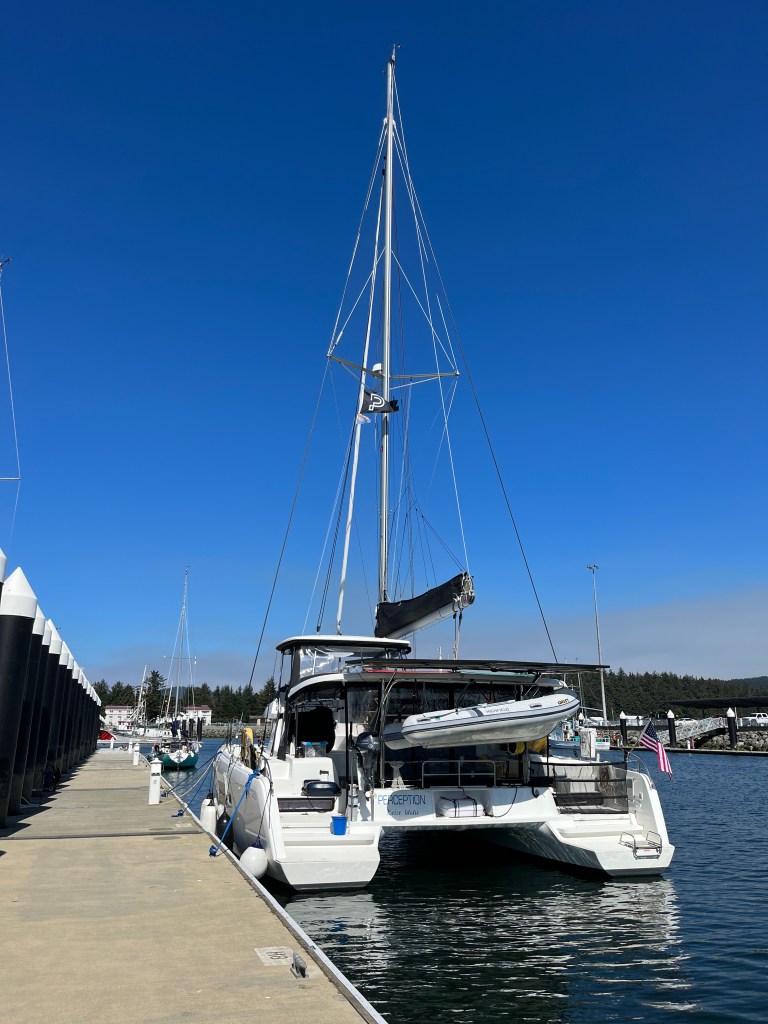
We cruised our way into the Crescent City Harbor that Tuesday morning and tied up in our assigned slip. I had called ahead and reserved a space when we decided to turn into shore to wait out the weather. I had expected that any marina in California would have to be more expensive than what we were used to in the Pacific Northwest, and was pleasantly surprised at the $32/night rate – probably the cheapest we have ever seen, even including the remote places of Canada and Alaska.
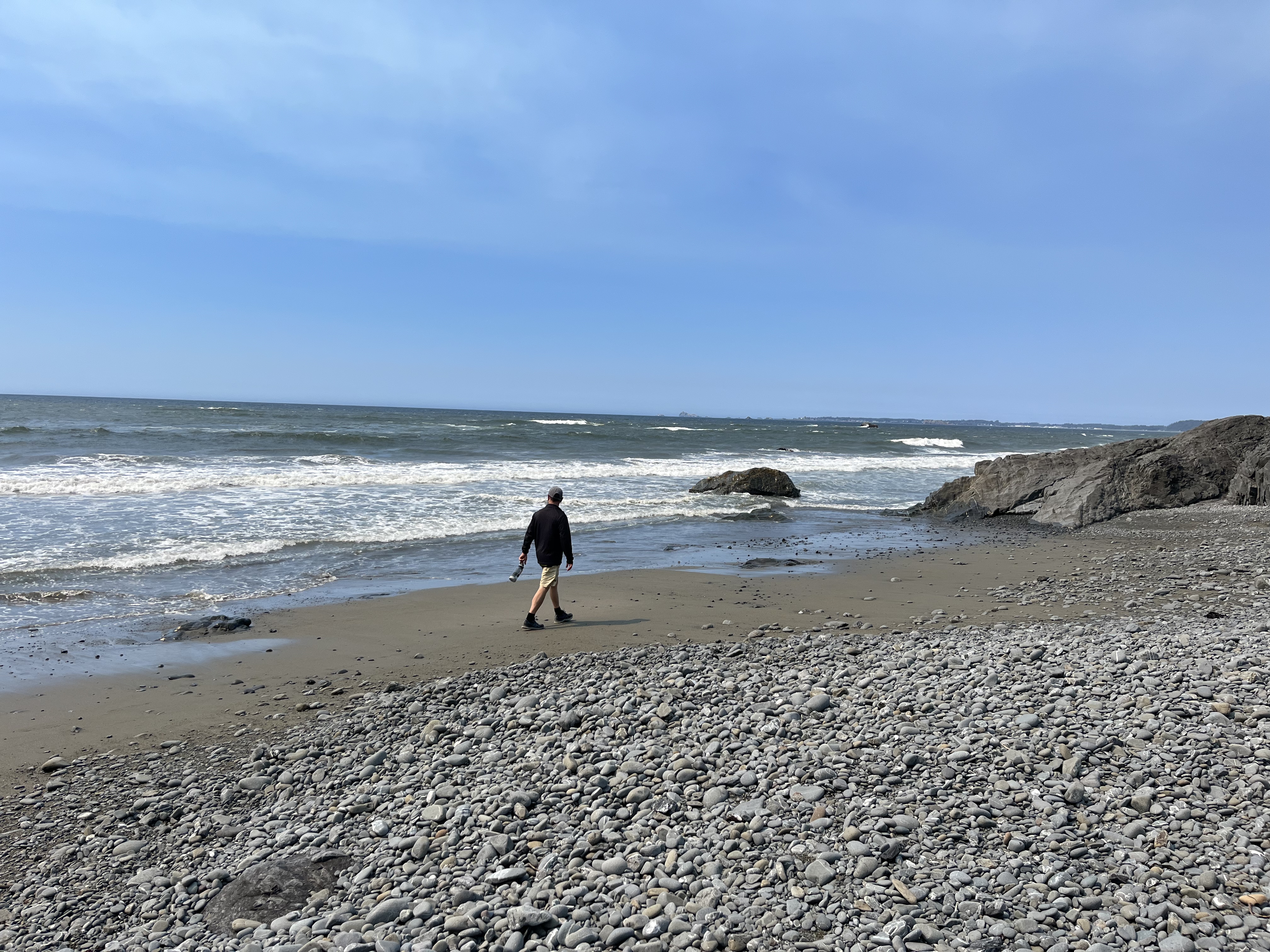
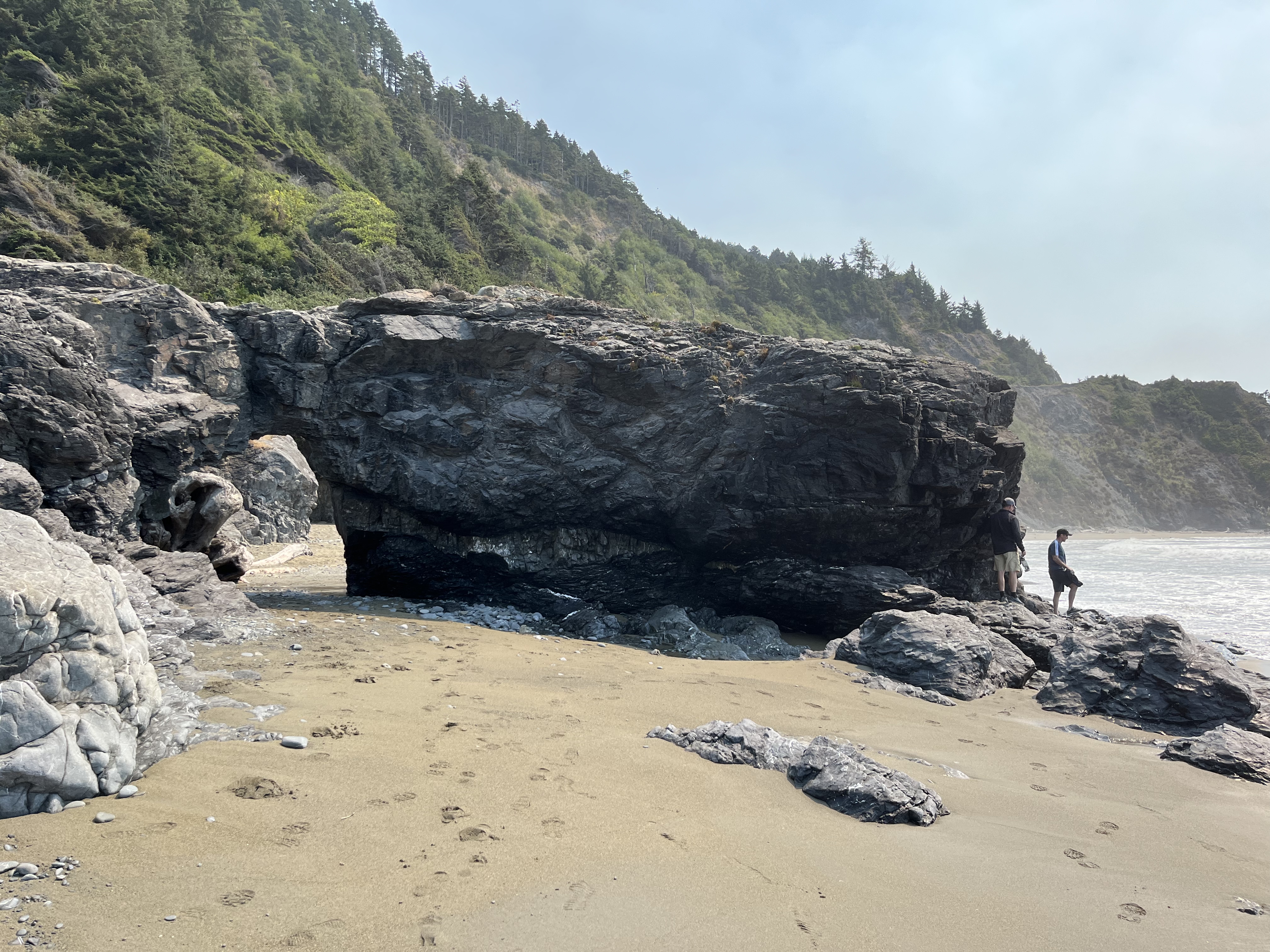
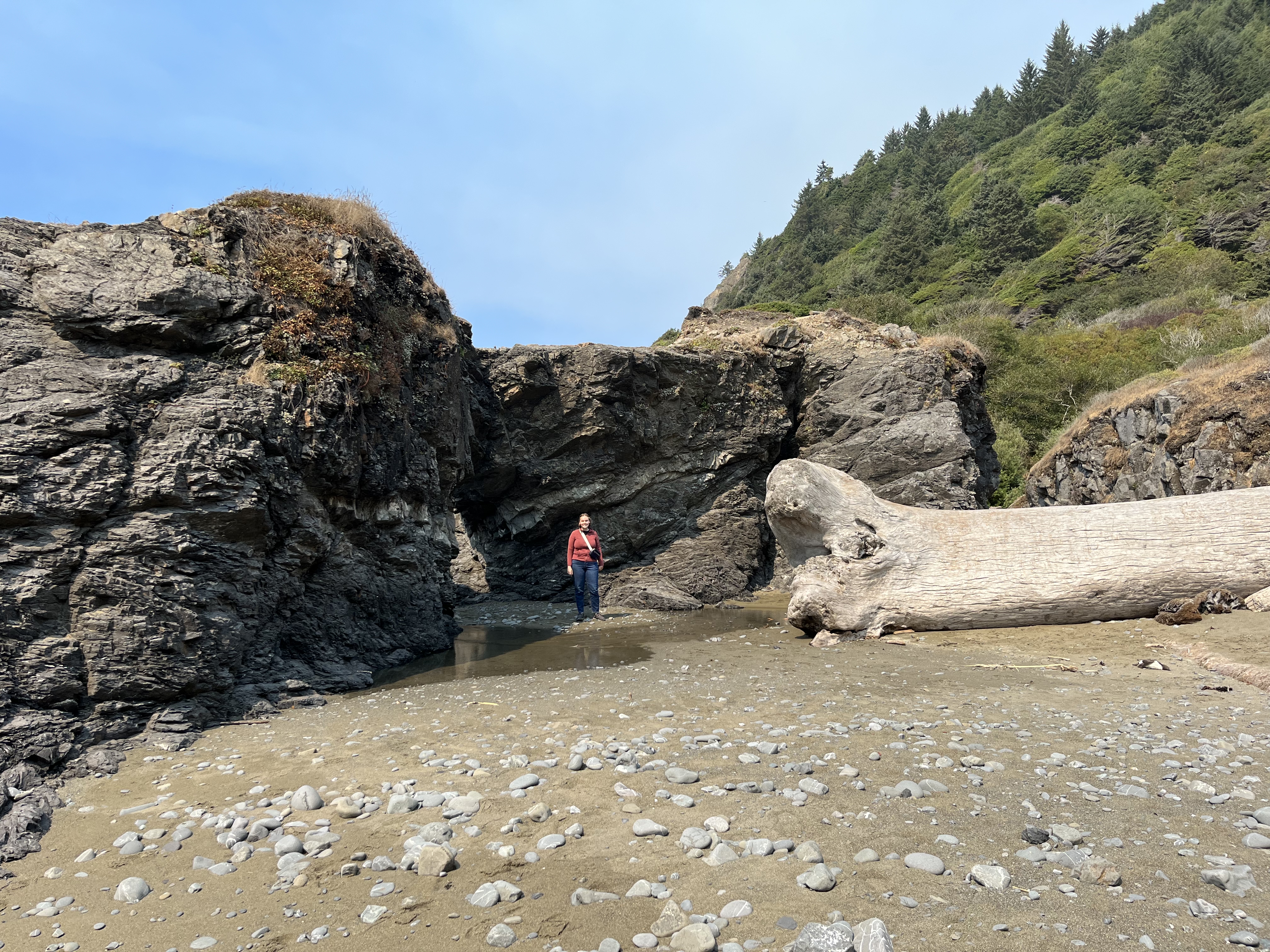
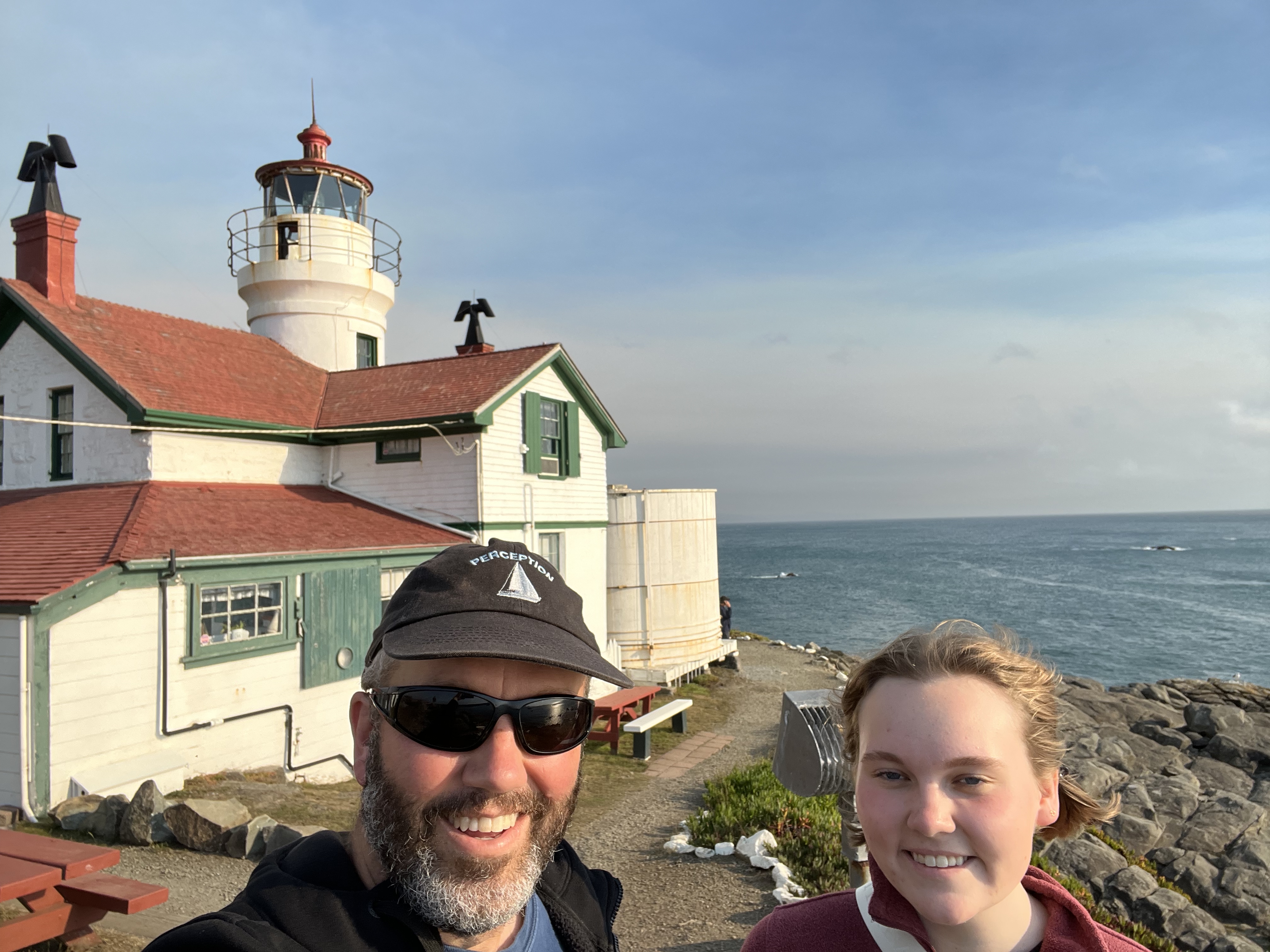
So began our stay in Crescent City. Each day we designated a “shore captain” to decide what we’d do to pass the time. We hiked up the coast, visited the local lighthouse, ate and drank at multiple pubs and restaurants, and visited the local cheese factory. Being on foot was a bit of a constraint, but we needed the exercise and had plenty of time to walk where we wanted to go.
Unfortunately we couldn’t pursue one of the more popular activities in the area – visiting the redwoods – as they were burning and off-limits to the public. Interestingly, the entire city had been cut off from the electrical grid by a fire to the north and was running from generators provided by the electrical utility placed throughout town.
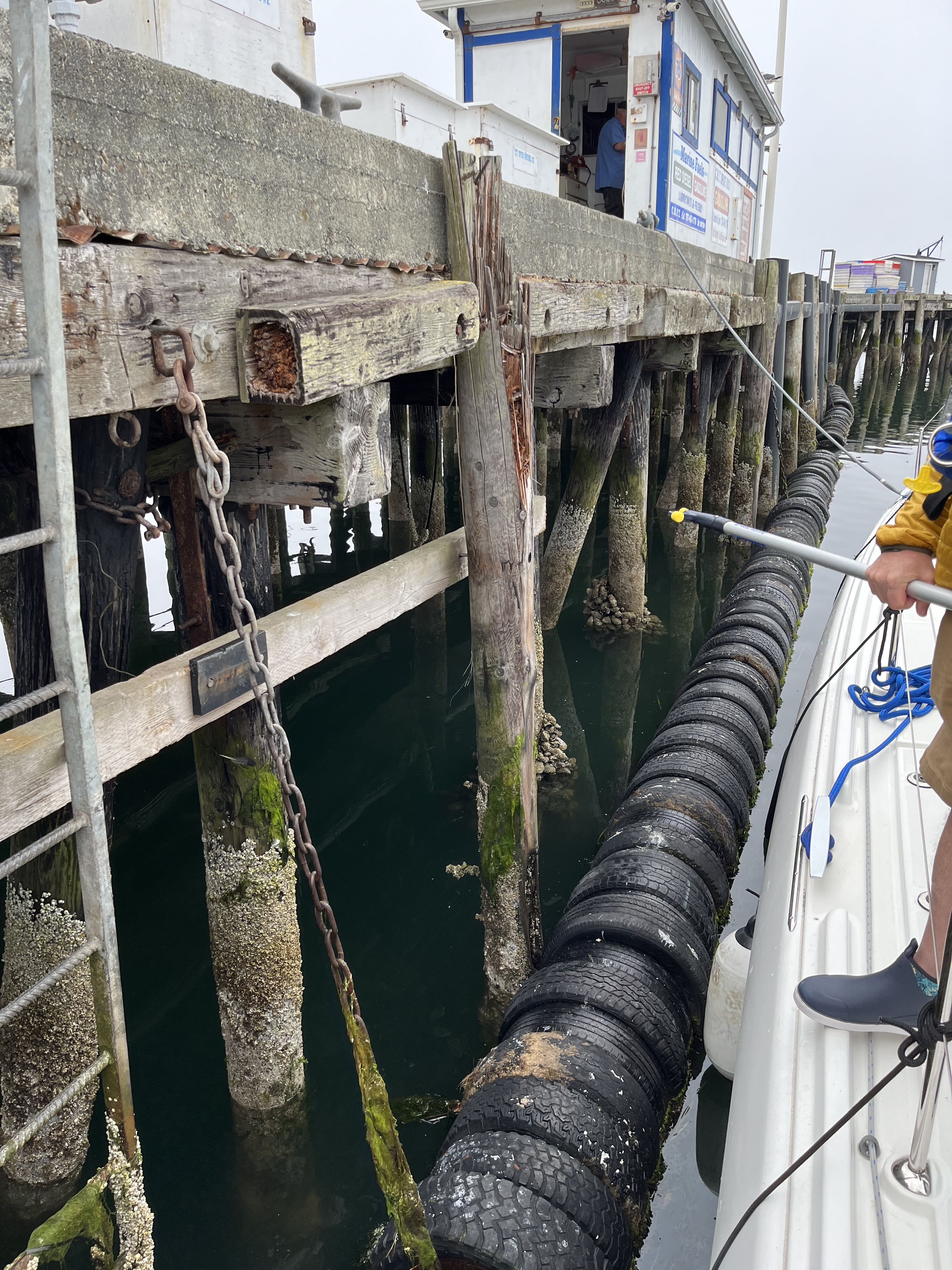
While we were in Crescent City I wanted to fuel up Perception to make sure we’d have enough diesel to reach San Francisco if we continued motoring so much. We had eyed the fuel pier as we entered the harbor, and decided against approaching it as the wind had been high and the landing uncertain. This proved to be a wise move, as the pier had a fixed set of tire “fenders” alongside, which you really couldn’t prevent from riding up against and marking up the side of the boat if the wind was pushing you there. Fortunately we had one relatively windless morning where we could approach the pier and keep ourselves off of the tires just by pushing away with our boat hook.
While we waited, a couple other Coho boats, Karma and Kealani, made it in to Crescent City as well. We had a very pleasant gathering on Perception on the evening before we all headed back out into the Pacific. It had started raining, and we were able to zip up the cockpit enclosure to keep our little party warm and dry. It was great to connect with some of the other Coho boaters. In particular I very much enjoyed talking with Captain Nancy Erely, who was helping the Karma crew down the coast and certifying them for offshore sailing.
In Crescent City we worked to fix our one persistent boat problem – the saildrive on the port side was oozing oil out of the oil change tube. The leak wasn’t serious enough to be a major concern, but I definitely wanted to stop it. When I’d changed the oil before the trip, I had torn one of two gaskets on the tube plug on both saildrives – apparently the plugs had never been removed previously and were “fused” in place. I’d attempted to replace the gaskets with a set I’d bought in Anacortes – the starboard side never leaked but the port took a couple tries before I had the correct size to keep the seal air/oil tight.
By Saturday the weather finally looked settled enough to head out and attempt the rest of the passage. We had a daunting challenge ahead in rounding Cape Mendocino. The stories of nasty weather off this cape were legendary, and we very much didn’t want to add to the lore.
We departed Crescent City at 2pm, trying to give the sea state enough time to settle from the recent blow yet also give us ample time to make it into San Francisco Bay on a flood tide in two days. We didn’t want to hit the bay entrance on a stong ebb, since the resulting chop from wind against waves could be dangerous for small craft.
The winds were light around the cape, but the sea state was very lumpy. We were encountering swell from multiple directions, and would occasionally launch the bows off of a particularly steep wave and pound into the water below. It made for an uncomfortable night, but in the end posed no real concern for our safety. As with many navigational challenges, a hefty dose of patience to wait for the right conditions will help keep you relatively safe. While it was inconvenient to wait for so long in Crescent City, I’m very happy that we weren’t off of Cape Mendocino at night in 30+ knot winds.
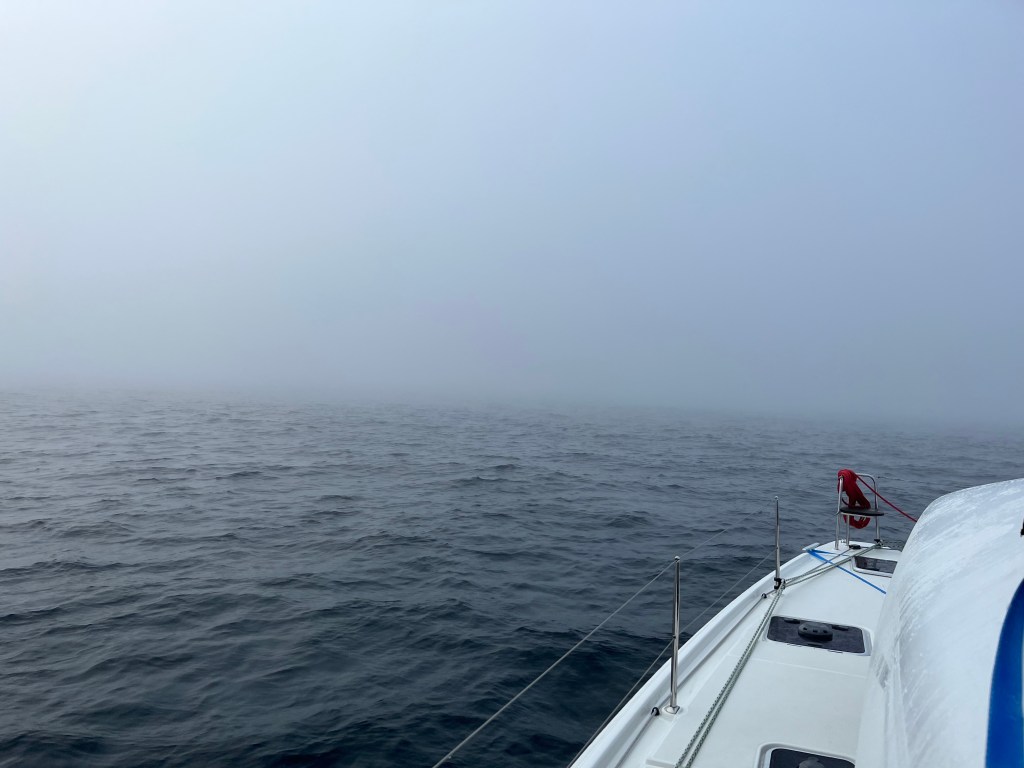
By the next day the fog had settled in with a vengeance. The winds were still very light, so we motored on through the soup with very limited visibility. The radar was our friend, showing us other boats in the fog well before we were upon them.
The situation became quite intense as transitioned through the area off of Fort Bragg. We hit this spot at around 4pm and began to encounter small sport fishing boats traveling at high speed towards the coastline from further offshore. They were coming at right angles to our path, and running 20+ knots. We could pick them up intermittently on radar as they approached our position, so we knew they were coming near, but it was hard to predict if they would come on our bow or stern, and what would be best done to avoid them.
When we would detect a boat approaching our position on radar, we would start sounding our horn and sweeping our spotlight back and forth in an effort to alert them to our presence. They would leap out of the fog at us, veering off if they were on our bow. Perception certainly couldn’t alter course quickly enough if they did not.
We lost count at seven boats that came within visual range over the period of an hour or so. Given that visibility was quite poor, this was much to close for comfort. They must have generally not had radar, and certainly did not have AIS, just trusted their luck and reaction times to avoid anything like Perception lurking in the fog. I’ll do my best to avoid navigating offshore of a fishing harbor at quitting time in the future!
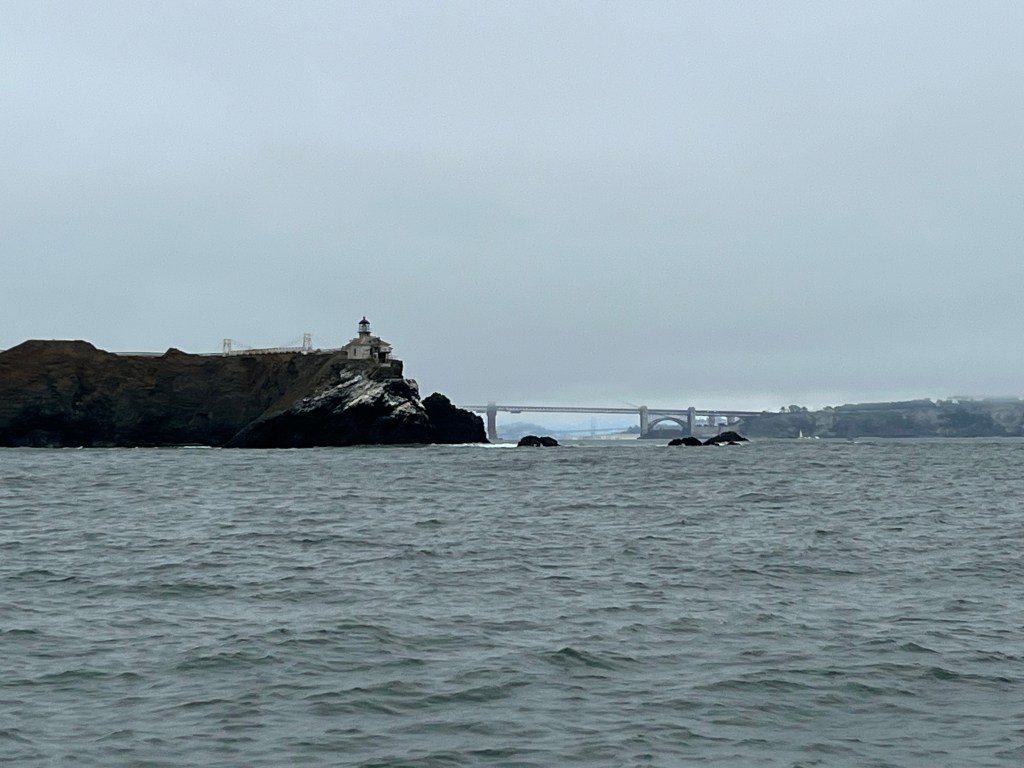
One final calm night in the fog, and we were on the doorstep of San Francisco Bay. The wind started picking up behind us, but I was anxious to get in and the crew was still sacked out, so we continued motoring into the morning. We passed Point Reyes, and could see and hear the breakers crashing into the shore under the fog layer. The fog continued to lift in elevation as we neared the Golden Gate Bridge. We caught our first glimpse of the span as we neared Point Bonita, and our excitement began to build.
Soon we reached the bridge while eating – of all things – baked potatoes. Grace had put four in the oven to warm us up, and they came to fruition just as we reached the bridge. A stupendous and very Idaho way to reach our destination. The whole crew was on a high as we passed under and merged with the fleet of sailboats out plying the waters of the Bay.

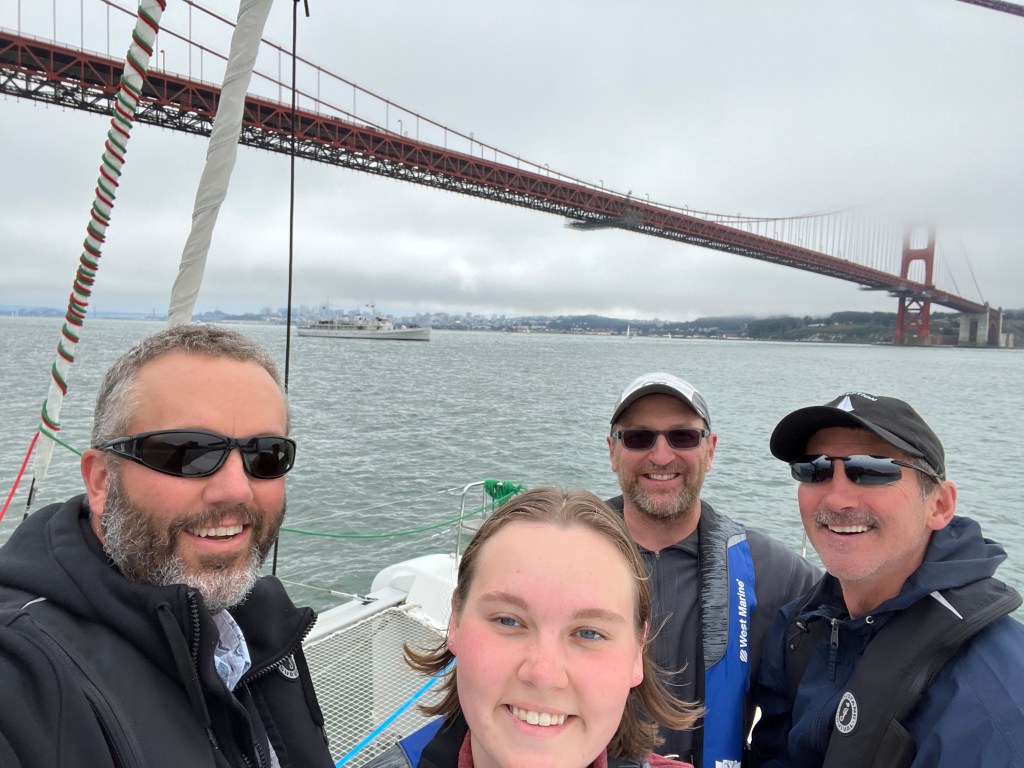
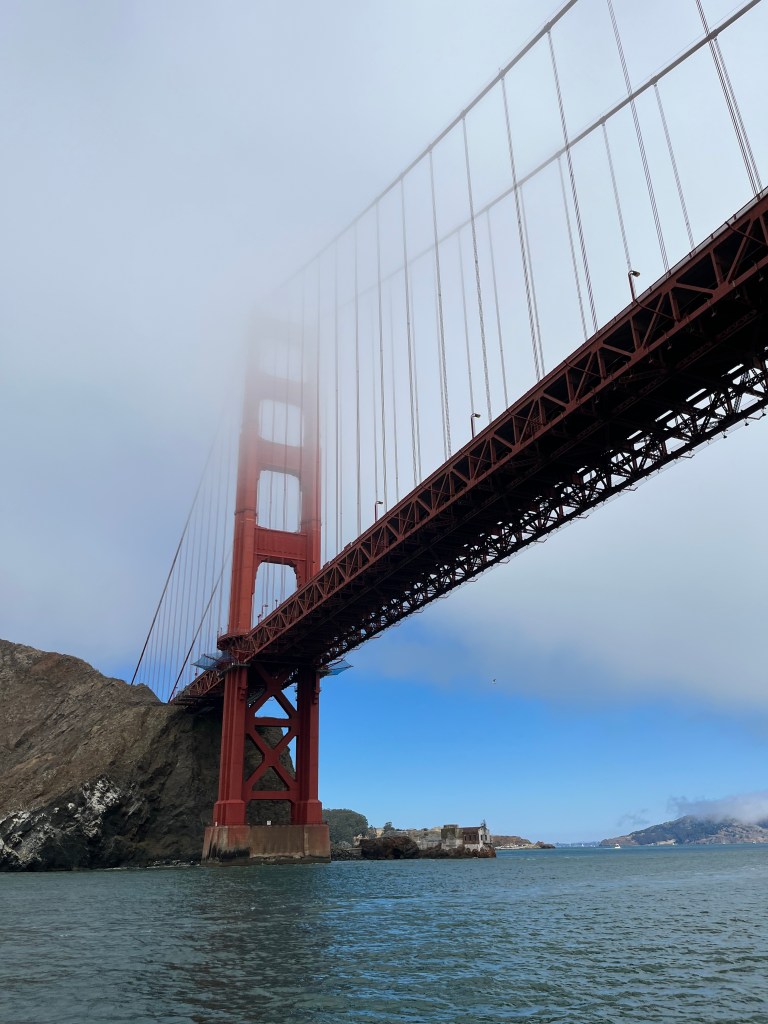
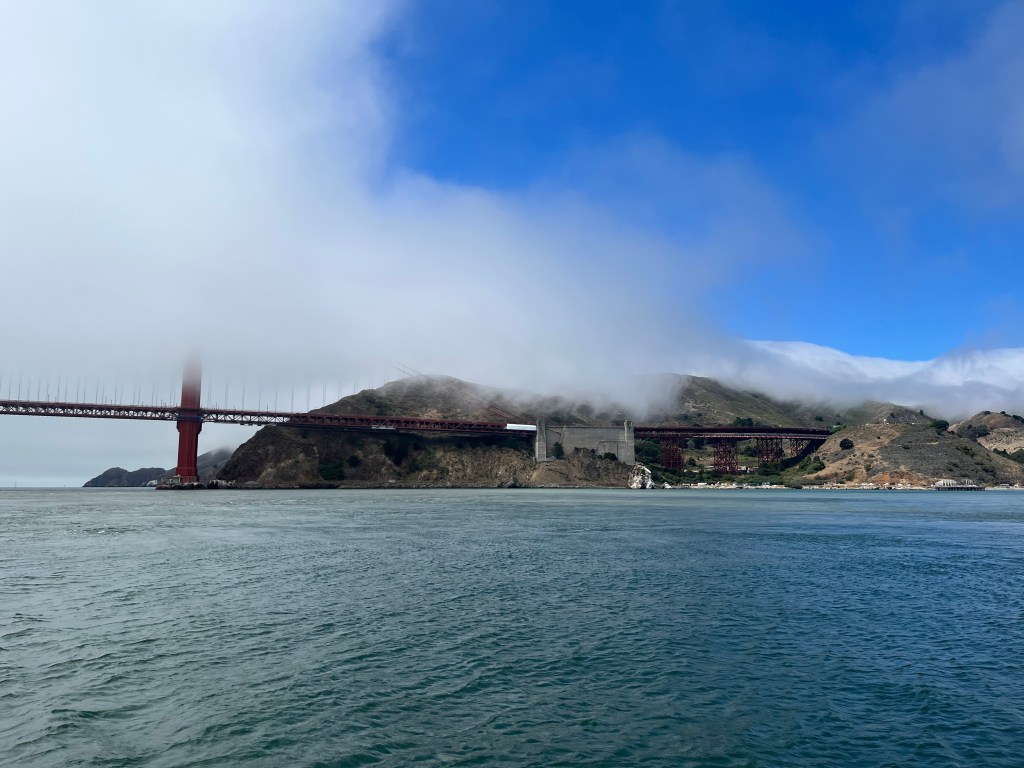
We turned north to Sausalito, and magically found sunshine waiting for us. It is amazing to watch the fog try to overcome the crest of the hills above the town, and dissipate in the sunlight. After a couple of days of gloomy pea soup, it was incredibly rejuvenating to bask in the sunlight and dry out the boat.
We owe a huge debt of gratitude to the volunteer members of our first offshore crew: Tom and Marty. They helped keep our spirits up along the way and manned some of the hardest night watches between them. They helped us put the finishing touches on our preparations to head into the ocean and were willing to do anything to move the voyage forward. We’ll be looking for them again when it’s time to bring on crew for our future crossings – and any time in-between!
 Sailing Perception
3 responses to “August 26 – September 4, 2023: Offshore to San Francisco”
Sounds like it was an interesting trip. Belated congrats to skipper and crew on your first overnight/offshore adventure!
LikeLike
A great read! So glad to hear details of your travels! ~sharpies
LikeLike
An interesting and successful first overnight/offshore adventure.
I’ve got to get a rod, reel, and heavier fishing line and try and find those metal lures!
LikeLike