
After a hot, buggy weekend in La Paz, the Perception crew was eager to be heading north once more. We pulled our anchor out of the soup, glad to be done “waltzing” for a while. We’d been dreaming of getting up into the islands and bays north of La Paz ever since starting our trip south from Bellingham. All of us had enjoyed our 2020 charter trip to the area and we were excited to visit in our own boat on a more restful schedule.
Our first stop after getting out of the anchorage was the fuel dock at Marina Palmira, just up the channel at the northern edge of the town. We weren’t down all that much on diesel since filling up prior to heading north from Cabo, but I always feel better topping off when I can. We pulled in next to some large motor yachts and chatted away the time while we waited for the fuel dock attendant.
Having comfortably full fuel tanks, we continued on our way up the channel and crossed over to the west side of Espiritu Santo. Our target was a small anchorage on Isla Partida called El Cardoncito, where it was rumored there might be good snorkeling. We wanted to get in and settled in a nice anchorage before a looming norther set in for a good blow.
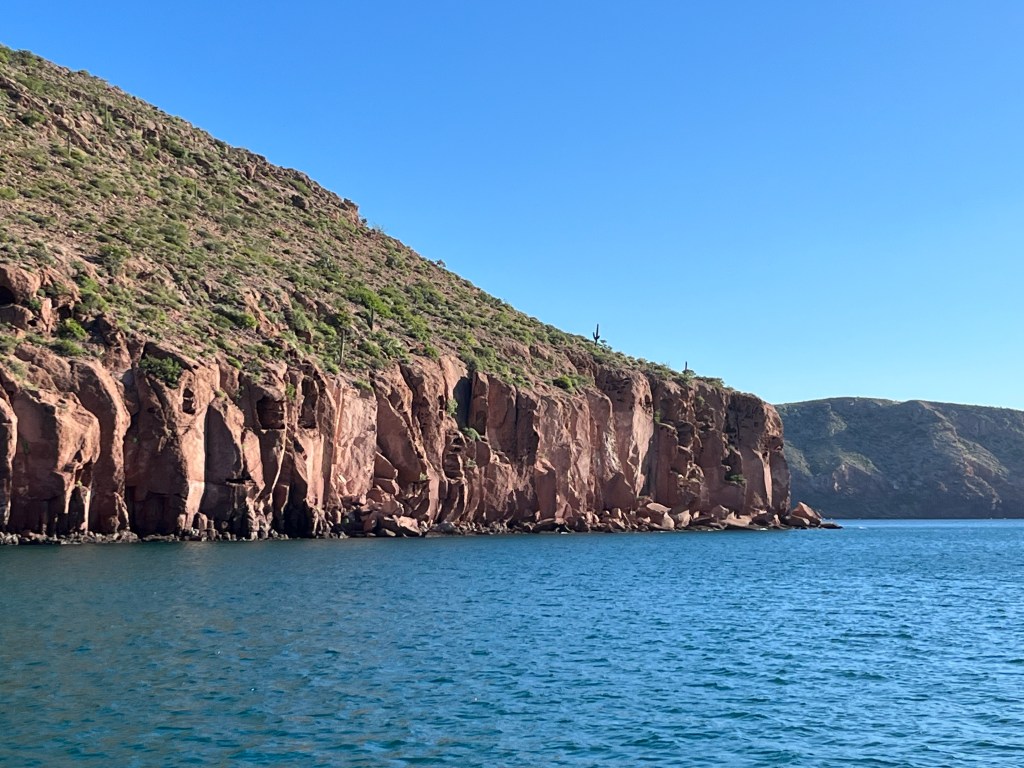
On arriving, we found the inner part of the narrow bay occupied by a single boat, so we stuck to the outer part of the bay and dropped anchor centered between the red cliffs on both shores. It felt like a well protected bay, at least from all but the west where it was open to the sunset.
As night fell, the winds began to pick up even in our sheltered bay. While we were sure the winds out in the open water were northerly, the winds in the bay whistled in from the east, down the canyon at its head, and blasted across the surface of the water. At its worst the wind was very cyclic in nature, hitting the boat in a large gusts of more than 25 knots before slowly settling down to almost complete calm. I could see the line in the water moving towards us in the bay as each gust approached, like an invisible hand scooping across the surface of the water.
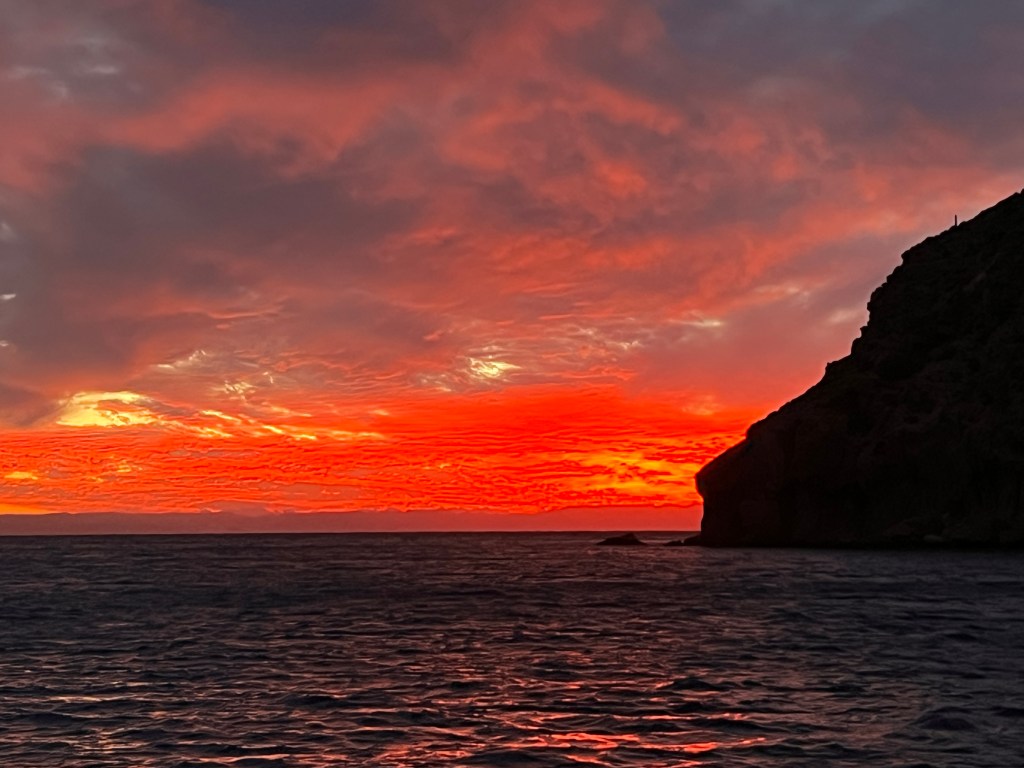
The gusty winds held strong for the next day and a half, and we mostly just sheltered on the boat. Grace and I did get in some snorkeling along the north shore of the bay, though the winds were stirring up enough silt to make the visibility less than optimal.
On Tuesday we pulled anchor and made the short hop around the corner to Ensenada Grande. This is really the signature bay on the Isla Partida/Espiritu Santo islands and we found several other boats in the bay as we entered. We moved into the southern lobe of the inlet and dropped our anchor against the northern edge, hoping to get the most protection from the northerly winds there. We had good holding in about 20 feet of water over a sandy bottom, and the clear water let us see the anchor and chain on the bottom after we were set.
After a while we noticed that puffer fish seemed to enjoy our anchor rode brushing back and forth across the sandy bottom as the boat moved in the wind. Apparently the chain would stir up the sand on the bottom, presumably dislodging things that the fish like to eat. We could see a fish positioned about every meter along the chain.
The wind picked up again that afternoon, but the northern shore gave us fair protection against the worst of it. The wind couldn’t really make up it’s mind as to what direction it would blow in the bay, so we happily swung about our anchor for the duration of the day.
On Wednesday the forecast showed the winds starting to ease up a bit, and we debated whether or not to make the jump up to Isla San Francisco. We decided we’d try as the forecast showed winds in the 10-12 knot range. We’d be beating, but figured that wouldn’t be too bad.
We first wanted to visit Los Islotes, which is a small rock just north of Isla Partida that is home to a large sea lion colony. We’d visited it when we chartered out of La Paz back in 2020, and it was a must-see-again for us this time around. We decided we’d go out to the rock, then assess conditions as to whether or not we’d continue on to Isla San Francisco.
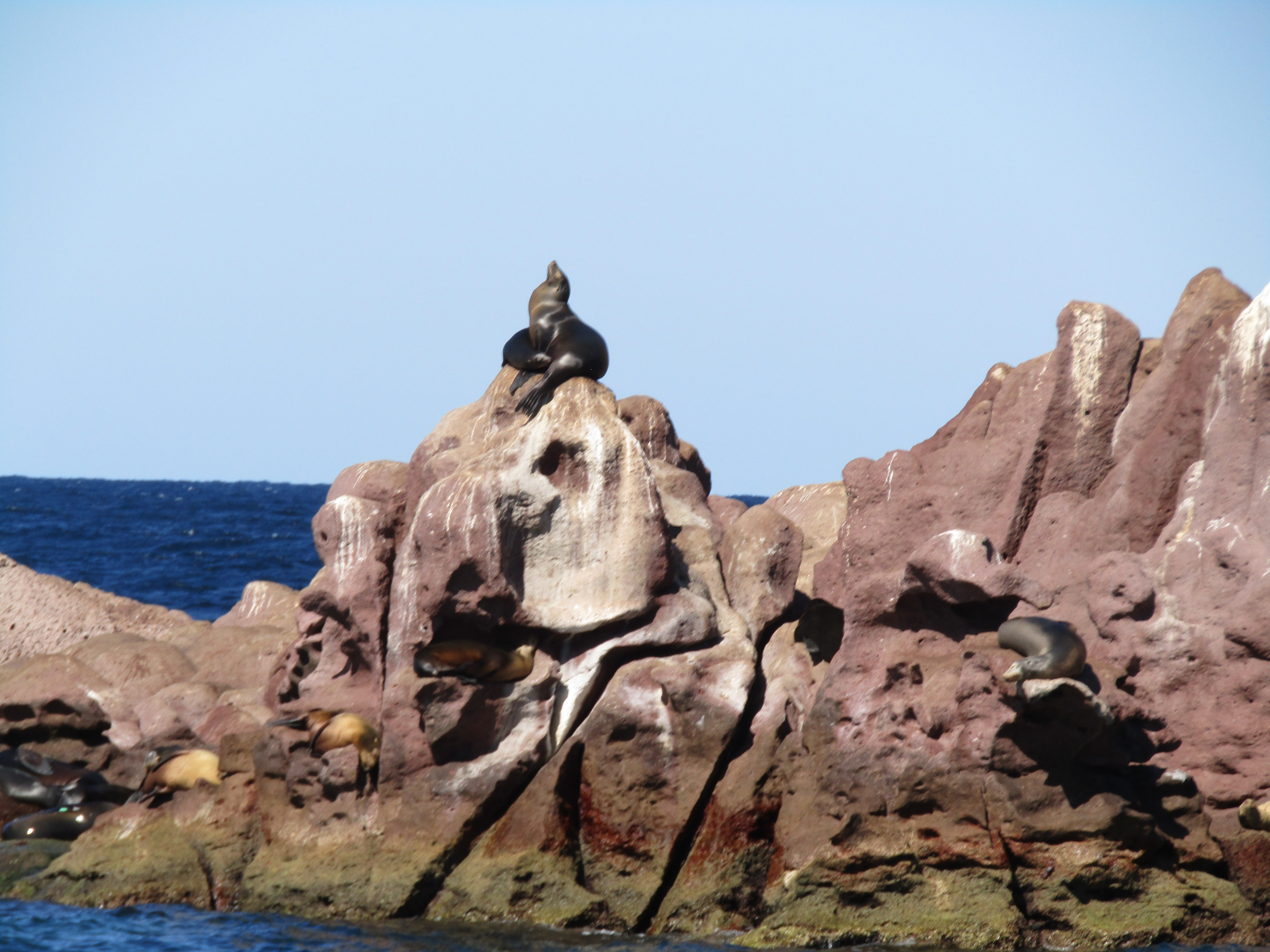
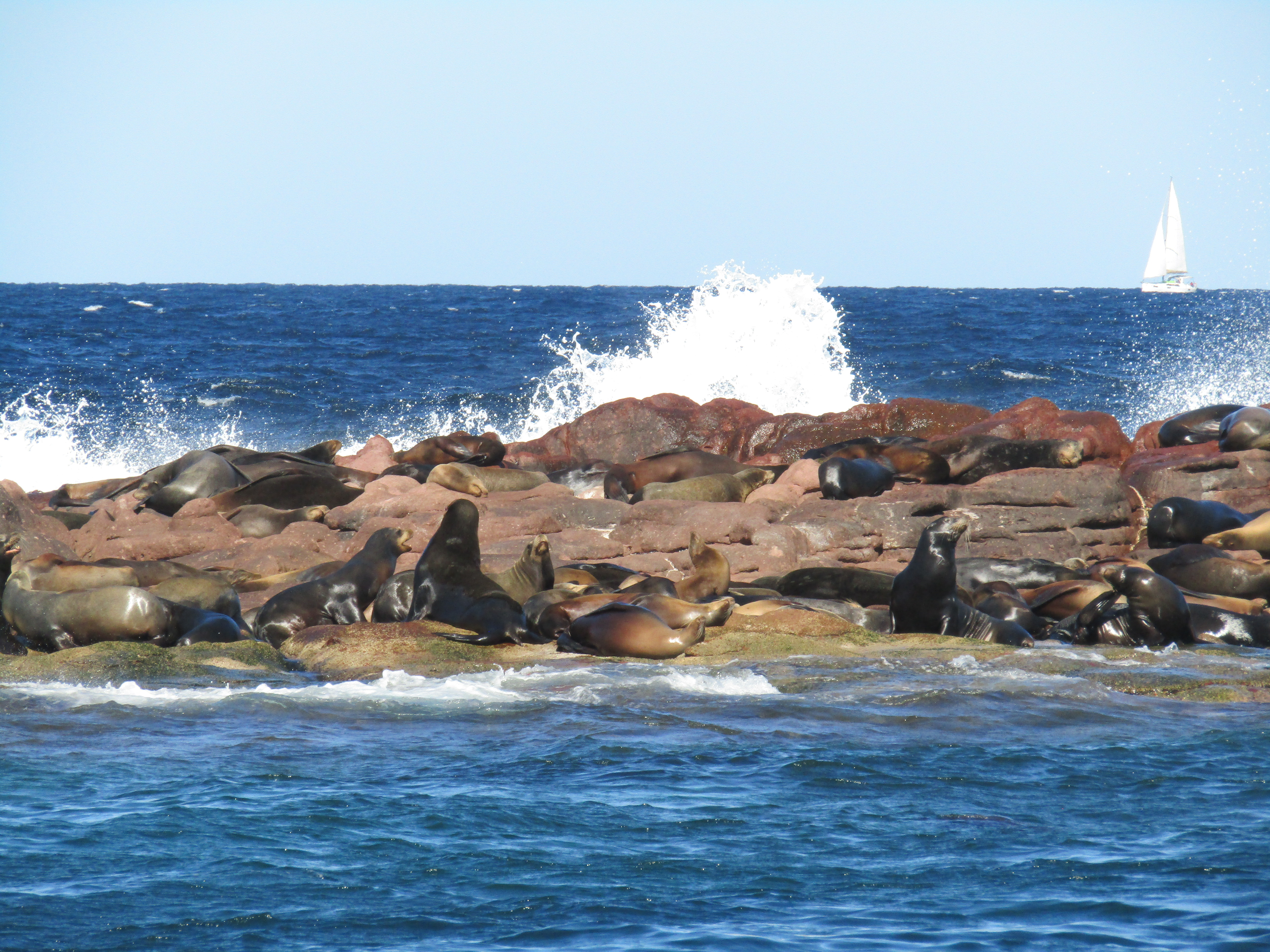
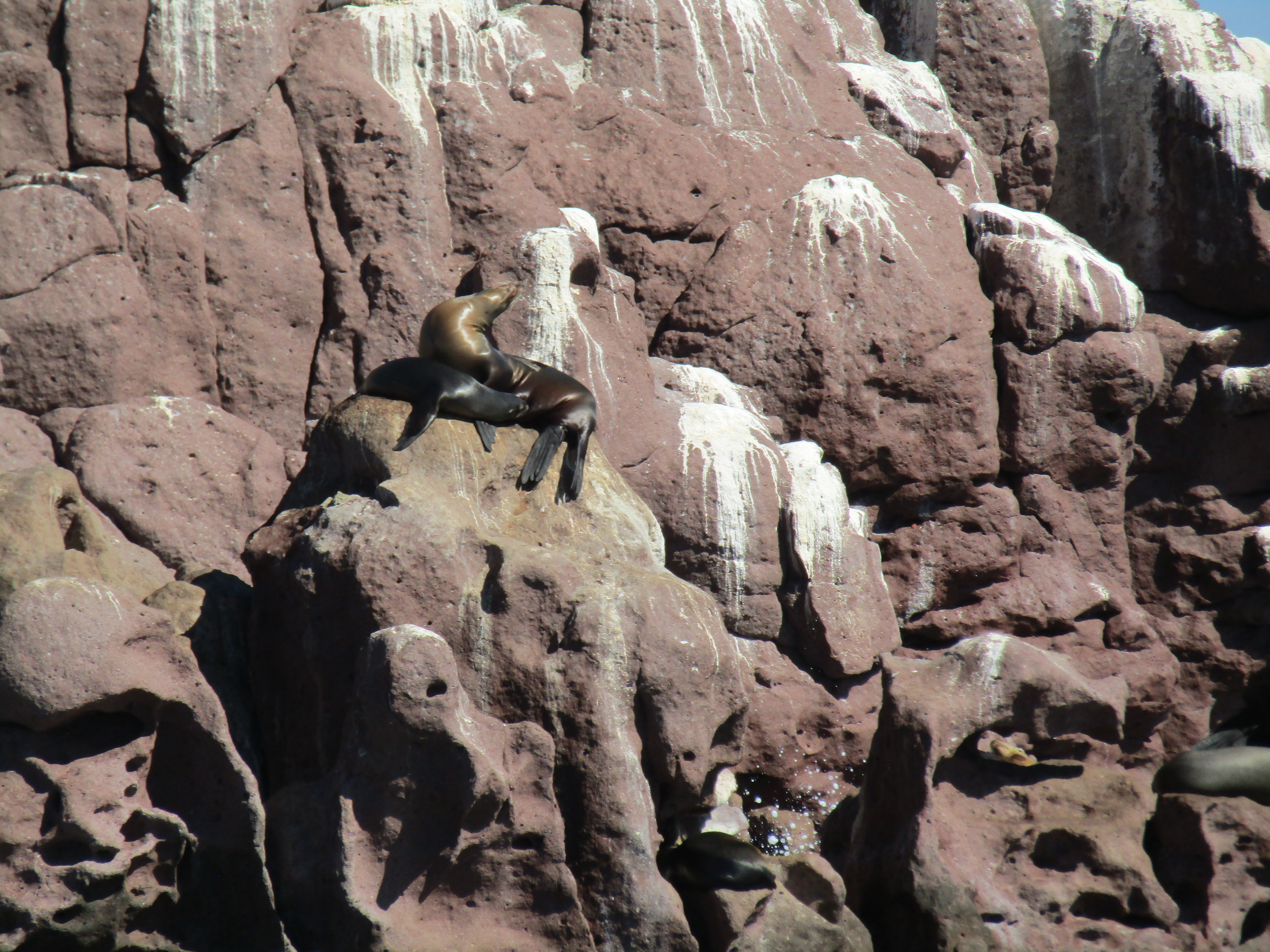
Los Islotes did not disappoint, being surrounded and covered in sea lions. Oh, the stench of it! There’s not much like the smell of a sea lion colony. We floated up to the rock and took in the spectacle. In some cases the sea lions were high up on rocks were you couldn’t see how they’d been about to haul themselves up so high. They sat like kings of their respective mountains, with heads arched back on their spines.
There were a number of local pangas at Los Islotes as well, carrying visitors to see and swim with the sea lions. I’m not sure I’d be comfortable getting in with so many of the large animals around. One of the panga drivers became a bit annoyed with us as we came in close to the rock, and warned us away. Given they had swimmers in the water, we happily complied.
The water looked a bit rough but not untenable for the crossing to Isla San Francisco, so we decided to press on the additional sixteen nautical miles to the anchorage. Thus began another learning experience for the skipper – as much as he’d like to press on into sub-optimal conditions, there are times when it just isn’t worth it. For about a third of the way we were able to sail a close reach on a starboard tack up towards our destination as the wind was from the north-northeast.
As the day wore on, the wind began to build and move more towards the north. We reefed the main to keep the pressure on our rig down. The seas were rising, our speed was good, but we were starting to be pressed west of our desired course. Before long our velocity made good towards Isla San Francisco was very poor. I could move to a port tack, but that would take us further out into the sea. As the waves built I really wanted any shelter that the islands to the north would give us.
As the winds approached 20 knots, well above forecast, we were really starting to pound into the nasty, steep chop being driven down the Sea of Cortez by the northerly wind. We were about two-thirds of the way to the island, but on our current course it would take several more hours to get in beating up the Sea. At this point the crew was not having fun, the boat was taking a beating, and the skipper was realizing he’d made a poor decision to head out that day.
At this point I decided to drop the sails and motor at a moderate speed directly to our destination. We were still pounding into the sea, but we were making our best time to get out of a bad situation. We held strong and finally made it in, dropping our hook in the gently curving hook of a bay with only mild swell making it in to rock the boat.
In retrospect, hadn’t we had enough with beating when we made the jump up from Cabo? I was a bit deflated that I’d taken us out into another rough day that makes you question your life choices. We really needed to slow down and take things more cautiously, going when the weather would clearly be in our favor.
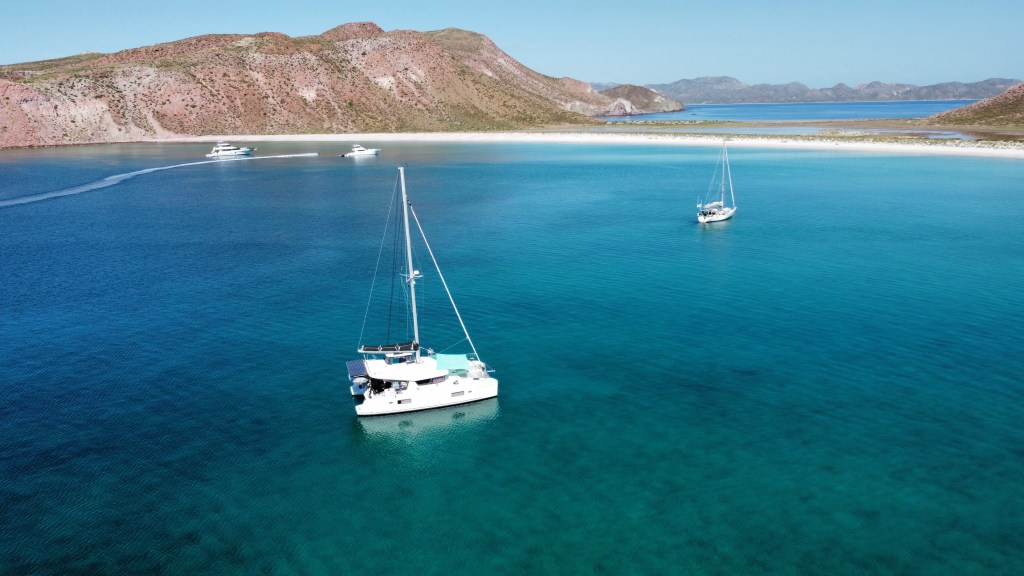
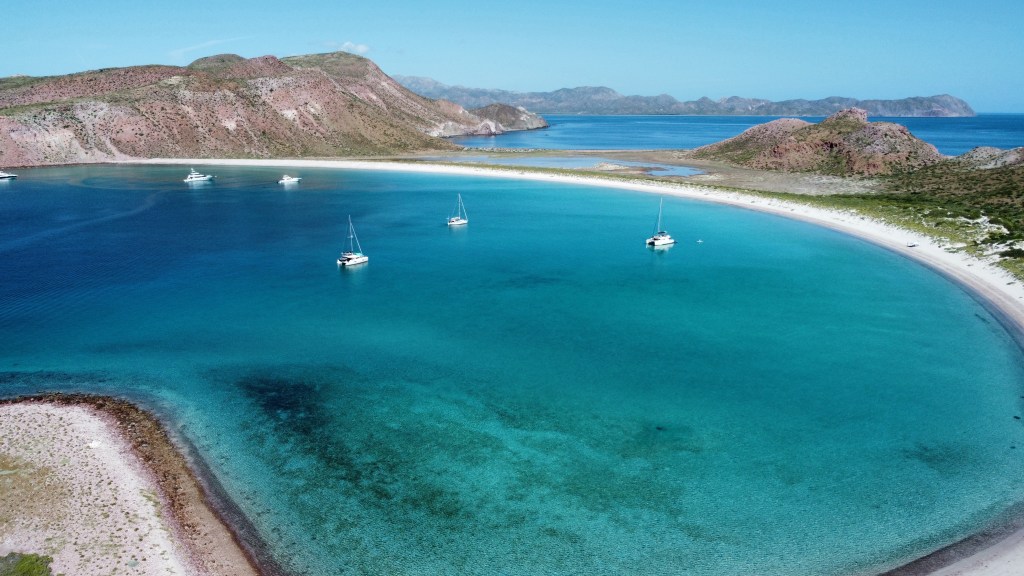
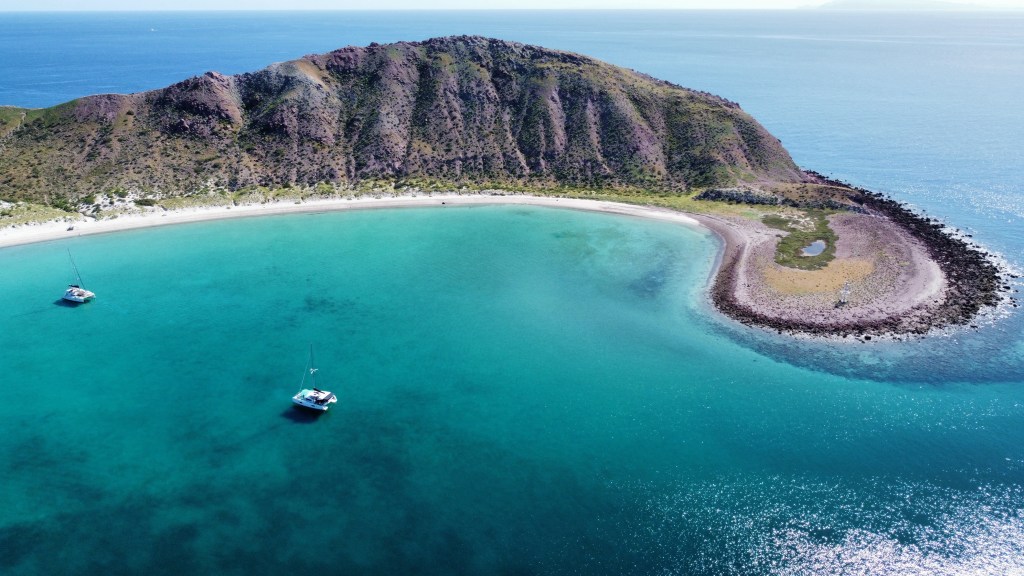
Isla San Francisco was a welcome respite and a beautiful anchorage. The next day was Thanksgiving, and we were certainly thankful to be in sheltered, crystal-clear waters.
That evening the trouble with the no-see-ums began. Things were just fine on the boat from an insect standpoint while the wind was up. Unfortunately the wind died completely that night, and the infestation began.
The mangroves on Isla San Jose to the north of Isla San Francisco are infamous for these little biting midges. John Steinbeck wrote about them in his book The Log from the Sea of Cortez. We found that they are so small they can get in through the mesh in the screens covering our ports. Once inside, they hover in the dark corners of the boat, then swoop down to feast on you when you least suspect it.
By the morning of Thanksgiving the crew was covered in bites. The bugs had feasted on us in their own form of the holiday as we slept. While the skipper didn’t seem to be bothered much by the bites, the ladies of the crew had an almost allergic reaction to them. Their bites swelled up and itched mercilessly. We did our best to kill the little things – they were easy to smush once you found them but would often leave behind a tiny smear of human blood from their feasting on the crew. They were so small you had to get right up to them to even see their tiny black bodies. It felt like a losing battle. Nothing prevented them from re-invading as it was much too warm to close up the boat completely.
We did have a nice early-afternoon Thanksgiving dinner, including chicken, potatoes, and green-bean casserole. We were only missing the cranberry jello salad that had become a staple of our Thanksgiving dinners in Boise. Grace made us a pumpkin-pie vodka punch to take the edge off our nerves and bites. We settled in to eat and splayed out to digest in pleasant misery.
Earlier that day we noticed that Okisollo, a boat we’d come across in San Francisco and which was part of the Baja Ha-Ha, had come into the anchorage. We’d watched as they dinghied ashore briefly before piling back in and hurrying away from the sand. They made their way over to Perception and hailed us.
Grace had caught a line for Dan as he brought Okisollo in to the dock at Schoonmaker Point Marina in Sausalito, soon after Perception had arrived there. We’d bumped into them on and off as part of the Baja, but hadn’t really gotten to know them yet. We invited the pair aboard and shared a drink with them. It started a nice, multi-week friendship between the boats as we headed north to Puerto Escondido together. Often sharing an anchorage and sundowners, or going on shore adventures together.
It turned out that Dan had gone ashore to test fly his new drone, but had been swarmed by sand fleas on walking up the beach. His legs were covered in bites from the five minutes he’d spent ashore. Big thumbs-up for the beauty of Isla San Francisco, but a giant thumbs-down for the bugs!!
The next day we happily parted from Isla San Francisco, though we were nervous that moving on wouldn’t let us escape the no-see-ums. They had re-invaded our boat in the night, and we continued to kill as many as we could before they chewed us up. We didn’t have much to combat them – we really wish we had some fly-paper which might have snagged them. It taught us to prepare a bit better for them in the future.
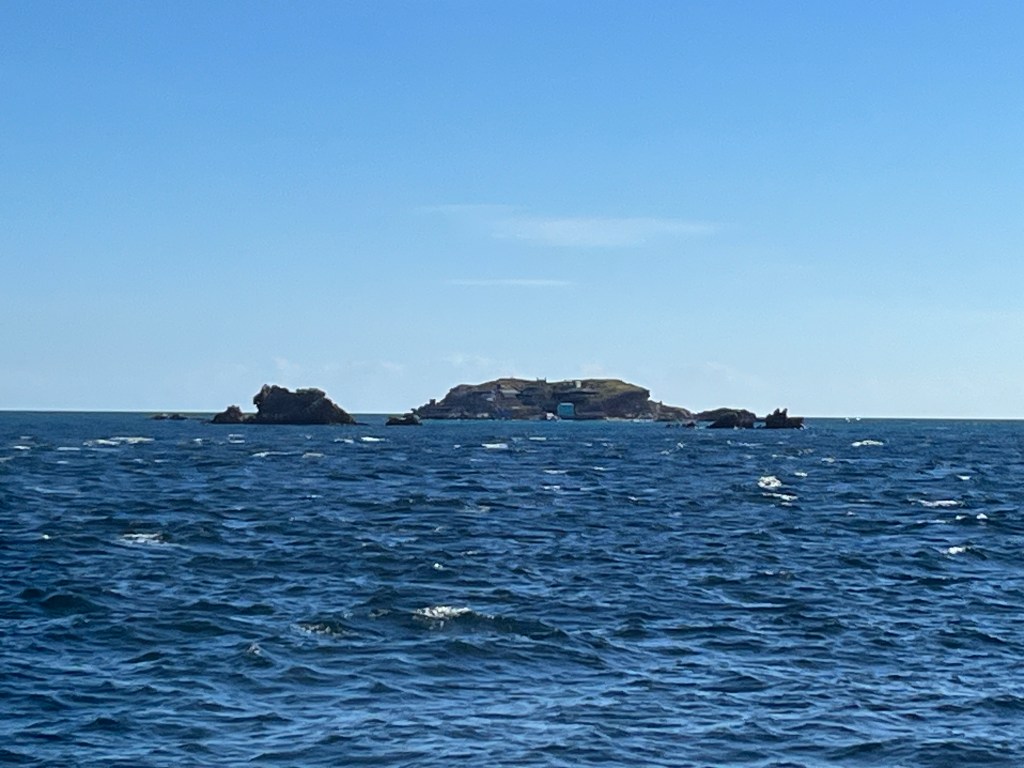
We crossed the narrow channel between Isla San Francisco and Isla San Jose, and noted the small, rocky Isla Coyote in the distance. This rock has been home to fisherman, and is one of the few inhabited islands in the Sea of Cortez. We briefly considered exploring this island that we’d bypassed during our charter in 2020, but we’d read some reports that it was no longer inhabited, just a fishing camp now. In the end we decided to skip it and move on to Isla San Jose.
Grace had been intrigued by one of the locations pointed out by Shawn Breeding and Heather Bansmer in their Sea of Cortez – A Cruiser’s Guidebook. This location was a mangrove-lined lagoon on the southern end of Isla San Jose. This also happened to be the epicenter of the no-see-ums, according to John Steinbeck! Since the daylight should have sent the bugs retreating into their nasty little caves for the day, we decided we’d try to take the dinghy into the lagoon.
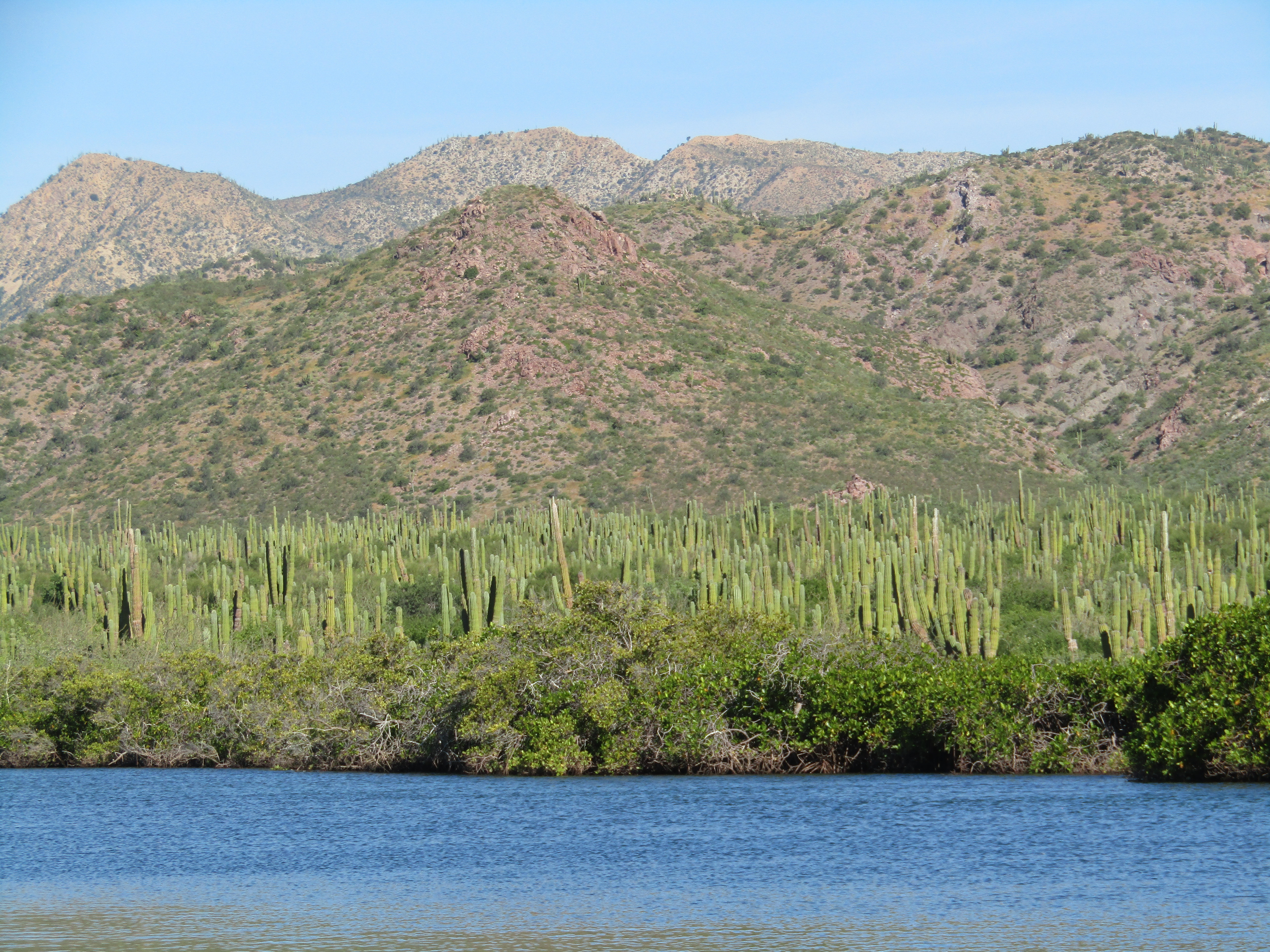
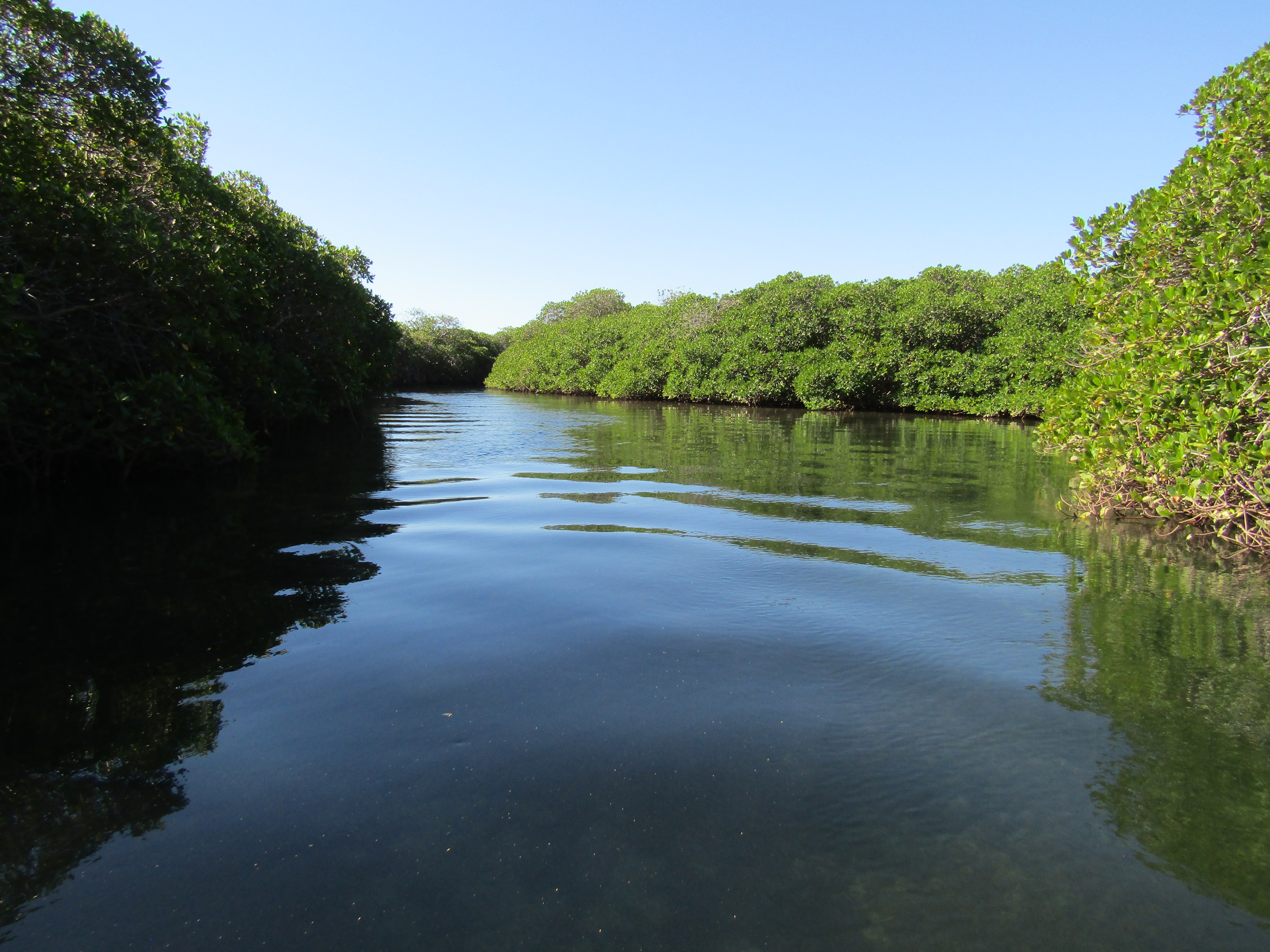
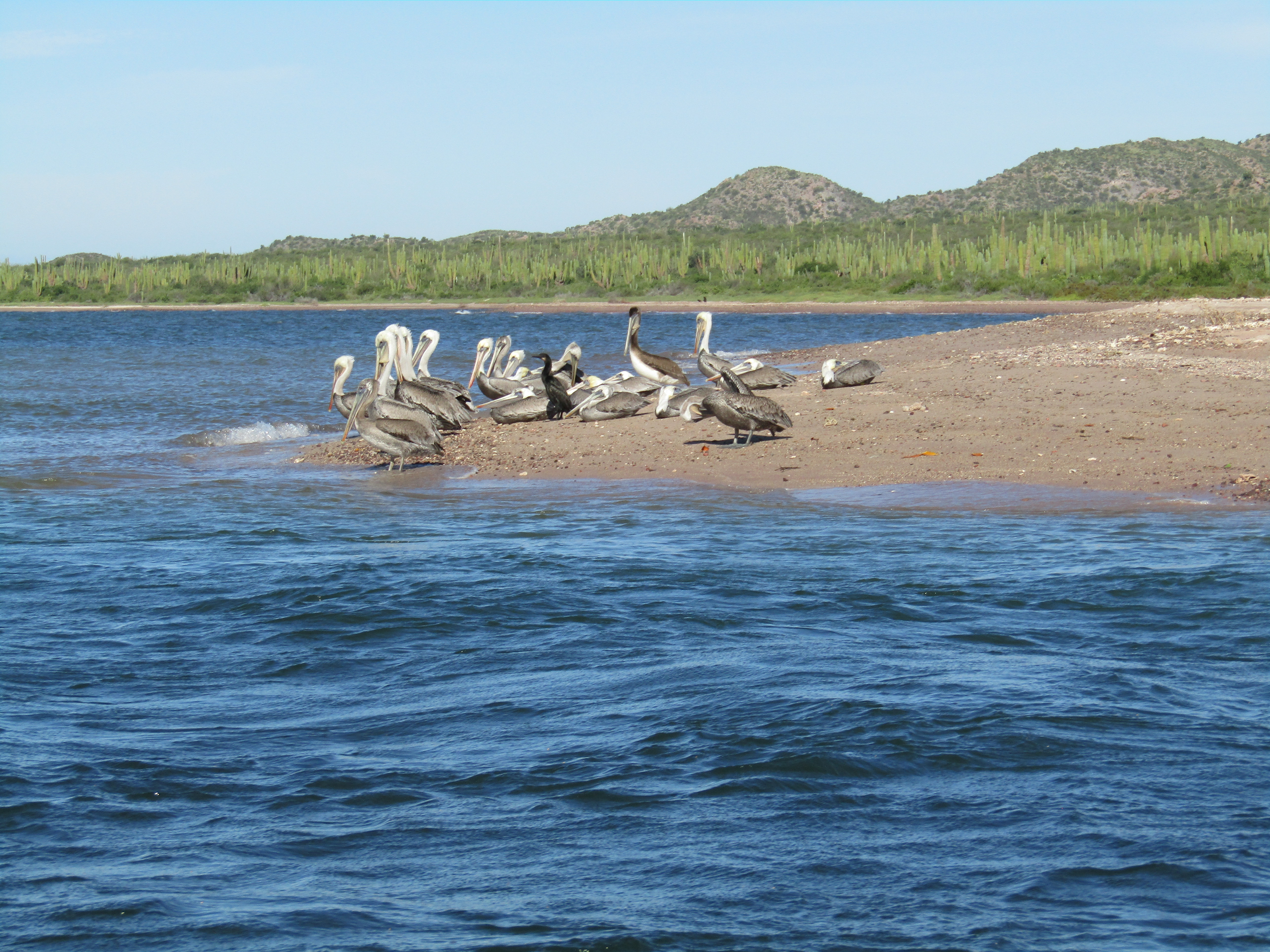
We timed our entrance for high-tide, to give us the best clearance across the sand bar outside the entrance to the lagoon. It almost wasn’t enough, and we had some high-pucker-factor moments skirting just above the sand through the flow and chop at the mouth of the lagoon. We made it in and breathed a sigh of relief, though we maintained constant vigilance at the bow of the dinghy watching for shallows.
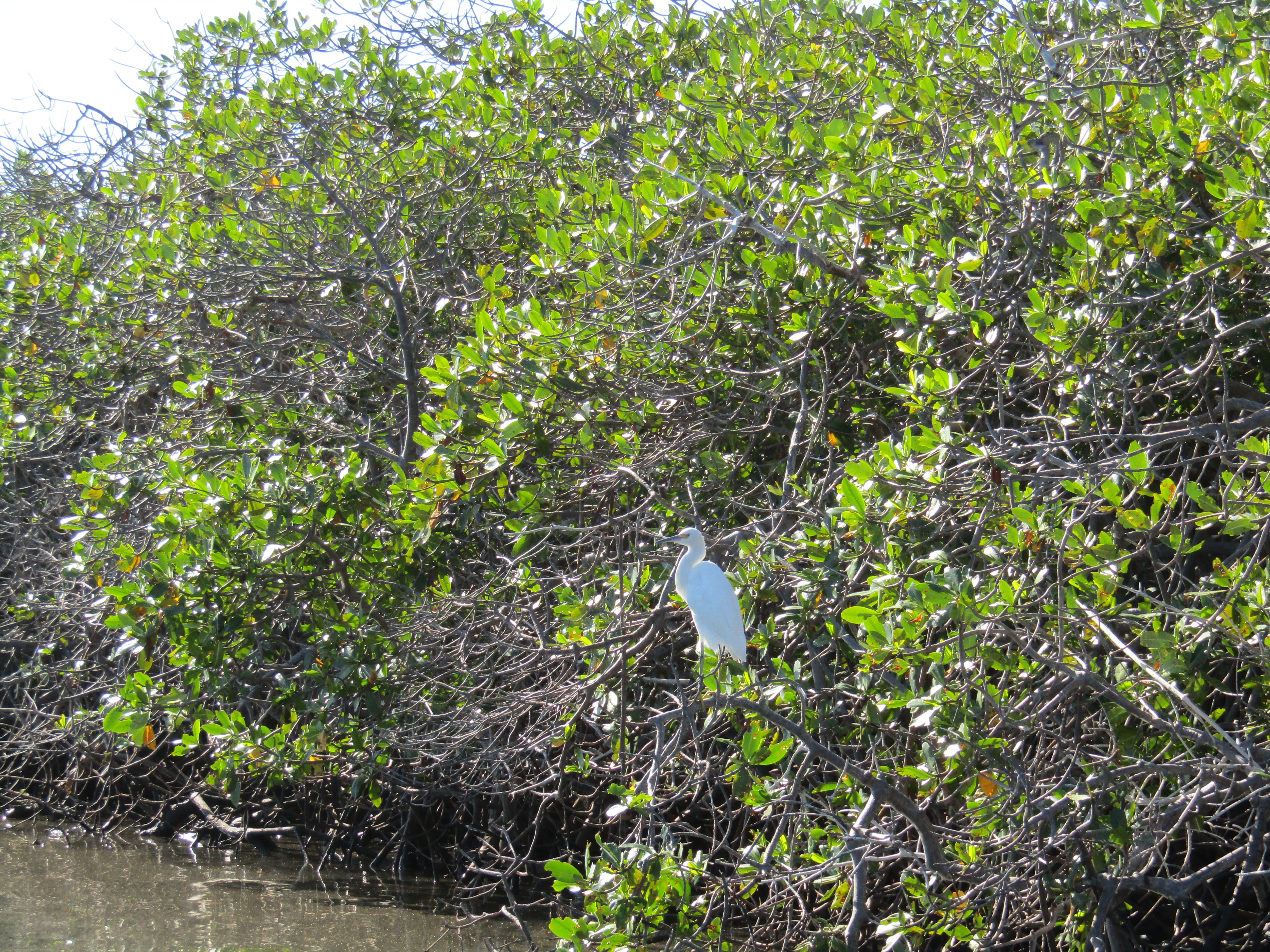
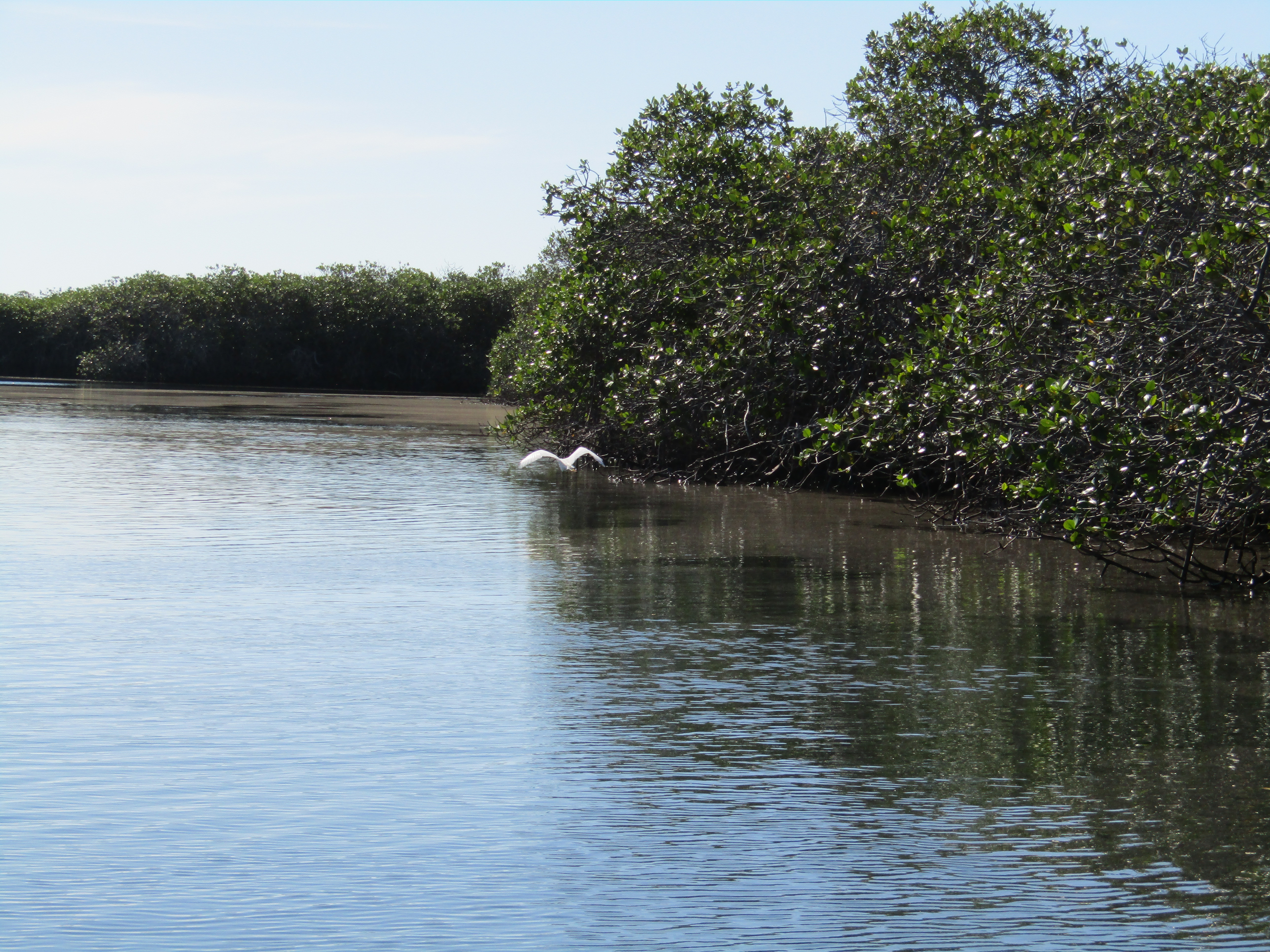
The mangroves were a different world of calm greenery. We idled through the narrow channel beyond the entrance, coming upon several great egrets perching on the mangroves above the water. Many of these birds were quite unbothered by our presence, never flying even though we passed by just feet away.
We spent about 20 minutes up in the mangroves, watching the birds and tooling through the greenery-lined waterways. We even scared up a turtle under the water and laughed at our own startlement as he zipped under the boat and into the shadows. Turning the boat around we were wiser about the deep parts of the lagoon entrance, and made it out through the chop without swamping.
Back aboard Perception, we pulled anchor and headed across the San Jose Channel to the little shoreside settlement of San Evaristo. When we arrived we were preceded in the anchorage only by our new friends on Okisollo, and had plenty of room to swing on anchor.
We dropped our hook near the north end of the bay as there was reportedly good snorkeling off the rocks there. Grace and I were in the water soon after we landed, and enjoyed chasing the fish around the rocky bottom. Visibility wasn’t spectacular due to the sandy beach, but we saw a good number and variety of fish regardless.
Once we were done snorkeling, we re-anchored Perception a bit further south in the bay to have a bit more margin between us and the rocky shore. We still had a respectable distance between us and Okisollo, not wanting to crowd them in an open anchorage. As the day wore on however, more boats began to join us, with some anchoring uncomfortably close despite having ample room elsewhere in the bay. We ended up having three boats between us by the end, redefining what we considered to be a “respectable distance”.
For dinner we decided to go ashore and try out the beachside taqueria. We hadn’t really employed our dinghy wheels yet since installing them back in San Diego. We were delightfully surprised at how easy it was to wheel the 300 lbs dinghy up onto the beach. Still a bit of a chore, but nothing like trying to slide the bottom across the sand!
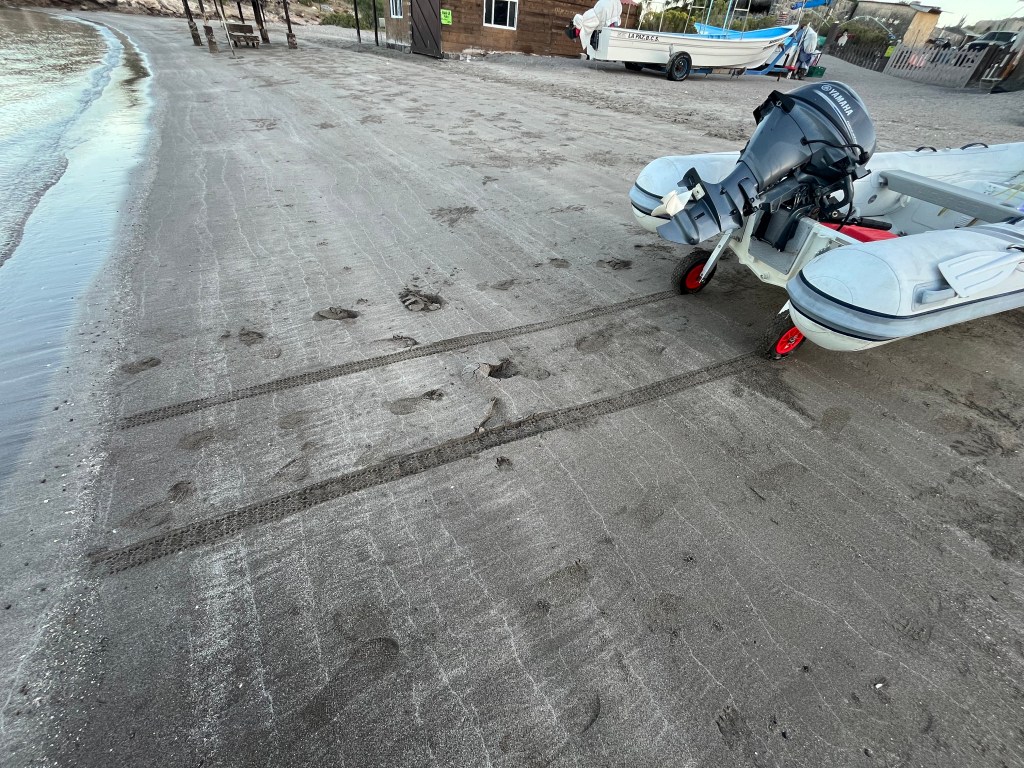
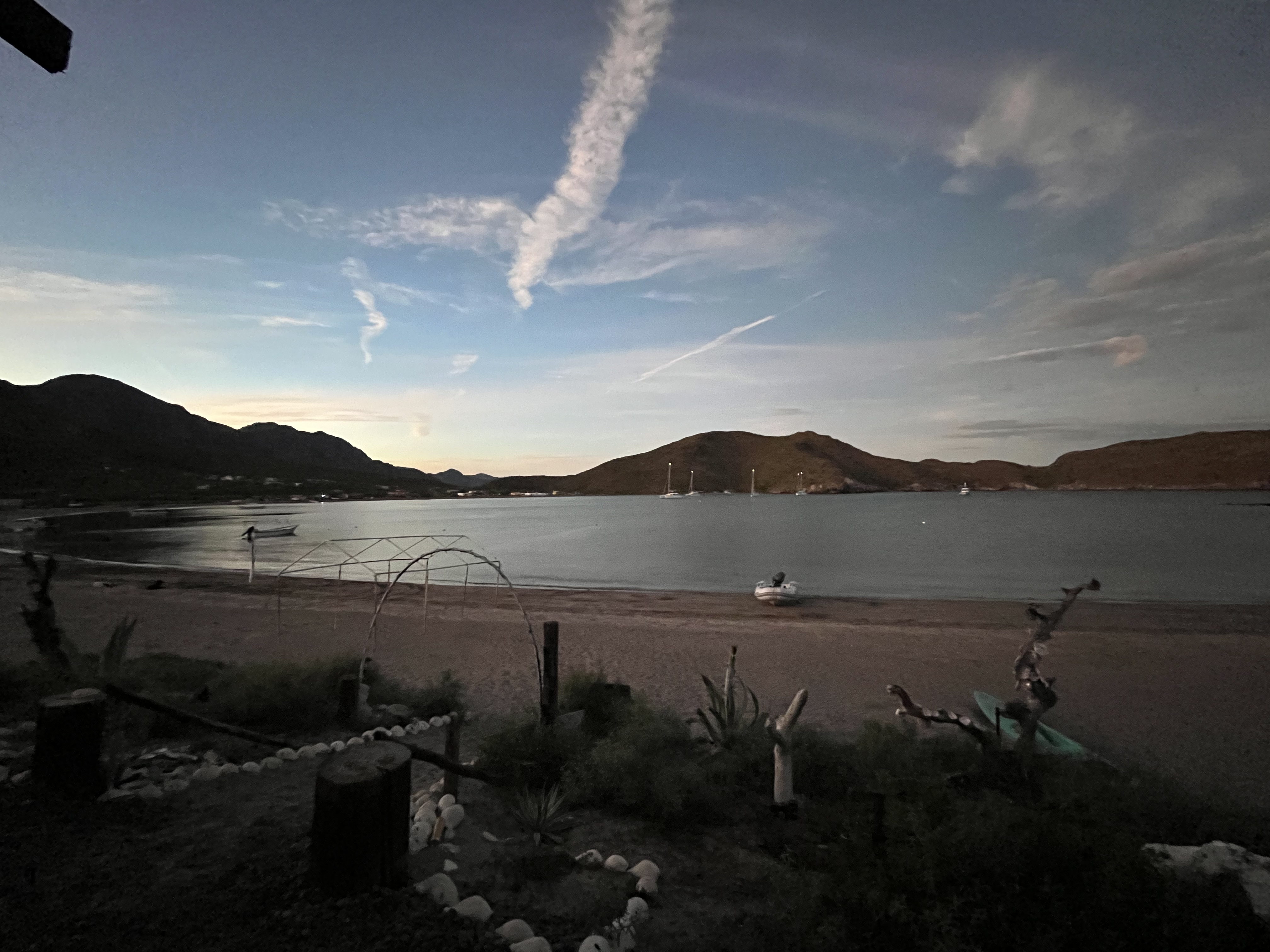
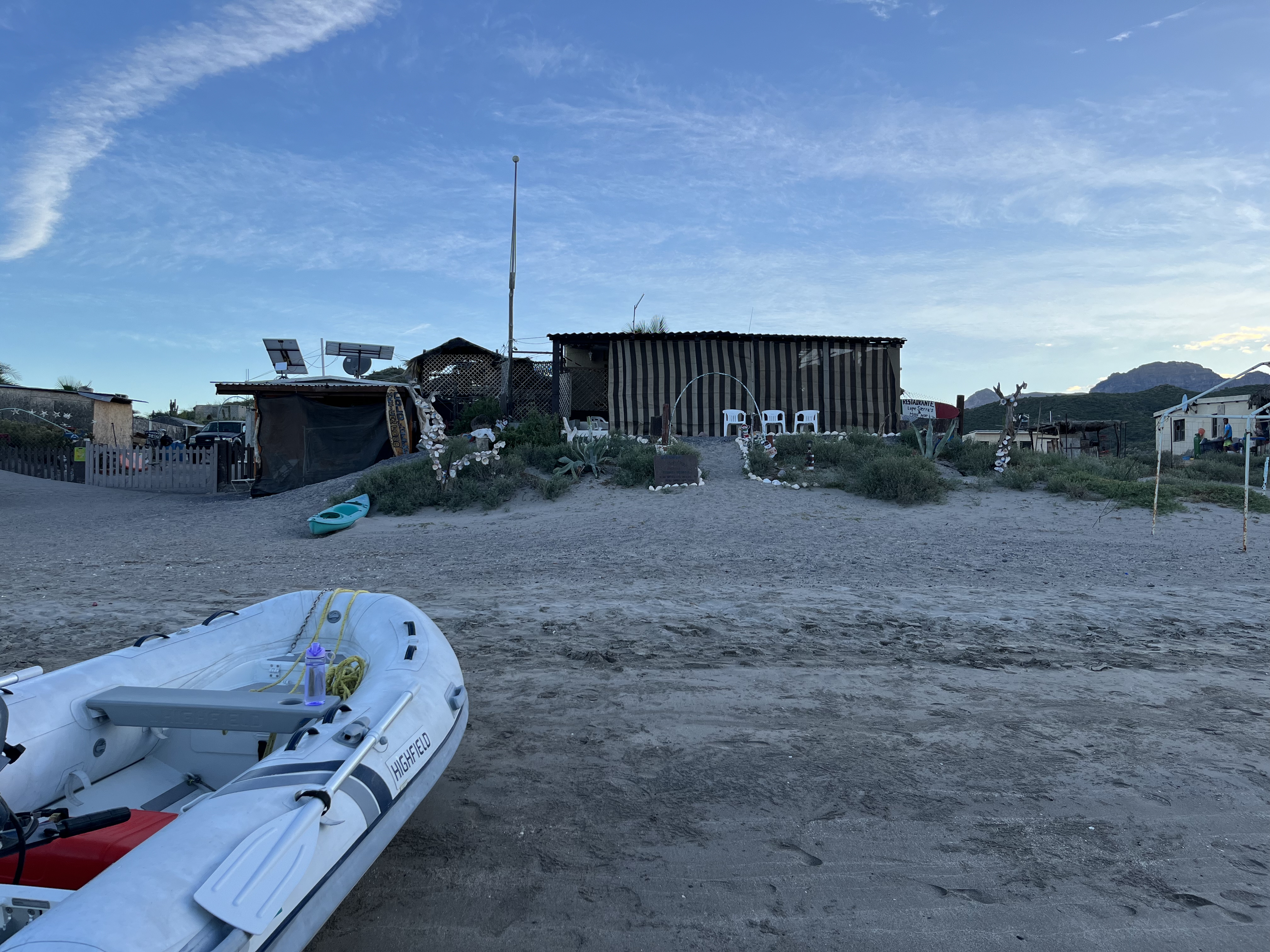
The taqueria was pleasant, and we were the only customers as the sun began to set behind us. We sat with our feet in the sand, enjoying delicious shrimp and carne tacos. The beer-averse skipper even sipped on a Pacifico to kill the germs.

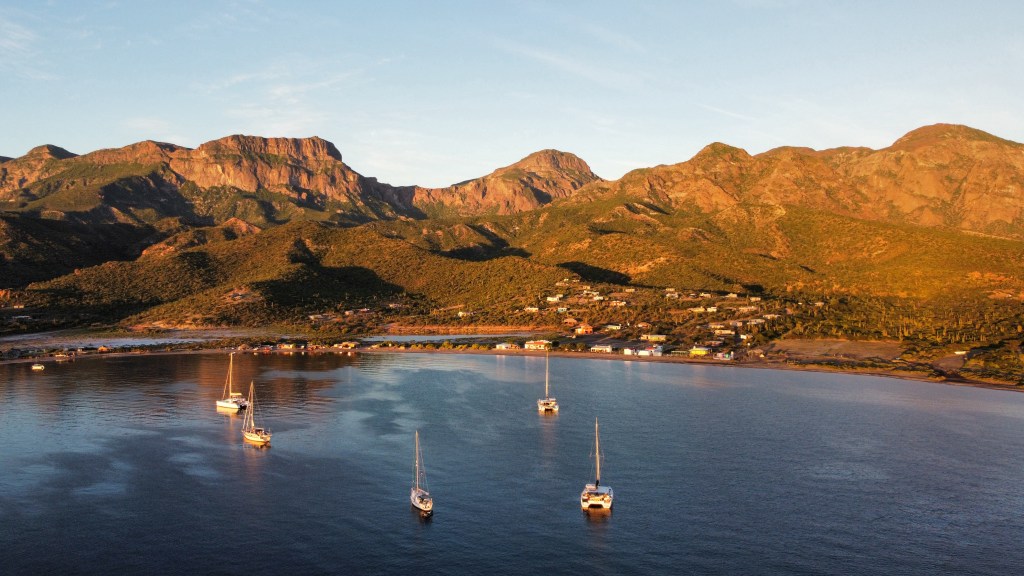
The next morning was calm and sunny, so I took some drone footage of our anchorage. In the photo, Perception is the catamaran at bottom-right, and Okisollo is the monohull on the left. One of the three boats between us had pulled anchor late in the evening, and relocated to the south side of Okisollo in the picture.
As we pulled anchor to head north, the monohull nearby us called on the VHF and expressed his apologies at having dropped his anchor too close to us. Very nice of him to acknowledge, a rarity for sure! We’re just happy the winds were light and didn’t drive us even closer together in the night.
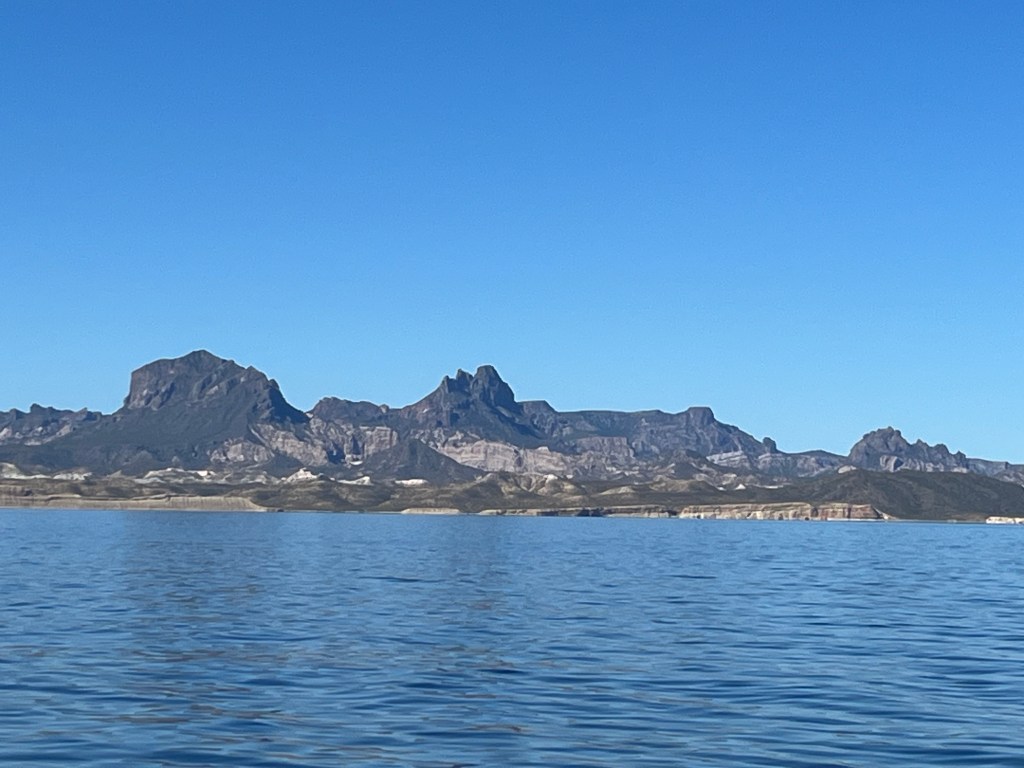
As we steamed north in very light winds, we admired the awe-inspiring Sierra de la Giganta mountain range on the Peninsula to the west. The craggy mountains loom in the background, providing hours of beautiful imagery as we slowly glide by.
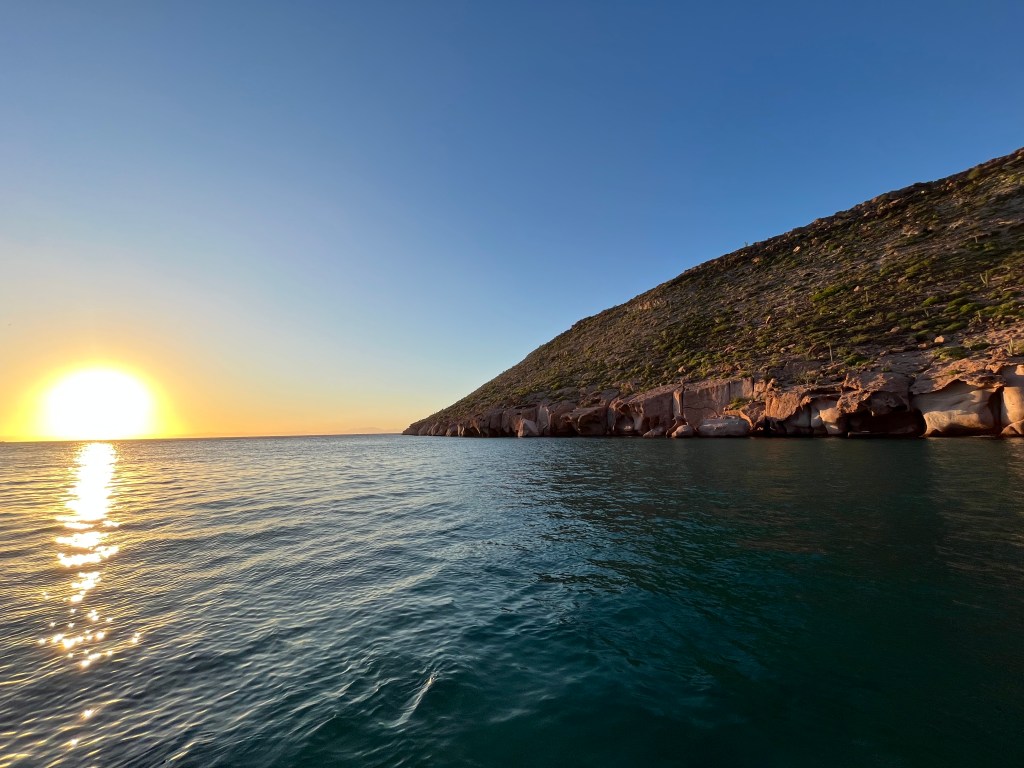
We were all looking forward to our destination for the day, Los Gatos. This small baylet on the side of the Sea of Cortez has the most striking red sandstone bluff on its north end. The wind has carved and smoothed shapes in the rock that you can freely clamber across. We spent two days in the little bay, and had a good afternoon the second day exploring and taking photos ashore.
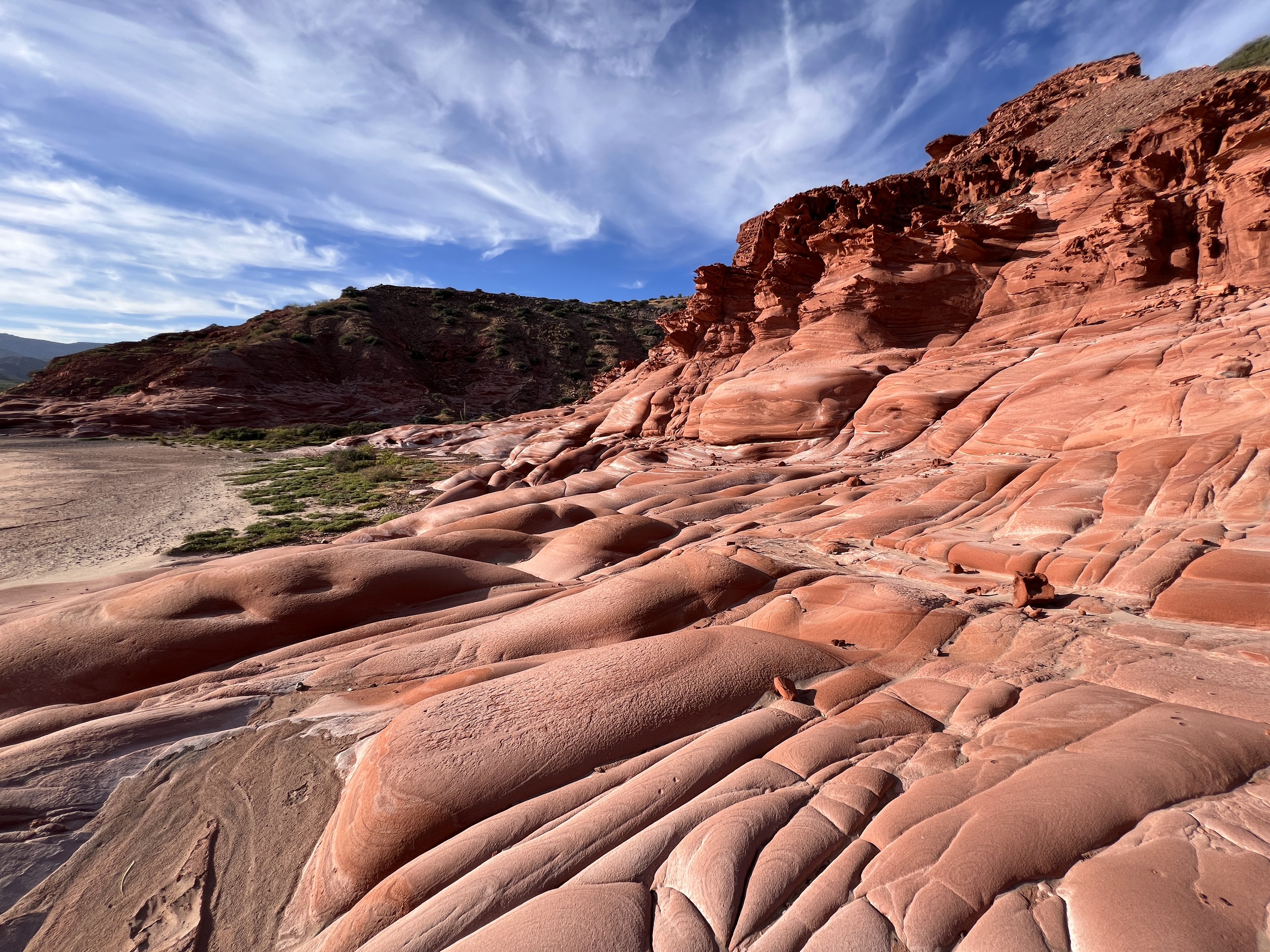
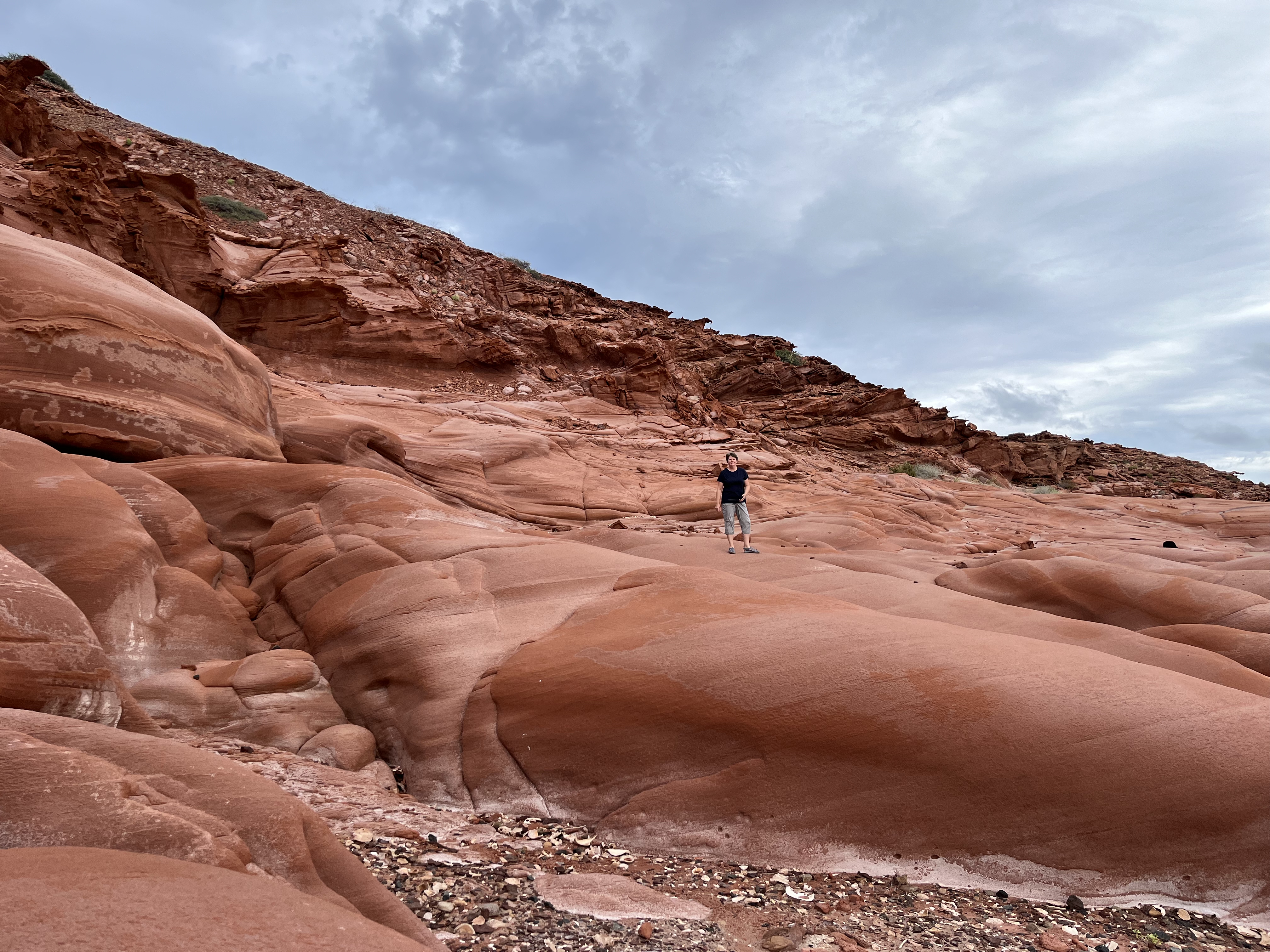
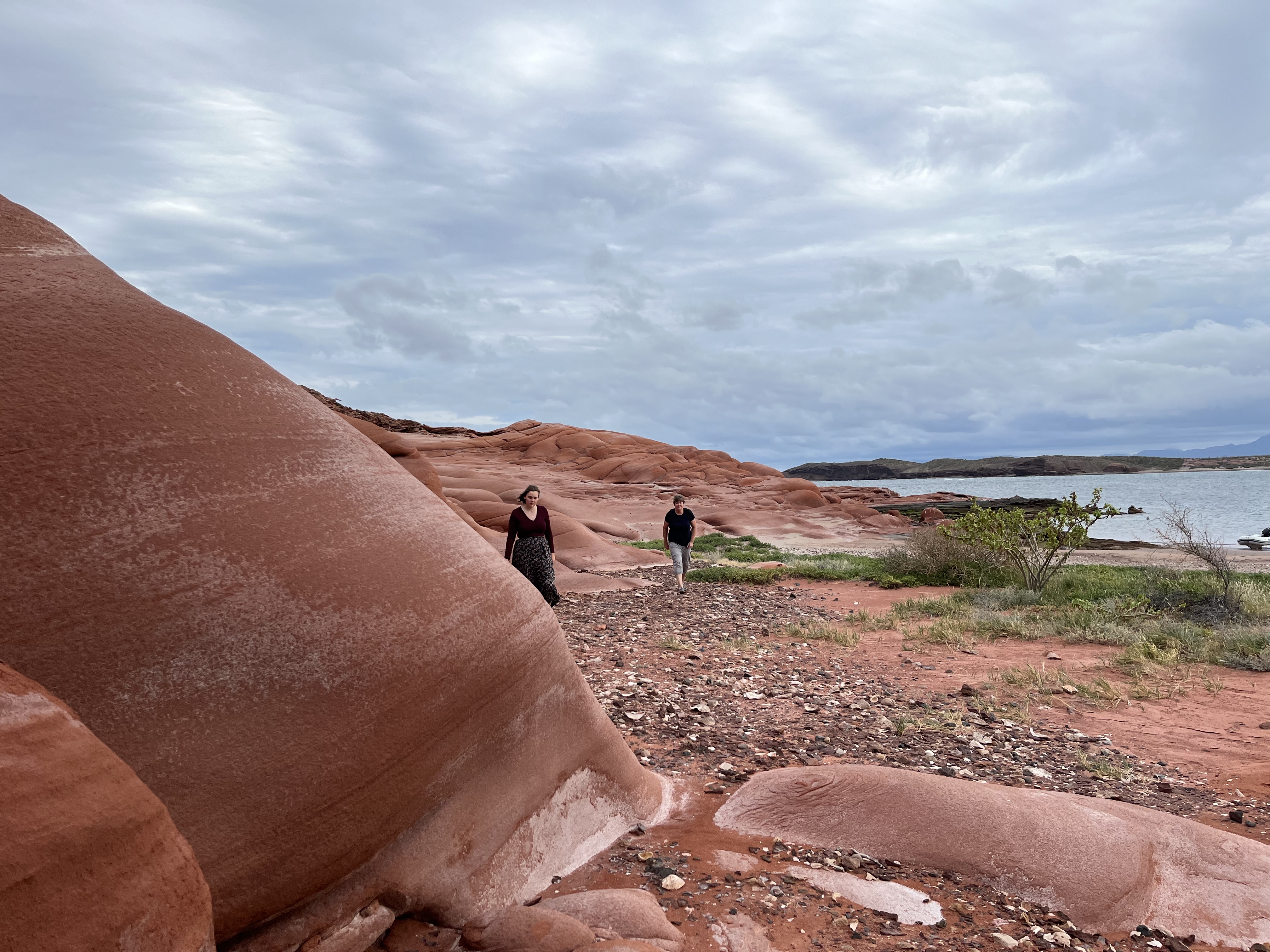
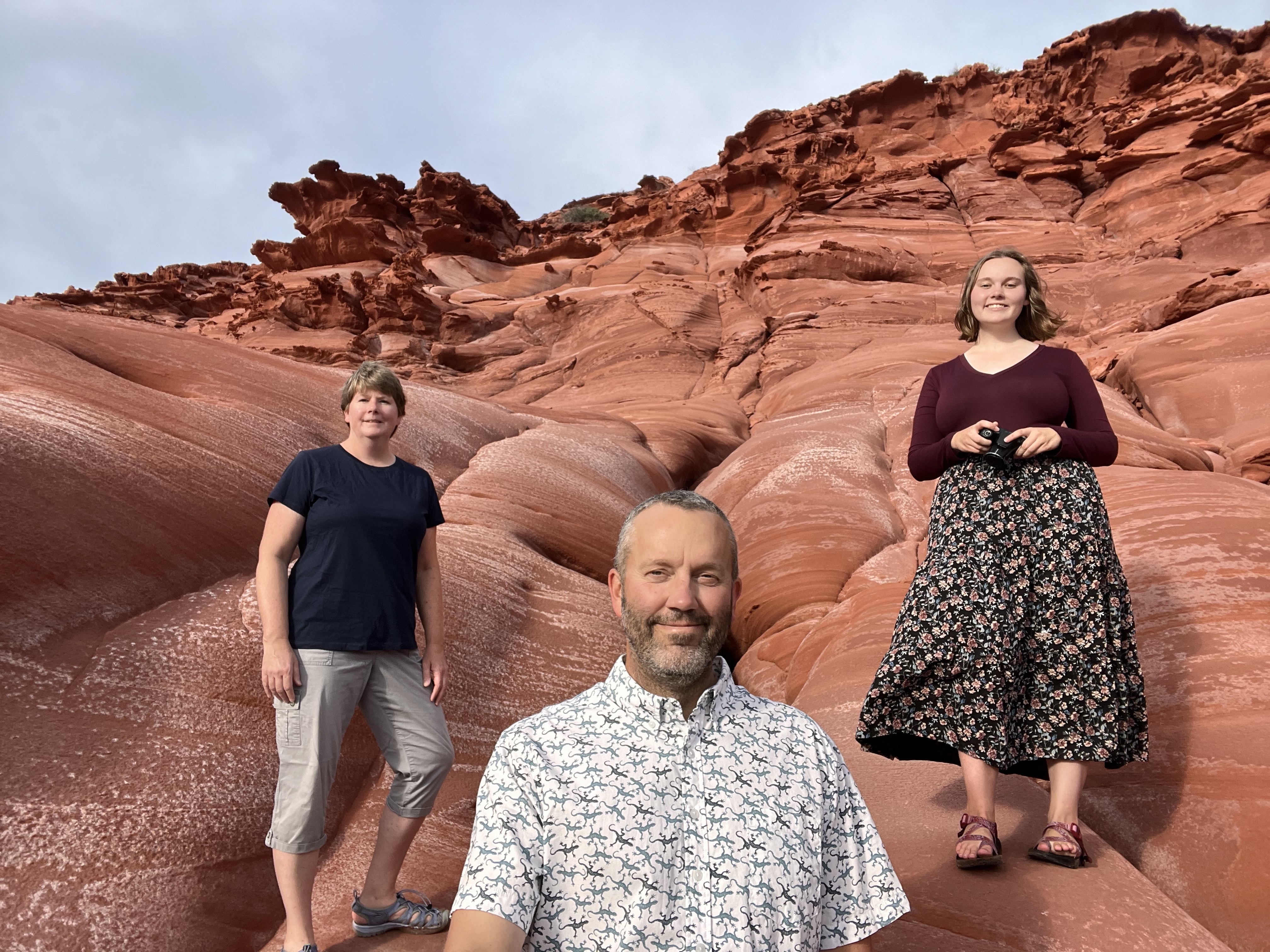
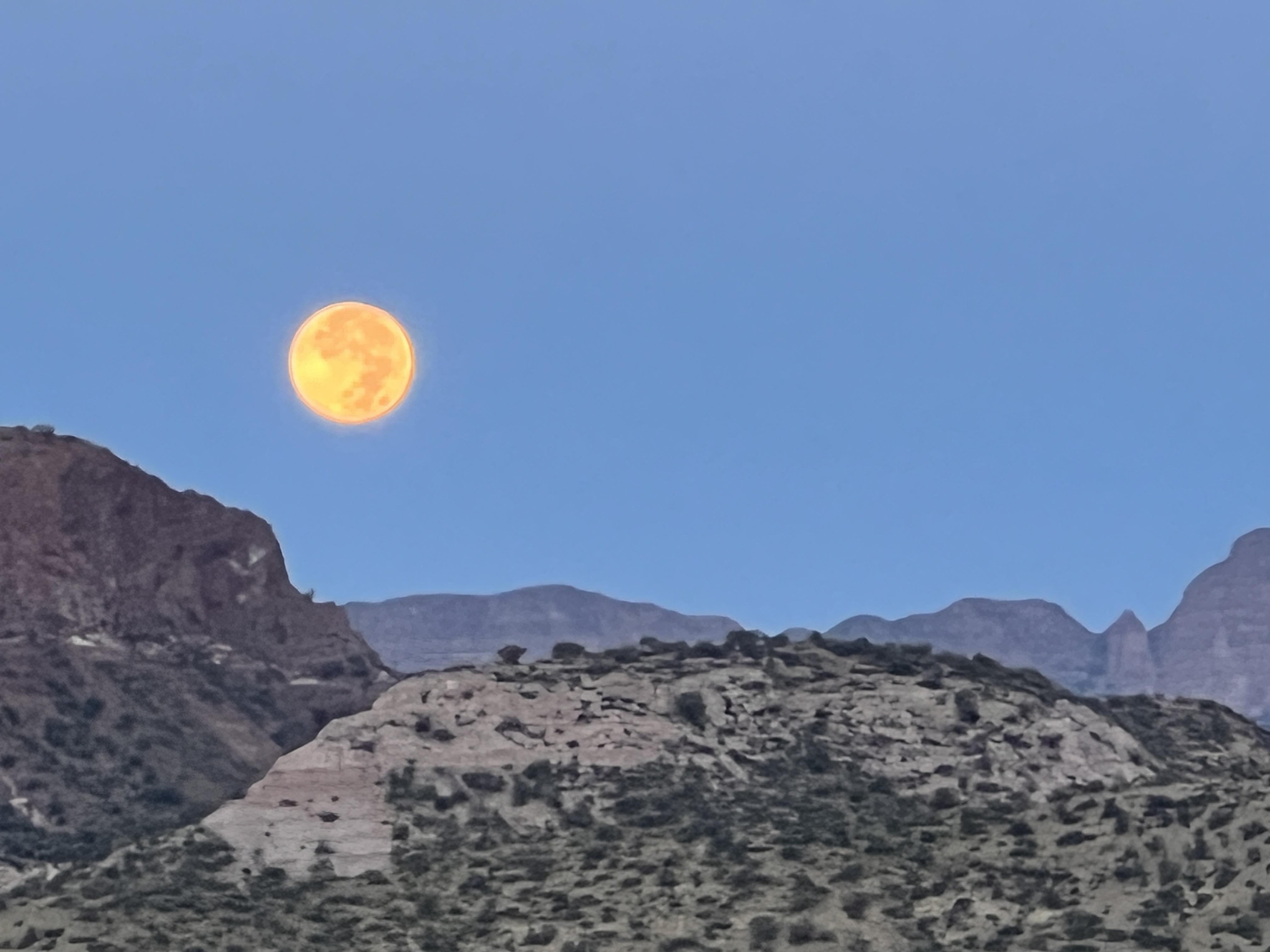
Our second day in Los Gatos was inspired by the weather. The north wind was blowing again, not too severe, but enough to give us pause. Okisollo had joined us in the bay again for the first night, and had decided to head north the next day regardless of the weather. Watching them buck against the chop northward as they left the bay cemented our decision – we’d had enough pounding!
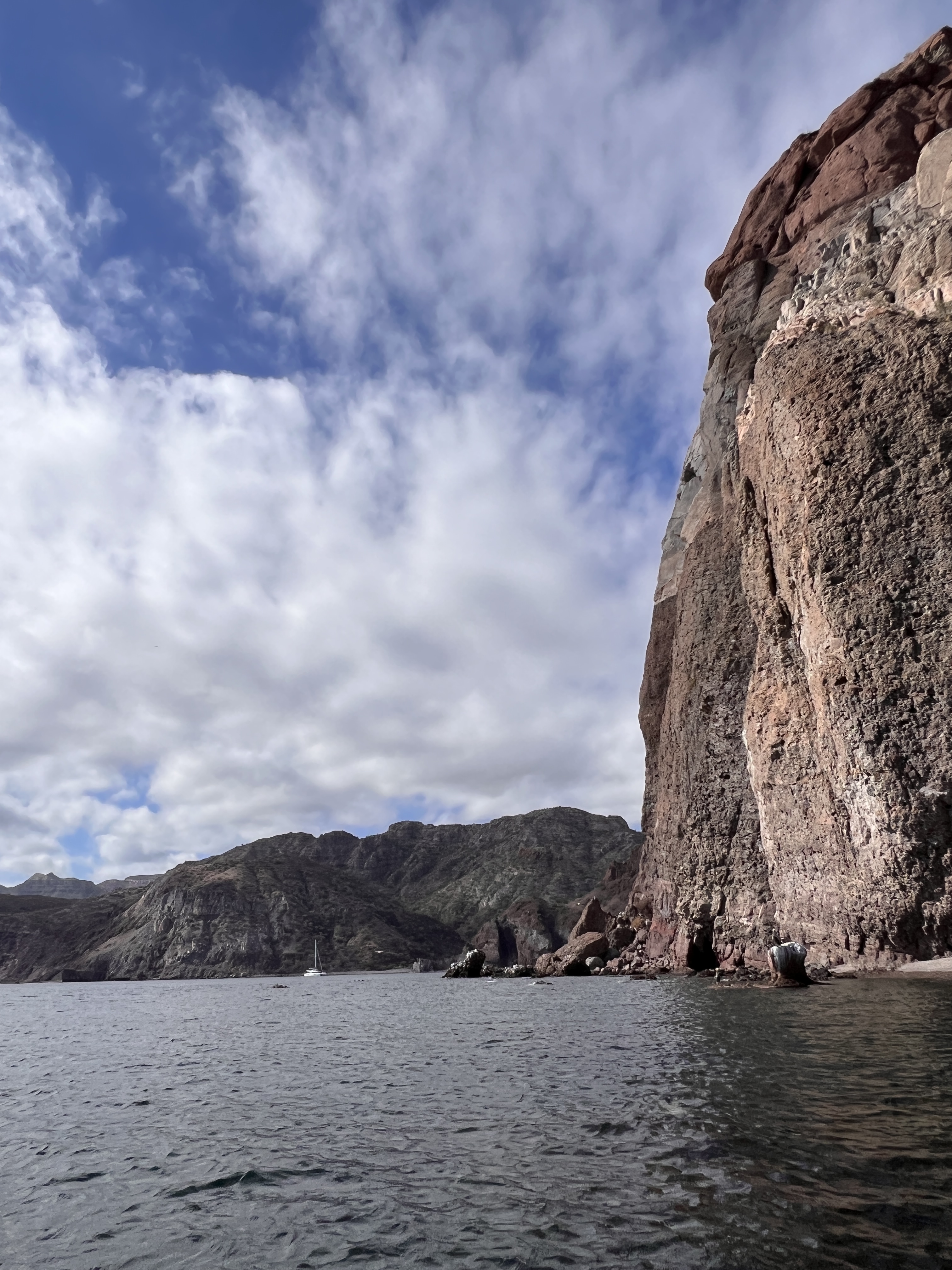
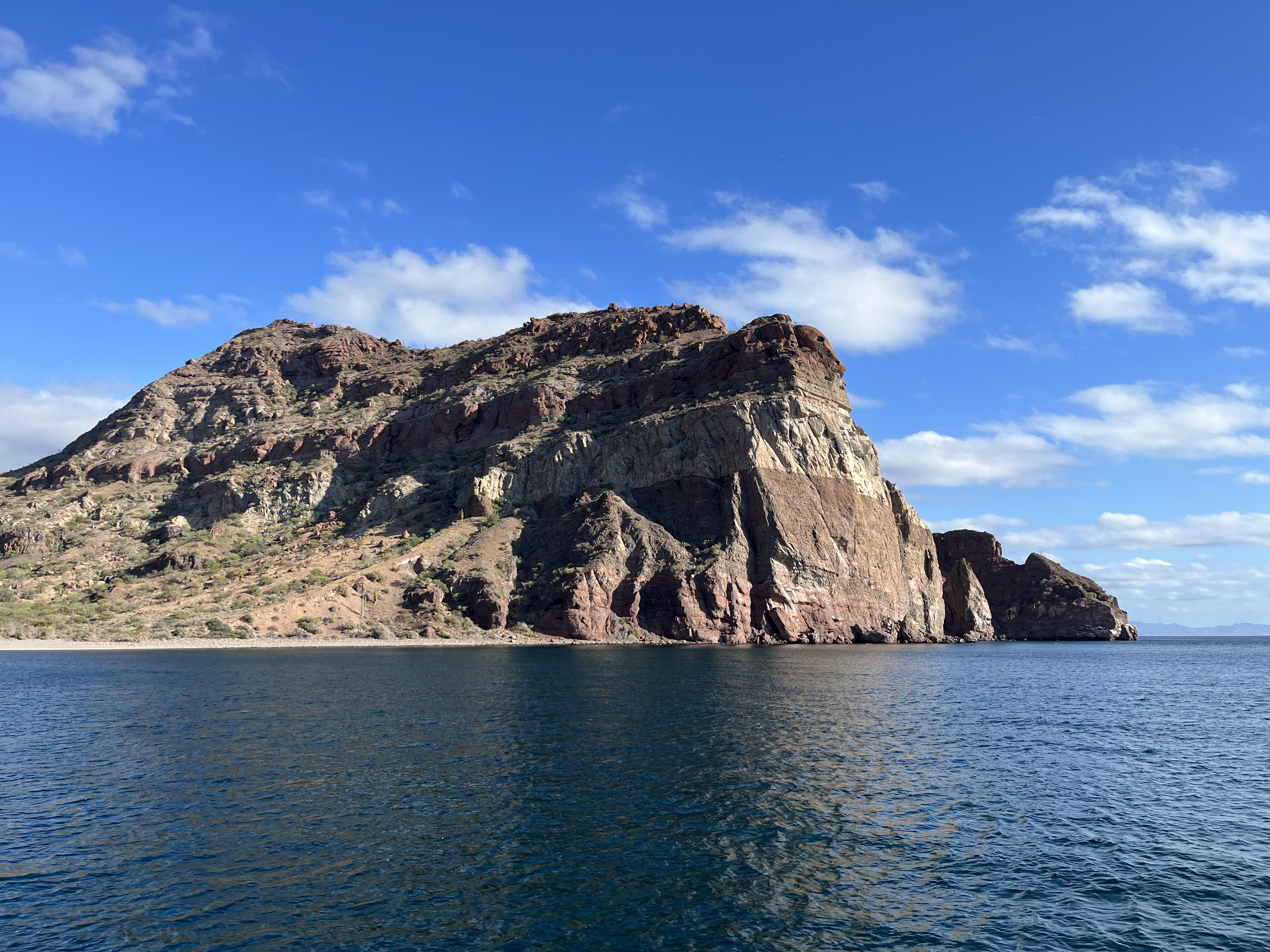
The next day offered much kinder conditions, with the north wind dying down and resulting sea state lying much flatter than the prior day. We headed north towards Bahia San Marcial, with a lunch stop planned for Bahia Berrendo. We were now beyond the limit of our 2020 charter journey, and in unknown waters once again.
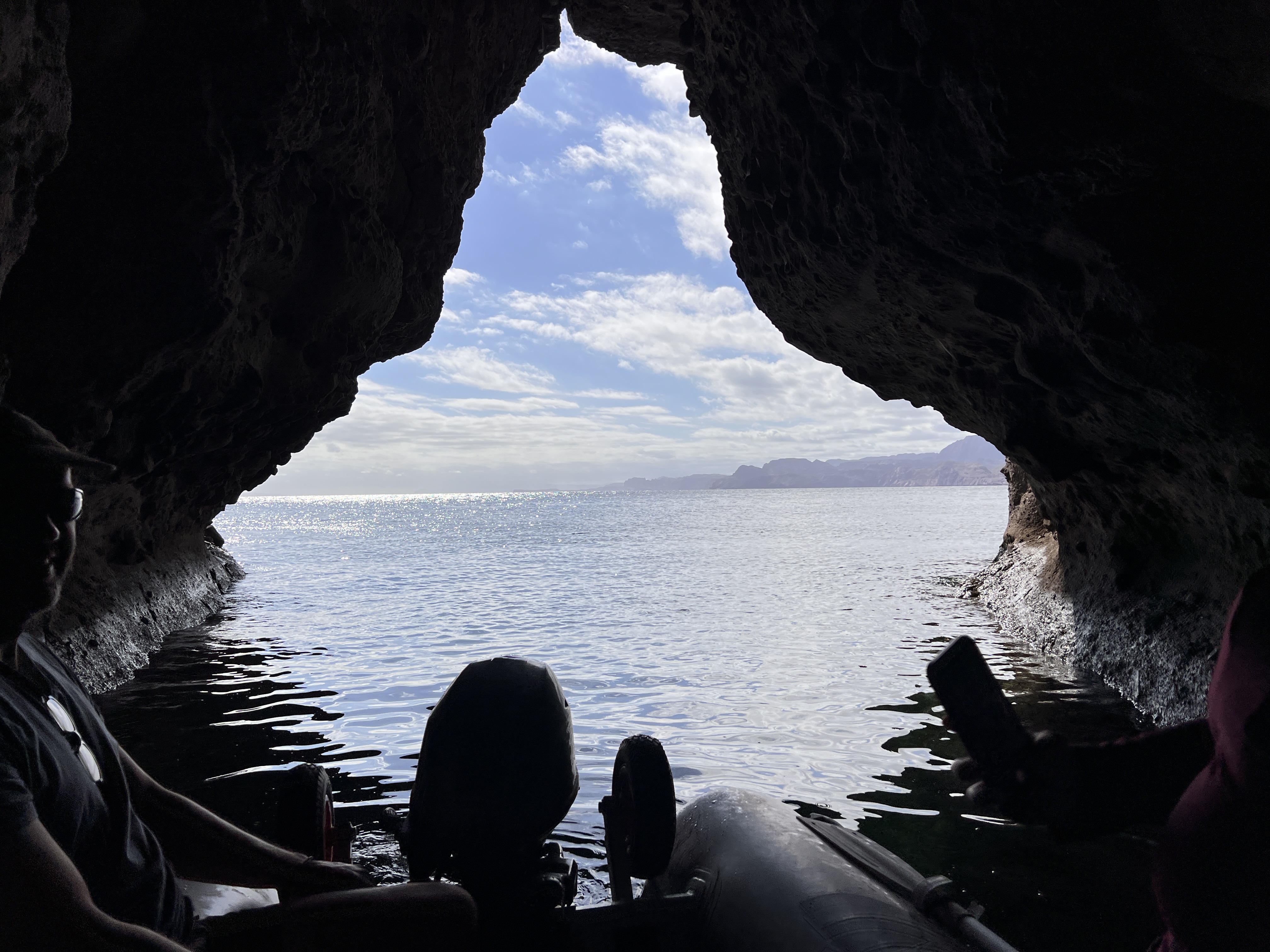
The lunch stop was spectacular, with a huge cliff looming above the anchorage and a tidal cave at its base. The cave was the objective for the stop – we launched our dinghy and stuck our noses (and more) into the narrow entrance of the cave. Fortunately the swell wave very light that day, and we had little risk of being dashed against the rocks inside. Definitely a test for claustrophobia if there ever was one!
We finished our sail up to Bahia San Marcial, finding the prime spots in the anchorage to be already occupied. We anchored a bit farther out from the point, where we would be more exposed to swell wrapping around, but found it to be just fine.
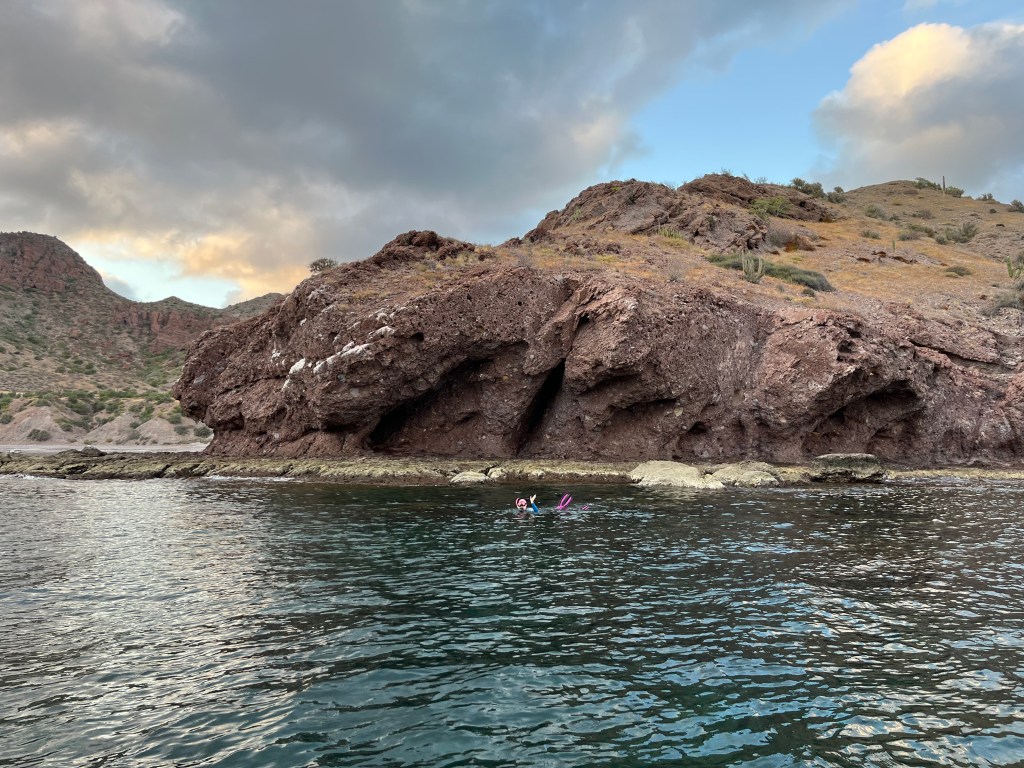
Grace and I piled into the dinghy in the late afternoon. Grace wanted to snorkel the reef that extends southeast from the point, so I motored her out there and she dumped into the water. The reef was pretty deep, even though it was marked as a navigational hazard, and was hard to see due to the failing light. She swam inland, chasing fish around the rocks at the point before getting back aboard.
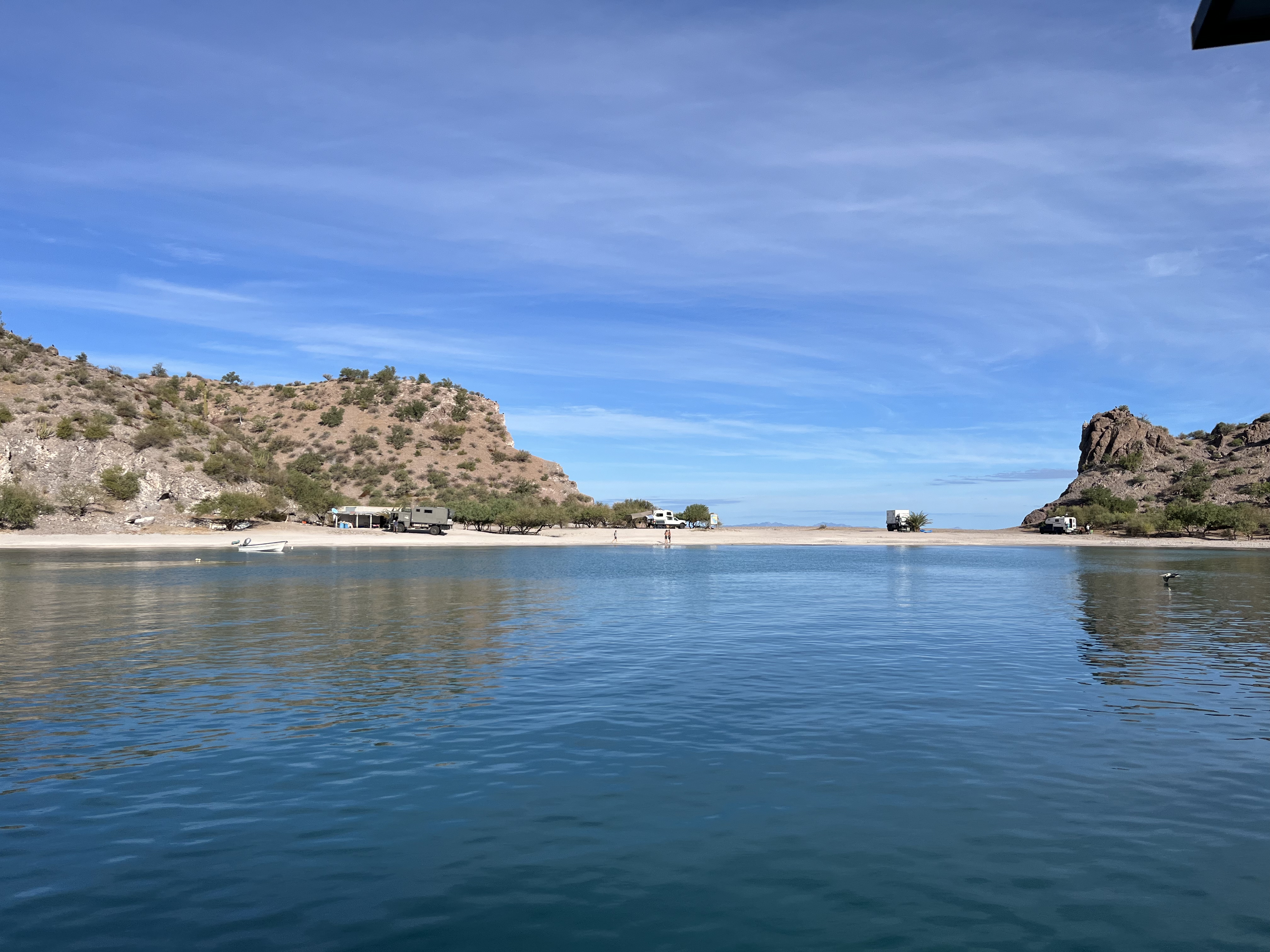
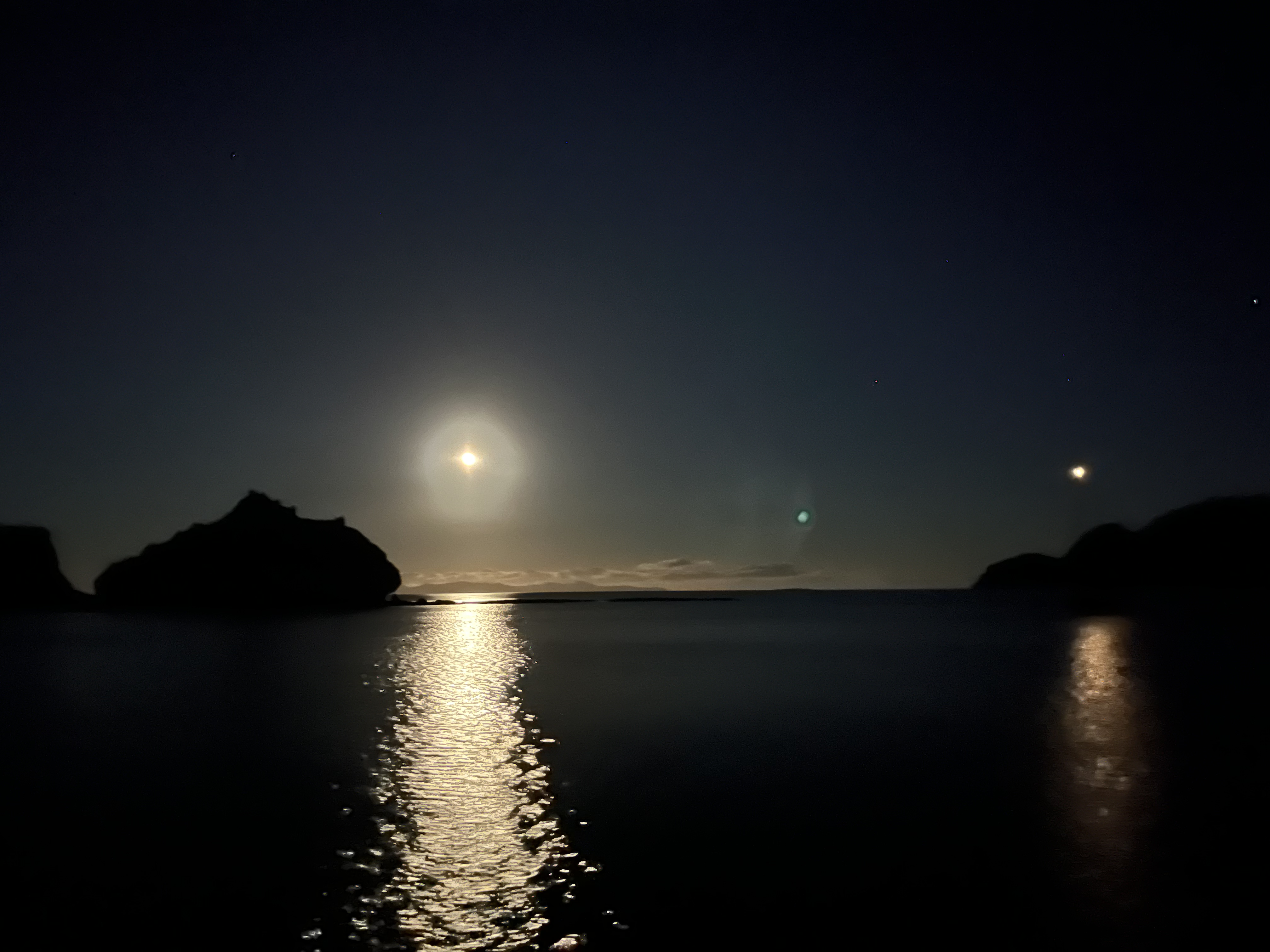
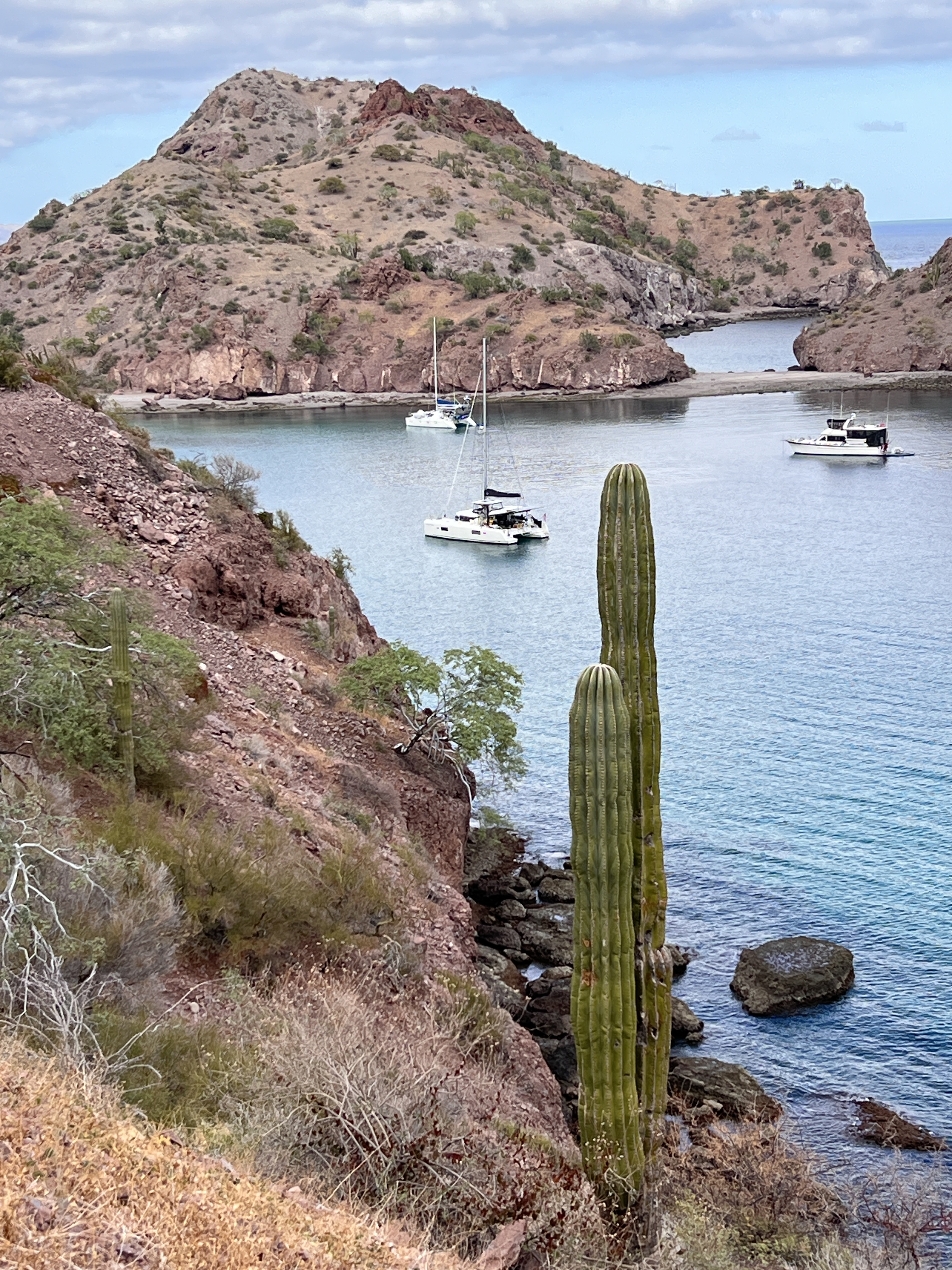
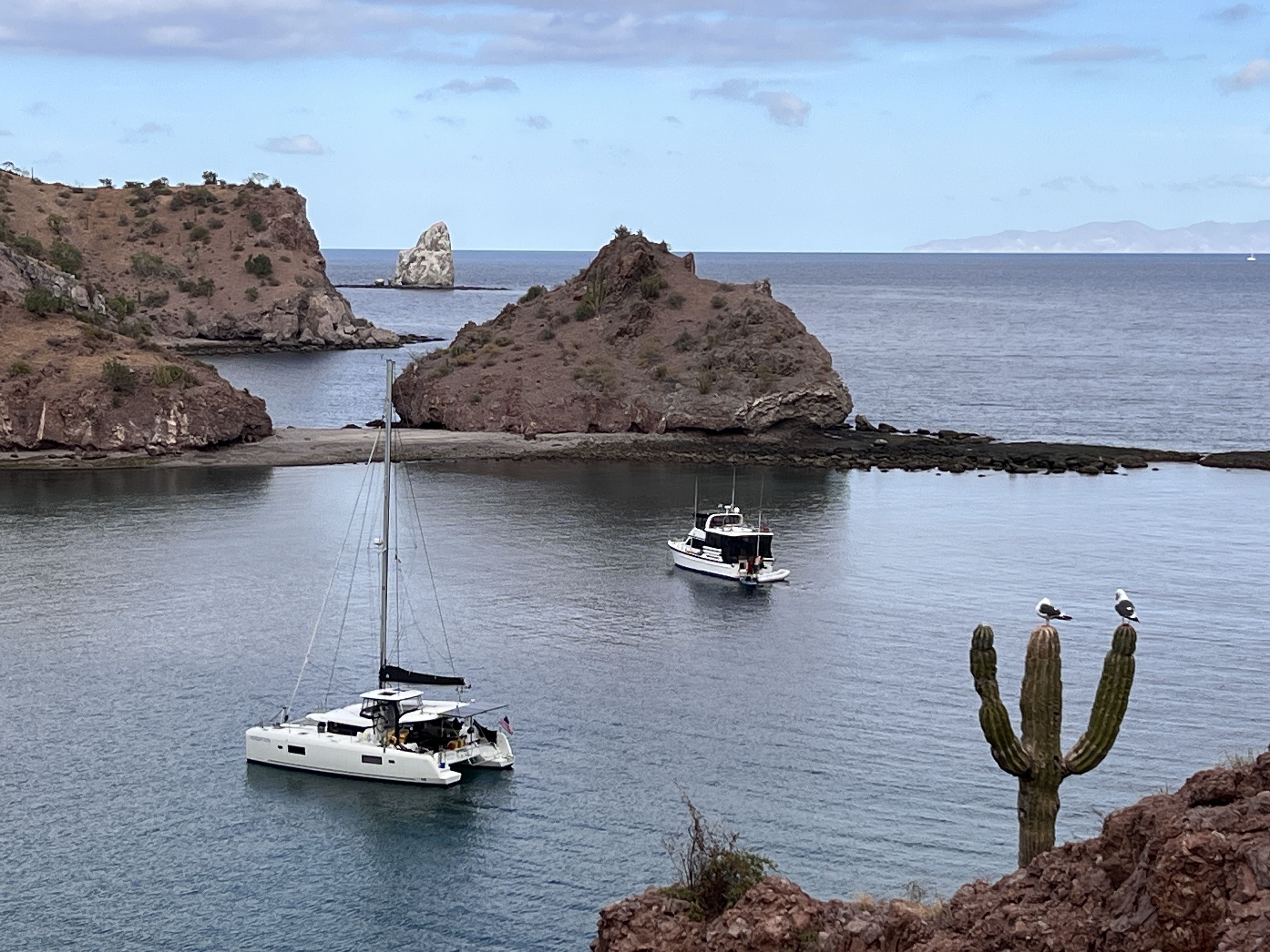
Tuesday morning after a calm night we pulled anchor and headed around the point to Agua Verde. This was originally the stretch-goal destination for our charter back in 2020, but we didn’t get here due to the distance. I was eager to see the place as it has been played up so much by cruisers who visit, and in my mind when planning for our charter those years ago.
As we neared the anchorage, we traded messages with Okisollo, who had arrived there a couple days ahead of us. They let us know that a spot had opened up between them and the shore, the prime spot to be out of the northern swell. We cruised in past them and dropped our hook in 20′ of water over sand, with the shore just out of range of our anchor scope. I wouldn’t have had the chutzpah to take that spot without Okisollo having blessed it before hand!
We were just off the beach where a collective of RV campers were set up. It was interesting watching their daily routines as compared to life on a boat. Some of the RVs were set up like military vehicles, and were presumably from the US. We particularly enjoyed watching these vehicles climb the narrow, rocky road out of the campground as the would leave.
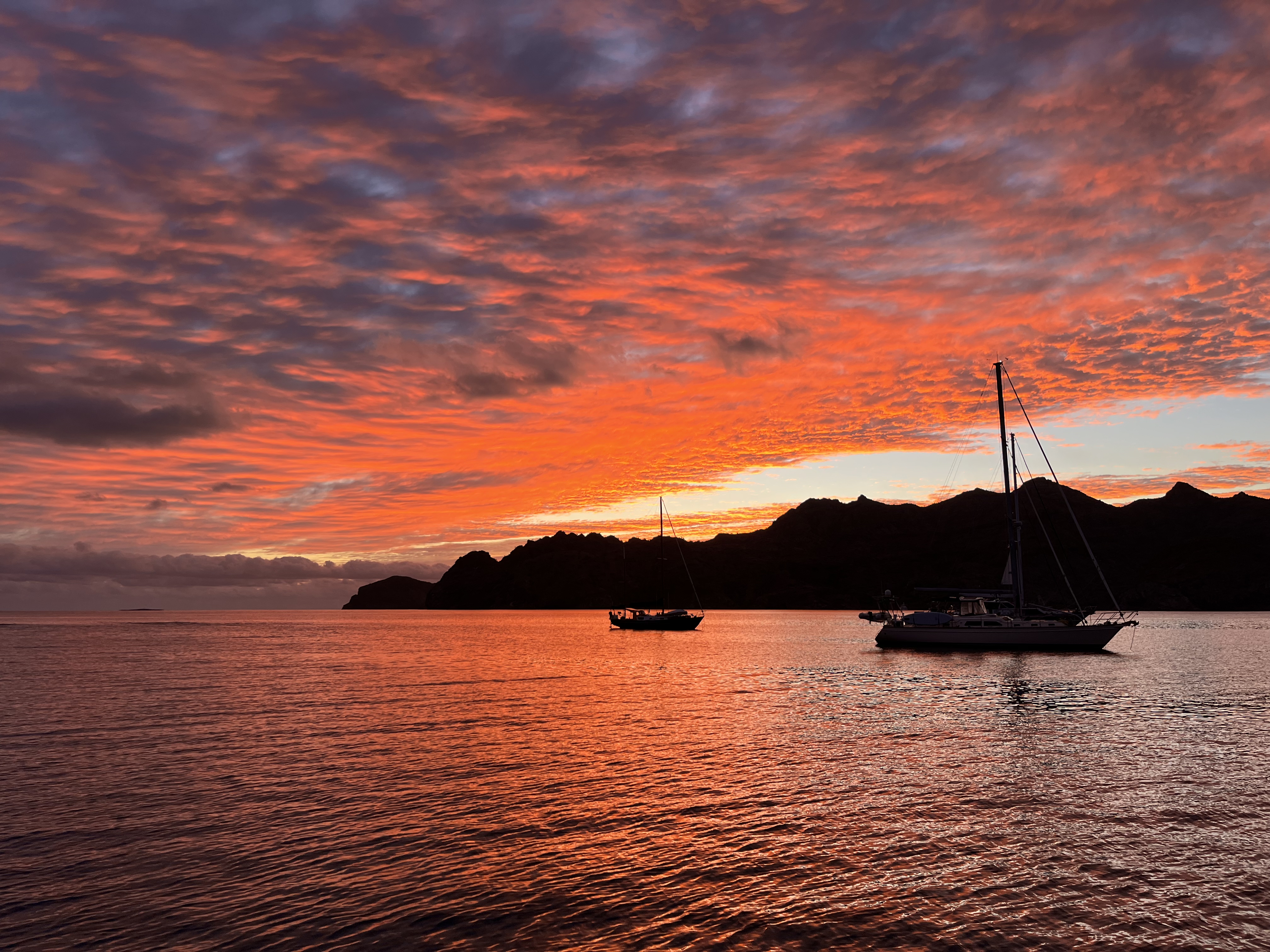
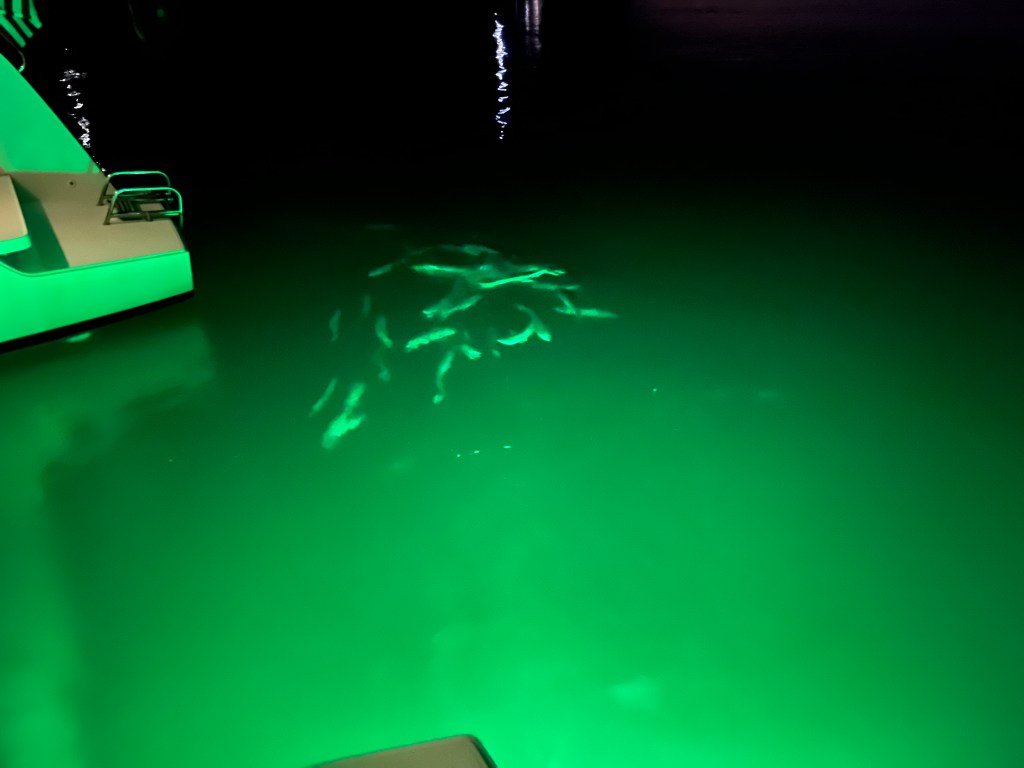
It was Perception’s turn to host sundowners with Okisollo, so we had Dan and Jeanne over for evening drinks. We threw our green LED fish light into the water and watched the swirl of fish that it attracted swim circles under the boat. It was a pleasant evening with friends, discussing our histories and hopes for what lay ahead.
On Wednesday we decided to practice our amphibious invasion skills by visiting a nearby prehistoric site. It was rumored that just north of Agua Verde was a site where you could see hand prints in a cave overlooking the Sea of Cortez. We found this site conveniently marked on our Navionics charts by a community member – nice to be able to use the application for both sea and land navigation!
Since we our boat-bodies were not conditioned to multi-mile hikes in the desert heat, we took the dinghy out around the western point of the bay and up the coast to the point marked on our charts. The surf didn’t look terrible, but was still significantly higher than we’d yet attempted a dinghy landing. We approached the beach at a right angle, bow first and dinghy wheels lowered. Melinda leapt from the bow like a gazelle with the painter, and immediately went down to her waist in the water. The following surf crashed over the stern of the dinghy, swamping it with water. Grace and I slopped out alongside Melinda and we all pulled the soggy mess that was the Perception landing party up onto the beach.
We drained the dinghy, and assessed our situation. We were all wet, some more than others, but were whole and still determined to push forward. The wetness would help keep us cool in the desert heat, right? After securing the dinghy and gathering our shore gear, we trudged up towards the dunes above the beach.
We could see the cliff and the shadows of what must be the cave entrance above us. After a few failed attempts we managed to find the clear path through the spiky shrubs growing on the dunes up to the ridge-line with the cave. We found a good trail at the ridge leading upwards, parallel to the shore. The first part of the ridge hike was easy as it marched along the relatively gentle slope on the back side of the ridge. The trail then crossed over to the front, which was much steeper. This gave those of us with height sensitivity some pause, but we pressed on nonetheless.
Reaching the mouth of the cave required some scrabbling over areas where a fall could be catastrophic, so we approached with great care. The cave mouth provided a glorious view of the Sea of Cortez in front of us. The mouth divided into two separate entrances into the shallow cave behind, and in the center was a space covered with red handprints. Grace really enjoyed this archeological visit, and scoured the cave to see if she could find any stone tool remnants.
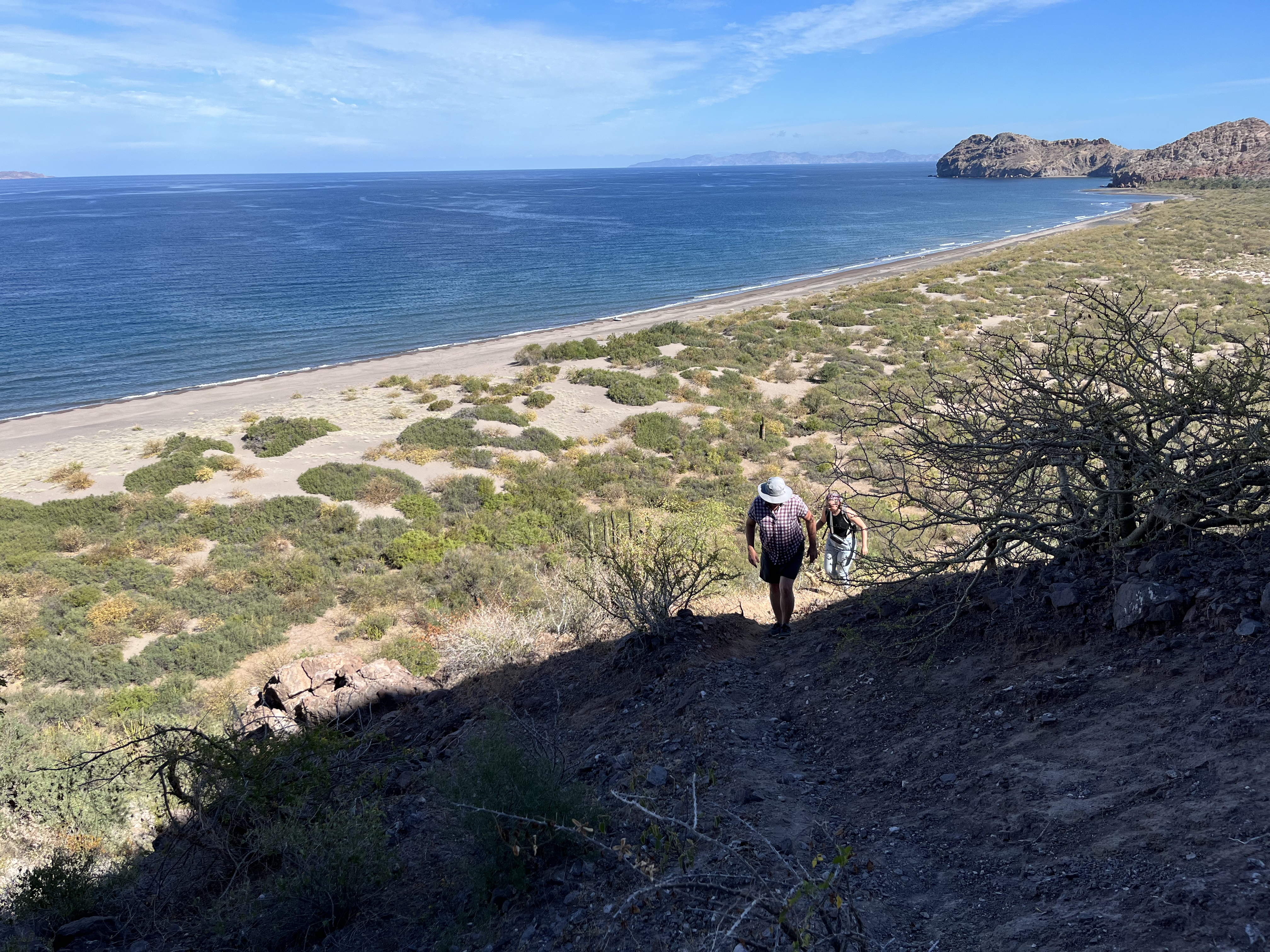
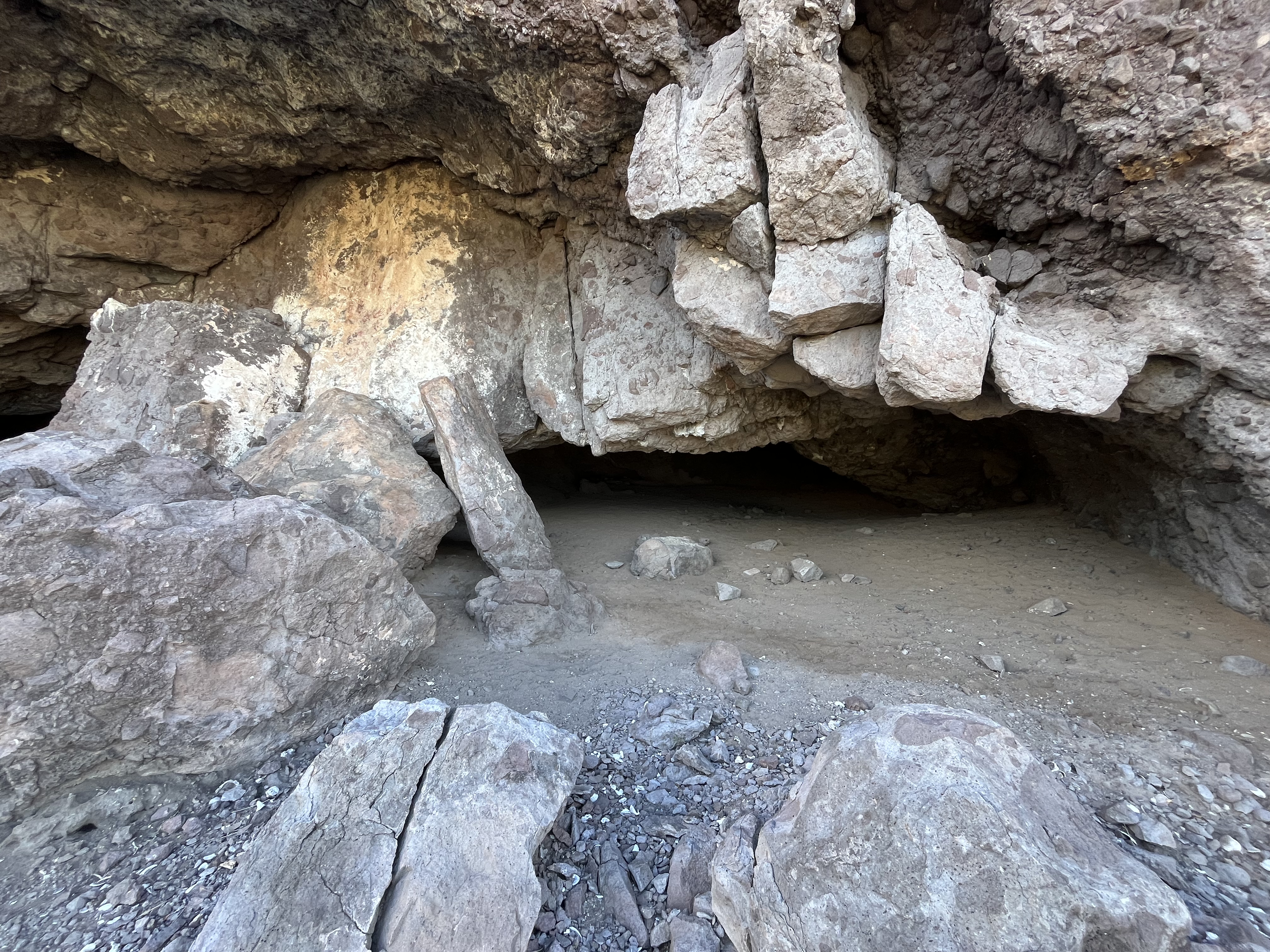
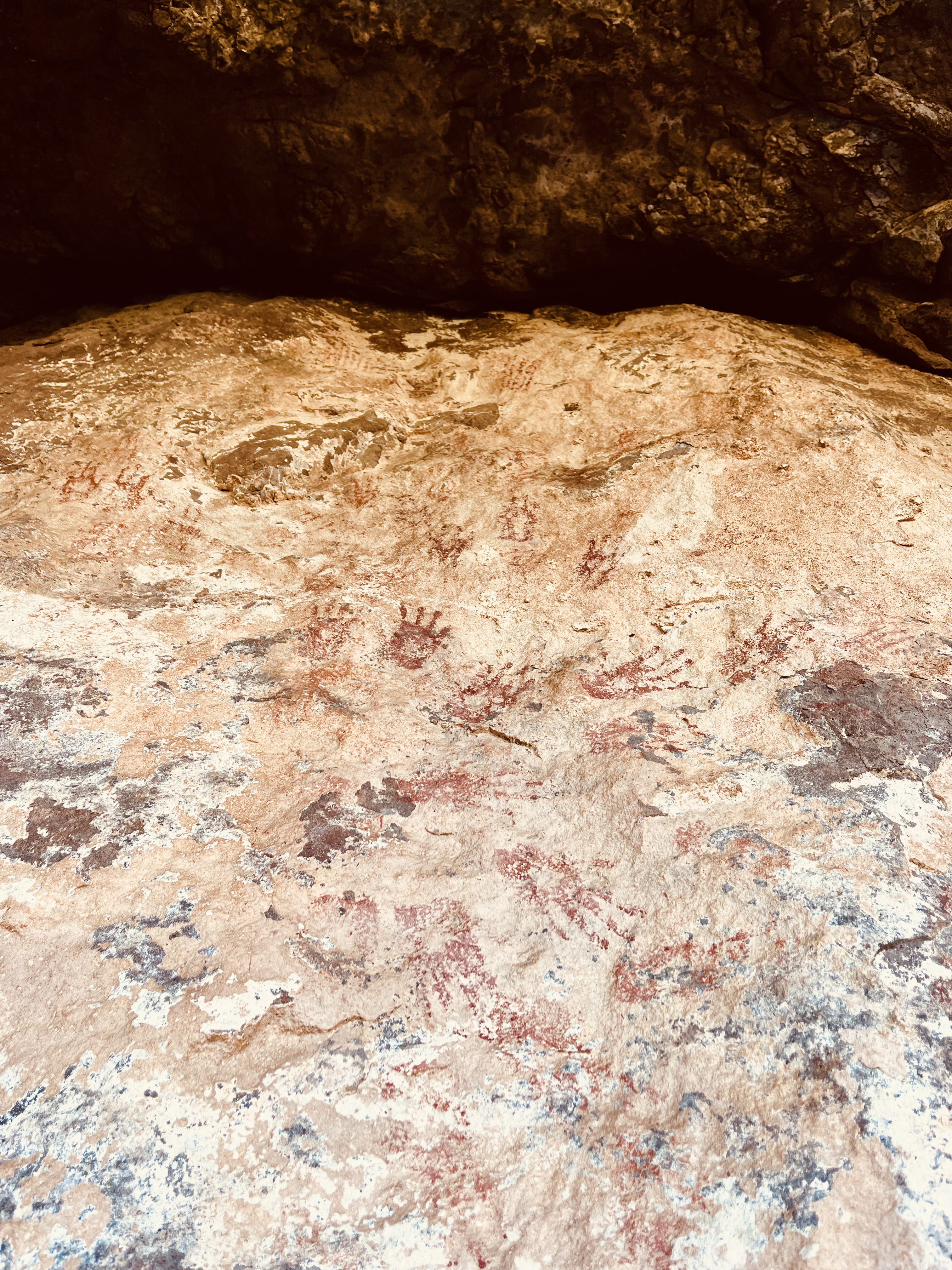
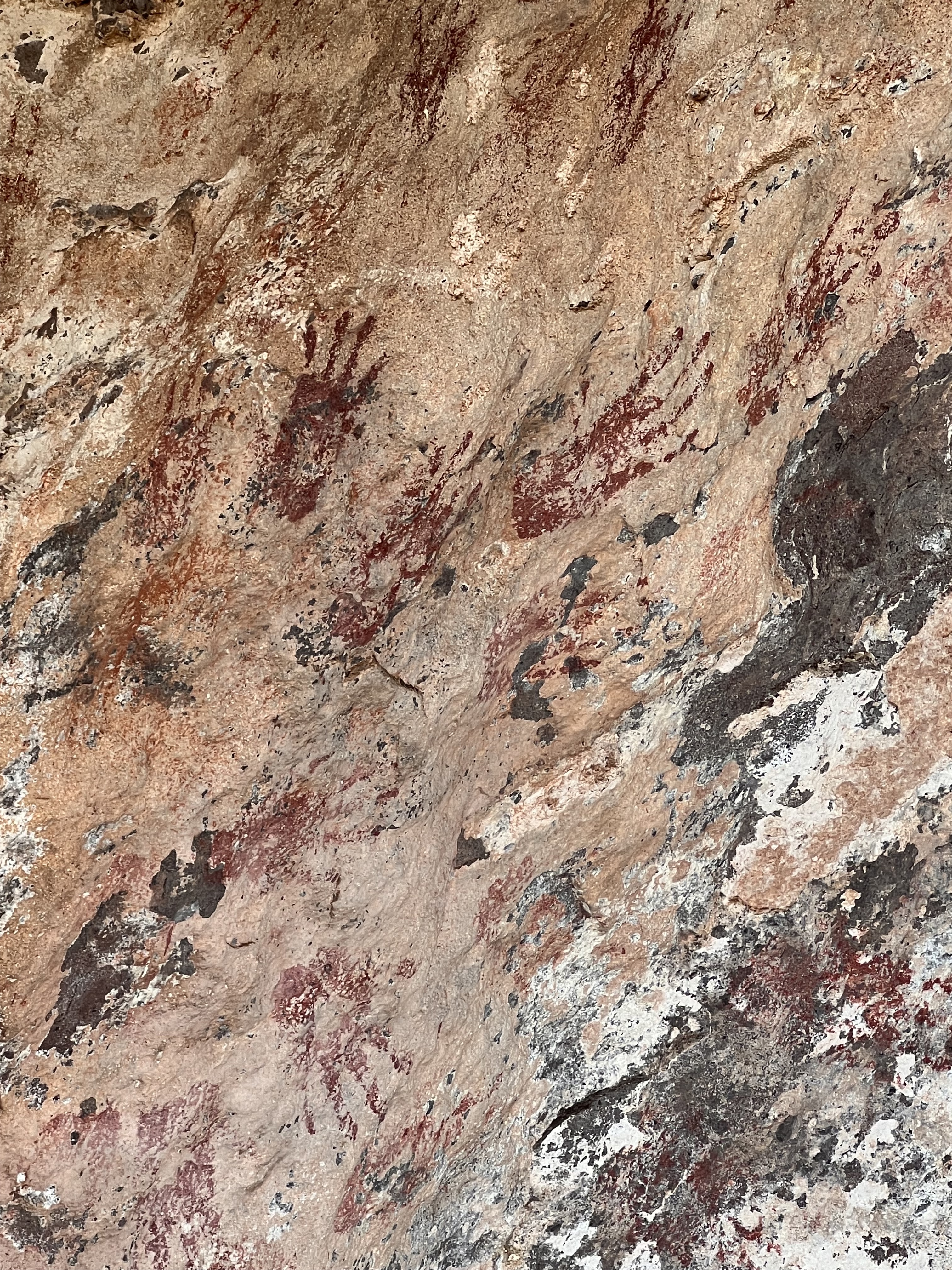
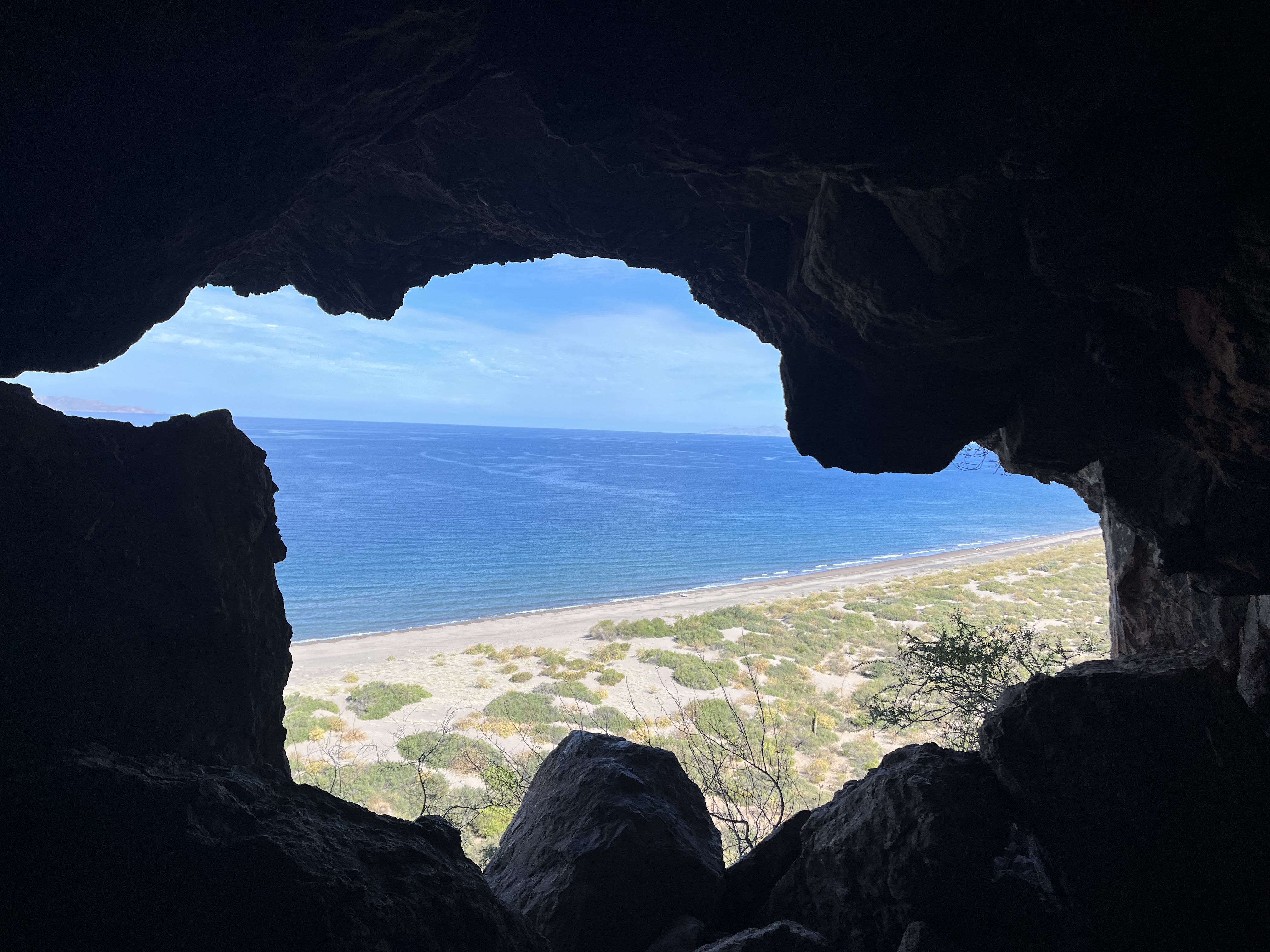
The trip back down the cliff face was a bit hairy, with the crew slowly picking their way downwards over the steep and slippery surfaces. Once safely down and back to the beach, it was time for more dinghy fun! We launched ourselves bow-forward, and luckily made it out of the surf without further calamity.
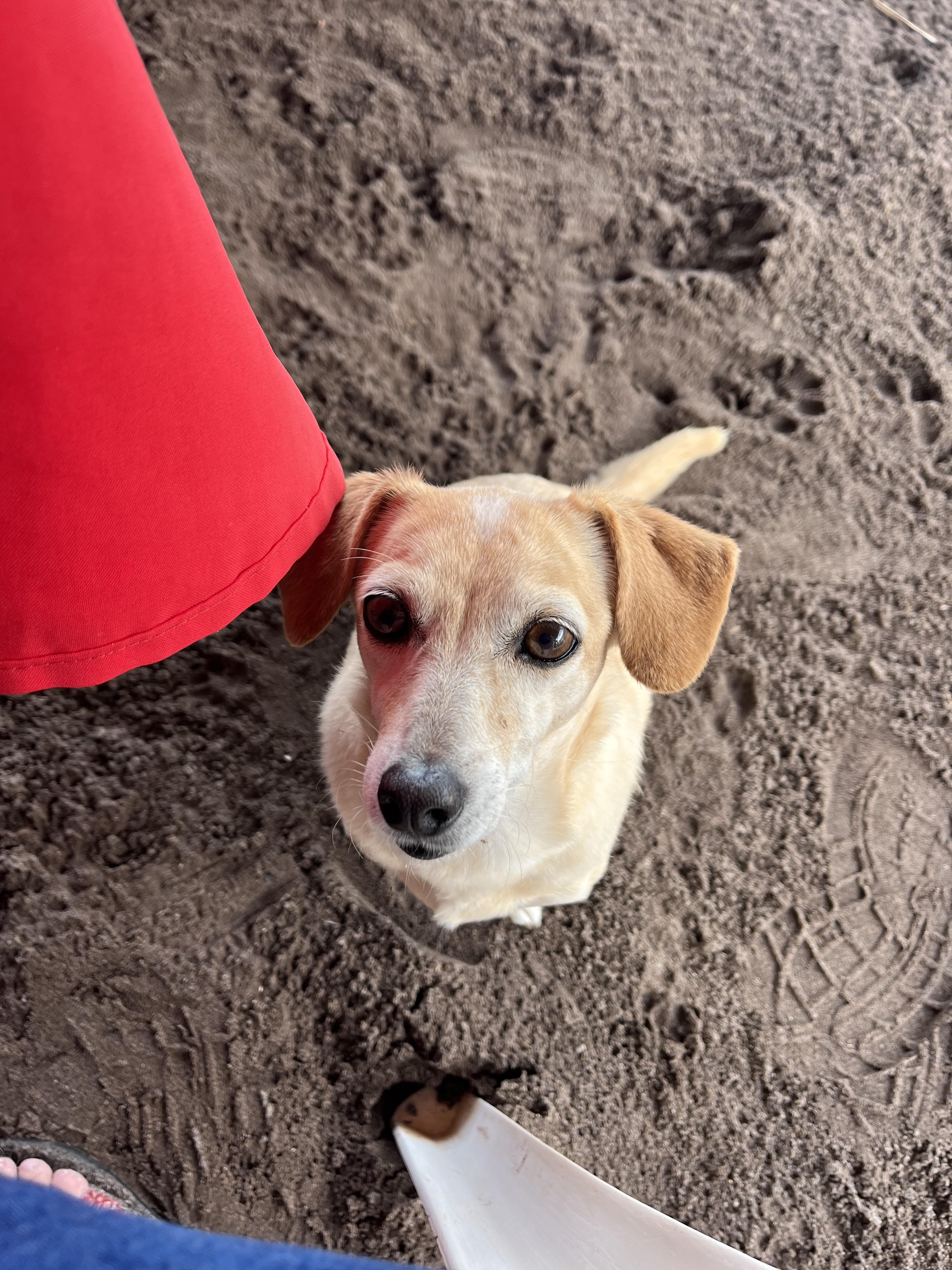
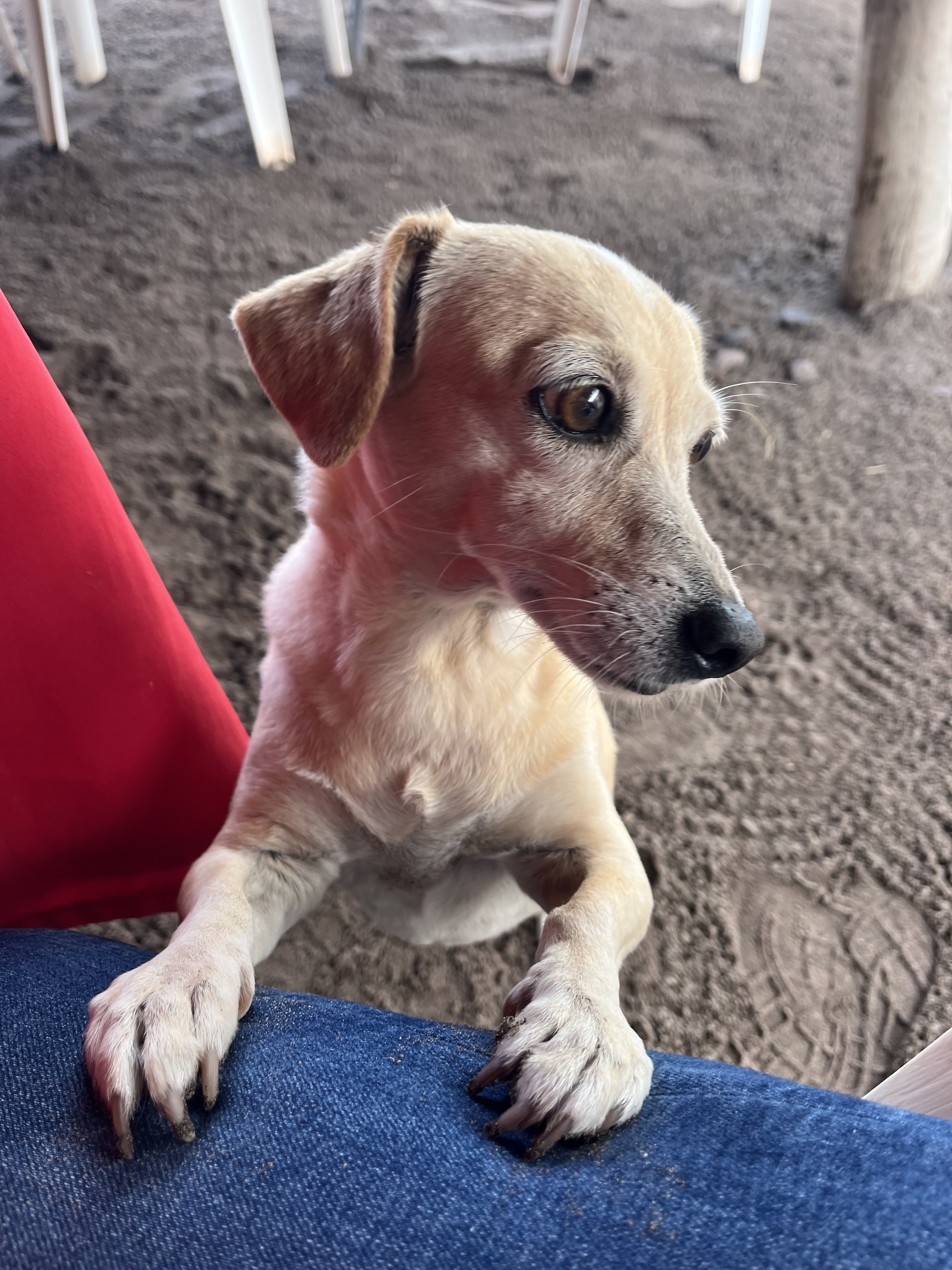
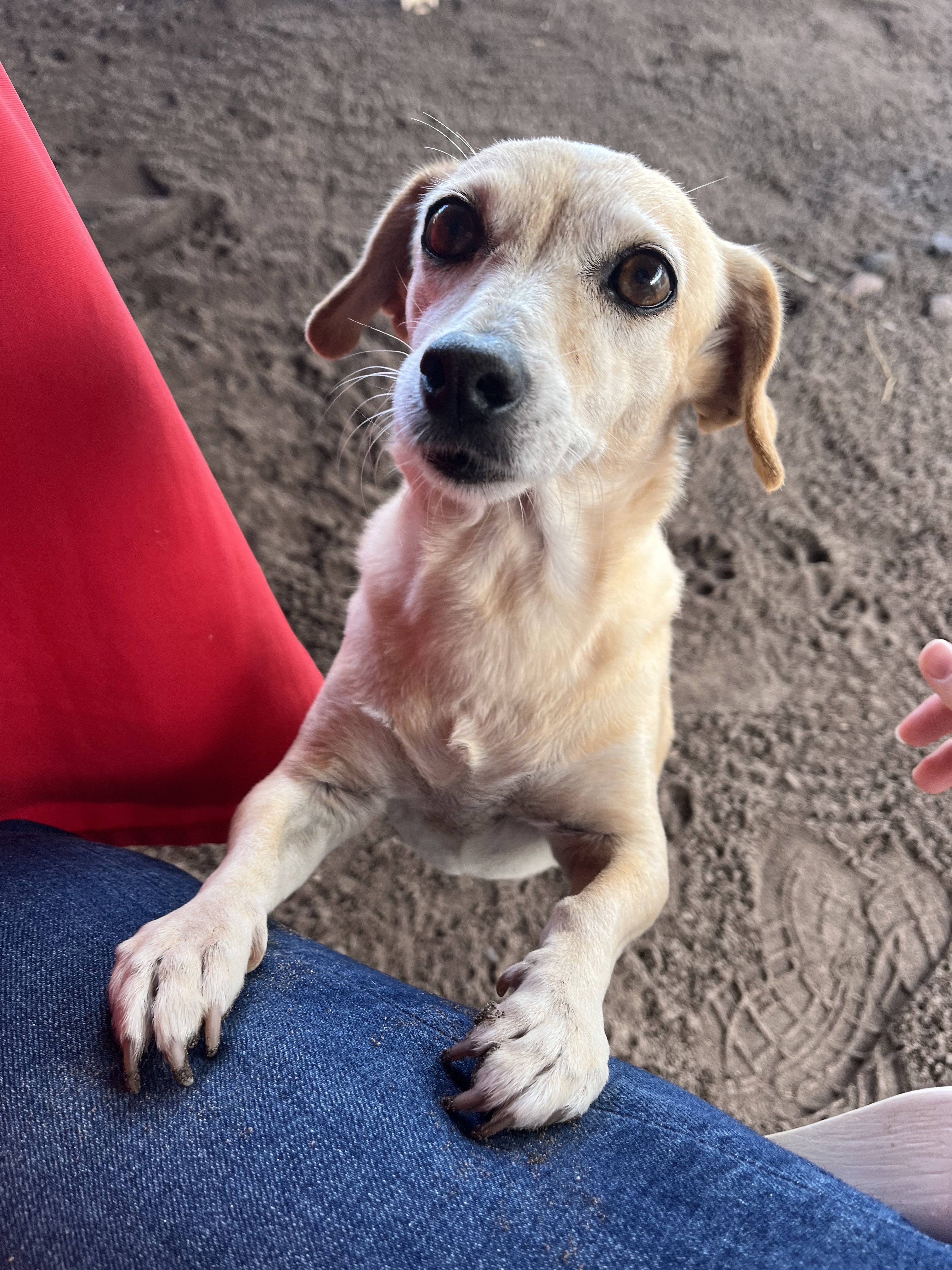
Back in Agua Verde, we went ashore for dinner our last night there. Melinda and Grace had been to the local beach restaurant for lunch before, and they loved the tacos. Grace also wanted to introduce me to the cute dog that befriended her during their first visit. As promised, the food was delicious and our feet were in the sand. The company was interesting as well – the tables being populated with other cruisers from the bay. We dined on fine tacos and listened to plans and reminiscenced as the sun set behind us.
Our final day’s journey on this leg was to get up to Puerto Escondido, which would be our first time in an actual marina since San Diego, a month before. We were all anxious to be on a dock with unlimited power and water, to get the boat cleaned up, and be relatively secure for a while.
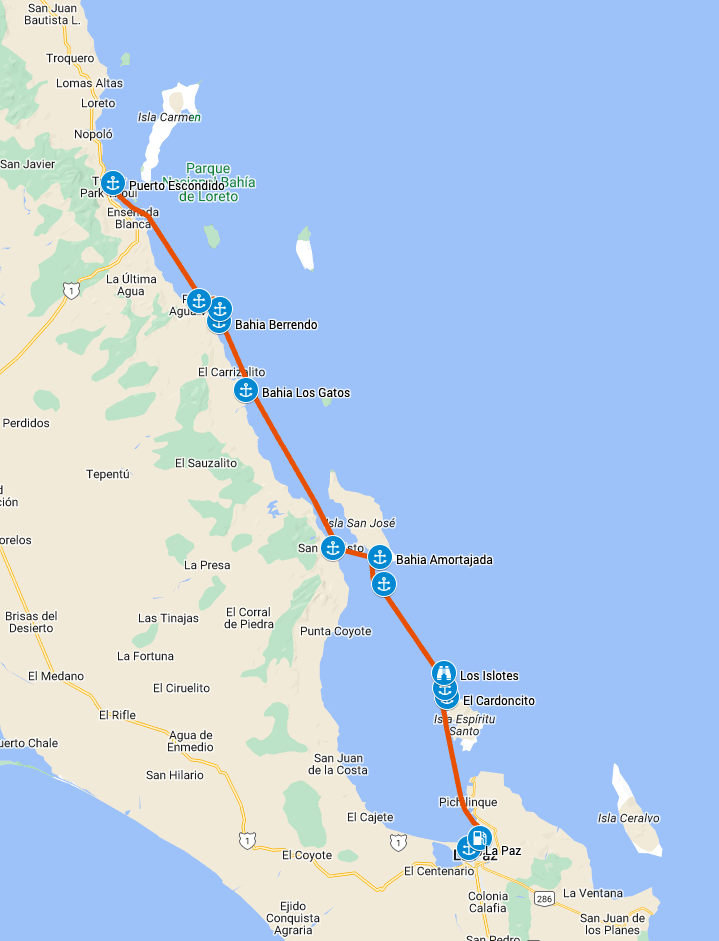
The winds were very light out of the north that day, so we motored the 23 nautical miles up the coast to the harbor. The harbor entrance is narrow but opens into a relatively large lagoon that is protected from the open waters to the north. We wound our way through the entrance, past a circular reserved anchorage called the “Ellipse”, and on into the placid waters of the lagoon. The marina and docks are near the entrance to the harbor, with a large number of moorings scattered through the lagoon. We could see the boats scattered through the moorings as we approached the dock.
We were going to have to do a “med-moor” here, with our stern pulled up to the dock and our bow tied to an anchor out in the water ahead of us. As we approached, we called in to the marina on the VFH and the harbormaster said that she would send staff down to help us moor.
As we closed the distance to the dock we could see that other boats at the dock were using “slime lines” out into the water. These are lines that the marina has anchored in front of the dock which you may use to tie your bows to when you med moor, in theory making it so you don’t need to drop your own anchor to hold your bow out. So we assumed we’d be able to use these as well and backed towards the dock without dropping our anchor.
The marina staff took our dock lines from Melinda and Grace as we backed in, and tied four lines from our aft cleats to the dock. Unlike the slime lines we’d encountered previously in Croatia, there were no lead lines from the dock out to the stronger anchor lines in the water. In Croatia, the folks on the dock would hand you the lead lines which you could walk forward to the bows, pulling up the anchor line as you went. Here, the staff had to go out in a panga to a buoy in front of the dock, pull up the anchor line, and then secure your dock lines to that. So we sat nervously for a bit with our stern hard tied to the dock, and nothing protecting our stern from it but our engines and fenders at the bottom of our sugar scoops.
We didn’t have to wait long before the dock staff was ahead of us in their panga retrieving the anchor line. Unfortunately there was only a single line available for us to take, and it wasn’t well centered on our position. We tied our port bow to it and hoped for the best. More on why it was not sufficient at all in our next post!
 Sailing Perception
One response to “November 19 – 30, 2023: Thanksgiving in the Southern Sea of Cortez”
[…] first all was well. As reported in our last post, we got ourselves situated in the mandatory med-moor attitude, with our stern firmly lashed to the […]
LikeLike